What Is SQCDP? Understanding This Method for Managing Performance
Introduction to the SQCDP Method
SQCDP is a structured method for managing performance that helps organisations improve operational visibility, workplace communication, team accountability, and continuous improvement across daily business activities.
SQCDP stands for Safety, Quality, Cost, Delivery, and People, which represent five critical areas used to measure and manage operational performance within organisations.
The SQCDP method is widely used across manufacturing, logistics, warehousing, healthcare, engineering, construction, and service industries because it provides a simple and highly visual approach to performance management.
Businesses use SQCDP systems to monitor operational targets, improve communication between departments, identify workplace inefficiencies, and encourage stronger collaboration across teams.
Unlike traditional reporting methods that often rely on delayed spreadsheets or lengthy meetings, SQCDP provides real-time operational visibility that supports faster decision-making and improved workplace responsiveness.
Organisations implementing SQCDP often create more organised and disciplined working environments where employees clearly understand workplace priorities, operational targets, and performance expectations.
The method also supports lean management principles by encouraging continuous monitoring, proactive problem-solving, and structured workplace improvement activities.
SQCDP systems may be implemented using physical visual boards, digital dashboards, cloud-based software, or integrated business performance platforms depending on organisational requirements.
Many organisations integrate SQCDP into wider operational excellence strategies, lean transformation programmes, Kaizen activities, and continuous improvement initiatives.
As businesses continue prioritising productivity, operational efficiency, and workforce accountability, SQCDP remains one of the most effective methods for managing performance within modern workplaces.
SQCDP also improves transparency because operational information remains highly visible to employees, supervisors, and leadership teams throughout the organisation.
Improved operational awareness helps organisations respond more quickly to workplace challenges while supporting long-term business stability and performance growth.
Why the SQCDP Method Matters in Modern Performance Management
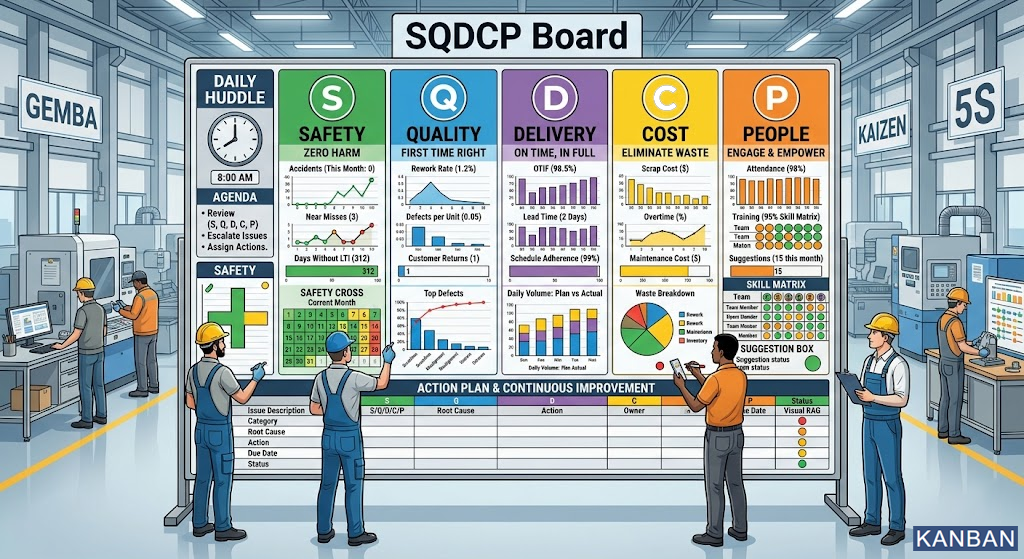
Modern organisations operate within highly competitive environments where operational efficiency, communication speed, accountability, and productivity directly affect long-term business success.
The SQCDP method helps organisations manage performance more effectively by providing structured operational visibility across key business areas.
Businesses using SQCDP can monitor daily operational activities more efficiently while improving decision-making, workflow consistency, and workplace collaboration.
The method also encourages stronger communication because performance data remains visible and regularly reviewed during operational meetings and team discussions.
Managers can identify operational concerns more quickly while monitoring workplace safety, quality standards, production performance, staffing challenges, and cost control activities.
SQCDP improves accountability because employees remain more aware of operational targets, responsibilities, and performance expectations.
Many organisations use SQCDP to strengthen workplace discipline while creating more transparent and organised operational environments.
The method also supports continuous improvement cultures because employees become more involved in identifying inefficiencies and contributing towards operational improvements.
Businesses implementing SQCDP frequently achieve improved productivity, reduced delays, stronger communication, and more consistent operational performance.
As operational complexity continues increasing across industries, SQCDP remains an essential method for managing performance and maintaining business competitiveness.
Organisations also benefit from improved reporting accuracy because operational data is monitored consistently across departments and business functions.
By supporting proactive management and operational transparency, SQCDP helps businesses maintain stronger long-term operational control and organisational resilience.
Understanding the Core Elements of SQCDP: Safety, Quality, Cost, Delivery and People
The Five Core Areas of the SQCDP Method
The SQCDP method focuses on five essential operational categories that help organisations measure, monitor, and improve workplace performance.
Safety focuses on protecting employees, reducing workplace risks, monitoring incidents, and maintaining compliance with health and safety regulations.
Quality measures product standards, customer satisfaction, defect levels, operational consistency, and process reliability.
Cost helps organisations monitor operational expenses, waste reduction activities, downtime, productivity losses, and financial efficiency.
Delivery focuses on production schedules, customer deadlines, workflow efficiency, and operational responsiveness.
People measures workforce engagement, attendance, training, communication, skills development, and employee performance.
These five categories work together to provide organisations with a balanced and highly visible approach to operational performance management.
Businesses can identify weaknesses more effectively when performance information is organised into clearly defined operational areas.
The SQCDP structure also encourages balanced decision-making because organisations monitor operational performance from multiple perspectives rather than focusing on one area alone.
Many businesses customise SQCDP systems to match their specific operational objectives, industry requirements, and workplace priorities.
Regular reviews across all SQCDP categories help organisations maintain stronger operational consistency while supporting continuous improvement activities.
As organisations continue prioritising lean management and operational efficiency, understanding the core elements of SQCDP remains essential for successful performance management.
How SQCDP Supports Effective Operational Performance Management
SQCDP supports operational performance management by helping organisations monitor workplace activities in a more visible, structured, and consistent manner.
Performance management systems become more effective when operational data is clearly organised and regularly reviewed across departments.
SQCDP encourages daily operational reviews where teams discuss workplace priorities, operational concerns, production targets, and improvement activities.
Managers gain stronger oversight because operational KPIs remain visible and easier to analyse during daily business activities.
Businesses can respond more quickly to operational problems because issues affecting safety, quality, costs, delivery, or workforce performance become immediately visible.
The method also improves communication between teams by simplifying the sharing of operational information and performance expectations.
Employees become more engaged because they can clearly understand workplace targets, business priorities, and operational responsibilities.
Structured performance monitoring supports better decision-making while improving organisational discipline and workplace accountability.
SQCDP also helps businesses align operational activities with wider strategic goals and long-term business objectives.
Continuous monitoring and regular operational reviews encourage organisations to maintain consistent performance standards while supporting sustainable business growth.
Digital SQCDP systems further improve operational performance through automated reporting, cloud-based accessibility, and real-time workplace updates.
As businesses continue focusing on operational excellence, SQCDP remains one of the most practical methods for managing daily workplace performance effectively.
Key Benefits of Using the SQCDP Method in the Workplace
The SQCDP method provides organisations with numerous operational benefits that support productivity, communication, accountability, and continuous improvement.
One of the main advantages of SQCDP is improved operational visibility because performance data remains highly visible throughout the workplace.
Managers and employees can identify operational concerns more quickly while monitoring daily targets, workflow efficiency, safety incidents, and quality performance.
SQCDP also improves communication between departments because operational information is reviewed consistently and shared more openly.
Businesses often achieve stronger workplace accountability because responsibilities, KPIs, and corrective actions remain clearly visible.
Daily operational meetings become more productive because teams can focus discussions around clearly organised operational data.
The method also supports faster problem-solving because operational weaknesses become easier to identify and address quickly.
Employees frequently become more engaged in continuous improvement activities because workplace performance remains transparent and easy to understand.
SQCDP supports stronger operational consistency while reducing communication gaps, workflow confusion, and reporting delays.
Many organisations implementing SQCDP achieve improved productivity, reduced waste, stronger compliance performance, and better operational reliability.
Digital SQCDP platforms further improve accessibility and collaboration by allowing remote teams to monitor operational performance in real time.
As organisations continue prioritising lean operations and workplace efficiency, SQCDP remains an essential method for managing performance successfully.
The Role of Visual Management in the SQCDP Performance Method
Visual management plays a central role within the SQCDP method because it helps organisations communicate operational information quickly, clearly, and consistently across the workplace.
SQCDP systems rely heavily on visual tools such as performance boards, KPI dashboards, colour indicators, charts, graphs, and workflow tracking systems to improve operational visibility.
Visual management allows employees, supervisors, and managers to identify workplace priorities, operational concerns, and performance targets more efficiently during daily activities.
Operational information becomes easier to understand because key metrics remain highly visible throughout departments and production areas.
Businesses using visual SQCDP systems often achieve improved communication because employees can quickly review operational updates without relying on lengthy reports or complex spreadsheets.
Visual management also strengthens workplace accountability because operational performance remains transparent and continuously monitored.
Daily operational meetings become more structured and productive because teams can review performance data in one central location.
Visual systems help organisations identify workflow bottlenecks, production delays, staffing challenges, quality concerns, and safety risks more effectively.
Many businesses integrate SQCDP visual management into lean manufacturing systems, Kaizen programmes, and continuous improvement initiatives.
Digital visual management platforms further improve accessibility by allowing real-time operational updates across multiple business sites and remote teams.
Organisations implementing strong visual management systems often achieve greater operational discipline, improved productivity, and more consistent workplace performance.
As lean management practices continue evolving, visual management remains one of the most important foundations of successful SQCDP performance systems.
Identifying Performance Issues and Operational Gaps Using SQCDP
Identifying operational weaknesses and performance gaps is one of the most valuable functions of the SQCDP method because unresolved issues can negatively affect productivity, quality, customer satisfaction, and profitability.
SQCDP systems help organisations monitor daily operational activities while identifying recurring concerns affecting safety, quality standards, delivery performance, operational costs, and workforce engagement.
Visual performance monitoring allows managers and employees to identify workflow disruptions, communication failures, missed targets, staffing shortages, and operational delays more quickly.
Businesses can also identify hidden inefficiencies such as excessive downtime, duplicated processes, production waste, inconsistent procedures, or poor workflow coordination.
Regular SQCDP reviews encourage organisations to respond proactively to operational concerns before they escalate into larger business problems.
Managers often analyse trend reports, operational KPIs, workplace incidents, and performance charts to identify recurring operational weaknesses.
The SQCDP method improves accountability because unresolved issues and corrective actions remain visible to both employees and leadership teams.
Structured escalation systems also help organisations respond faster to urgent operational risks and workplace disruptions.
Continuous operational monitoring allows businesses to prioritise improvement initiatives more effectively while strengthening workplace discipline.
Businesses implementing SQCDP often achieve stronger operational responsiveness, reduced disruption, improved communication, and more reliable workplace performance.
Identifying operational gaps early also supports better resource planning and more sustainable long-term operational improvement.
As organisations continue prioritising operational excellence, SQCDP remains an essential method for identifying and resolving workplace performance issues.
How to Choose the Right SQCDP System for Your Organisation
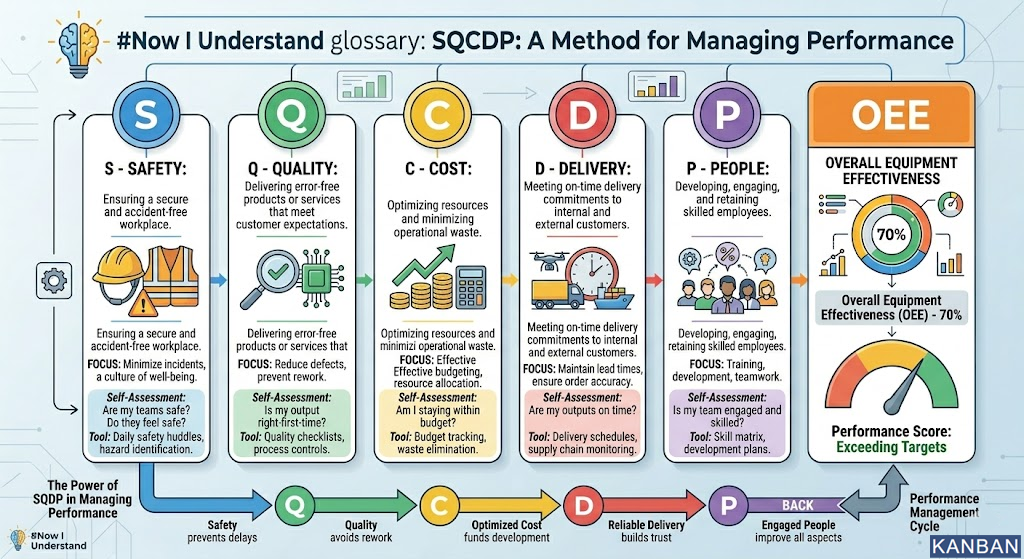
Selecting the right SQCDP system is an important decision for organisations aiming to improve workplace communication, operational visibility, and performance management processes.
Businesses should first assess their operational requirements, reporting objectives, workflow challenges, and team communication needs before implementing an SQCDP solution.
Different industries require different SQCDP structures depending on whether operations focus on manufacturing, logistics, healthcare, engineering, retail, or office-based services.
Some organisations prefer physical SQCDP boards because they encourage stronger workplace interaction and team participation during daily meetings.
Other businesses choose digital SQCDP systems because they provide automated reporting, cloud accessibility, real-time updates, and easier integration with wider business software.
Board layout, KPI categories, visual indicators, and customisation options should be reviewed carefully to ensure operational suitability.
User-friendly systems improve employee participation because operational data becomes easier to review, update, and understand.
Scalability is also important because SQCDP systems should support future organisational growth and changing operational requirements.
Businesses implementing digital SQCDP platforms should also review software compatibility, cybersecurity measures, and integration capabilities before deployment.
Durability and flexibility remain important considerations for physical systems used within industrial and production environments.
Organisations selecting well-designed SQCDP systems are often better positioned to improve operational discipline, accountability, and workplace productivity.
As business operations continue evolving, choosing the right SQCDP system remains essential for maintaining long-term operational efficiency and performance management success.
A Step-by-Step Guide to Implementing the SQCDP Method Successfully
Successful implementation of the SQCDP method requires careful planning, clear communication, leadership support, and structured operational objectives.
The first stage usually involves reviewing existing workplace processes, reporting systems, operational challenges, and communication methods.
Organisations should identify operational weaknesses such as inconsistent reporting, workflow inefficiencies, delayed communication, or unclear performance expectations before implementation begins.
The next stage focuses on defining operational KPIs and performance metrics across the Safety, Quality, Cost, Delivery, and People categories.
Implementation teams are often created to manage board design, employee training, KPI monitoring, and operational integration activities.
Businesses should establish clear procedures regarding operational updates, escalation processes, and daily review meetings.
Employee training sessions help teams understand how to use SQCDP systems, monitor performance data, and contribute towards continuous improvement activities.
Clear visual layouts improve communication because operational information becomes easier to review and understand during daily operations.
Digital SQCDP systems require additional preparation including software setup, cloud integration, automated reporting configuration, and data accessibility testing.
Regular monitoring and operational reviews help organisations identify implementation weaknesses while improving long-term performance management effectiveness.
Leadership involvement remains essential because successful SQCDP implementation often depends on consistent support, communication, and accountability from management teams.
Businesses following structured implementation strategies are often better positioned to improve workplace transparency, operational efficiency, and long-term business performance.
Streamlining Workplace Processes Through SQCDP Performance Management
SQCDP performance management helps organisations streamline workplace processes by improving communication, strengthening workflow visibility, and reducing operational inefficiencies.
Operational information becomes more organised and accessible because workplace priorities, targets, and performance indicators remain clearly visible.
Businesses can reduce workflow delays because teams gain faster access to operational updates and workplace performance data.
SQCDP systems improve coordination between departments by ensuring employees remain aligned regarding production schedules, quality standards, staffing requirements, and operational objectives.
Daily operational meetings become more effective because teams can review workflow performance, discuss concerns, and monitor improvement activities using structured visual information.
Visual workflow systems also reduce communication errors because responsibilities and operational expectations remain clearly displayed throughout the workplace.
Managers gain stronger oversight while monitoring productivity levels, workflow consistency, operational risks, and delivery performance.
Digital SQCDP platforms further improve workplace efficiency through automated reporting, cloud accessibility, and real-time operational communication.
Continuous workflow visibility supports proactive management because operational concerns become easier to identify and resolve quickly.
Many organisations implementing SQCDP achieve reduced downtime, improved operational responsiveness, and stronger process consistency.
Structured performance management also helps businesses maintain more disciplined and organised operational environments.
As organisations continue prioritising lean operations and workplace efficiency, SQCDP remains essential for streamlining business processes successfully.
Measuring Team and Business Performance with SQCDP Metrics
Accurate performance measurement is essential for organisations seeking to improve productivity, accountability, and operational decision-making.
SQCDP systems provide structured methods for monitoring operational KPIs across safety, quality, cost, delivery, and people management categories.
Managers can review key performance indicators such as accident rates, defect levels, production output, delivery schedules, absenteeism, operational expenses, and employee engagement.
Real-time operational visibility improves reporting accuracy because workplace data remains current, transparent, and highly accessible.
Performance analytics help organisations identify operational trends, recurring inefficiencies, workflow disruptions, and communication gaps before they escalate.
SQCDP metrics support better operational planning because businesses can monitor whether improvement initiatives are delivering measurable results.
Trend analysis and reporting dashboards also support forecasting by helping organisations predict operational risks and future performance challenges.
Cloud-connected digital SQCDP systems improve collaboration while simplifying operational reporting across departments and multiple business locations.
Employees gain stronger awareness of organisational objectives because workplace targets and operational KPIs remain clearly visible.
Businesses implementing structured SQCDP metrics often achieve improved operational discipline, stronger accountability, and more reliable workplace performance.
Continuous performance measurement also supports long-term strategic planning and sustainable business growth.
As organisations continue prioritising data-driven management strategies, SQCDP metrics remain essential for improving operational performance and workplace productivity.
Using SQCDP for Problem Solving and Root Cause Analysis
Problem solving is one of the most valuable functions of the SQCDP method because organisations must identify and resolve operational issues quickly to maintain productivity, quality, and workplace efficiency.
SQCDP helps businesses investigate operational problems by making performance trends, workflow disruptions, and recurring issues highly visible during daily operational reviews.
Rather than focusing only on immediate symptoms, the SQCDP method encourages organisations to identify underlying root causes affecting operational performance.
Managers can analyse operational data across safety, quality, cost, delivery, and people categories to understand how different issues may be connected.
Common problem-solving techniques used alongside SQCDP include the Five Whys method, Kaizen activities, fishbone diagrams, Pareto analysis, and structured continuous improvement reviews.
Visual management systems simplify operational investigations because teams can review workplace performance data, trends, and corrective actions within one central location.
Employees are also encouraged to participate in problem-solving discussions because they often possess valuable operational knowledge and practical workplace experience.
Action tracking systems improve accountability because unresolved issues and corrective measures remain visible until successfully completed.
Businesses implementing structured SQCDP problem-solving systems often achieve reduced disruption, stronger operational reliability, and more consistent workplace performance.
Continuous operational reviews also support proactive management because recurring problems can be identified and resolved earlier.
Digital SQCDP systems further improve root cause analysis through automated reporting, trend monitoring, and real-time performance tracking capabilities.
As operational complexity continues increasing across industries, SQCDP remains an essential method for supporting effective workplace problem-solving and operational stability.
Standardising Performance Management Processes with SQCDP
Standardised performance management processes help organisations maintain operational consistency while reducing unnecessary variation across departments and business activities.
The SQCDP method supports process standardisation by helping organisations create structured reporting systems, operational review procedures, and consistent workplace communication practices.
Employees benefit from standardised systems because workplace expectations, operational targets, and performance monitoring processes remain clearly defined.
Managers can also identify operational deviations more quickly because all teams follow the same performance management structure and reporting format.
Standardisation improves communication between departments because performance information is organised consistently throughout the organisation.
SQCDP systems help businesses simplify employee training, onboarding processes, and operational reviews by creating clear and repeatable workplace procedures.
Visual consistency improves operational awareness because employees can quickly understand performance indicators, workflow priorities, and workplace responsibilities.
Businesses operating across multiple sites particularly benefit from standardised SQCDP systems because communication methods and reporting expectations remain aligned.
Digital SQCDP platforms further support standardisation through automated dashboards, reporting templates, cloud-based systems, and integrated workflow tools.
Organisations implementing standardised SQCDP processes often achieve improved productivity, stronger accountability, reduced operational confusion, and more reliable workplace performance.
Continuous monitoring also helps organisations ensure that operational standards and workplace procedures are followed consistently.
As businesses continue prioritising operational reliability and lean management principles, standardising performance processes through SQCDP remains increasingly important.
Improving Safety, Quality and Operational Compliance Through SQCDP
Safety, quality, and compliance management remain essential priorities for organisations seeking to maintain operational reliability, customer satisfaction, and workplace stability.
The SQCDP method helps businesses improve workplace safety and quality by making operational risks, compliance concerns, and performance issues highly visible.
Safety sections within SQCDP systems allow organisations to monitor workplace incidents, hazards, near misses, and health and safety activities more effectively.
Quality monitoring areas help businesses identify production defects, customer complaints, operational inconsistencies, and process failures affecting business performance.
Real-time operational visibility allows organisations to identify risks earlier before they escalate into larger operational or financial problems.
SQCDP also supports stronger compliance management because operational procedures, corrective actions, and workplace standards remain consistently monitored.
Businesses can improve workplace discipline through structured visual reporting systems, regular performance reviews, and clearer operational accountability.
Managers gain stronger oversight while monitoring operational KPIs, quality trends, safety performance, and regulatory compliance activities.
Many organisations use SQCDP systems to support ISO standards, health and safety programmes, lean manufacturing initiatives, and operational excellence strategies.
Digital SQCDP platforms improve traceability by simplifying operational reporting, audit preparation, and documentation management.
Continuous operational monitoring also encourages employees to become more actively involved in maintaining workplace safety and quality standards.
As regulatory expectations continue increasing across industries, SQCDP remains an essential method for improving safety, quality, and operational compliance.
Reducing Waste, Delays and Operational Costs with the SQCDP Method
Reducing operational waste and controlling costs remain major objectives for organisations seeking to improve profitability, productivity, and long-term competitiveness.
The SQCDP method helps businesses identify activities that consume unnecessary time, labour, materials, or resources without creating meaningful operational value.
Common examples of operational waste include excessive downtime, duplicated tasks, communication failures, inefficient workflows, overproduction, unnecessary movement, and delayed decision-making.
Visual performance management systems improve operational visibility by helping organisations identify inefficiencies more quickly and consistently.
Daily operational reviews encourage faster responses to workplace concerns before they develop into larger operational disruptions or financial losses.
SQCDP also improves accountability because operational issues and corrective actions remain visible to both employees and management teams.
Businesses implementing SQCDP frequently achieve improved workflow efficiency, lower operational costs, stronger productivity, and reduced workplace disruption.
The method supports lean management principles by encouraging continuous improvement, operational discipline, and structured waste reduction activities.
Digital SQCDP systems further improve efficiency through automated reporting, cloud communication, and real-time operational monitoring.
Managers can use operational KPIs to identify areas where labour, materials, or production resources are being used inefficiently.
Continuous operational monitoring helps organisations maintain more responsive, financially sustainable, and highly organised working environments.
As economic pressures continue increasing across industries, reducing waste and operational costs through SQCDP remains essential for maintaining business performance and profitability.
Encouraging Employee Engagement Through SQCDP Performance Systems
Employee engagement plays a major role in the success of SQCDP performance systems because workplace improvement depends heavily on communication, collaboration, and workforce participation.
Employees often possess valuable insights regarding workflow inefficiencies, safety concerns, quality problems, operational delays, and communication challenges affecting business performance.
SQCDP encourages organisations to involve employees in daily operational reviews, performance discussions, improvement planning, and problem-solving activities.
Open communication systems help businesses create more collaborative workplace cultures where employees feel more responsible for supporting operational objectives.
Employee engagement also improves accountability because workplace targets, KPIs, and operational responsibilities remain highly visible throughout operational areas.
Daily stand-up meetings supported by SQCDP systems encourage stronger teamwork while improving operational awareness across departments.
Recognition systems and performance tracking areas can motivate employees by highlighting operational achievements and workplace contributions.
Training programmes help employees understand operational goals, workplace metrics, lean management principles, and continuous improvement expectations more effectively.
Digital SQCDP systems allow employees to update operational information, review performance data, and communicate concerns more efficiently.
Businesses encouraging workforce participation often achieve stronger morale, improved communication, greater operational transparency, and more sustainable productivity improvements.
Employee involvement also strengthens continuous improvement cultures because operational improvements become part of everyday workplace activities.
As organisations continue prioritising people-focused operational management, employee engagement remains essential for successful SQCDP implementation.
Digital Tools and Technologies Supporting Modern SQCDP Systems
Modern SQCDP systems increasingly rely on digital technologies designed to improve operational visibility, communication, reporting accuracy, and workflow management.
Many organisations integrate digital SQCDP platforms with ERP systems, production software, workforce management tools, quality management systems, and operational analytics platforms.
Digital dashboards provide real-time updates regarding workplace safety, operational KPIs, staffing levels, production targets, workflow performance, and improvement activities.
Cloud-based technologies improve accessibility by allowing managers and employees to review operational data from remote locations, mobile devices, and multiple business sites.
Automated reporting tools simplify data collection while reducing manual administration and improving operational responsiveness.
Advanced analytics systems allow organisations to identify performance trends, forecast operational risks, improve planning accuracy, and strengthen decision-making processes.
Mobile applications and cloud-connected communication systems improve collaboration between departments while supporting faster operational decision-making.
Digital SQCDP tools also support paperless operational management while simplifying KPI monitoring and performance reporting activities.
Integration with project management platforms, communication software, and workflow management tools further improves operational coordination.
Cybersecurity and secure cloud infrastructure remain essential for protecting sensitive business information, workforce data, and operational records.
Businesses investing in technology-driven SQCDP systems are often better positioned to improve efficiency, strengthen operational resilience, and maintain long-term workplace performance.
As digital transformation continues reshaping operational management, modern SQCDP technologies remain essential for supporting efficient and data-driven business environments.
SQCDP, a method for managing performance, helps organisations create more organised, transparent, and efficient workplace environments where employees and leadership teams can clearly monitor operational performance.
Key SQCDP KPIs and Metrics to Track for Continuous Improvement
Performance metrics play a major role within the SQCDP method because organisations rely on measurable data to improve operational efficiency, workplace safety, quality standards, delivery performance, cost control, and employee engagement.
SQCDP provides businesses with structured and highly visible methods for monitoring workplace activities, operational trends, and continuous improvement initiatives.
Unlike traditional reporting systems that often depend on disconnected spreadsheets or delayed communication, SQCDP focuses on real-time operational visibility and structured KPI management.
Businesses can identify recurring operational issues, workflow inefficiencies, staffing pressures, communication failures, and productivity weaknesses more effectively when KPIs are monitored continuously.
Safety-related metrics often include workplace incidents, near misses, hazards, compliance activities, and accident frequency rates.
Quality KPIs commonly focus on product defects, customer complaints, audit findings, rework levels, process consistency, and operational reliability.
Cost indicators may include labour efficiency, downtime, waste reduction, energy consumption, operational expenses, and productivity losses.
Delivery metrics help organisations monitor production schedules, on-time delivery performance, workflow consistency, and order completion rates.
People-focused KPIs often measure employee attendance, staff engagement, workforce participation, training completion, and skills development activities.
SQCDP dashboards improve workplace transparency because operational targets, performance trends, and workplace concerns remain highly visible across departments.
Managers can use visual reporting systems to monitor operational trends, improve planning activities, strengthen accountability, and support faster decision-making.
Digital SQCDP systems often integrate with operational software, workforce management platforms, and cloud-based analytics tools to improve reporting accuracy and accessibility.
Continuous KPI monitoring also allows organisations to measure the long-term success of operational improvement programmes and workplace optimisation strategies.
Businesses maintaining highly visible KPI systems often achieve stronger operational discipline, improved communication, and more consistent workplace performance.
As organisations continue prioritising operational transparency and continuous improvement, SQCDP metrics remain essential for maintaining productive and highly organised working environments.
Supporting Continuous Improvement Through the SQCDP Method
Continuous improvement remains one of the most important outcomes of implementing the SQCDP method because long-term operational success depends heavily on workplace optimisation and proactive management.
SQCDP helps organisations identify workflow inefficiencies, communication gaps, quality concerns, safety risks, and operational weaknesses requiring structured improvement activities.
Businesses can create operational improvement plans by analysing workplace KPIs, employee feedback, workflow trends, and operational performance data.
Continuous improvement initiatives often focus on reducing waste, improving productivity, strengthening accountability, increasing efficiency, and enhancing overall workplace performance.
Many organisations introduce gradual operational improvements to maintain workflow stability while supporting sustainable long-term growth.
Lean methodologies such as Kaizen, root cause analysis, process mapping, standardised work procedures, and visual management techniques are frequently integrated into SQCDP systems.
Employee involvement remains essential because operational teams often possess valuable insights regarding workplace inefficiencies and workflow bottlenecks.
Daily operational reviews help organisations maintain focus on workplace priorities, operational targets, and continuous improvement objectives.
SQCDP systems allow businesses to monitor improvement activities, review progress, and evaluate operational results more effectively.
Continuous improvement also increases organisational flexibility because businesses become more capable of adapting to changing customer expectations and operational pressures.
Digital SQCDP platforms further improve operational discipline by ensuring workplace actions, improvement tasks, and operational activities remain consistently monitored.
Businesses with strong continuous improvement cultures often achieve improved morale, stronger teamwork, reduced disruption, and more reliable workplace performance.
Regular operational reviews also encourage proactive management because recurring issues become easier to identify and resolve quickly.
As lean management and workplace optimisation continue evolving, continuous improvement remains essential for maintaining efficient and competitive operational environments.
SQCDP also creates stronger organisational focus because employees regularly review operational priorities, discuss workplace concerns, and monitor improvement progress together.
The Role of Leadership in Successful SQCDP Performance Management
Strong leadership is essential for successful SQCDP performance management because workplace improvement depends heavily on communication, accountability, employee engagement, and operational discipline.
Leadership teams help define organisational priorities, workplace objectives, performance expectations, and continuous improvement strategies before implementing SQCDP systems.
Visible leadership involvement encourages employees to participate more actively in operational reviews, improvement activities, workplace discussions, and problem-solving processes.
Managers play an important role in maintaining accountability by monitoring KPIs, reviewing operational performance, and supporting corrective actions when required.
Effective leadership also strengthens communication because workplace goals and operational expectations remain consistently reinforced across departments.
SQCDP encourages leaders to adopt proactive management approaches rather than relying solely on reactive operational decision-making.
Leadership teams often use SQCDP systems to monitor workflow efficiency, staffing performance, productivity levels, operational risks, and workplace improvement progress.
Employee development also depends heavily on leadership support because managers provide coaching, operational guidance, and continuous improvement training.
Businesses with highly engaged leadership teams frequently achieve stronger operational performance, improved morale, and more organised workplace environments.
Leaders also help create workplace cultures focused on transparency, collaboration, accountability, and continuous operational improvement.
Data-driven leadership improves operational decision-making because managers gain access to measurable workplace insights and real-time performance information.
Leadership involvement is particularly important during SQCDP implementation because employees often require reassurance, guidance, and ongoing communication when adapting to new performance management systems.
Managers who participate actively in daily SQCDP reviews help strengthen organisational commitment towards workplace consistency and operational excellence.
As organisations continue adapting to lean operational environments and increasing productivity demands, leadership remains essential for successful SQCDP performance management.
Strong leadership also improves long-term sustainability because employees remain more motivated when workplace improvement activities receive visible management support.
Common Challenges When Introducing the SQCDP Method
Although the SQCDP method provides significant operational benefits, many organisations experience challenges during implementation and long-term adoption.
One of the most common difficulties involves resistance to change because employees and managers may initially feel uncomfortable adapting to new operational processes and performance management systems.
Businesses transitioning from traditional reporting methods to visual performance management often require cultural adjustments, stronger communication, and increased workforce engagement.
Limited leadership involvement can reduce implementation success because employees may struggle to maintain operational improvements without visible management support.
Some organisations experience difficulties selecting accurate KPIs that properly reflect workplace performance and operational priorities.
Inconsistent communication between departments may create workflow confusion, reduce accountability, and weaken operational coordination.
Insufficient employee training can affect implementation quality because staff may not fully understand SQCDP procedures, operational expectations, or reporting responsibilities.
Businesses relying on outdated operational systems may encounter integration challenges when implementing digital SQCDP platforms or cloud-based technologies.
Operational silos between departments can reduce collaboration and slow workplace improvement activities because information does not flow effectively throughout the organisation.
Data accuracy issues may also arise when operational information is updated inconsistently or when performance reviews are not conducted regularly.
SQCDP implementation requires long-term commitment, which may become challenging during periods of rapid growth, restructuring, or workforce changes.
Maintaining employee engagement over time may become difficult if operational reviews become repetitive or if workplace improvements are not clearly communicated.
Digital SQCDP systems may introduce cybersecurity concerns because operational information is often stored within cloud-connected platforms.
Despite these challenges, businesses maintaining strong communication, leadership support, employee engagement, and continuous training often achieve highly successful SQCDP implementation outcomes.
Regular operational reviews, workplace audits, and structured performance management processes help organisations overcome many common SQCDP challenges while maintaining long-term workplace efficiency.
Integrating SQCDP with Existing Business and Operational Systems
Integrating SQCDP with existing business systems helps organisations improve workplace visibility, operational communication, workflow coordination, and reporting accuracy.
Connected operational systems allow information to move more efficiently between departments including production, logistics, quality assurance, human resources, engineering, and management teams.
SQCDP systems are commonly integrated with ERP software, workforce management platforms, quality management systems, operational analytics tools, and cloud collaboration technologies.
Integrated systems improve operational transparency by centralising workplace KPIs, staffing data, workflow activities, operational reporting, and performance tracking.
Businesses can monitor productivity, operational efficiency, delivery performance, staffing accountability, and workplace improvement progress from one structured management platform.
Automated reporting improves efficiency because workplace information can be collected, analysed, and updated continuously without relying heavily on manual administration.
SQCDP integration also strengthens communication between departments while reducing delays caused by disconnected reporting systems or inconsistent operational procedures.
Cloud-based technologies improve accessibility by allowing operational teams and leadership groups to monitor workplace performance remotely across multiple sites.
Integrated systems support more accurate forecasting, staffing allocation, workflow planning, operational scheduling, and strategic decision-making activities.
Businesses can respond more quickly to operational disruptions, staffing concerns, production delays, and quality issues through real-time operational visibility.
Advanced analytics tools help organisations identify long-term operational trends and workplace improvement opportunities across departments and locations.
Many businesses use integrated SQCDP systems to strengthen accountability, reduce administrative workload, improve reporting consistency, and maintain more organised operational environments.
API integrations and cloud-connected platforms further improve flexibility by enabling seamless communication between multiple workplace applications and systems.
As digital transformation continues accelerating across industries, integrated SQCDP systems remain essential for maintaining agile, efficient, and highly productive business environments.
Integrated operational systems also improve collaboration because employees can access shared workplace information more consistently throughout daily operations.
Future Trends in SQCDP and Performance Management Strategies
The future of SQCDP will continue being influenced by digital transformation, automation technologies, artificial intelligence, and increasingly connected workplace environments.
Businesses are rapidly adopting cloud-based SQCDP platforms that provide real-time operational visibility, automated reporting, predictive analytics, and advanced performance monitoring capabilities.
Artificial intelligence is expected to play a growing role in operational forecasting, staffing analysis, workflow optimisation, and productivity management activities.
SQCDP systems will increasingly integrate with automation technologies to reduce repetitive administration, improve reporting accuracy, and strengthen operational efficiency.
Real-time monitoring technologies will improve workplace visibility by automatically tracking operational KPIs, staffing performance, workflow activities, and productivity levels.
Advanced analytics platforms will help organisations identify workplace trends, predict operational disruptions, and improve long-term strategic planning.
Machine learning technologies may also support smarter resource allocation, workforce scheduling, production balancing, and operational optimisation across departments.
Mobile applications will continue improving accessibility to workplace information across remote teams, field employees, and hybrid operational environments.
Many organisations are investing heavily in digital technologies designed to strengthen communication, improve operational flexibility, and support workforce productivity.
Automation and predictive analytics are expected to improve workplace performance while reducing the administrative burden associated with traditional reporting systems.
Cybersecurity will remain critically important because businesses are becoming increasingly dependent on cloud-based systems and connected operational technologies.
Sustainability initiatives are also influencing future SQCDP strategies because organisations continue prioritising digital transformation, energy efficiency, and paperless operational management.
Interactive dashboards, AI-powered reporting systems, and smart workplace displays are expected to become increasingly common within modern performance management environments.
Businesses adopting advanced SQCDP technologies are often better positioned to improve resilience, maintain operational consistency, and remain competitive within rapidly changing industries.
As workplace innovation continues accelerating across sectors, SQCDP will remain central to achieving efficient, agile, transparent, and continuously improving operational environments.
Conclusion: Why SQCDP Is an Effective Method for Managing Performance
SQCDP has become one of the most effective methods for managing performance because it helps organisations improve operational visibility, workplace communication, accountability, and long-term business efficiency.
By providing structured operational management systems and measurable workplace insights, SQCDP allows businesses to maintain stronger operational control and faster decision-making.
Organisations can identify workflow inefficiencies, operational bottlenecks, communication gaps, staffing concerns, productivity risks, and workplace delays much earlier through structured performance monitoring.
SQCDP also improves collaboration because operational responsibilities, workplace targets, and improvement activities remain clearly visible and consistently reviewed.
Businesses implementing SQCDP often achieve improved productivity, reduced operational waste, stronger accountability, lower operational costs, and more reliable workplace performance.
Continuous improvement becomes more sustainable because employees participate actively in workplace reviews, problem-solving discussions, and operational improvement activities.
Integrated digital technologies provide additional advantages including automated reporting, cloud collaboration, real-time analytics, predictive forecasting, and improved operational responsiveness.
Leadership teams gain stronger visibility into workplace performance, allowing faster responses to operational risks, staffing concerns, workflow disruptions, and changing business demands.
SQCDP also supports wider lean management initiatives by helping organisations strengthen communication, improve operational consistency, simplify reporting processes, and maintain agile working environments.
Whether implemented within manufacturing facilities, logistics operations, healthcare organisations, engineering companies, warehouses, or office-based environments, SQCDP provides highly effective frameworks for improving operational performance.
Businesses investing in structured SQCDP systems are often better positioned to strengthen employee engagement, improve customer satisfaction, reduce workplace disruption, and achieve sustainable long-term growth.
The method also encourages stronger workplace discipline because employees remain more aware of organisational priorities, operational targets, and performance expectations.
As digital transformation and operational complexity continue increasing across industries, SQCDP will remain essential for maintaining resilient, transparent, and highly productive workplaces.
SQCDP therefore represents a critical foundation for organisations seeking to maintain organised, efficient, continuously improving, and competitive operational environments.
As modern workplaces continue evolving, SQCDP will remain one of the most valuable methods for managing performance successfully across multiple industries and operational sectors.