What is SQCDP in Manufacturing?
Introduction to SQCDP in Manufacturing
What SQCDP in manufacturing is essential for organisations seeking to improve operational efficiency and performance. SQCDP (Safety, Quality, Cost, Delivery, People), stands and it provides a structured framework for managing and monitoring key production metrics.
This approach helps organisations maintain control over daily operations while aligning activities with broader business objectives. It ensures that every aspect of manufacturing performance is tracked and continuously improved.
By integrating SQCDP into daily routines, organisations can quickly identify issues, respond effectively, and maintain consistency across processes.
It also supports a proactive management style where decisions are based on real-time data rather than assumptions.
In modern manufacturing environments, SQCDP is widely used as a foundation for lean practices and operational excellence.
Understanding the SQCDP Framework
The SQCDP framework focuses on five critical areas that directly impact manufacturing success.
Safety ensures a secure working environment, reducing risks and protecting employees.
Quality focuses on maintaining product standards and minimising defects.
Cost involves controlling expenses and improving efficiency in resource utilisation.
Delivery ensures that products are produced and delivered on time to meet customer expectations.
People emphasises workforce engagement, training, and productivity.
Together, these elements create a balanced approach to managing manufacturing performance.
Visual Management in SQCDP
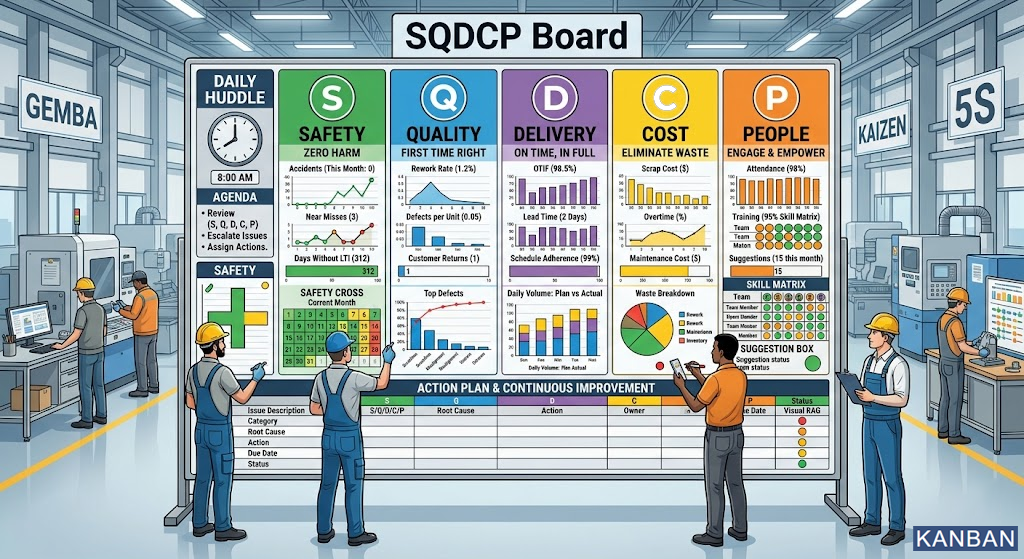
SQCDP is often implemented through visual management systems such as boards or dashboards.
These tools display key performance indicators in a clear and accessible format.
Visual elements such as charts, colour coding, and indicators make it easy to identify issues quickly.
This enables faster decision-making and encourages immediate corrective action.
Visual management also improves communication between teams and departments.
It ensures that everyone has a shared understanding of current performance and priorities.
Daily Monitoring and Continuous Improvement
SQCDP supports daily performance tracking through structured review meetings.
Teams assess results, discuss challenges, and identify improvement opportunities.
This routine helps organisations maintain discipline and accountability.
It also ensures that small issues are addressed before they develop into major problems.
Continuous monitoring enables organisations to adapt quickly to changes in demand or production conditions.
Over time, this leads to improved efficiency, reduced waste, and better overall performance.
Enhancing Accountability and Engagement
SQCDP in manufacturing promotes transparency by clearly displaying targets, results, and responsibilities.
This visibility encourages ownership at all levels of the organisation.
Employees become more engaged when they understand how their work contributes to overall success.
It also strengthens teamwork and collaboration across departments.
Engaged teams are more likely to identify improvement opportunities and contribute to innovation.
This creates a strong culture of continuous improvement and operational excellence.
Why SQCDP in Manufacturing Matters
Aligning Operations with Business Goals
SQCDP in manufacturing helps align daily production activities with strategic business objectives.
It provides a clear link between operational performance and organisational goals.
This ensures that teams remain focused on priorities that drive long-term success.
Alignment improves consistency and reduces the risk of inefficiencies.
It also helps organisations maintain direction in dynamic and competitive markets.
Clear alignment ensures that all efforts contribute towards measurable outcomes.
Improving Visibility of Performance
One of the key benefits of SQCDP is improved visibility into manufacturing performance.
Teams can easily track progress and identify deviations from targets.
This enables quicker responses to operational challenges.
Improved visibility enhances accountability across all levels of the organisation.
It also ensures that performance issues are addressed promptly and effectively.
Greater transparency supports better communication and collaboration.
Supporting Data-Driven Decision Making
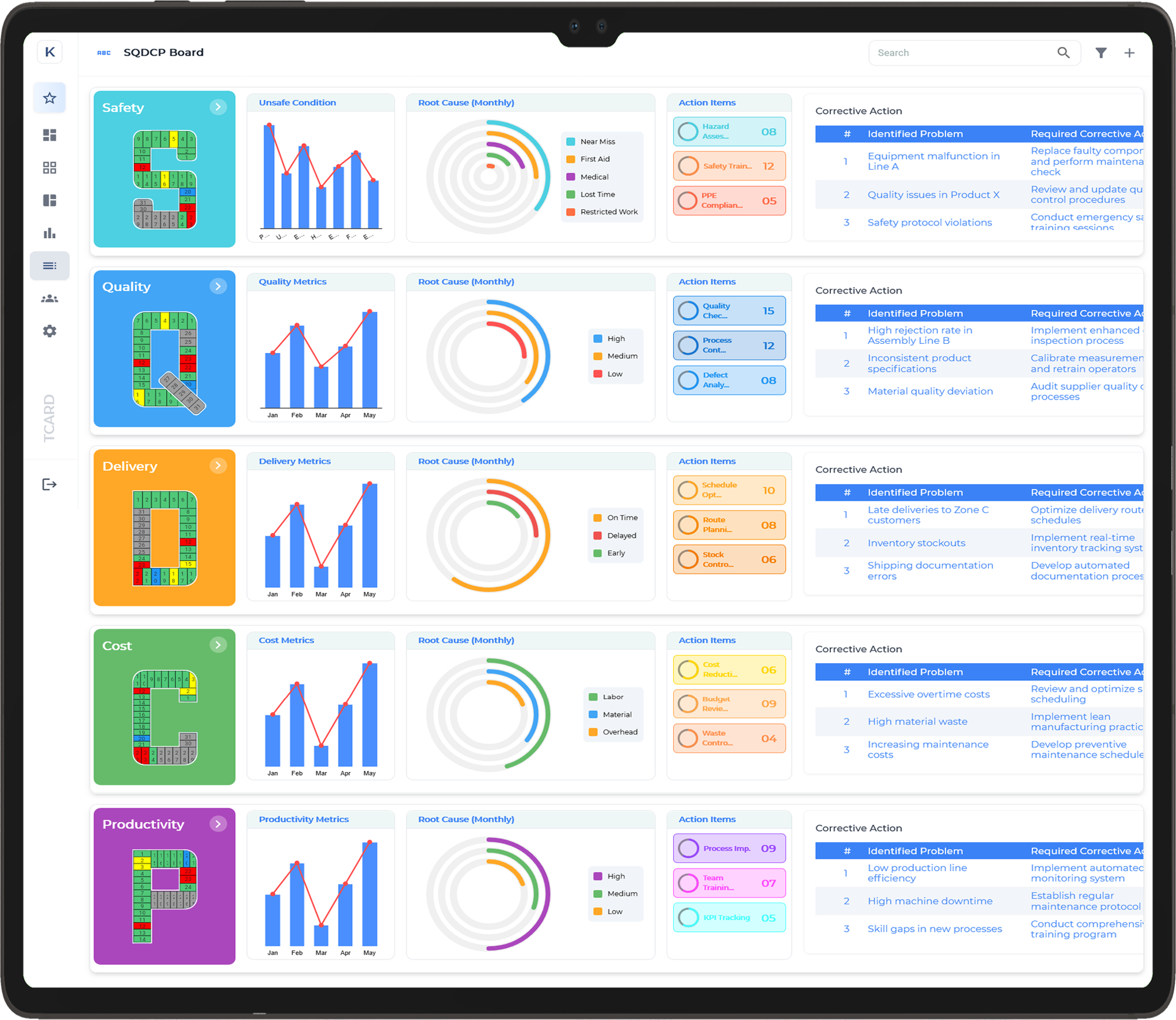
SQCDP systems provide reliable data that supports informed decision-making.
Managers can analyse trends, identify root causes, and implement targeted improvements.
This reduces reliance on guesswork and improves operational efficiency.
Both digital and physical SQCDP systems contribute to structured problem-solving.
Data-driven decisions lead to more consistent and predictable outcomes.
This approach strengthens overall business performance.
Encouraging Standardisation
SQCDP promotes standardised processes across manufacturing operations.
It ensures consistency in how performance is measured and managed.
Standardisation reduces variation and improves product quality.
It also supports scalability as organisations grow and expand.
Consistent processes help maintain control and improve reliability.
This is essential for sustaining long-term operational excellence.
Building a Culture of Continuous Improvement
SQCDP fosters a culture where continuous improvement becomes part of daily work.
Employees are encouraged to identify inefficiencies and suggest improvements.
Regular reviews create opportunities for learning and development.
This culture supports innovation and adaptability.
Organisations that embrace continuous improvement are better positioned for long-term success.
It ensures that performance is consistently enhanced over time.
Safety Monitoring in SQCDP in Manufacturing
When understanding what SQCDP in manufacturing is, safety is always the first and most critical element. It forms the foundation of all operational activities and ensures that employees work in a secure and controlled environment.
Organisations use SQCDP to monitor safety metrics such as incidents, near misses, hazards, and compliance levels. This structured tracking enables early identification of risks and helps prevent accidents before they occur.
By making safety performance visible, organisations promote a proactive safety culture where risks are addressed promptly.
Regular safety reviews ensure that potential hazards are continuously monitored and managed effectively.
Teams can take corrective actions quickly, reducing the likelihood of repeated incidents.
Over time, this leads to improved compliance, reduced downtime, and enhanced employee wellbeing.
A strong focus on safety within SQCDP also builds trust and confidence among employees.
It encourages greater engagement and responsibility towards maintaining a safe workplace.
Cost Management Using SQCDP in Manufacturing
Cost management is a key aspect of what SQCDP in manufacturing is, focusing on efficient use of resources and financial control.
Organisations track actual costs against planned targets to identify inefficiencies and areas for improvement.
This visibility enables better budgeting, forecasting, and decision-making.
Reducing waste, improving process efficiency, and optimising resource utilisation are central to effective cost control.
Regular monitoring helps teams identify cost-saving opportunities and improve overall performance.
Better cost awareness ensures that financial objectives are consistently met.
In addition, cost-focused SQCDP practices encourage accountability at all levels.
Employees become more conscious of how their actions impact overall costs, leading to smarter operational decisions.
Quality and Delivery Management in SQCDP
Quality and delivery are essential components when defining what SQCDP in manufacturing is, as they directly influence customer satisfaction and business success.
Organisations monitor defects, rework levels, and delivery performance to ensure consistent output.
Comparing actual results with targets helps maintain reliability and operational control.
Regular monitoring allows teams to identify bottlenecks and inefficiencies in production processes.
Improving quality reduces waste and rework, while reliable delivery ensures that customer expectations are met.
These improvements contribute to better performance and customer trust.
Consistent quality and on-time delivery strengthen brand reputation and competitiveness.
They also support long-term relationships with customers and stakeholders.
Driving Continuous Improvement Through SQCDP
A key principle of what SQCDP in manufacturing is lies in its ability to drive continuous improvement.
The framework provides clear visibility of performance, enabling teams to identify gaps and inefficiencies.
Structured reviews support root cause analysis and effective problem-solving.
Teams are encouraged to take ownership of performance and actively contribute to improvements.
Regular monitoring ensures that progress is tracked and sustained over time.
This creates a disciplined and consistent approach to operational improvement.
Small, incremental changes lead to significant long-term benefits.
Continuous improvement strengthens productivity, efficiency, and organisational resilience.
Enhancing Customer Focus with SQCDP in Manufacturing
Customer focus is a key outcome when understanding what SQCDP in manufacturing is.
Organisations monitor customer feedback, complaints, and service performance as part of their SQCDP framework.
This ensures that operations remain aligned with customer expectations.
Insights from customer data help identify improvement areas and refine processes.
Teams can respond quickly to changing requirements and market demands.
Consistent performance enhances customer satisfaction and loyalty.
Maintaining a strong customer focus also supports business growth and competitiveness.
It strengthens relationships and builds long-term trust with customers.
Tools and Techniques for Implementing SQCDP
Effective implementation of SQCDP in manufacturing requires the use of structured tools and techniques.
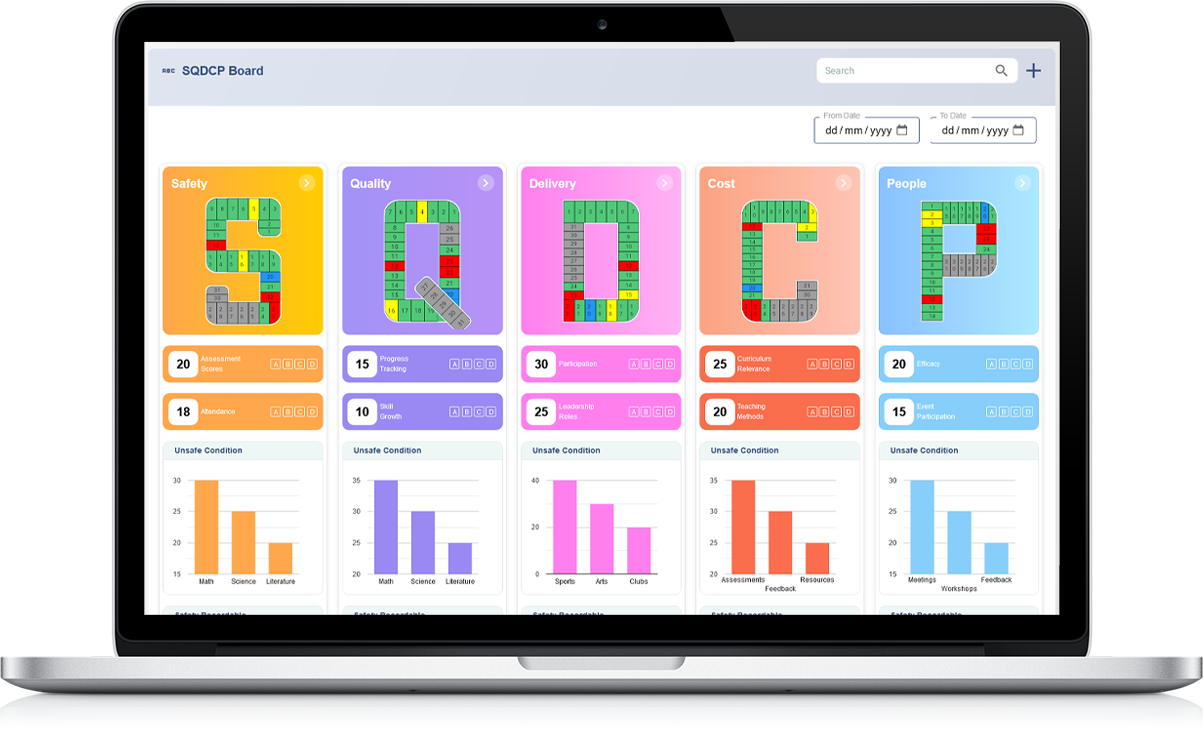
Visual management systems such as boards and dashboards display key performance indicators clearly.
Digital tools provide real-time data, analytics, and reporting capabilities.
Standard templates ensure consistency in tracking and communication.
Training ensures that teams understand how to use these tools effectively.
Advanced analytics provide deeper insights into operational performance.
Combining physical and digital tools enhances flexibility and efficiency.
This integrated approach supports continuous improvement and better decision-making.
Key KPIs in SQCDP for Manufacturing
Key performance indicators are essential for understanding what SQCDP in manufacturing is and how it measures success.
Common KPIs include safety incidents, quality defects, delivery performance, cost efficiency, and employee engagement.
These metrics provide a clear and measurable view of operational performance.
Regular monitoring of KPIs improves transparency and accountability across teams.
Trend analysis helps predict future performance and identify potential risks.
Clear metrics enable better prioritisation and decision-making.
Effective KPI management supports continuous improvement and operational excellence.
It ensures that organisations remain focused on achieving their strategic objectives.
Standardising Manufacturing Processes with SQCDP
Standardisation is a core element of understanding what SQCDP in manufacturing is, ensuring consistency and reliability across all operations.
It enables organisations to establish clear procedures, reduce variability, and maintain consistent quality standards.
By integrating standardised processes into SQCDP, teams can perform tasks more efficiently and with fewer errors.
This structured approach supports operational stability and continuous improvement.
Standardisation also simplifies training and onboarding, making it easier for employees to follow best practices.
It creates a baseline for performance measurement and ongoing optimisation.
Organisations can refine processes over time based on data and performance insights.
This leads to improved productivity and reduced operational risks.
Furthermore, consistent processes enhance communication and coordination between departments.
They ensure that improvements are sustained and scalable across the organisation.
Ultimately, standardisation strengthens long-term efficiency and manufacturing excellence.
The Role of Digital Transformation in SQCDP Systems
Digital transformation plays a significant role in advancing what SQCDP in manufacturing is by improving data accuracy and accessibility.
Modern digital SQCDP systems provide real-time performance tracking, enabling faster and more informed decision-making.
Automation reduces manual effort, minimises errors, and improves overall efficiency.
Cloud-based platforms allow teams to access performance data from anywhere, enhancing collaboration.
Advanced analytics tools provide deeper insights into trends, risks, and opportunities.
This enables organisations to move from reactive to proactive management.
Digital dashboards present complex data in a simple and visual format.
Teams can quickly identify issues and take corrective action.
In addition, digital systems support scalability and flexibility in growing organisations.
They integrate seamlessly with other business tools and technologies.
Digital transformation strengthens continuous improvement efforts and operational performance.
Integrating SQCDP with Manufacturing Business Systems
Integrating SQCDP with business systems is an essential part of what SQCDP in manufacturing is, ensuring seamless data flow across operations.
This integration eliminates data silos and improves coordination between departments such as production, quality, and finance.
Real-time data sharing enhances visibility and supports better decision-making.
It aligns operational performance with strategic business objectives.
Integrated systems provide a comprehensive view of organisational performance.
Teams can analyse data across multiple functions and identify improvement opportunities.
This leads to more effective problem-solving and collaboration.
Integration also supports long-term scalability and growth.
By connecting SQCDP with ERP, MES, or other systems, organisations improve efficiency and accuracy.
This ensures that all departments work with consistent and reliable data.
Ultimately, integration strengthens overall business performance and competitiveness.
Steps to Implement SQCDP in Manufacturing
Implementing SQCDP in manufacturing begins with understanding what SQCDP is and defining clear objectives across Safety, Quality, Cost, Delivery, and People.
Organisations must establish measurable KPIs aligned with business goals.
Choosing the right format, whether digital, physical, or hybrid, is also essential.
The system should be accessible and visible to all team members.
Training plays a crucial role in ensuring successful adoption.
Employees must understand how to interpret data and use the SQCDP framework effectively.
Leadership support is essential to drive engagement and maintain consistency.
Regular review meetings help monitor performance and identify improvement areas.
Clear ownership should be assigned to each metric to ensure accountability.
Organisations should continuously refine the system based on feedback and performance data.
Over time, SQCDP becomes embedded in daily operations, supporting continuous improvement.
This structured approach leads to improved efficiency and long-term success.
Challenges in Adopting SQCDP in Manufacturing
Adopting SQCDP in manufacturing can present several challenges, particularly during the initial stages of implementation.
Resistance to change is common, as employees may be unfamiliar with structured performance management systems.
Data accuracy and consistency can also be difficult to maintain without proper processes.
These challenges may affect the effectiveness of the system if not addressed.
Providing comprehensive training and clear communication helps overcome these barriers.
Strong leadership support ensures that teams remain engaged and aligned.
Establishing standard processes improves consistency and reliability.
Regular feedback helps identify and resolve issues quickly.
Organisations must also ensure that data collection methods are accurate and efficient.
Continuous monitoring and refinement improve system effectiveness over time.
Overcoming these challenges strengthens operational performance and resilience.
Leadership’s Role in Successful SQCDP Implementation
Leadership plays a crucial role in defining what SQCDP in manufacturing is within an organisation and ensuring its success.
Leaders set the direction, establish expectations, and align SQCDP with business goals.
They promote accountability and transparency through regular performance reviews.
Strong leadership ensures consistent implementation across all teams.
Leaders also provide the necessary resources, tools, and support for effective execution.
They encourage collaboration, innovation, and continuous improvement.
Employee engagement is strengthened when leadership actively participates.
This creates a culture of trust and commitment.
Effective leadership drives discipline and consistency in daily operations.
It ensures that SQCDP becomes an integral part of organisational culture.
Ultimately, leadership enables long-term success and sustainable improvement.
How SQCDP Supports Continuous Improvement
Understanding what SQCDP in manufacturing is includes recognising its role in enabling continuous improvement.
The framework provides clear visibility of performance across all key areas.
Teams can identify gaps, analyse root causes, and implement improvements systematically.
This ensures consistent progress and measurable results.
Regular performance reviews create opportunities for learning and development.
Employees are encouraged to contribute ideas and participate in improvement initiatives.
Data-driven insights support better decision-making and prioritisation.
Continuous monitoring ensures that improvements are sustained.
Small, incremental improvements lead to significant long-term gains.
This structured approach strengthens operational efficiency and competitiveness.
It also supports innovation and adaptability in changing environments.
Workforce Engagement Through SQCDP Practices
Workforce engagement is a key benefit of understanding what SQCDP in manufacturing is and how it is applied.
Employees are actively involved in tracking performance and contributing to improvements.
This increases accountability, motivation, and ownership of results.
Clear visibility of data supports open communication and collaboration.
Engaged employees are more likely to identify inefficiencies and suggest improvements.
Recognition of achievements boosts morale and confidence.
Stronger engagement leads to improved productivity and performance.
It also enhances employee satisfaction and retention.
Over time, an engaged workforce becomes a key driver of continuous improvement.
This contributes to a positive organisational culture and long-term success.
Benefits of SQCDP in Manufacturing
The benefits of SQCDP in manufacturing are significant, providing a structured approach to managing performance.
It improves visibility of key metrics and enhances control over daily operations.
Teams can quickly identify issues and take corrective action.
This leads to faster and more accurate decision-making.
SQCDP enhances productivity, efficiency, and operational consistency.
It supports continuous improvement by embedding performance tracking into daily routines.
Organisations become more responsive to changes and challenges.
Customer satisfaction improves through better quality and delivery.
Additionally, SQCDP strengthens collaboration and accountability across teams.
It supports long-term growth and sustainability.
Overall, it provides a competitive advantage in modern manufacturing environments.
Future Trends in SQCDP and Visual Management in Manufacturing
The future of SQCDP in manufacturing is closely linked to technological advancements and digital innovation.
Real-time dashboards, automation, and integrated systems are becoming standard.
These tools improve accuracy, efficiency, and accessibility of data.
Organisations can make faster and more informed decisions.
Emerging technologies such as artificial intelligence and machine learning are transforming SQCDP systems.
These tools enable predictive analysis and proactive decision-making.
Future systems will be more interactive and user-friendly.
They will support greater flexibility and scalability.
Organisations adopting these innovations will become more agile and competitive.
Technology will continue to drive continuous improvement and operational excellence.
This ensures that SQCDP remains relevant in evolving manufacturing environments.