What Does SQDCP Stand For and Why Is It Important in Operations?
Understanding the Meaning of SQDCP
SQDCP stands for Safety, Quality, Delivery, Cost, and People. It is a structured approach used in many operational environments to monitor and improve performance across key areas of production and business activity. Each element of SQDCP reflects a critical aspect of operational excellence.
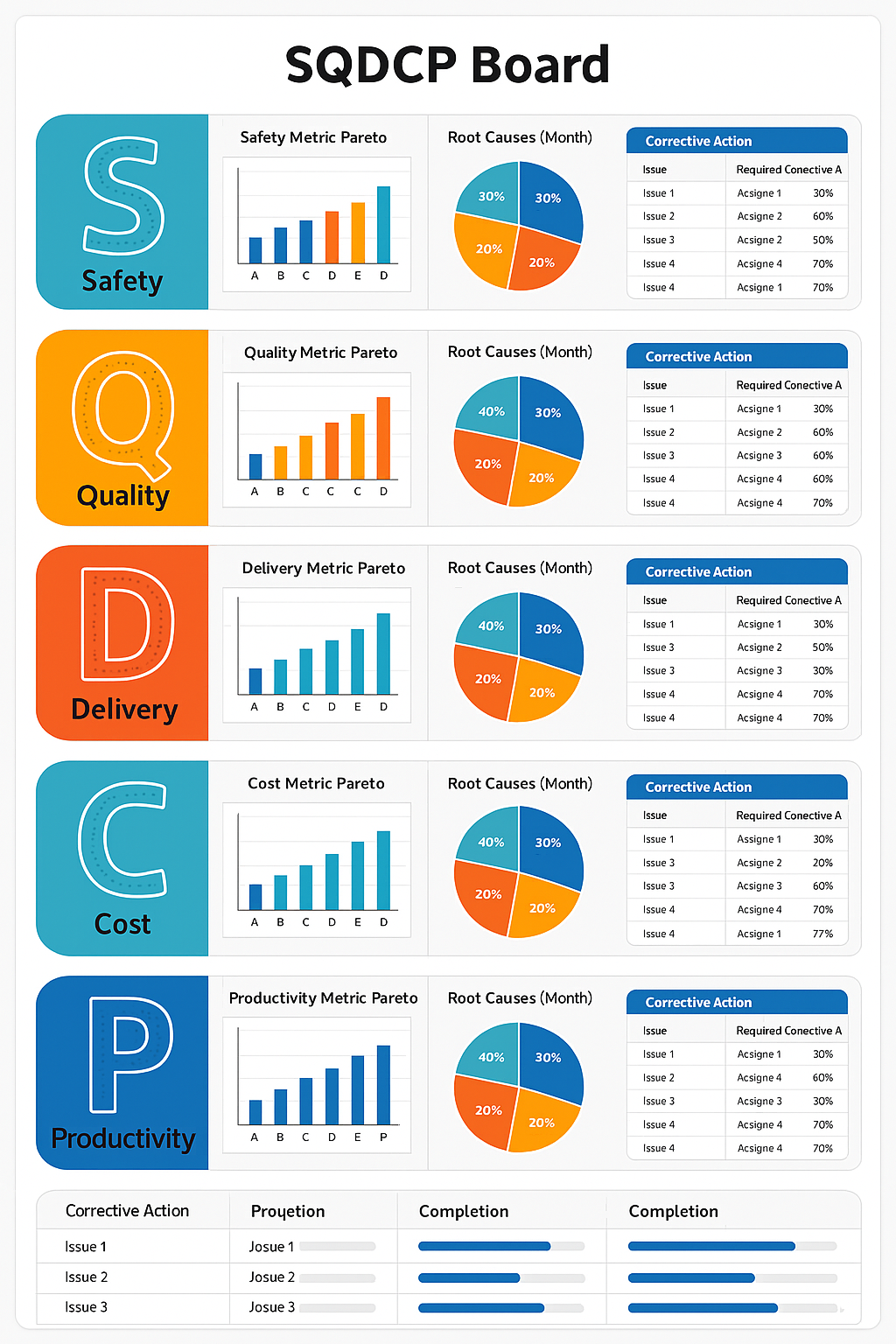
Safety as the Top Priority
Safety always comes first. Keeping workers safe helps prevent accidents, reduce downtime, and build a positive workplace culture. By tracking safety metrics, organisations can identify risks and take steps to improve conditions for everyone.
Maintaining High Quality Standards
Quality is essential for meeting customer expectations. When processes are consistent and products are made to a high standard, customer satisfaction improves. Monitoring quality helps reduce defects, waste, and rework, saving time and resources.
Focusing on Timely Delivery
Delivery refers to how well a business meets customer timelines. Measuring delivery performance helps ensure products or services are provided as promised. This builds trust and can improve long-term business relationships.
Controlling Operational Costs
Cost management ensures that resources are used wisely. Tracking costs helps teams identify inefficiencies and areas where savings can be made without affecting quality or delivery.
Valuing People and Engagement
People are central to any operation. Encouraging involvement, training, and teamwork helps build a motivated workforce. By measuring engagement and feedback, businesses can create a more productive and supportive environment.
The Origins of the SQDCP Board in Lean and TPM Practices
Understanding the Roots of SQDCP
The SQDCP board is closely linked to Lean and Total Productive Maintenance (TPM) practices. It was developed as a visual management tool to support continuous improvement and daily performance tracking. Each letter in SQDCP represents a key area of focus: Safety, Quality, Delivery, Cost, and People.
Lean Thinking and Visual Control
In Lean environments, visual control is an important principle. Teams need clear, simple tools to track progress and identify issues quickly. The SQDCP board fits perfectly within this approach. It brings daily focus to essential metrics and supports a culture of teamwork and improvement.
TPM and Daily Accountability
TPM places strong emphasis on ownership, especially at the shop floor level. The SQDCP board helps encourage accountability by making performance visible to everyone. It supports the idea that each team member plays a part in driving success across all five areas.
Built for Daily Review and Action
The board is not just for tracking; it’s for engaging the team. By reviewing SQDCP indicators daily, teams can respond to issues in real time. This promotes faster problem-solving and stronger team communication.
A Tool for Sustained Improvement
Over time, the SQDCP board has proven to be more than a display. It is a practical tool that drives consistency, discipline, and a shared focus on what matters most in operations.
Breaking Down Each Element: Safety, Quality, Delivery, Cost, and People
Safety – Protecting Everyone, Every Day
Safety is the foundation of all operations. A safe working environment prevents accidents, reduces downtime, and protects staff well-being. Regular safety checks, reporting near misses, and promoting safe behaviours help build a strong safety culture that benefits the entire team.
Quality – Delivering Consistent Excellence
Quality focuses on meeting customer expectations by producing goods or services that are reliable and error-free. Monitoring quality helps reduce waste, rework, and complaints. It also encourages teams to find and fix root causes rather than just treating symptoms.
Delivery – Meeting Deadlines and Customer Demand
Delivery refers to how reliably a team or process meets planned schedules. On-time delivery builds customer trust and supports smooth internal operations. Measuring delivery performance ensures that teams stay aligned and responsive to demand.
Cost – Controlling Spend Without Cutting Corners
Cost management ensures that resources are used efficiently. Keeping an eye on operational costs, material use, and labour productivity helps identify areas to improve. The goal is to reduce waste and increase value without sacrificing quality or delivery speed.
People – Empowering and Engaging the Workforce
People are at the heart of every improvement. Tracking training, engagement, and team morale helps ensure that staff feel valued and supported. A motivated team is more productive, more committed, and more likely to contribute to ongoing improvement.
How an SQDCP Board Drives Daily Performance Management
Clear Visual Communication for Teams
An SQDCP board is a powerful tool that provides a clear, visual overview of daily performance across key areas: Safety, Quality, Delivery, Cost, and People. By displaying relevant data in one place, teams can quickly see what’s going well and where action is needed. This improves communication and helps align everyone with daily goals.
Supporting Quick Decision-Making
With real-time updates, an SQDCP board enables quicker decision-making. Team leaders and staff can spot issues as they happen and respond before problems grow. Whether it's a safety concern, a delay in delivery, or a drop in quality, the board keeps teams informed and ready to act.
Encouraging Accountability and Ownership
Each area on the SQDCP board can be assigned to individuals or teams, encouraging accountability. When team members take ownership of results, they are more likely to be proactive in resolving issues and suggesting improvements. This sense of responsibility helps build a performance-driven culture.
Daily Routines for Continuous Improvement
Used during regular team meetings, the SQDCP board becomes part of the daily routine. These check-ins encourage reflection and action. Over time, this habit supports continuous improvement by helping teams identify trends, fix root causes, and celebrate small wins.
Simple but Effective
The beauty of the SQDCP board is its simplicity. It brings structure to daily management without adding complexity, making it ideal for driving performance in a fast-paced environment.
Real-Time Visual Management: Why Teams Rely on SQDCP Boards
Instant Visibility Across Key Performance Areas
SQDCP boards offer teams a live, visual overview of performance in five key areas: Safety, Quality, Delivery, Cost, and People. This simple format allows anyone to walk up to the board and instantly understand how the team is doing. Colour-coded indicators, charts, and daily updates help highlight where attention is needed, driving fast and informed decisions.
Boosting Team Engagement and Ownership
When performance data is shared openly, team members feel more involved and responsible. SQDCP boards encourage staff to take ownership of their roles, understand how their actions impact results, and take initiative to fix issues. This promotes accountability and strengthens teamwork.
Driving Focused Daily Meetings
Used in daily stand-ups, SQDCP boards keep meetings short and purposeful. Instead of discussing performance from memory, teams can point directly to data on the board. This speeds up problem-solving and helps teams stay aligned on priorities for the day.
Supporting a Culture of Continuous Improvement
By showing real-time results, the board encourages teams to reflect and act daily. Trends become visible over time, helping teams identify patterns, investigate root causes, and plan effective improvements. It turns performance management into a daily habit rather than a once-a-month report.
Simple, Practical, and Powerful
The SQDCP board works because it’s easy to use and keeps everyone focused. With real-time visual management, teams can move quickly, stay aligned, and continuously raise their performance.
How SQDCP Boards Help Identify Root Causes and Continuous Improvement Opportunities
Making Issues Visible at a Glance
SQDCP boards provide a daily snapshot of key performance indicators in the areas of Safety, Quality, Delivery, Cost, and People. With visual signals like colour codes and trend lines, problems are easy to spot. This visibility allows teams to detect early signs of decline before they become major setbacks.
Encouraging Daily Discussions and Action
Teams use SQDCP boards during daily meetings to review performance and discuss any issues. These short, focused conversations help identify whether a problem is recurring or new. Frequent checks keep performance front of mind and promote an ongoing cycle of learning and improvement.
Finding Root Causes, Not Just Symptoms
When a drop in performance is recorded on the board, the team is encouraged to explore why it happened. Rather than placing blame, the focus shifts to understanding the cause behind the result. This supports a problem-solving mindset where deeper issues are addressed, not just the surface effects.
Linking Problems to Long-Term Solutions
By capturing patterns and trends on the board, teams can connect issues to larger process gaps. These insights lead to improvement ideas that are practical and informed by real data. Over time, this builds a culture where fixing root causes becomes part of daily work.
Building a Continuous Improvement Habit
SQDCP boards create structure for improvement. With daily tracking and team input, small changes can lead to big gains. It’s a simple tool that drives lasting results through regular reflection and action.
Paper vs Digital SQDCP Boards: Which One Suits Your Organisation Best?
Understanding the Role of SQDCP Boards
SQDCP boards help teams track and improve performance in five key areas: Safety, Quality, Delivery, Cost, and People. Choosing between paper and digital versions depends on your workplace needs, team size, and improvement goals.
Benefits of Paper SQDCP Boards
Paper boards are easy to set up and highly visible in physical workspaces. They encourage face-to-face discussions and are ideal for teams working on-site. Writing updates by hand creates a hands-on connection with the data, helping teams feel more involved in daily performance tracking.
Advantages of Digital SQDCP Boards
Digital boards offer more flexibility and data management. They can automatically collect metrics, store historical data, and provide real-time updates. For organisations with remote teams or multiple locations, digital boards offer better access and easier tracking over time.
Choosing What Works Best for Your Team
If your team works in a single location and values hands-on engagement, a paper board might be the best fit. However, if your organisation needs centralised reporting, data sharing, and real-time insights, a digital board will offer more long-term benefits.
Blending Both Approaches
Some organisations choose a hybrid model—using paper boards for daily huddles and digital systems for analysis. This allows teams to stay connected on the shop floor while still benefiting from digital tracking features.
Integrating SQDCP Boards with Lean Manufacturing and Kaizen Initiatives
Driving Daily Improvement through SQDCP
SQDCP boards align well with Lean and Kaizen principles by focusing on structured, daily performance tracking. Each section—Safety, Quality, Delivery, Cost, and People—offers a clear framework for identifying waste, addressing problems, and encouraging continuous improvement across all areas of operations.
Supporting Lean Practices
Lean manufacturing aims to remove waste and increase efficiency. SQDCP boards support this by providing teams with a visual reference of key performance indicators. Issues can be highlighted quickly, and actions can be taken to eliminate non-value-adding activities. This supports the Lean goal of creating more value with fewer resources.
Enabling Kaizen Culture
Kaizen, which means “continuous improvement,” thrives on small, daily changes. SQDCP boards encourage this by allowing teams to monitor their performance and suggest actions in real time. When issues are recorded on the board, teams are empowered to discuss root causes and suggest improvements during daily meetings.
Promoting Team Involvement
Both Lean and Kaizen value frontline involvement. SQDCP boards make this possible by giving every team member a role in tracking and improving results. Whether it’s a safety concern or a delivery delay, employees are encouraged to take ownership and contribute to lasting improvements.
Creating a Cycle of Improvement
By using SQDCP boards alongside Lean and Kaizen, organisations create a culture where issues are identified, addressed, and improved on a continuous basis. This leads to stronger processes, better results, and a more engaged workforce.
How to Set Up and Customise Your SQDCP Board for Your Team
Understanding the Purpose of the SQDCP Board
An SQDCP board is a powerful tool used in daily operations to monitor performance in five key areas: Safety, Quality, Delivery, Cost, and People. Setting it up correctly from the start helps your team stay focused, aligned, and continuously improve.
Start with a Clear Layout
Begin by designing a board layout that separates each of the five SQDCP categories. Use clear headings and allow space under each for daily updates. Keep the design simple so that all team members can quickly understand and use the board during daily stand-ups or shift meetings.
Customise for Your Team’s Needs
Every team works differently, so it’s important to tailor the board to your operations. Add columns for daily targets, actual performance, and issues raised. You can also include colour-coded indicators (like green for good, red for attention needed) to make the board more visual and easier to read at a glance.
Make It a Living Tool
Encourage your team to update the board daily. Assign responsibilities so everyone is involved in tracking performance and reporting problems. This ownership leads to stronger engagement and accountability.
Review and Improve
Regularly review how the board is being used. Make improvements based on team feedback. The goal is to keep the board effective and relevant to daily work, helping your team drive progress and take control of performance in a structured, visible way.
Daily Huddles and Stand-Up Meetings: Using SQDCP for Team Alignment
Why Daily Huddles Matter
Daily huddles or stand-up meetings are a simple yet powerful way to bring teams together and keep everyone aligned. When combined with an SQDCP board, these short meetings become even more effective by providing a clear focus on key performance areas.
Structure the Meeting Around SQDCP
Use the SQDCP board as the core structure for your huddle. Move through each of the five areas—Safety, Quality, Delivery, Cost, and People—discussing updates, concerns, and any actions needed. This ensures that the conversation stays focused and relevant to daily operations.
Encourage Team Involvement
Daily meetings work best when everyone has a chance to speak. Encourage team members to share updates or raise issues. This helps build ownership, promotes teamwork, and ensures that problems are caught early before they grow.
Keep It Short and Consistent
A good huddle should take no more than 10 to 15 minutes. Holding it at the same time and place each day helps build a habit and keeps the team engaged. The SQDCP format also makes it easier to cover all important areas quickly and clearly.
Drive Continuous Improvement
Use the insights gathered during huddles to make small daily improvements. Over time, these add up to real progress. The SQDCP board supports this by making issues visible and giving the team a structured way to act on them.
Measuring Success: KPIs and Metrics on an SQDCP Board
Why KPIs Matter in Daily Operations
Key Performance Indicators (KPIs) provide a clear way to measure how well your team is performing. On an SQDCP board, KPIs are broken down into five key areas—Safety, Quality, Delivery, Cost, and People—helping teams stay focused on what matters most.
Setting the Right KPIs
Each area of the SQDCP board should have specific and measurable KPIs. For example, Safety might include the number of incidents reported, while Quality could track defects per unit. The goal is to choose metrics that reflect your team’s daily work and goals.
Using Data to Drive Decisions
Tracking KPIs on the SQDCP board gives your team real-time insight into performance. When a target is missed, it’s easy to spot and address the issue quickly. This makes problem-solving a regular part of the workday rather than something that’s delayed.
Engaging the Team in Performance Tracking
Involving team members in tracking and updating KPIs helps build accountability and ownership. When everyone understands the numbers, they’re more likely to take action and support improvements.
Improving Through Consistent Monitoring
Consistent use of KPIs across all five SQDCP areas supports continuous improvement. Over time, this helps teams improve safety, product quality, delivery times, and overall efficiency, while also supporting a stronger team culture.
How SQDCP Boards Support Employee Engagement and Accountability
Giving Teams a Clear Daily Focus
SQDCP boards provide a structured way for teams to understand and focus on key areas—Safety, Quality, Delivery, Cost, and People. This clarity helps employees feel more connected to their daily goals and gives them a better sense of purpose at work.
Encouraging Ownership of Results
When team members see their performance displayed on the SQDCP board, it naturally builds a sense of responsibility. They can track their impact and contribute to solving problems. This creates a workplace culture where everyone feels accountable for outcomes.
Improving Communication and Participation
By using the SQDCP board in daily huddles or meetings, team members get a regular chance to speak up and share updates. This boosts open communication and gives everyone a voice, which strengthens team unity and morale.
Recognising Achievements and Efforts
Visible progress on the board gives managers a simple way to recognise and celebrate success. Whether it’s meeting a safety goal or reducing waste, these small wins help keep motivation high and make employees feel valued.
Supporting Continuous Growth
When employees are engaged and understand their role in improvement, they are more likely to take initiative. The SQDCP board becomes more than just a tool—it becomes a daily guide that helps drive consistent growth, learning, and pride in the team’s work.
Common Mistakes to Avoid When Using an SQDCP Board
Not Updating the Board Regularly
One of the most common mistakes is failing to keep the SQDCP board up to date. When the data is old or missing, it loses its value as a real-time management tool. Daily updates are key to keeping the board useful and relevant.
Ignoring Team Involvement
If only managers interact with the board, teams may feel disconnected. Everyone should have a role in updating and discussing the information. Engaging team members encourages ownership and leads to more meaningful conversations during daily meetings.
Focusing Only on the Negative
Highlighting problems is important, but it’s also essential to recognise progress. Focusing only on what’s going wrong can lower morale. A balanced approach that celebrates wins and addresses issues helps keep teams motivated and focused.
Making the Board Too Complex
Another mistake is adding too much detail, which can make the board hard to read and understand. Keep the format clear and simple. Use visuals, colour codes, and straightforward categories to help everyone quickly grasp the key messages.
Failing to Act on Issues
Finally, if problems identified on the board are not followed up with action, teams may stop taking it seriously. It's vital to treat the board as a living tool that supports continuous improvement by driving real change on the floor.
Case Study: How Leading Manufacturers Use SQDCP to Improve Performance
Understanding the Challenge
Many manufacturers face daily issues with quality, safety, delivery, cost, and workforce coordination. Without a clear structure, these challenges often go unnoticed or unresolved. One manufacturer decided to implement an SQDCP board to better track and improve performance across its operations.
Putting the SQDCP Board into Practice
The team set up a visible board divided into five key categories: Safety, Quality, Delivery, Cost, and People. Each section was updated daily by team members during morning huddles. This created a shared understanding of current issues and priorities.
Creating Accountability and Focus
By assigning owners to each area, the manufacturer saw a rise in team accountability. For example, the quality lead was responsible for logging any product issues and leading root cause discussions. This helped the team take quick, targeted action when problems occurred.
Achieving Measurable Results
Within months, the business noticed a reduction in missed delivery deadlines, improved safety compliance, and fewer quality defects. The simple visual format made it easy to spot patterns and act quickly, leading to better overall performance and communication across departments.
Conclusion
This case study shows that using an SQDCP board helps teams stay aligned and focused on the right goals. It promotes a culture of visibility, action, and continuous improvement — key ingredients for long-term success in manufacturing.
The Future of Performance Tracking: Going Digital with SQDCP Boards
Why Digital Transformation Matters
In today’s fast-paced work environment, staying updated and making timely decisions is more important than ever. Traditional paper-based SQDCP boards can be effective but may struggle to keep up with the demands of modern operations. This is where digital SQDCP boards come in, offering a smart and efficient way to manage performance.
Real-Time Visibility for Everyone
With digital boards, teams can access updates instantly from any device. This means no more delays in sharing information or waiting for daily meetings. Managers and team members get a clear view of issues as they happen, helping them act quickly and keep operations running smoothly.
Simplifying Data Collection and Analysis
One of the biggest advantages of going digital is automated data capture. Digital SQDCP boards can link directly to existing systems, reducing manual work and errors. Data is stored securely and can be easily analysed to identify trends, root causes, and performance gaps.
Encouraging Collaboration and Accountability
Teams using digital boards tend to communicate better and take more ownership of their actions. Everyone can see what’s going well and what needs attention, making collaboration more natural and focused on improvement.
Looking Ahead
As more organisations embrace digital tools, SQDCP boards are becoming a key part of performance tracking. The shift to digital not only saves time but also helps build a culture of continuous improvement based on accurate, real-time insights.