A Visual management board for production is a powerful tool that enhances operational efficiency by providing a clear and organized view of processes, tasks, and performance metrics. It acts as a central hub for teams to monitor progress, identify bottlenecks, and ensure alignment with production goals. This tool fosters transparency, accountability, and real-time communication, making it indispensable for modern manufacturing environments.
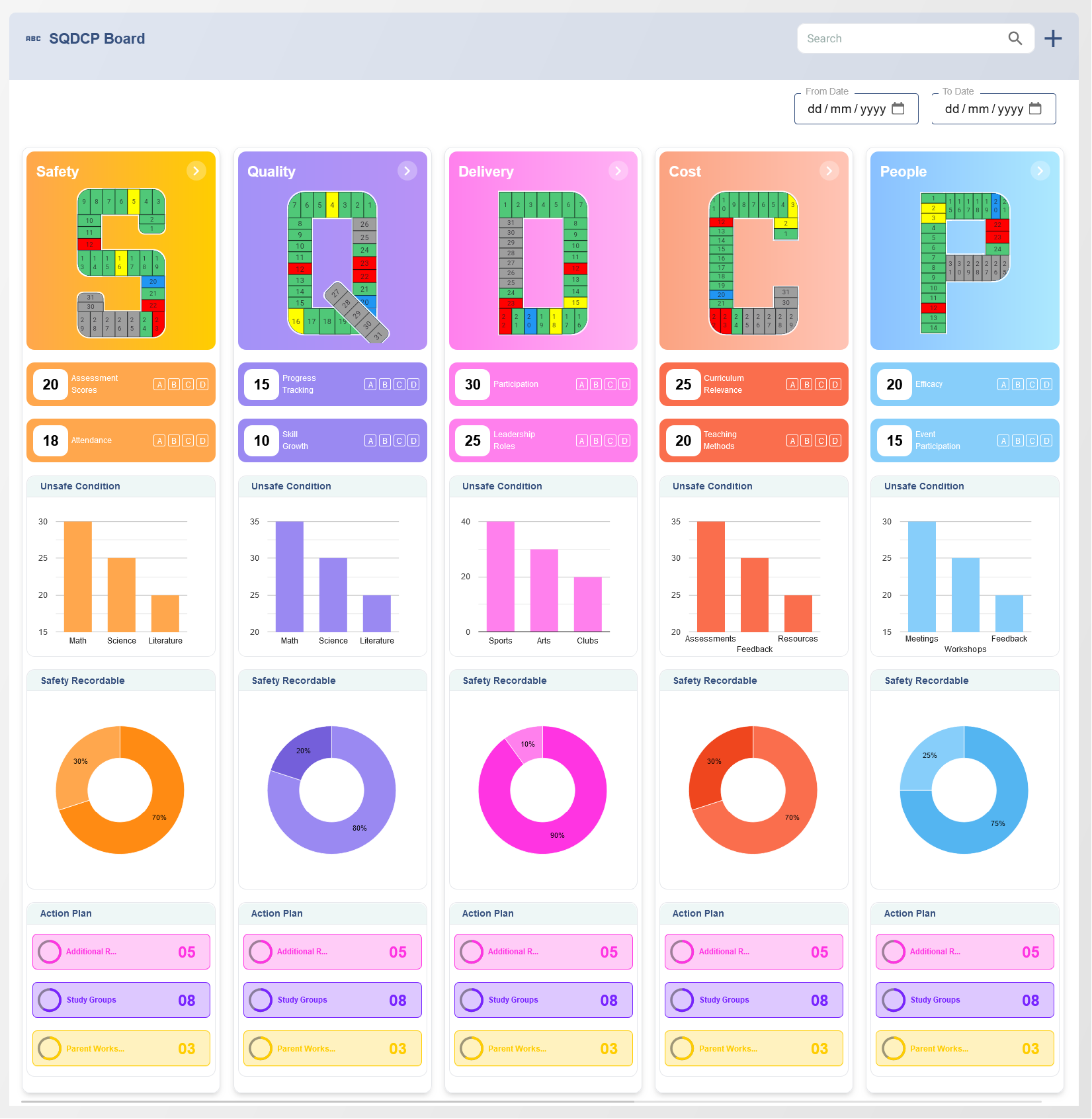
Key Components of a Visual management board
To be effective, a visual management board should include several key components that align with production objectives and workflows:
1. Workflow Stages
The board should clearly display the stages of the production process. Common stages include:
- Planning: Tasks and schedules for upcoming production cycles.
- In Progress: Items currently being worked on.
- Quality Check: Completed items undergoing inspection for compliance with quality standards.
- Completed: Finished goods ready for dispatch or storage.
2. Key Performance Indicators (KPIs)
Incorporate metrics that track production performance, such as:
- Cycle Time: The time required to complete a production cycle.
- Throughput: The number of items produced within a specific timeframe.
- Defect Rate: The percentage of defective items in total production.
- Downtime: The duration of unplanned production stoppages.
3. Task Assignments
Each task or production step should be assigned to a specific team or individual. This ensures accountability and clarity regarding responsibilities.
4. Visual Cues
Utilize color coding, icons, and charts to enhance the board's readability. For instance:
- Green: Tasks on schedule or completed successfully.
- Yellow: Tasks that require attention or are at risk of delay.
- Red: Tasks that are delayed or experiencing issues.
5. Updates and Notes
Provide space for team members to add updates, notes, or comments. This encourages collaboration and keeps all stakeholders informed of changes or challenges.
Benefits of Using a Visual management board in Production
Implementing a visual management board offers numerous advantages for production teams:
1. Enhanced Transparency
All team members can easily see the status of tasks, ongoing processes, and overall production performance. This visibility minimizes confusion and promotes a shared understanding of goals.
2. Improved Communication
The board serves as a focal point for discussions and updates, reducing the need for lengthy meetings. It also ensures that critical information is accessible to everyone.
3. Real-Time Problem Identification
With clear visuals, teams can quickly identify bottlenecks, delays, or quality issues and address them proactively, minimizing disruptions.
4. Increased Accountability
By assigning tasks and tracking their progress, the board ensures that team members are accountable for their responsibilities, fostering a sense of ownership.
5. Data-Driven Decision Making
KPIs and performance metrics displayed on the board provide valuable insights, enabling managers to make informed decisions to optimize production processes.
Steps to Implement a Visual management board
Follow these steps to set up and utilize a visual management board effectively:
1. Define Objectives
Identify the goals you aim to achieve with the board, such as improving cycle times, reducing defects, or enhancing collaboration.
2. Choose the Board Format
Decide whether you will use a physical board (e.g., whiteboard with markers) or a digital board (e.g., software platforms). The choice depends on the team's preferences and operational needs.
3. Design the Board Layout
Organize the board to include workflow stages, KPIs, task assignments, and space for updates. Use visual cues for clarity and readability.
4. Populate the Board
Input tasks, assign responsibilities, and include relevant metrics. Ensure that the board is updated regularly to reflect the current production status.
5. Train the Team
Educate team members on how to use the board effectively. Emphasize the importance of keeping it updated and using it as a collaboration tool.
6. Monitor and Improve
Regularly review the board's effectiveness and make adjustments as needed. Solicit feedback from the team to ensure it meets their needs.
Best Practices for Maintaining a Visual management board
To maximize the board's utility, adhere to these best practices:
- Keep It Simple: Avoid overcrowding the board with unnecessary information. Focus on key metrics and processes.
- Update Regularly: Ensure that the board is always up-to-date to reflect the current status of production tasks.
- Encourage Participation: Involve the entire team in maintaining and utilizing the board. Collaboration enhances its effectiveness.
- Use Automation: For digital boards, automate data collection and updates to minimize manual effort and reduce errors.
- Review and Optimize: Periodically assess the board's design and functionality to ensure it continues to meet production needs.
Visual management board for production
What is a visual management board, and how is it used in production?
A visual management board is a tool that displays production data, goals, and progress in a clear and organized manner, helping teams monitor performance and maintain focus on objectives.
How does a visual management board improve production efficiency?
It improves efficiency by providing a centralized location for tracking progress, identifying issues, and aligning team efforts to streamline production workflows.
What key components are included on a production visual management board?
Key components include production schedules, key performance indicators (KPIs), task assignments, progress tracking, and issue logs.
Can visual management boards be customized for specific production needs?
Yes, they can be tailored to include data, layouts, and visual elements that align with the unique needs of a production team or process.
What types of data are typically displayed on a production visual management board?
Data often includes production targets, daily output, quality metrics, downtime records, and progress against deadlines.
How do visual management boards support team communication in production?
They facilitate communication by providing a shared view of goals, progress, and issues, fostering collaboration and quick decision-making.
What are the benefits of using a visual management board in lean manufacturing?
In lean manufacturing, they enhance transparency, reduce waste, support standardization, and encourage continuous improvement.
Can visual management boards be used to track production metrics in real time?
Yes, real-time tracking is possible, particularly with digital or hybrid boards that integrate with production systems and update automatically.
How do color-coding and symbols enhance the functionality of visual management boards?
Color-coding and symbols make it easier to identify priorities, status updates, and issues at a glance, improving clarity and response times.
Is it possible to integrate digital tools with physical visual management boards?
Yes, hybrid systems combine physical boards with digital tools for better data management and enhanced functionality.
How do visual management boards help identify bottlenecks in production processes?
By highlighting delays or unmet targets, they help teams pinpoint areas where production is slowed, allowing for quick corrective action.
What role do visual management boards play in achieving continuous improvement?
They provide ongoing insights into performance, enabling teams to identify areas for improvement and implement changes systematically.
How often should production teams update their visual management boards?
Boards should be updated daily or as changes occur to ensure they accurately reflect the current status of production activities.
What industries benefit the most from using visual management boards?
Industries like manufacturing, logistics, healthcare, and construction benefit greatly from enhanced process visibility and coordination.
What challenges might arise when implementing visual management boards in production?
Challenges include resistance to change, insufficient training, and maintaining consistent updates, which can be mitigated with proper planning.