Why Go Digital? The Shift from Whiteboards to Smart SQDCM Dashboards
Overcoming Manual Limitations
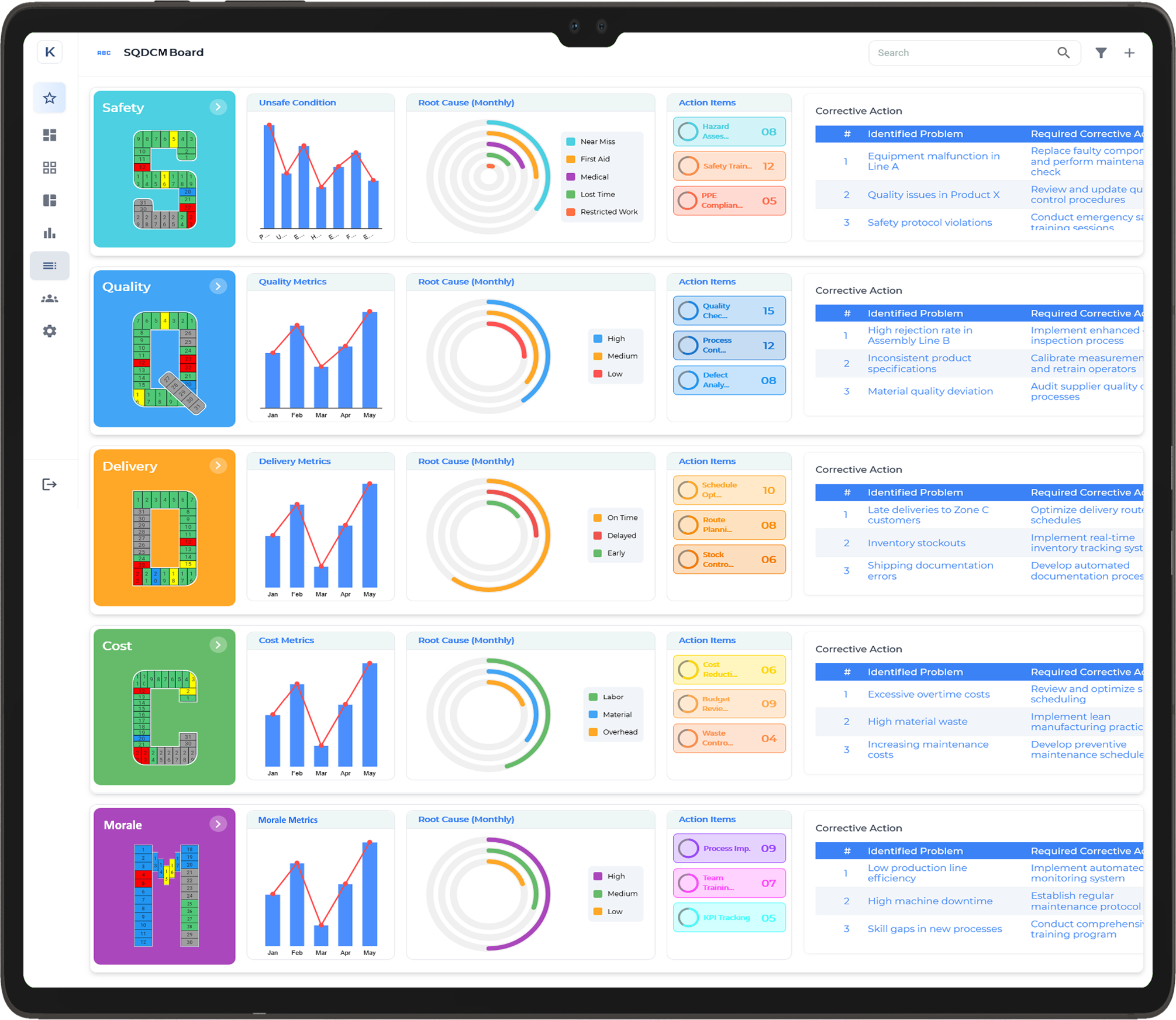
Traditional SQDCM whiteboards serve a valuable role on the shop floor, but they come with limits. Handwritten updates can be inconsistent, hard to read, or delayed. Digital dashboards remove these barriers by providing real-time updates that are automatically logged and clearly displayed.
Improved Accuracy and Timeliness
Smart SQDCM dashboards allow data to be entered directly through tablets or terminals, reducing the chance of human error. Information is instantly reflected across displays, making it easier for teams to track current performance without waiting for manual updates.
Better Data Storage and Trend Tracking
One key benefit of going digital is the ability to track historical data effortlessly. Digital SQDCM dashboards store past records, allowing teams to analyse trends over days, weeks, or months. This helps identify repeated issues, improvements, and areas needing more attention.
Remote Access and Broader Visibility
Unlike physical boards, digital dashboards can be accessed remotely by supervisors and managers. This means even off-site personnel can monitor performance and support teams in real time, leading to quicker decisions and stronger oversight.
Cleaner, More Professional Display
Digital displays bring a polished and consistent look to the workplace. Colour coding, graphs, and alerts make it easier to understand key metrics at a glance. This not only improves communication but also supports a more organised and efficient shop floor environment.
How Digital SQDCM Boards Streamline Daily Team Meetings
Real-Time Information at a Glance
Digital SQDCM boards make daily team meetings more efficient by showing up-to-date performance data instantly. Teams no longer need to wait for handwritten updates or sift through notes. All key metrics—Safety, Quality, Delivery, Cost, and Morale—are available on-screen in real time, allowing faster and more focused discussions.
Clear Visuals and Consistent Format
One major advantage of digital boards is their clean, consistent presentation. Charts, colour codes, and icons clearly highlight areas that are on track and those needing attention. This visual clarity helps all team members quickly understand what’s going well and where action is required.
Encouraging Active Participation
With the board displaying live data, every team member can see how their actions impact overall performance. This visibility encourages accountability and invites open discussion during meetings. It also supports a more structured agenda, where topics can be addressed based on real issues shown on the board.
Time-Saving and More Productive Conversations
Digital SQDCM boards reduce the time spent on preparing and reviewing daily reports. Teams can use meeting time more effectively—focusing on solutions rather than collecting data. This keeps meetings short, purposeful, and more engaging for everyone involved.
Stronger Team Alignment
By sharing one central source of truth, digital boards help align shift teams and supervisors around shared goals. Everyone can see how their performance contributes to wider outcomes, leading to better teamwork and continuous improvement across the shop floor.
Visualising Safety, Quality, Delivery, Cost, and Morale in Real Time
Making Performance Visible Instantly
Real-time visualisation of Safety, Quality, Delivery, Cost, and Morale helps teams stay aware of how the shop floor is performing throughout the day. By using a digital board, each of these five areas is clearly displayed, showing current status and highlighting any issues as they arise. This allows teams to act quickly and make better decisions.
Safety Comes First
Displaying safety data in real time helps create a culture where risks are spotted and reported early. Any incidents or near misses are logged and shown immediately, helping prevent further issues and keeping workers protected.
Tracking Quality Without Delay
Quality metrics on the board highlight defects, errors, or rework needs as soon as they occur. By making this visible to all, problems can be addressed on the spot, reducing waste and improving product standards.
Delivery and Cost Performance at a Glance
Up-to-the-minute figures on delivery help ensure that customer orders remain on schedule. Cost-related data shows usage of resources, helping teams keep operations within budget. Any deviations from targets are flagged early for quick action.
Morale Measured Openly
Morale indicators—such as team feedback or shift attendance—are tracked in real time, encouraging open communication. This helps supervisors recognise and respond to team concerns, which supports a healthier work environment and stronger collaboration.
Making Data-Driven Decisions with Live SQDCM Insights
Turn Real-Time Data into Meaningful Action
Live SQDCM insights provide accurate, up-to-the-minute information that supports better decision-making on the shop floor. By tracking Safety, Quality, Delivery, Cost, and Morale in real time, teams and leaders can respond quickly to changes, identify risks, and correct issues before they grow into bigger problems.
Spot Problems Before They Escalate
Having live updates allows teams to notice patterns or drops in performance as they happen. Whether it’s a safety concern or a delivery delay, issues are flagged early so action can be taken immediately. This reduces downtime and helps keep targets on track.
Support Continuous Improvement
Daily SQDCM data helps managers spot areas where performance is slipping or improving. These insights are useful during team huddles and reviews, allowing for better discussions, improved root cause analysis, and smarter long-term planning. The information can also be used to adjust daily goals as needed.
Promote Accountability and Ownership
When data is visible to all, it encourages everyone on the team to take responsibility. Staff can see how their actions impact the five key areas. This boosts motivation and helps create a culture focused on performance and problem-solving.
Better Decisions, Faster
With live SQDCM insights, decisions no longer rely on guesswork or old reports. Clear, current data gives teams confidence to act quickly and align actions with business goals.
How to Customise Digital Boards for Different Departments or Shifts
Tailor Information to Department Goals
Each department on the shop floor has different priorities. A production team may focus on delivery and quality, while a maintenance team might highlight safety and cost. Digital SQDCM boards allow you to customise the display to reflect the most relevant metrics for each group, keeping their attention where it matters most.
Set Unique KPIs for Each Shift
Shift teams often face different challenges. Morning teams may deal with start-up checks, while night shifts handle machine cooldowns or maintenance. By tailoring digital boards to suit shift-specific tasks and KPIs, you ensure that every team starts their shift with a clear focus on what needs to be achieved.
Use Visual Cues for Quick Understanding
Custom digital boards can include colours, symbols, or trend arrows that help teams quickly understand performance at a glance. These simple cues save time and ensure everyone stays on the same page, even with rotating staff or different language preferences.
Enable Role-Based Access
With digital boards, it’s easy to control who sees what. Supervisors might access detailed reports, while operators view simplified dashboards. This helps reduce information overload and makes sure each person sees only what is useful for their role.
Improve Shift Handover Communication
Custom views also support smoother handovers between shifts. Key updates and notes can be added to each board, making it easier to pass on vital information without confusion.
Integrating Digital SQDCM Boards with Existing Factory Systems
Connecting with Real-Time Data Sources
Digital SQDCM boards can be integrated with your factory’s current systems to automatically collect and display live data. By connecting with machines, sensors, and internal reporting tools, the board stays updated without manual input. This real-time flow ensures accurate tracking of performance metrics like output, downtime, and defect rates.
Streamlining Data from Multiple Sources
Many factories use various systems for tracking production, maintenance, and HR. A digital SQDCM board can act as a central hub by pulling together information from these platforms. This creates a single point of reference where team members can see a complete picture of the shop floor's performance across all five SQDCM categories.
Improving Workflow and Efficiency
When digital boards are linked with planning and scheduling systems, they help teams align daily activities with broader production goals. If a delay or issue is detected, alerts can be generated instantly, allowing teams to act quickly and keep operations on track.
Supporting Remote Monitoring and Updates
Integration also allows managers to check the board remotely. Whether offsite or moving between departments, they can access the same data in real time to monitor trends, identify risks, or make quick decisions, ensuring greater flexibility and control.
Reducing Manual Errors
Automated data transfer from factory systems to digital boards reduces human error. This leads to more reliable information and supports confident, data-driven decision-making across all levels of the team.
How Digital Boards Help You Spot Trends Before They Become Problems
Identify Small Issues Early
Digital SQDCM boards allow teams to notice small issues before they grow into larger problems. By tracking daily data across safety, quality, delivery, cost, and morale, teams can quickly see when something is moving in the wrong direction. A minor drop in quality scores or a slight delay in delivery can signal early signs of trouble.
Use Colour and Patterns for Quick Recognition
Digital boards use colour-coded indicators and charts that make trends easier to spot. For example, a section that turns amber or red repeatedly over several days is a clear warning. Visual trends help workers and managers take action quickly without needing to dive into detailed reports.
Monitor Performance Over Time
Unlike manual boards, digital systems store historical data. This lets you compare week-on-week or shift-by-shift results. Spotting repeated patterns, like rising costs during specific shifts or consistent delays in one process, allows leaders to investigate and fix the root cause.
Support Continuous Improvement
Early trend detection supports a culture of continuous improvement. Teams can adjust their actions based on data, not just instinct. This creates a more proactive approach where problems are solved before they impact customers or output.
Reduce Downtime and Waste
By acting on trends early, digital boards help prevent downtime and reduce waste. Whether it’s a recurring equipment fault or a dip in morale, seeing the signs in real time keeps the production line running smoothly.
Boosting Shop Floor Communication Across All Teams and Levels
Creating a Shared Visual Language
Clear communication on the shop floor starts with a shared understanding of goals and performance. SQDCM boards help by offering a visual way to share updates on safety, quality, delivery, cost, and morale. Everyone, from operators to supervisors, can view the same information, making expectations and priorities visible to all.
Breaking Down Communication Barriers
In many workplaces, miscommunication between shifts or departments causes delays and confusion. A well-maintained board breaks down these barriers by keeping everyone informed. When data is updated regularly and presented in an easy-to-read format, there’s less room for misunderstandings and more focus on action.
Encouraging Daily Conversations
Regular use of the board encourages short, focused conversations during handovers or stand-up meetings. These discussions keep teams aligned and give everyone a chance to raise concerns or offer suggestions. Communication becomes a daily habit rather than a reactive step.
Supporting Cross-Level Engagement
Shop floor communication improves when both frontline workers and managers interact with the same tools. When leaders use the board to review performance and celebrate wins, it builds trust and shows that everyone's input matters. This shared focus helps connect strategy with daily actions.
Improving Clarity with Real-Time Updates
Up-to-date boards ensure that teams work from the latest data. Whether it’s a quality issue or a shift in targets, everyone stays in sync, helping the entire operation move forward with clarity and confidence.
How Digital SQDCM Tools Support Lean and Continuous Improvement
Aligning Daily Operations with Lean Goals
Digital SQDCM tools support lean practices by giving teams a clear and structured view of daily performance in key areas: safety, quality, delivery, cost, and morale. This visibility helps reduce waste, improve flow, and focus efforts on what adds value to the customer.
Enabling Real-Time Monitoring
With live updates, digital boards let teams track performance instantly. When issues arise, they’re visible right away—making it easier to respond quickly and reduce downtime. This immediate insight helps prevent small problems from growing into bigger ones.
Driving Root Cause Analysis
Digital tools allow for easy tracking of repeated issues. Over time, trends emerge that help teams find and fix the root cause of problems. This supports continuous improvement by promoting data-based decisions rather than assumptions or guesswork.
Encouraging Team Participation
Lean success depends on team involvement. Digital SQDCM tools make it simple for every worker to contribute, whether it's noting a safety concern or flagging a delivery delay. Everyone becomes part of the improvement process, creating a more engaged workforce.
Standardising Processes and Reporting
Digital boards create consistency in how information is displayed and tracked. This standard approach supports lean efforts by making it easier to compare data across shifts, teams, or even sites, helping leaders identify and spread best practices.
Tracking Daily KPIs Has Never Been Easier—Here’s How
Bringing Clarity to Daily Performance
Keeping up with key performance indicators (KPIs) is essential for smooth shop floor operations. Digital SQDCM boards now make it easier than ever to track daily metrics related to safety, quality, delivery, cost, and morale. These boards offer a clear, real-time view of performance, helping teams understand exactly where they stand.
Real-Time Data Entry and Access
Instead of waiting for paper reports or end-of-shift summaries, teams can now enter and view data instantly. This reduces delays in communication and helps problems get noticed sooner. Everyone on the team has the same access to up-to-date information, which supports better, faster decisions.
Spotting Trends Without Extra Effort
When KPIs are tracked consistently, patterns start to emerge. Whether it's a recurring issue in quality or a dip in morale, digital boards make it easy to spot and address trends. The visual layout highlights changes clearly, allowing supervisors and team members to take action before problems escalate.
Supporting Accountability Across Teams
When daily KPIs are visible to all, everyone becomes more aware of their role in hitting targets. The board serves as a shared reference point, encouraging teams to take responsibility for their areas and support one another in achieving common goals.
Reducing Time Spent on Manual Tasks
Automated tracking and display of KPIs save time spent on writing, printing, and updating physical charts. This gives teams more time to focus on improvements rather than admin tasks, making operations more efficient overall.
Improving Operator Engagement with Simple, Visual Interfaces
Making Information Easy to Understand
Visual interfaces on digital SQDCM boards help operators quickly understand key performance areas such as safety, quality, delivery, cost, and morale. Simple visuals like colour-coded indicators, charts, and status icons remove the need for long explanations, making it easier for all team members to grasp daily updates at a glance.
Encouraging Active Participation
When information is easy to access and interpret, operators are more likely to get involved. Visual boards support a hands-on approach by giving staff a clear view of how their work impacts team performance. This sense of ownership helps build accountability and strengthens team morale.
Reducing Confusion Between Shifts
Simple visuals make shift handovers smoother. Operators starting their day can immediately see what’s been completed and what issues remain. This reduces the chances of repeated errors, missed tasks, or wasted time, and creates a consistent flow of information between teams.
Supporting Continuous Learning
With visual tools, learning becomes easier and more intuitive. New operators can quickly adapt to routines and expectations by observing the interface. Over time, they gain confidence and become more engaged with continuous improvement efforts.
Creating a More Positive Work Environment
When operators feel informed and involved, job satisfaction improves. A clear, visual system reduces stress, helps highlight achievements, and promotes open communication—all of which support a healthier, more productive workplace culture.
How Digital SQDCM Boards Support Faster Root Cause Analysis
Instant Access to Real-Time Data
Digital SQDCM boards provide teams with live updates on safety, quality, delivery, cost, and morale. This real-time visibility allows for quicker identification of deviations from expected performance. Instead of waiting for reports, supervisors can act immediately when something goes off track, making root cause analysis faster and more focused.
Clear Visual Cues for Problem Areas
Colour-coded indicators and trend lines help pinpoint exactly where issues are occurring. Whether it's a rise in defects or a drop in morale, the visual layout makes it easy to highlight areas needing deeper investigation. This clarity reduces time spent searching for the source of a problem.
Structured Logging of Daily Incidents
Digital boards allow operators to log problems as they happen, along with notes and photos. This ongoing record provides a clear timeline of events, making it easier to trace back to the root cause. Patterns become visible over time, supporting evidence-based decisions rather than guesswork.
Supporting Collaborative Problem Solving
Since digital boards are accessible to multiple teams, they promote a shared understanding of issues. Everyone sees the same data, which encourages discussion and teamwork during shift meetings. It also prevents repeated issues from being overlooked between shifts.
Faster Escalation and Follow-Up
When a problem is logged and flagged digitally, it can be escalated to the right person quickly. Follow-up actions can be tracked, helping ensure nothing falls through the cracks and that solutions are fully implemented.
Creating a Culture of Ownership and Accountability with Digital Displays
Making Performance Visible to Everyone
Digital displays make it easy to share live updates on key metrics like safety, quality, delivery, cost, and morale. When this information is always visible, team members stay more aware of their responsibilities and how their actions affect overall performance. This visibility encourages a sense of shared responsibility across the team.
Encouraging Responsibility Through Transparency
When data is clear and available to all, it becomes easier to track progress and identify areas that need attention. Employees know their input matters because they can see the impact directly on the screen. This helps create a workplace where everyone takes ownership of their role in meeting daily goals.
Highlighting Success and Areas for Improvement
Digital boards help celebrate wins in real time, whether it’s a safety milestone or a drop in defects. At the same time, they shine a light on issues that need fixing. This balance between praise and problem-solving promotes accountability without creating a blame culture.
Supporting Self-Management
When individuals and teams see their performance data regularly, they are more likely to make improvements on their own. Instead of waiting for instructions, they can take immediate action when targets are missed. This supports faster decisions and a proactive work culture.
Fostering a Team-First Mindset
Digital displays don’t just show individual results—they show how the whole team is doing. This helps build unity and motivates everyone to support each other, driving a culture of continuous improvement and accountability.
Mobile-Friendly Dashboards: Manage Metrics from Anywhere
Stay Connected to Shop Floor Performance on the Go
Mobile-friendly SQDCM dashboards make it possible to monitor key performance indicators from any location. Whether you're walking the site, in a meeting, or working remotely, you can stay informed about safety, quality, delivery, cost, and morale without being tied to a desktop or whiteboard.
Instant Access to Live Updates
With a mobile dashboard, real-time data is always at your fingertips. Team leaders and supervisors can see current performance levels, log incidents, or review trends from their mobile devices. This helps speed up decision-making and allows for quicker responses to issues.
Improved Flexibility for Managers and Teams
Mobile access allows managers to remain involved in daily operations even when away from the shop floor. It also supports shift leads and team members who need to update data or track metrics without returning to a central board. Everyone can stay aligned, regardless of their location.
Better Collaboration Across Shifts
Using mobile dashboards ensures that all shifts have the same access to the latest information. It reduces gaps in communication and helps maintain consistency in tracking and performance review throughout the day and night.
Supporting Modern Workflows
As work becomes more flexible and fast-paced, mobile dashboards fit naturally into modern operations. They eliminate delays in reporting and create a more responsive, connected workplace where performance can be managed anytime, anywhere.
Real Results: Case Studies of Teams Who Made the Digital Leap
From Manual Boards to Instant Updates
One manufacturing team replaced their paper-based SQDCM board with a digital version to reduce time spent on manual updates. The change allowed them to view live metrics during daily meetings and instantly log incidents. Within weeks, team leaders reported quicker response times and a clear improvement in issue tracking.
Improving Shift Handover Efficiency
In another case, a factory operating across multiple shifts struggled with missed updates during handovers. After switching to a digital SQDCM board, each team could log their progress in real time, making information visible to the next shift before they started work. This reduced errors and improved handover accuracy.
Boosting Team Engagement and Morale
A production team introduced digital boards to help operators understand how their work affected daily goals. By displaying visual indicators for each SQDCM category, staff felt more involved and motivated. Over time, morale improved, and teams began raising suggestions for further process improvements.
Tracking Trends with Greater Accuracy
One maintenance department started using digital SQDCM boards to monitor machine downtime and safety issues. This made it easier to identify recurring problems and take action. The team used historical data from the dashboard to justify changes, leading to measurable reductions in equipment breakdowns.
Consistency Across Sites
In a multi-location setup, teams adopted a shared digital format for SQDCM tracking. This created a standard approach and allowed leaders to compare results across sites, encouraging healthy competition and best practice sharing.