What Is Total Productive Maintenance (TPM)?
Total Productive Maintenance (TPM) is a structured maintenance methodology designed to maximise equipment effectiveness, eliminate production losses, and improve overall operational performance. TPM focuses on involving all employees in maintaining equipment reliability rather than relying solely on maintenance departments. The approach combines preventive maintenance, continuous improvement, and employee engagement to ensure machinery and production systems operate efficiently and consistently.
TPM was originally developed to improve manufacturing productivity by reducing equipment failures and operational disruptions. Over time, it has evolved into a comprehensive business improvement strategy used across various industries. Organisations implementing TPM seek to create a culture where operators, supervisors, engineers, and maintenance teams work collaboratively to improve equipment performance and production reliability.
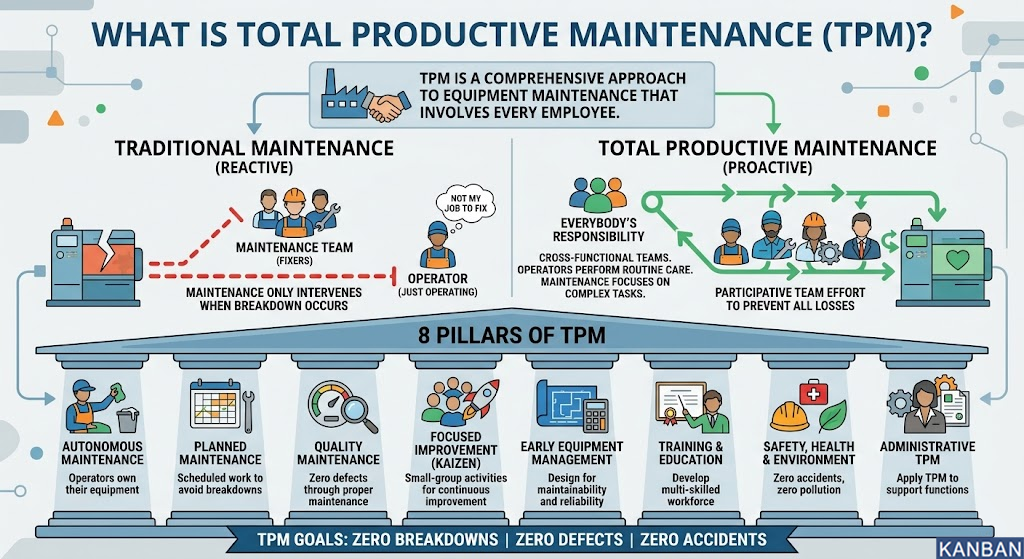
The methodology aims to prevent breakdowns, minimise downtime, reduce defects, and improve workplace safety. By proactively maintaining equipment and identifying potential issues before they become serious problems, businesses can improve productivity while reducing operational costs.
TPM also supports lean manufacturing principles by eliminating waste associated with machine failures, production delays, excessive maintenance activities, and poor-quality output. This helps organisations create more efficient production environments while improving customer satisfaction and profitability.
Modern TPM programmes often incorporate digital technologies, predictive maintenance systems, and performance monitoring tools to improve equipment visibility and maintenance planning. These technologies enable organisations to make more informed decisions and optimise asset utilisation.
Businesses across manufacturing, engineering, logistics, food processing, pharmaceuticals, and automotive sectors use TPM to improve operational excellence and maintain competitive advantage. The methodology continues to be recognised as one of the most effective approaches for improving equipment reliability and long-term operational performance.
Why TPM Matters for Manufacturing Efficiency
Total Productive Maintenance plays a critical role in improving manufacturing efficiency by ensuring equipment remains reliable, productive, and capable of meeting operational demands. Equipment failures can significantly impact production schedules, increase costs, and reduce customer satisfaction. TPM addresses these challenges by focusing on proactive maintenance and continuous improvement.
One of the main reasons TPM is important is its ability to reduce unplanned downtime. Unexpected breakdowns often result in production interruptions, missed delivery deadlines, and increased maintenance expenses. Through regular inspections and preventive maintenance activities, TPM helps organisations avoid costly disruptions.
TPM also improves Overall Equipment Effectiveness (OEE), which measures equipment availability, performance, and quality output. Higher OEE levels indicate that machinery is operating efficiently and producing quality products with minimal waste.
Another significant advantage is improved employee involvement. TPM encourages machine operators to take ownership of equipment care, creating greater accountability and improving communication between production and maintenance teams.
Manufacturers implementing TPM often experience reduced operational costs, improved product quality, increased production capacity, and stronger workplace safety performance. These benefits contribute directly to improved profitability and business competitiveness.
As manufacturing environments become increasingly competitive, TPM provides organisations with a structured framework for maintaining operational efficiency and supporting long-term growth.
Understanding TPM and Its Business Impact
Total Productive Maintenance is more than a maintenance programme; it is a comprehensive operational strategy that influences productivity, quality, safety, and organisational culture. TPM focuses on preventing equipment-related losses while encouraging continuous improvement across all operational activities.
Businesses implementing TPM often experience significant improvements in equipment reliability and production consistency. By reducing breakdowns and process interruptions, organisations can maintain stable production schedules and meet customer requirements more effectively.
TPM also contributes to improved quality performance. Well-maintained equipment is less likely to produce defects, reducing waste and improving customer satisfaction. This helps organisations strengthen their reputation and maintain competitive advantage.
From a financial perspective, TPM can reduce maintenance costs, minimise emergency repairs, and improve asset lifespan. Equipment that receives proper care typically requires fewer costly interventions and remains productive for longer periods.
The cultural impact of TPM is equally important. Employee involvement creates stronger teamwork, encourages problem-solving, and promotes accountability for operational performance. This collaborative environment supports continuous improvement and innovation.
Overall, TPM helps organisations achieve greater efficiency, stronger operational control, and improved long-term business performance.
What Is TPM in Manufacturing?
In manufacturing environments, Total Productive Maintenance is a systematic approach used to maximise production efficiency by improving equipment reliability and reducing operational losses. TPM focuses on maintaining machinery in optimal condition to support consistent production performance.
Manufacturing facilities rely heavily on equipment availability and performance. Any disruption can lead to production delays, quality issues, and increased operational costs. TPM addresses these challenges through preventive maintenance, autonomous maintenance, and continuous improvement activities.
Operators play an active role in TPM by conducting routine inspections, cleaning equipment, identifying abnormalities, and reporting potential issues. This early detection process helps prevent minor problems from developing into major equipment failures.
TPM also supports manufacturing quality objectives by ensuring equipment operates within specified performance standards. Stable equipment performance reduces process variation and improves product consistency.
Many manufacturers integrate TPM with lean manufacturing initiatives to eliminate waste, improve workflow efficiency, and maximise production output. Together, these methodologies create highly efficient and competitive production environments.
As manufacturing technologies continue to evolve, TPM remains an essential strategy for maintaining operational excellence and supporting sustainable business growth.
What Is the Main Purpose of TPM?
The primary purpose of Total Productive Maintenance is to maximise equipment effectiveness while eliminating production losses caused by breakdowns, defects, and inefficiencies. TPM aims to create a highly reliable operational environment where equipment consistently performs at its best.
One of the key goals is achieving zero breakdowns. Although completely eliminating failures may be challenging, TPM encourages organisations to continuously reduce equipment-related disruptions through preventive and predictive maintenance activities.
Another important objective is improving product quality. Equipment operating under optimal conditions is less likely to produce defects, reducing waste and improving customer satisfaction.
TPM also seeks to improve workplace safety by identifying equipment hazards and promoting safe operating practices. Well-maintained machinery reduces the risk of accidents and creates a safer working environment for employees.
Furthermore, TPM encourages employee participation and ownership. When employees are actively involved in equipment care and improvement initiatives, organisations benefit from greater accountability and stronger operational performance.
Ultimately, the purpose of TPM is to create efficient, reliable, and sustainable operations that support long-term organisational success.
What Is TPM in Maintenance Management?
Within maintenance management, Total Productive Maintenance provides a structured framework for maintaining equipment reliability and improving maintenance effectiveness. TPM shifts maintenance activities from reactive repairs to proactive and preventive approaches.
Traditional maintenance often focuses on repairing equipment after failures occur. TPM takes a different approach by identifying potential issues early and implementing maintenance activities before breakdowns happen. This reduces downtime and improves operational stability.
Maintenance teams use TPM to develop planned maintenance schedules, monitor equipment performance, and analyse failure patterns. These activities help organisations optimise maintenance resources and improve equipment availability.
TPM also encourages collaboration between maintenance professionals and production teams. Operators contribute valuable insights regarding equipment performance and can identify abnormalities during routine operations.
Modern TPM programmes frequently incorporate condition monitoring technologies, predictive analytics, and digital maintenance management systems. These tools improve maintenance planning and provide real-time visibility into equipment health.
By integrating TPM principles into maintenance management practices, organisations can improve asset reliability, reduce maintenance costs, and support continuous operational improvement.
What Is TPM and Kaizen?
Total Productive Maintenance (TPM) and Kaizen are closely connected methodologies that support continuous improvement, operational excellence, and organisational efficiency. While TPM focuses primarily on maximising equipment effectiveness and reliability, Kaizen concentrates on making continuous incremental improvements across all business processes. Together, they create a powerful framework for reducing waste, improving productivity, and strengthening overall business performance.
Kaizen is based on the principle that small, ongoing improvements can lead to significant long-term results. Within a TPM environment, employees are encouraged to identify equipment issues, suggest improvements, and participate in problem-solving activities that enhance operational performance. This collaborative approach helps organisations create a culture of continuous learning and improvement.
TPM provides the structure needed to maintain equipment reliability, while Kaizen drives innovation and efficiency improvements. Employees at all levels contribute ideas that help eliminate losses, improve maintenance practices, reduce downtime, and increase production efficiency.
One of the key benefits of combining TPM and Kaizen is the ability to address root causes rather than simply treating symptoms. Teams regularly analyse operational challenges, identify opportunities for improvement, and implement corrective actions that deliver sustainable results.
Organisations that successfully integrate TPM and Kaizen often achieve higher equipment availability, improved product quality, stronger employee engagement, and lower operating costs. These improvements contribute directly to increased competitiveness and customer satisfaction.
As part of a lean manufacturing strategy, TPM and Kaizen work together to create efficient, reliable, and continuously improving operational environments capable of supporting long-term business success.
The Evolution and Development of TPM
Total Productive Maintenance originated in Japan during the late 1960s and early 1970s as manufacturers sought more effective ways to improve equipment reliability and production efficiency. The concept evolved from preventive maintenance programmes that had previously been introduced by American manufacturing organisations.
Japanese companies recognised that maintenance should not be limited to specialised maintenance personnel. Instead, operators and production employees could play an active role in caring for equipment and identifying potential problems before failures occurred. This philosophy became one of the defining characteristics of TPM.
The methodology was further developed by the Japan Institute of Plant Maintenance (JIPM), which formalised TPM principles and introduced structured frameworks for implementation. Over time, TPM expanded beyond maintenance activities to include quality improvement, safety management, employee development, and organisational culture.
As global competition increased, organisations around the world began adopting TPM to improve operational performance and support lean manufacturing initiatives. The methodology proved particularly effective in industries where equipment reliability directly influenced productivity and profitability.
Technological advancements have further transformed TPM by introducing predictive maintenance tools, condition monitoring systems, industrial sensors, and data analytics platforms. These technologies enable organisations to monitor equipment health in real time and make more informed maintenance decisions.
Today, TPM remains one of the most widely recognised maintenance and operational improvement methodologies, helping businesses achieve higher productivity, reduced downtime, and improved equipment performance.
Key Benefits of Total Productive Maintenance
Total Productive Maintenance provides organisations with numerous benefits that improve operational performance, equipment reliability, and long-term profitability. By focusing on proactive maintenance and continuous improvement, TPM helps businesses create more efficient and productive working environments.
One of the most significant benefits is reduced equipment downtime. Regular inspections, preventive maintenance activities, and early fault detection help minimise unexpected breakdowns and production interruptions. This improves production continuity and supports customer delivery commitments.
TPM also increases equipment lifespan by ensuring machinery receives appropriate care and maintenance throughout its operational life. Well-maintained equipment typically performs more efficiently and requires fewer costly repairs.
Another important benefit is improved product quality. Equipment operating in optimal condition produces more consistent results, reducing defects, rework, and customer complaints. This contributes to higher levels of customer satisfaction and stronger brand reputation.
TPM improves workplace safety by identifying potential hazards, reducing equipment failures, and encouraging safe operating practices. Employees become more aware of equipment conditions and potential risks, helping create safer working environments.
Furthermore, TPM strengthens employee engagement by involving staff in equipment care, improvement initiatives, and problem-solving activities. Greater ownership often leads to improved morale, stronger teamwork, and increased operational accountability.
Businesses implementing TPM frequently experience lower maintenance costs, improved resource utilisation, higher productivity, and enhanced operational flexibility. These benefits support sustainable growth and long-term competitive advantage.
Core Objectives of TPM Programmes
The primary objective of a Total Productive Maintenance programme is to maximise Overall Equipment Effectiveness (OEE) by improving equipment availability, performance, and quality output. Organisations implementing TPM focus on eliminating losses that reduce operational efficiency and profitability.
One of the key objectives is achieving zero breakdowns through proactive maintenance and continuous monitoring. While complete elimination of failures may not always be possible, TPM encourages organisations to reduce breakdown frequency and minimise their impact.
Another important objective is reducing product defects. By maintaining equipment in optimal condition and addressing performance issues promptly, businesses can improve product consistency and minimise waste.
TPM programmes also aim to improve workplace safety by identifying hazards, reducing operational risks, and promoting safe equipment operation. Safe workplaces contribute to employee wellbeing and operational stability.
Employee involvement is another central objective. TPM encourages operators and maintenance personnel to collaborate on equipment improvement activities, creating a culture of shared responsibility and continuous learning.
Many organisations also pursue objectives related to cost reduction, productivity improvement, equipment lifespan extension, and environmental sustainability. These goals help businesses strengthen operational performance while supporting broader strategic objectives.
Ultimately, TPM programmes seek to create highly efficient, reliable, and continuously improving operational environments capable of delivering long-term business value.
Which Are the 8 Pillars of TPM?
The eight pillars of Total Productive Maintenance provide the foundation for successful TPM implementation. Each pillar focuses on a specific area of operational improvement and contributes to overall equipment effectiveness.
1. Autonomous Maintenance: Operators perform routine cleaning, inspection, and basic maintenance activities to maintain equipment condition.
2. Planned Maintenance: Maintenance activities are scheduled proactively to prevent breakdowns and improve equipment reliability.
3. Focused Improvement: Cross-functional teams identify and eliminate losses that reduce productivity and efficiency.
4. Quality Maintenance: Organisations focus on preventing defects by maintaining optimal equipment conditions and process stability.
5. Early Equipment Management: Lessons learned from existing equipment are incorporated into the design and installation of new machinery.
6. Training and Education: Employees receive ongoing training to improve technical skills, maintenance knowledge, and operational competence.
7. Safety, Health and Environment: TPM promotes safe working practices and environmental responsibility throughout operational activities.
8. Office TPM: Administrative processes are improved to support operational efficiency and eliminate non-production waste.
Together, these pillars create a comprehensive framework that supports reliability, productivity, quality, and continuous improvement throughout the organisation.
How Many Pillars Are Considered in TPM?
Total Productive Maintenance is traditionally built around eight core pillars, each addressing a specific aspect of operational performance and equipment management. These pillars work together to create a structured approach to improving equipment effectiveness and reducing operational losses.
The eight-pillar model was developed to ensure TPM addresses both technical and organisational factors that influence productivity. Rather than focusing solely on maintenance activities, the framework incorporates employee development, quality improvement, safety management, and administrative efficiency.
Each pillar contributes to the overall goal of achieving maximum equipment effectiveness and operational excellence. Organisations typically implement the pillars gradually, allowing employees to develop the skills, processes, and culture required for long-term success.
Although the eight pillars remain the standard TPM framework, some organisations adapt the methodology to suit specific industry requirements or operational objectives. Additional focus areas may be incorporated depending on business needs.
Despite these adaptations, the fundamental principles of TPM remain consistent: proactive maintenance, employee involvement, continuous improvement, and operational excellence.
The eight pillars continue to provide a proven framework for organisations seeking to improve equipment reliability, productivity, quality, and business performance.
Autonomous Maintenance in TPM
Autonomous Maintenance is one of the most important pillars of Total Productive Maintenance because it empowers machine operators to take responsibility for routine equipment care and maintenance activities. This approach helps prevent equipment deterioration while improving operator knowledge and equipment ownership.
Traditionally, maintenance tasks were performed exclusively by maintenance departments. TPM changes this model by encouraging operators to conduct basic maintenance activities such as cleaning, lubrication, inspection, and minor adjustments. These activities help identify abnormalities before they develop into serious problems.
Autonomous Maintenance improves communication between operators and maintenance personnel by creating a shared understanding of equipment condition and performance. Operators become more aware of potential issues and can report concerns promptly.
Regular inspections help maintain equipment cleanliness and prevent contamination, wear, and damage. This improves equipment reliability and supports consistent production performance.
Another important benefit is increased operator engagement. Employees who actively participate in equipment care often develop stronger ownership and commitment to operational excellence.
Autonomous Maintenance also allows maintenance specialists to focus on more complex technical activities rather than routine tasks. This improves maintenance efficiency and resource utilisation across the organisation.
When implemented effectively, Autonomous Maintenance contributes significantly to reduced downtime, improved equipment lifespan, higher productivity, and stronger overall equipment effectiveness.
Planned Maintenance Strategies
Planned Maintenance is one of the fundamental pillars of Total Productive Maintenance and focuses on preventing equipment failures through structured, proactive maintenance activities. Rather than waiting for machinery to break down, organisations develop maintenance schedules based on equipment condition, operational requirements, manufacturer recommendations, and historical performance data.
The primary objective of Planned Maintenance is to minimise unplanned downtime while maximising equipment availability and reliability. Maintenance activities are carefully scheduled to reduce disruptions to production operations and ensure machinery remains in optimal working condition.
Planned Maintenance includes preventive maintenance tasks such as inspections, lubrication, calibration, component replacement, and routine servicing. These activities help identify potential issues before they develop into major failures that could affect productivity or product quality.
Modern organisations increasingly incorporate predictive maintenance technologies into their Planned Maintenance programmes. Sensors, condition-monitoring systems, and data analytics tools allow maintenance teams to assess equipment health in real time and predict failures before they occur.
Effective maintenance planning also improves resource utilisation by ensuring that spare parts, maintenance personnel, and technical expertise are available when needed. This reduces emergency repair costs and improves maintenance efficiency.
Businesses that implement robust Planned Maintenance strategies often experience improved equipment lifespan, lower maintenance expenditure, increased production stability, and higher Overall Equipment Effectiveness (OEE).
By proactively managing equipment reliability, Planned Maintenance supports operational excellence and contributes significantly to long-term business performance and competitiveness.
Focused Improvement and Continuous Improvement
Focused Improvement, often referred to as Kobetsu Kaizen, is a TPM pillar dedicated to identifying and eliminating losses that reduce operational efficiency and productivity. The purpose of Focused Improvement is to address recurring problems, remove inefficiencies, and create sustainable operational improvements through structured problem-solving activities.
Cross-functional teams typically participate in improvement projects, bringing together expertise from production, maintenance, engineering, quality, and management departments. This collaborative approach helps organisations gain a broader understanding of operational challenges and develop more effective solutions.
Focused Improvement targets losses associated with equipment downtime, reduced production speed, quality defects, material waste, excessive maintenance activities, and inefficient workflows. By systematically analysing these issues, organisations can implement corrective actions that improve overall performance.
Root cause analysis techniques such as the Five Whys, Fishbone Diagrams, and Pareto Analysis are commonly used to identify underlying causes rather than simply addressing symptoms. This approach helps organisations achieve long-term improvements rather than temporary fixes.
Continuous improvement is an essential component of TPM because operational excellence requires ongoing refinement rather than one-time changes. Employees are encouraged to contribute ideas, suggest improvements, and participate actively in problem-solving initiatives.
Organisations that embrace Focused Improvement often achieve measurable gains in productivity, quality, equipment reliability, and cost efficiency while fostering a culture of innovation and continuous learning.
Over time, these incremental improvements contribute significantly to organisational competitiveness and sustainable operational performance.
Quality Maintenance for Defect Prevention
Quality Maintenance is a TPM pillar focused on preventing defects by maintaining equipment and processes in conditions that consistently produce high-quality products. Rather than relying solely on inspection and quality control after production, Quality Maintenance aims to eliminate the root causes of defects before they occur.
The foundation of Quality Maintenance is the understanding that equipment condition directly influences product quality. Machines that are poorly maintained or operating outside specified parameters are more likely to produce defects, inconsistencies, and customer complaints.
Organisations use Quality Maintenance to identify critical equipment conditions that affect product quality and establish controls to maintain those conditions consistently. This proactive approach reduces variation and improves process stability.
Regular inspections, process monitoring, equipment calibration, and preventive maintenance activities help ensure machinery continues to operate within defined performance standards. These activities minimise the risk of quality-related failures.
Quality Maintenance also involves analysing defect trends, investigating root causes, and implementing corrective actions that prevent recurrence. This continuous improvement process strengthens quality performance and supports customer satisfaction objectives.
Businesses that successfully implement Quality Maintenance often experience reduced rework, lower scrap rates, improved product consistency, and stronger customer confidence.
By integrating quality assurance with maintenance excellence, organisations can create more reliable production systems that consistently deliver products meeting customer expectations and regulatory requirements.
Early Equipment Management and Design Improvement
Early Equipment Management focuses on improving the design, installation, and commissioning of new equipment by applying lessons learned from existing operations. This TPM pillar helps organisations reduce future maintenance requirements and improve equipment reliability from the beginning of the asset lifecycle.
Traditional approaches often address equipment problems only after machinery has been installed and operational. Early Equipment Management takes a proactive approach by incorporating maintenance knowledge and operational experience during equipment design and procurement stages.
Maintenance teams, engineers, operators, and production specialists collaborate to identify potential challenges and recommend design improvements that enhance reliability, maintainability, and operational performance.
Equipment designers and suppliers can use operational feedback to simplify maintenance activities, improve accessibility, reduce wear points, and eliminate recurring failure modes. These improvements contribute to lower maintenance costs and greater equipment efficiency.
Early Equipment Management also supports faster equipment start-up and commissioning by reducing the likelihood of design-related problems and operational disruptions. This helps organisations achieve productivity targets more quickly following installation.
As organisations invest in new technologies and production systems, Early Equipment Management ensures that reliability and maintainability remain key considerations throughout the equipment acquisition process.
The result is improved asset performance, reduced lifecycle costs, and stronger long-term operational reliability.
Training and Education in TPM
Training and Education play a crucial role in the success of Total Productive Maintenance by ensuring employees possess the skills, knowledge, and competencies required to support equipment reliability and continuous improvement initiatives.
TPM recognises that people are one of the most valuable assets within an organisation. Even the most advanced equipment cannot perform effectively if employees lack the expertise necessary to operate, maintain, and improve it.
Training programmes typically cover equipment operation, maintenance procedures, troubleshooting techniques, safety practices, quality management, and continuous improvement methodologies. Employees gain a deeper understanding of equipment performance and operational best practices.
Operator training is particularly important because Autonomous Maintenance relies on operators conducting inspections, cleaning activities, lubrication tasks, and basic maintenance procedures. Proper training ensures these responsibilities are performed effectively.
Maintenance personnel also benefit from ongoing technical development that helps them manage increasingly sophisticated equipment and technologies. Continuous learning supports higher maintenance standards and improved problem-solving capabilities.
Training initiatives contribute to improved employee confidence, stronger teamwork, enhanced operational consistency, and reduced human error. Organisations often experience higher productivity and equipment reliability as employee competence increases.
By investing in Training and Education, businesses strengthen their ability to sustain TPM programmes and achieve long-term operational excellence.
Safety, Health and Environmental Management
Safety, Health and Environmental Management is a critical TPM pillar that focuses on creating safe workplaces, protecting employee wellbeing, and minimising environmental impact. The objective is to achieve zero accidents, zero occupational illnesses, and zero environmental incidents while maintaining high levels of operational performance.
Equipment failures and unsafe operating conditions can create significant risks for employees and the organisation. TPM addresses these risks by ensuring equipment remains in safe working condition and operational procedures support workplace safety.
Regular inspections, risk assessments, hazard identification activities, and preventive maintenance programmes help organisations identify potential safety concerns before incidents occur. This proactive approach contributes to safer and more reliable operations.
Employee involvement is essential because frontline workers often recognise hazards and operational risks that may otherwise go unnoticed. TPM encourages employees to report concerns and participate in safety improvement initiatives.
Environmental management focuses on reducing waste, improving energy efficiency, minimising emissions, and ensuring compliance with environmental regulations. Well-maintained equipment typically consumes fewer resources and generates less environmental impact.
Organisations that prioritise Safety, Health and Environmental Management often experience lower accident rates, improved employee morale, stronger regulatory compliance, and enhanced corporate reputation.
This pillar reinforces the principle that operational excellence cannot be achieved without maintaining safe and environmentally responsible workplaces.
Office TPM and Administrative Efficiency
Office TPM extends TPM principles beyond production environments and applies them to administrative, support, and business processes. The objective is to improve efficiency, eliminate waste, and enhance productivity within office functions that support operational activities.
Many organisations focus heavily on manufacturing efficiency while overlooking inefficiencies within administrative processes. Delays in purchasing, planning, documentation, communication, and information management can significantly affect overall business performance.
Office TPM identifies and eliminates waste associated with excessive paperwork, duplicated activities, unnecessary approvals, communication breakdowns, and inefficient workflows. Streamlined administrative processes support faster decision-making and improved organisational responsiveness.
Digital technologies and process automation tools are frequently used to improve administrative efficiency and reduce manual effort. These improvements help employees focus on higher-value activities that contribute to organisational objectives.
Office TPM also promotes performance measurement, process standardisation, and continuous improvement across support functions. Departments such as finance, human resources, procurement, logistics, and customer service can all benefit from TPM principles.
By improving administrative efficiency, organisations strengthen operational support systems and enhance overall business performance.
Office TPM demonstrates that operational excellence requires improvement across all areas of the organisation, not only within production environments.
What Are the Pillars of TPM 5S?
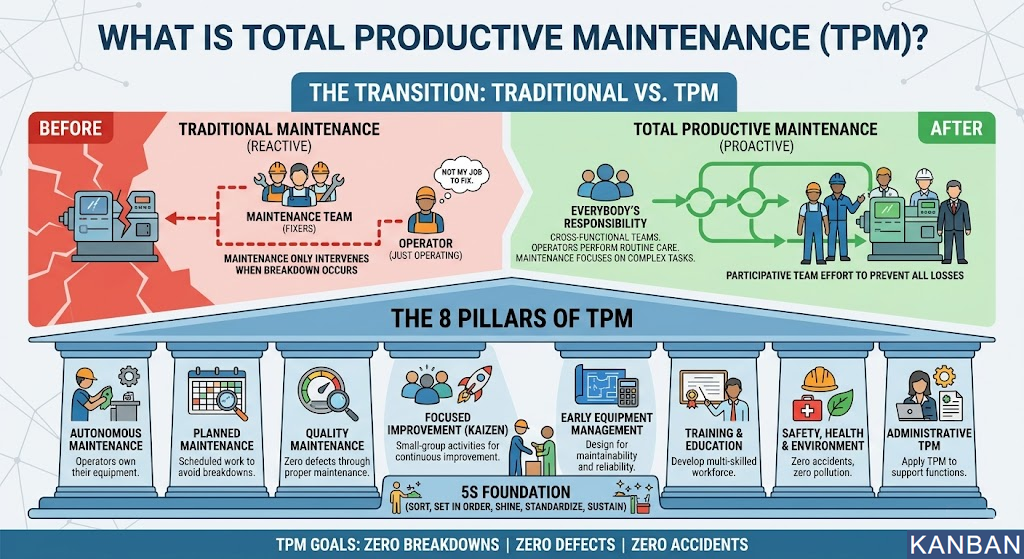
5S is a workplace organisation methodology that serves as a foundation for successful TPM implementation. Although 5S is not one of the eight TPM pillars, it provides the structure and discipline necessary to support maintenance excellence and continuous improvement activities.
The five elements of 5S are Sort, Set in Order, Shine, Standardise, and Sustain. Together, these principles create organised, efficient, and safe working environments that improve productivity and equipment care.
Sort: Remove unnecessary items from the workplace to reduce clutter and improve efficiency.
Set in Order: Arrange tools, materials, and equipment so they are easily accessible and clearly identified.
Shine: Clean equipment and work areas regularly to identify abnormalities and maintain optimal conditions.
Standardise: Establish consistent procedures and visual controls that support workplace organisation.
Sustain: Develop habits and systems that ensure long-term adherence to 5S principles.
5S supports TPM by improving equipment visibility, reducing workplace hazards, enhancing operator ownership, and creating conditions that facilitate Autonomous Maintenance activities.
Organisations that successfully integrate 5S and TPM often experience improved efficiency, stronger workplace discipline, and enhanced operational performance.
Step-by-Step Guide to Implementing TPM
Implementing Total Productive Maintenance requires a structured and systematic approach to ensure long-term success. Organisations must develop a clear implementation strategy that aligns with operational objectives and business priorities.
Step 1: Secure Leadership Commitment – Senior management must actively support TPM initiatives and communicate their importance throughout the organisation.
Step 2: Assess Current Performance – Evaluate equipment reliability, maintenance practices, downtime levels, and operational performance to establish baseline measurements.
Step 3: Introduce TPM Awareness Training – Educate employees about TPM principles, objectives, and expected responsibilities.
Step 4: Implement 5S Foundations – Create organised workplaces that support equipment care and maintenance activities.
Step 5: Establish Autonomous Maintenance – Train operators to perform routine inspections, cleaning, lubrication, and basic maintenance tasks.
Step 6: Develop Planned Maintenance Programmes – Introduce preventive maintenance schedules and condition-monitoring activities.
Step 7: Launch Improvement Projects – Form cross-functional teams to identify and eliminate operational losses.
Step 8: Monitor Performance and Sustain Improvements – Track key metrics, review progress regularly, and continuously refine TPM activities.
Successful TPM implementation requires patience, employee involvement, and long-term commitment. Organisations that remain consistent often achieve significant improvements in productivity, quality, safety, and equipment reliability.
Tools and Techniques Used in TPM
Total Productive Maintenance relies on a variety of tools and techniques that support equipment reliability, maintenance effectiveness, and continuous improvement. These tools help organisations identify problems, analyse performance, and implement sustainable improvements.
Overall Equipment Effectiveness (OEE): Measures equipment availability, performance efficiency, and quality output.
5S Workplace Organisation: Improves workplace cleanliness, organisation, and operational discipline.
Root Cause Analysis: Identifies the underlying causes of equipment failures and operational problems.
Five Whys Technique: A structured questioning method used to investigate problems and determine root causes.
Fishbone Diagrams: Visual tools used to analyse contributing factors to operational issues.
Pareto Analysis: Helps prioritise improvement activities by identifying the most significant sources of losses.
Preventive Maintenance Programmes: Scheduled maintenance activities designed to prevent equipment failures.
Predictive Maintenance Technologies: Sensors, vibration monitoring, thermal imaging, and data analytics used to monitor equipment condition.
Visual Management Systems: Displays and indicators that communicate equipment status and performance information.
These TPM tools provide organisations with practical methods for improving reliability, reducing downtime, increasing productivity, and supporting continuous operational improvement. When used effectively, they contribute significantly to long-term equipment performance and business success.
Total Productive Maintenance (TPM) is a structured maintenance methodology designed to maximise equipment effectiveness, eliminate production losses, and improve overall operational performance.
Key Performance Indicators for TPM Success
Measuring the success of Total Productive Maintenance (TPM) requires organisations to monitor specific Key Performance Indicators (KPIs) that reflect equipment reliability, operational efficiency, maintenance effectiveness, and overall business performance. These metrics provide valuable insights into the effectiveness of TPM initiatives and help organisations identify opportunities for continuous improvement.
One of the most widely used TPM metrics is Overall Equipment Effectiveness (OEE). OEE measures equipment availability, performance efficiency, and product quality to provide a comprehensive view of manufacturing productivity. Improvements in OEE often indicate successful TPM implementation and stronger operational performance.
Equipment availability is another important KPI because it measures the percentage of scheduled production time during which machinery is available for operation. High availability levels indicate effective maintenance practices and reduced downtime.
Mean Time Between Failures (MTBF) is commonly used to assess equipment reliability. Increasing MTBF values suggest that equipment is experiencing fewer breakdowns and operating more consistently.
Mean Time to Repair (MTTR) measures how quickly maintenance teams can restore equipment to operational condition following a failure. Lower MTTR values typically reflect improved maintenance processes and faster problem resolution.
Additional TPM KPIs may include maintenance costs, defect rates, production output, safety incident frequency, energy consumption, and planned maintenance compliance. Monitoring these indicators helps organisations maintain visibility over operational performance and improvement progress.
Regular KPI reviews allow businesses to evaluate TPM effectiveness, identify performance gaps, and make informed decisions that support long-term operational excellence and sustainable growth.
The Role of Leadership in TPM Success
Strong leadership is one of the most important factors influencing the success of Total Productive Maintenance programmes. TPM is not simply a maintenance initiative; it represents a cultural and operational transformation that requires active support from senior management and organisational leaders.
Leaders play a critical role in establishing the vision, objectives, and expectations associated with TPM implementation. By communicating the importance of equipment reliability, continuous improvement, and employee involvement, leadership helps create organisational alignment and commitment.
Successful TPM programmes require adequate resources, including training, maintenance tools, technology investments, and employee development opportunities. Leadership teams are responsible for ensuring these resources are available and aligned with strategic priorities.
Management support also encourages employee participation. When leaders actively engage with TPM activities, recognise achievements, and promote continuous improvement, employees are more likely to embrace the programme and contribute to its success.
Another important responsibility is removing barriers that may hinder TPM implementation. Leaders must address organisational resistance, resolve cross-functional conflicts, and ensure departments work collaboratively towards shared objectives.
Regular performance reviews and progress evaluations help maintain momentum and accountability. Leadership involvement ensures TPM remains a strategic priority rather than becoming a short-term initiative.
Organisations with strong leadership commitment often achieve higher levels of equipment reliability, employee engagement, operational efficiency, and long-term business performance through TPM.
Common Challenges When Implementing TPM
Although Total Productive Maintenance offers significant benefits, organisations frequently encounter challenges during implementation. Understanding these obstacles helps businesses prepare more effectively and develop strategies that support successful TPM adoption.
One of the most common challenges is resistance to change. Employees may be hesitant to adopt new responsibilities, particularly when TPM requires operators to participate in maintenance activities traditionally performed by maintenance personnel.
Insufficient management support can also hinder TPM progress. Without visible leadership commitment, employees may view TPM as a temporary initiative rather than a long-term organisational strategy.
Lack of training is another significant obstacle. Employees need the knowledge and skills necessary to perform inspections, maintenance activities, problem-solving tasks, and continuous improvement initiatives effectively.
Many organisations also struggle with inconsistent implementation. TPM requires discipline, standardisation, and ongoing commitment. Inconsistent application of TPM principles can limit results and reduce programme effectiveness.
Resource constraints may create additional challenges. Limited budgets, staffing shortages, and competing operational priorities can affect the ability to implement maintenance improvements and training programmes.
Data quality and performance measurement issues can also impact TPM success. Accurate information is essential for monitoring equipment performance, identifying trends, and supporting informed decision-making.
By recognising and addressing these challenges proactively, organisations can improve implementation outcomes and maximise the long-term benefits of Total Productive Maintenance.
Continuous Improvement Through TPM
Continuous improvement is a fundamental principle of Total Productive Maintenance and plays a crucial role in sustaining long-term operational excellence. TPM encourages organisations to move beyond reactive problem-solving and establish a culture where employees continually seek opportunities to improve equipment performance, productivity, and quality.
Rather than viewing improvement as a one-time project, TPM promotes ongoing evaluation of equipment, processes, and operational activities. Employees are encouraged to identify inefficiencies, analyse performance data, and implement solutions that deliver measurable improvements.
Continuous improvement initiatives often focus on reducing downtime, eliminating defects, improving maintenance efficiency, enhancing workplace safety, and optimising resource utilisation. Small improvements made consistently over time can generate significant operational and financial benefits.
Cross-functional collaboration is essential because effective improvement activities require input from operators, maintenance teams, engineers, quality specialists, and management personnel. Diverse perspectives help organisations identify root causes and develop sustainable solutions.
Performance monitoring and data analysis support continuous improvement by providing visibility into operational trends and identifying areas requiring attention. Organisations use TPM metrics to measure progress and evaluate the effectiveness of improvement initiatives.
Continuous improvement also contributes to employee engagement by empowering individuals to participate actively in organisational development and problem-solving activities.
Businesses that embrace continuous improvement through TPM often achieve greater agility, stronger operational resilience, and higher levels of long-term competitiveness.
Future Trends in TPM and Smart Manufacturing
The future of Total Productive Maintenance is increasingly connected to digital transformation, smart manufacturing technologies, and Industry 4.0 initiatives. As manufacturing environments become more technologically advanced, TPM continues to evolve to support modern operational requirements.
One of the most significant trends is the growing use of predictive maintenance technologies. Sensors, Industrial Internet of Things (IIoT) devices, and advanced analytics platforms enable organisations to monitor equipment health continuously and predict failures before they occur.
Artificial intelligence and machine learning are also transforming maintenance management by analysing large volumes of operational data and identifying patterns that may indicate emerging equipment issues. These technologies improve decision-making and maintenance planning accuracy.
Digital twins are becoming increasingly important in smart manufacturing environments. These virtual representations of physical assets allow organisations to simulate equipment behaviour, test maintenance scenarios, and optimise operational performance.
Mobile technologies, cloud-based maintenance systems, and real-time dashboards provide greater visibility into equipment performance and maintenance activities. These tools improve collaboration and support faster operational responses.
Sustainability is another emerging focus area. Future TPM programmes are expected to place greater emphasis on energy efficiency, resource conservation, waste reduction, and environmental responsibility.
As manufacturing continues to evolve, TPM will remain a critical framework for ensuring equipment reliability, operational efficiency, and long-term business competitiveness within increasingly digital and interconnected production environments.
Conclusion: Why TPM Is Essential for Modern Manufacturing
Total Productive Maintenance has become one of the most effective methodologies for improving equipment reliability, operational efficiency, product quality, and workplace safety within modern manufacturing environments. By combining proactive maintenance practices with employee involvement and continuous improvement principles, TPM helps organisations achieve sustainable operational excellence.
The methodology provides a structured framework for reducing downtime, preventing equipment failures, minimising defects, and improving productivity. Through its eight pillars, TPM addresses both technical and organisational factors that influence manufacturing performance and long-term business success.
One of TPM's greatest strengths is its ability to engage employees at every level of the organisation. Operators, maintenance personnel, engineers, supervisors, and managers all contribute to equipment reliability and continuous improvement efforts. This collaborative approach creates stronger accountability and supports a culture of operational excellence.
As manufacturing becomes increasingly competitive and technologically advanced, organisations must continuously improve equipment performance while controlling costs and maintaining quality standards. TPM provides the tools, processes, and mindset necessary to achieve these objectives effectively.
The integration of predictive maintenance technologies, smart manufacturing systems, and data-driven decision-making is further strengthening the value of TPM in modern industrial environments. Organisations that embrace these developments are better positioned to improve operational resilience and maintain competitive advantage.
Ultimately, TPM is more than a maintenance programme. It is a comprehensive business improvement strategy that helps organisations maximise asset performance, strengthen productivity, improve customer satisfaction, and support sustainable long-term growth.
For manufacturers seeking greater efficiency, reliability, and operational excellence, Total Productive Maintenance remains an essential foundation for achieving long-term success in an increasingly demanding and rapidly evolving marketplace.