What Does SQDCM Really Stand For – And Why It Matters
A Simple Breakdown of SQDCM
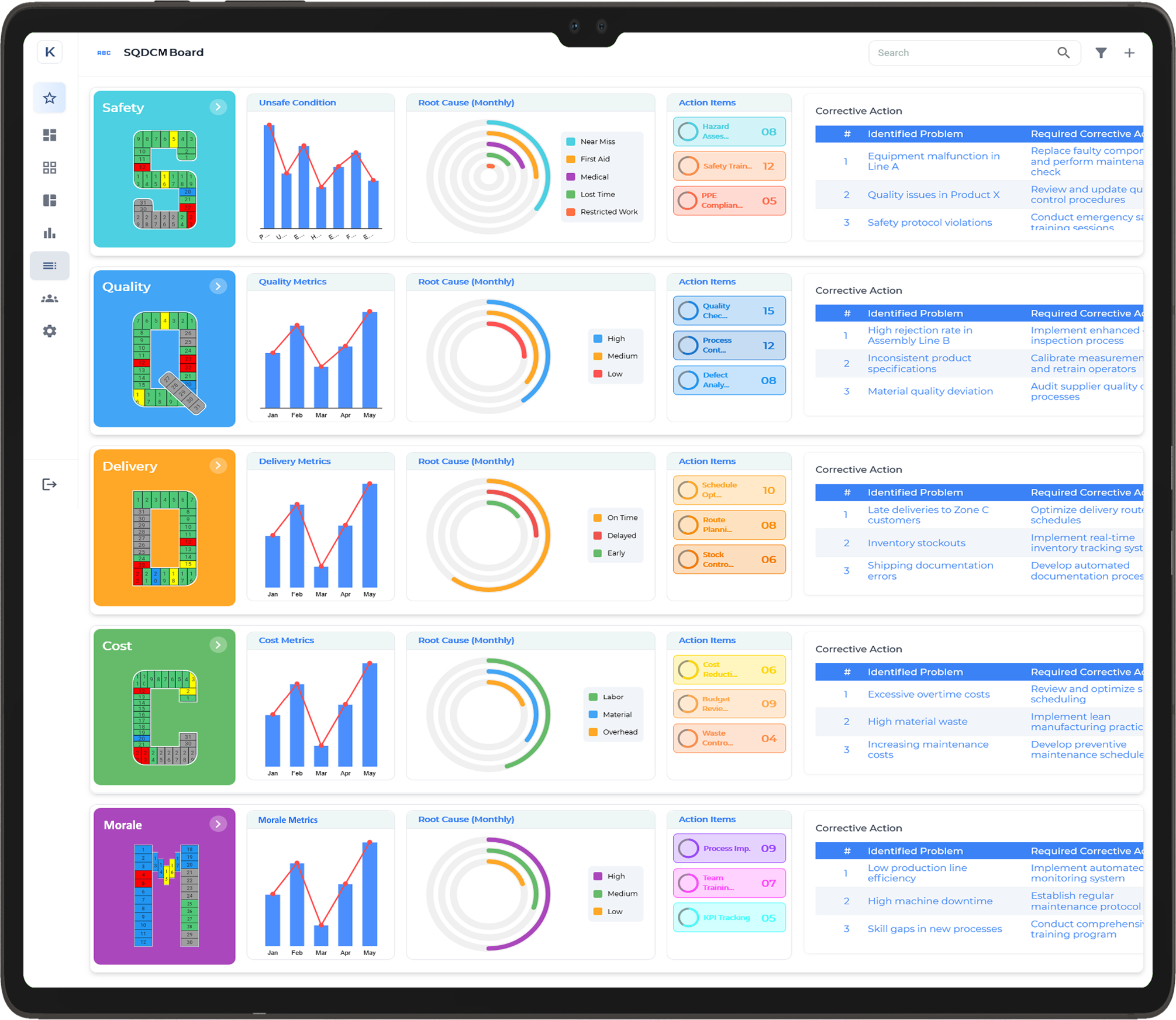
SQDCM stands for Safety, Quality, Delivery, Cost, and Morale. It is a structured approach used to monitor and improve performance across key operational areas. Each element represents a focus point that supports better decision-making and daily management in the workplace.
Safety Comes First
Safety is about protecting workers and creating a secure environment. By tracking safety issues daily, teams can quickly respond to risks, reduce incidents, and build a culture where everyone feels responsible for wellbeing at work.
Quality Keeps Standards High
Quality ensures that the output meets expectations. Whether it’s a product or service, consistent quality means fewer defects, less rework, and happier customers. Tracking quality daily helps teams spot problems early and take corrective action.
Delivery Ensures Timely Results
Delivery focuses on meeting schedules and deadlines. It helps teams stay on track and manage workloads effectively. Keeping delivery performance visible supports better planning and customer satisfaction.
Cost Highlights Resource Use
Cost control is key to maintaining efficiency. This metric tracks how well resources are used, helping identify waste and areas where savings can be made without affecting quality or delivery.
Morale Builds Team Strength
Morale measures how engaged and motivated the workforce is. High morale boosts productivity, teamwork, and problem-solving. By including morale in daily reviews, teams create a more supportive and positive working environment.
Boosting Daily Visibility on the Shop Floor with SQDCM Boards
Why Visibility Matters in Daily Operations
Clear visibility on the shop floor helps teams understand what’s happening in real time. SQDCM boards are an effective tool to make key performance areas visible to everyone. They promote transparency, quick updates, and focused daily discussions.
Highlighting Key Performance Areas
SQDCM stands for Safety, Quality, Delivery, Cost, and Morale. A board that tracks these areas every day makes it easy to identify what’s working and where there are issues. Teams can act fast, reducing delays and avoiding bigger problems later.
Supporting Team Accountability
When performance is visible, everyone knows their role in the bigger picture. SQDCM boards help build a sense of ownership. Team members can update data themselves, take responsibility for results, and contribute to solving issues quickly.
Encouraging Quick Action and Feedback
With real-time data on display, decisions don’t have to wait. Issues can be raised during the shift and solved before they grow. This also supports continuous improvement and builds a habit of regular communication and follow-up.
Making Performance Easy to Understand
Visual boards are simple to read and understand. Colour codes, symbols, and short notes make it easier for all team members to grasp performance at a glance. This improves awareness and keeps everyone aligned on shared goals.
How SQDCM Improves Safety, Quality, Delivery, Cost & Morale
Building a Safer Work Environment
Safety is the first pillar of SQDCM for a reason. By tracking safety daily, teams are more aware of risks and follow safer practices. Visual indicators on the board make it easy to report near misses or unsafe conditions, helping prevent accidents before they happen.
Maintaining Consistent Quality
Quality checks through SQDCM ensure defects are caught early. The board highlights problem areas and encourages teams to investigate root causes. This approach supports a culture of quality where everyone plays a part in meeting standards and avoiding rework.
Ensuring Timely Delivery
Delivery performance is clearly tracked, making delays more visible. Teams can monitor if targets are being met and take action when they’re not. SQDCM helps ensure that work stays on track, improving reliability and customer satisfaction.
Controlling Costs through Visibility
Cost issues often arise from waste, downtime, or poor planning. SQDCM boards highlight these issues early. By making cost performance visible each day, teams can manage resources better and cut unnecessary spending.
Improving Team Morale
When everyone’s effort is seen and valued, morale improves. SQDCM boards give teams a clear picture of how they contribute to success. Regular updates and involvement build engagement, teamwork, and a sense of pride in daily achievements.
Making Performance Metrics Easy to Understand for Everyone
Clear and Simple Data Display
One of the biggest challenges in performance tracking is making sure everyone understands the data. Digital boards and visual tools make metrics easier to read by using colours, icons, and plain language. This helps team members at all levels quickly grasp what’s going well and what needs attention.
Using Visual Aids for Quick Insights
Visual cues such as green, amber, and red signals provide instant feedback without needing to read detailed reports. These aids help frontline workers, team leaders, and managers see performance levels at a glance. It speeds up decision-making and promotes quicker action.
Standard Formats Across Teams
Standardising how metrics are shown helps remove confusion. When all departments use the same format, it’s easier to compare progress and align goals. This ensures that everyone speaks the same language when discussing performance.
Daily Updates Keep Everyone Informed
Real-time or daily updates help teams stay current. When metrics are updated regularly, it encourages accountability and allows quick correction of any issues. Staff don’t need to wait for end-of-week reviews to act.
Building Confidence and Engagement
When metrics are easy to understand, people are more likely to engage with them. Clear data builds confidence and helps teams feel more in control of their results. It turns performance tracking into a shared responsibility, not just a management task.
The Role of SQDCM in Daily Stand-Up Meetings
Keeping Teams Focused on What Matters
Daily stand-up meetings are a powerful way to align teams and track progress. Using the SQDCM method—Safety, Quality, Delivery, Cost, and Morale—helps keep discussions focused on key operational areas. Each category highlights a part of the business that contributes to overall performance.
Structuring Conversations for Efficiency
With a set format like SQDCM, stand-up meetings follow a consistent flow. This structure saves time and ensures that nothing important is missed. Teams can quickly walk through each point, raise issues, and agree on actions without lengthy discussions.
Real-Time Updates and Accountability
When SQDCM data is updated in real-time, team members can immediately see progress and spot concerns. This visibility supports accountability, as everyone knows where things stand and what needs to improve. It turns meetings into action-driven sessions.
Encouraging Cross-Shift Communication
SQDCM provides a shared view across all shifts. During stand-ups, outgoing and incoming teams can review the same dashboard, making sure key updates are passed on clearly. This reduces confusion and ensures continuity between shifts.
Building a Culture of Continuous Improvement
Regularly reviewing SQDCM data during daily meetings builds a culture of awareness and improvement. It encourages team members to speak up, suggest changes, and take part in solving problems as they arise, leading to better overall performance.
Encouraging Team Accountability with Clear Daily Targets
Why Daily Targets Matter
Setting clear daily targets gives teams a sense of direction and purpose. When each member understands what needs to be achieved by the end of the day, it brings focus and helps manage priorities. This clarity allows people to track their own progress and adjust their efforts when needed.
Boosting Responsibility and Ownership
When goals are clearly defined, individuals are more likely to take responsibility for their tasks. With measurable targets in place, team members can see how their work contributes to the overall performance. This shared understanding builds a culture of ownership and pride in results.
Tracking Performance Made Easy
Daily targets also make it easier to track performance. Simple visual boards or dashboards showing what’s planned versus what’s achieved help identify gaps early. This allows for quick action, rather than waiting for weekly or monthly reviews.
Driving Continuous Improvement
Clear targets encourage regular reflection. If a target is not met, the team can discuss why and find solutions. This ongoing review supports learning and continuous improvement, rather than blame. It turns challenges into opportunities for growth.
Creating a Positive Work Environment
Knowing what success looks like each day helps reduce stress and confusion. Teams become more engaged when they see progress and feel in control. This positive work environment leads to better communication, stronger teamwork, and improved results overall.
How SQDCM Boards Support Lean Manufacturing Goals
Creating Focus Around Key Performance Areas
SQDCM boards help teams concentrate on the five pillars that matter most in manufacturing: Safety, Quality, Delivery, Cost, and Morale. By clearly displaying these areas, the boards make it easy to keep daily operations aligned with lean goals. Teams stay focused on reducing waste, improving efficiency, and delivering value to the customer.
Visual Management for Faster Decision-Making
One of the main principles of lean is visual management. SQDCM boards give a quick, real-time view of performance across key metrics. This makes it easy to spot problems, delays, or quality issues as they happen. Teams can respond faster and avoid small problems turning into bigger ones.
Supporting Standard Work and Continuous Improvement
Lean manufacturing relies on standard work and ongoing improvement. SQDCM boards support this by highlighting gaps between expected and actual performance. If something is off track, the team can act immediately and look for root causes. This builds a culture where learning and small daily improvements become part of the routine.
Promoting Team Engagement and Accountability
SQDCM boards make targets and outcomes clear for everyone. This increases transparency and encourages all team members to take ownership of their results. When goals are visible, accountability naturally grows, which is key to sustaining lean efforts across shifts and departments.
Tracking Real-Time Issues with Visual Management Tools
Instant Visibility into Operations
Visual management tools provide a clear, real-time view of ongoing activities on the shop floor. Instead of waiting for reports or updates, teams can instantly see what’s working and what needs attention. This immediate insight helps prevent delays and improves response times to emerging issues.
Highlighting Problems as They Happen
One of the main strengths of visual tools is their ability to make problems visible the moment they occur. Whether it’s a delay in delivery, a safety concern, or a quality issue, these tools bring attention to it without needing complex systems. Visual cues like colour coding, indicators, and alerts guide teams to the exact area needing action.
Keeping Everyone on the Same Page
Visual management supports team alignment by showing shared goals and current status. All team members, across shifts or departments, see the same information at the same time. This reduces confusion and supports faster decision-making. Clear visuals ensure that everyone knows what the priority is right now.
Improving Response and Reducing Downtime
By tracking issues in real time, teams can quickly respond before problems grow. This reduces downtime, lowers costs, and improves workflow efficiency. Over time, these small gains help create a culture focused on continuous improvement and strong operational control.
From Problems to Solutions – Faster Decision-Making with SQDCM
Quick Identification of Daily Issues
SQDCM boards help teams easily spot problems as they arise across key focus areas—Safety, Quality, Delivery, Cost, and Morale. With structured daily updates, issues are not hidden in long reports or delayed by communication gaps. This visibility makes it easier to act quickly and reduce impact.
Clear Priorities Lead to Faster Actions
When problems are displayed clearly on the board, it becomes obvious which areas need urgent attention. This helps team leaders and supervisors focus on what matters most. Rather than waiting for long review meetings, decisions can be made on the spot, based on up-to-date facts.
Encouraging Ownership and Team Input
SQDCM boards allow everyone to participate in solving problems. Team members are encouraged to raise concerns and suggest improvements during stand-up meetings. This shared responsibility speeds up the decision-making process, as the people closest to the issue are directly involved in finding solutions.
Structured Problem-Solving Improves Results
The format of SQDCM supports standardised responses to common problems. When the same process is followed each time, teams learn from past actions and become more effective. Over time, this leads to fewer recurring issues and more efficient operations across all shifts.
Aligning Operators, Supervisors, and Management on Key Priorities
Creating a Common Understanding Across All Levels
One of the biggest challenges in any workplace is making sure that everyone—from operators to supervisors to top management—is working toward the same goals. Clear visual tools and structured routines help break down communication barriers and ensure that daily activities reflect broader business priorities.
Visual Boards Keep Everyone on Track
When key targets such as safety, quality, delivery, cost, and morale are clearly displayed, there’s no confusion about what needs attention. Operators can see what matters most each day, while supervisors use the same data to guide team performance. This shared visibility builds trust and improves coordination.
Structured Meetings Support Consistency
Daily stand-up meetings built around clear metrics help everyone speak the same language. Operators can report on the issues they face, supervisors can offer guidance, and management can support with resources. The routine builds a rhythm where all levels contribute to improvements in real time.
Better Alignment Leads to Faster Results
When all teams understand the same priorities, decisions are quicker and more effective. There’s less wasted effort, fewer misunderstandings, and more action. Everyone knows their role in the bigger picture, which boosts morale and makes continuous improvement part of the culture.
Boosting Morale Through Recognition and Progress Visibility
Celebrating Daily Wins Builds Positive Energy
One of the most effective ways to boost team morale is by recognising daily progress. When people feel seen and appreciated for their efforts, they are more likely to stay engaged and motivated. A visible system that tracks achievements helps teams feel that their work matters every day.
Visual Tools Make Progress Clear to Everyone
Displaying key metrics like safety, quality, and output helps the team see how they are doing in real time. When targets are met, it provides a sense of accomplishment. When there are challenges, it offers a clear chance to improve. This transparency supports a strong team spirit and shared responsibility.
Recognition Doesn’t Have to Be Big to Be Meaningful
Simple gestures like marking progress on a board or giving verbal praise during daily meetings can make a big difference. When leaders consistently highlight effort and improvement, it sends the message that every role is valuable. This consistent feedback builds confidence and pride across the team.
Team Motivation Grows with Visibility
When people see how their work fits into the bigger picture, they feel more connected to the company’s goals. Visibility of progress not only motivates individuals but also encourages peer support. Teams that see their impact are more likely to keep pushing forward together.
How SQDCM Boards Help Identify Trends Over Time
Tracking Performance in Key Areas
SQDCM boards are powerful tools for tracking daily performance across five key categories: Safety, Quality, Delivery, Cost, and Morale. By consistently recording data under each heading, teams can see how performance changes from day to day. Over time, this helps build a complete picture of progress and issues.
Spotting Patterns Early
One of the biggest advantages of using SQDCM boards is the ability to spot trends early. Repeated issues in the same area—such as frequent quality problems or missed delivery targets—can signal deeper issues. Early recognition allows teams to take action before problems grow larger or impact wider operations.
Data That Tells a Story
When information is recorded daily in a clear, visual format, it becomes easier to notice patterns. For example, if safety incidents increase during a certain shift or production drops on specific days, the data highlights this. These insights can help improve planning, staffing, and training decisions.
Supporting Continuous Improvement
By using SQDCM boards consistently, teams develop a habit of reviewing and reflecting on performance. This regular review process helps support continuous improvement efforts. Over weeks and months, teams can track how changes in processes, equipment, or behaviour affect results and make better long-term decisions.
Linking SQDCM Data to Continuous Improvement Initiatives
Turning Daily Observations into Long-Term Gains
SQDCM boards offer a structured way to capture daily performance across Safety, Quality, Delivery, Cost, and Morale. This routine data collection helps teams build a strong foundation for continuous improvement by making problems visible, measurable, and easier to understand.
Using Trends to Drive Action
By reviewing SQDCM data regularly, patterns and recurring issues become clear. For example, a consistent drop in quality or an increase in safety incidents highlights areas that need focused attention. These insights can then be used to set improvement targets and develop solutions that tackle root causes, not just symptoms.
Engaging Teams in Problem Solving
When teams are involved in updating and reviewing SQDCM boards, they become more engaged in the improvement process. It encourages ownership and responsibility, as team members can clearly see how their input and efforts lead to measurable progress. This hands-on involvement helps build a culture of problem-solving and teamwork.
Supporting Structured Improvement Cycles
SQDCM data supports improvement methods by providing a reliable source of performance metrics. It helps track whether new ideas and changes are delivering results. Over time, this ongoing measurement creates a feedback loop, ensuring that improvement efforts remain focused, effective, and aligned with operational goals.
Digital vs Manual SQDCM Boards – Which Is Right for You?
Understanding the Purpose of SQDCM Boards
SQDCM boards are visual tools used to track daily performance in five key areas: Safety, Quality, Delivery, Cost, and Morale. Whether digital or manual, their main goal is to give teams a clear and consistent view of performance and highlight issues that need attention.
The Case for Manual SQDCM Boards
Manual boards are simple, cost-effective, and easy to set up. They allow for physical interaction, often placed in a central shop floor area, where teams can gather for daily stand-ups. Writing directly on the board makes the process more personal and encourages discussion. However, they require more time to update and may lack data history or tracking over time.
The Case for Digital SQDCM Boards
Digital boards offer real-time updates, automatic tracking, and the ability to analyse trends over longer periods. They improve visibility across shifts and locations and reduce the chance of missed data. With clear dashboards and notifications, digital tools support faster decision-making and better alignment. They do, however, involve setup costs and require access to screens or devices.
Choosing the Right Option for Your Team
The decision depends on your team’s size, workflow, and existing systems. Smaller teams or sites with less tech infrastructure may prefer the simplicity of manual boards. Larger or multi-site operations often benefit from the speed and connectivity of digital boards to maintain consistency and improve performance tracking.
Why SQDCM Boards Are a Must-Have for Modern Manufacturers
Bringing Daily Focus to Key Operational Metrics
SQDCM boards play a vital role in today’s fast-moving manufacturing environments. They provide a clear visual summary of key areas—Safety, Quality, Delivery, Cost, and Morale. These categories are essential for tracking operational health, and having them displayed in one place helps teams stay aligned on what matters most every day.
Supporting a Culture of Continuous Improvement
Modern manufacturing is all about improving processes, reducing waste, and staying competitive. SQDCM boards support this by making problems visible as they happen. When issues are seen clearly, teams can act faster and work on root causes. This daily visibility encourages proactive thinking and promotes ownership at all levels.
Enhancing Team Communication and Accountability
Clear communication is a key benefit of SQDCM boards. During daily stand-up meetings, everyone can see the same information, making it easier to understand targets, progress, and issues. This shared understanding helps build accountability and ensures that team members know their responsibilities and goals.
Adapting to Both Manual and Digital Workflows
Whether using a whiteboard or a digital display, SQDCM boards can be adapted to suit different shop floor setups. They can fit into lean practices and support real-time data tracking, giving manufacturers flexibility while keeping the focus on operational excellence.