What Are SQDCM Boards and Why Manufacturers Use Them
Understanding the Purpose of SQDCM Boards
SQDCM boards are visual performance management tools used in manufacturing environments to track Safety, Quality, Delivery, Cost, and Morale on a daily basis. They bring critical operational information together in one visible place, allowing teams to understand current performance at a glance. By focusing on these five areas, SQDCM boards help manufacturers maintain control over daily operations while aligning shop floor activities with wider business goals.
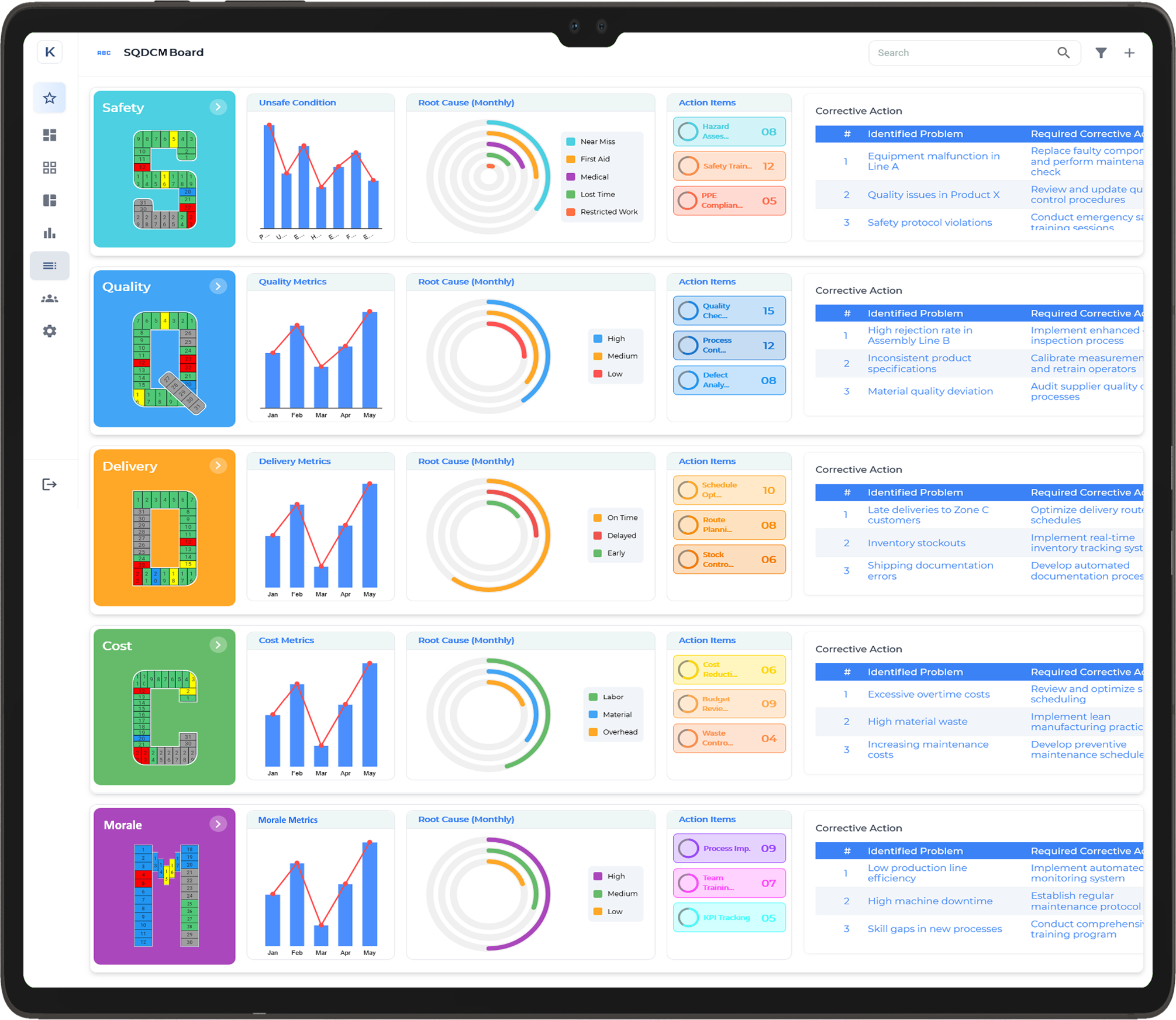
Supporting Daily Manufacturing Control
Manufacturers use SQDCM Boards to create structure and consistency in daily performance tracking. These boards allow teams to review results, identify deviations, and discuss actions during regular daily meetings. This routine helps ensure that problems are addressed quickly rather than being discovered later through reports or audits.
Improving Communication on the Shop Floor
Clear visual displays improve communication between operators, supervisors, and managers. SQDCM boards provide a shared reference point, reducing misunderstandings and helping teams stay aligned. Everyone can see priorities, targets, and current performance without needing detailed explanations.
Supporting Continuous Improvement
By reviewing SQDCM metrics daily, manufacturers can identify trends and improvement opportunities. This regular focus encourages teams to make small, continuous improvements that strengthen performance, reduce risk, and support long-term operational stability.
Improving Workplace Safety Through Daily SQDCM Visibility
Keeping Safety Performance Visible
Daily SQDCM visibility ensures that safety remains a top priority on the shop floor. Safety metrics such as incidents, near misses, and safety actions are displayed clearly, reminding teams of their responsibility to maintain a safe working environment. This constant visibility reinforces safe behaviours and awareness.
Identifying Risks Early
Tracking safety performance daily allows teams to identify potential hazards before they result in incidents. Patterns such as repeated near misses or unsafe conditions become easier to spot, enabling early intervention. This proactive approach reduces the likelihood of serious accidents.
Encouraging Open Safety Discussions
SQDCM Boards support open conversations about safety during daily meetings. Teams can discuss concerns, share observations, and agree on corrective actions together. This openness helps build trust and encourages employees to speak up about safety issues.
Building Shared Safety Responsibility
When safety data is visible to everyone, responsibility is shared across the team. Employees understand how their actions affect safety outcomes, leading to greater accountability and a stronger safety culture across the manufacturing environment.
Enhancing Product Quality with Structured Performance Tracking
Making Quality Performance Clear
Structured performance tracking through SQDCM boards helps make quality performance clear and measurable. Daily metrics such as defects, rework, and process deviations are displayed visually, allowing teams to quickly assess whether quality standards are being met.
Responding Quickly to Quality Issues
Daily visibility enables teams to respond to quality problems as soon as they occur. Early detection prevents defects from spreading further in the process, reducing waste and protecting customer satisfaction.
Supporting Root Cause Analysis
Tracking quality data consistently helps teams identify recurring issues and trends. This supports more effective root cause analysis, ensuring that corrective actions address the underlying causes rather than temporary symptoms.
Encouraging Ownership of Quality
When teams can see the impact of their work on quality outcomes, they take greater ownership. This engagement encourages adherence to standards and continuous improvement in daily manufacturing activities.
Keeping Production on Schedule with Clear Delivery Metrics
Understanding Delivery Performance
Clear delivery metrics on SQDCM Boards help teams understand whether production is meeting planned schedules. Daily tracking of output, delays, and missed targets provides immediate insight into delivery performance.
Reacting Quickly to Delays
When delivery issues are visible early, teams can take corrective action quickly. Adjustments to staffing, priorities, or processes can be made before delays affect customers or downstream operations.
Improving Coordination Across the Shop Floor
Shared delivery data improves coordination between different production areas. Teams can align their efforts, manage dependencies, and work together to keep production flowing smoothly.
Supporting Reliable Delivery Performance
Consistent daily tracking helps teams identify patterns that affect delivery reliability. Over time, this insight supports process improvements that lead to more predictable and stable production schedules.
Reducing Manufacturing Costs Using Data-Driven Insights
Making Cost Drivers Visible
Data-driven SQDCM boards help make cost-related issues visible. Metrics such as waste, downtime, and inefficiencies highlight where costs are increasing, allowing teams to focus improvement efforts effectively.
Taking Early Corrective Action
Daily cost visibility allows teams to address inefficiencies quickly. Early action helps prevent small issues from developing into larger cost problems, supporting better financial control.
Supporting Smarter Improvement Decisions
Reliable cost data enables teams to prioritise improvement actions that deliver the greatest value. Decisions are based on evidence rather than assumptions, improving the effectiveness of cost reduction efforts.
Encouraging Cost Awareness
When cost performance is visible to everyone, teams become more aware of how daily actions impact overall costs. This shared understanding supports responsible decision-making and sustainable manufacturing operations.
Boosting Team Morale and Engagement on the Shop Floor
Creating Transparency and Trust
SQDCM boards create transparency by openly sharing performance data with teams. This openness builds trust, as employees feel informed and involved rather than excluded from decision-making.
Recognising Team Achievements
Visible performance data allows teams to see their successes as well as challenges. Recognising improvements and achievements helps boost morale and motivates teams to maintain high standards.
Encouraging Participation and Ownership
When teams can see how their work contributes to results, they are more likely to engage actively. SQDCM boards encourage employees to contribute ideas, take responsibility, and support improvement initiatives.
Building a Positive Work Environment
Regular communication around SQDCM boards strengthens teamwork and alignment. This structured engagement supports a positive shop floor culture where employees feel valued and motivated.
Making Problems Visible Early with Visual Management
Seeing Issues as They Occur
Visual management through SQDCM boards makes problems visible as soon as they arise. Deviations from targets are easy to spot, allowing teams to respond quickly rather than relying on delayed reports.
Reducing the Impact of Issues
Early visibility helps prevent small problems from escalating. Teams can address root causes promptly, reducing disruption to production, quality, and safety.
Supporting Structured Problem-Solving
Visual data provides a clear basis for problem-solving discussions. Teams can review facts, analyse trends, and agree on actions using the same information.
Strengthening Continuous Improvement
By making problems visible early, visual management encourages a proactive approach. Over time, this consistent focus helps embed continuous improvement into daily manufacturing operations.
Turning Daily Production Meetings into Action-Focused Discussions
Bringing Structure and Purpose to Daily Meetings
Daily production meetings are most effective when they are structured around clear and visible performance data. SQDCM boards help teams focus discussions on safety, quality, delivery, cost, and morale, ensuring meetings remain relevant and purposeful. Instead of lengthy updates, teams can quickly review what is performing well and where attention is required. This structure keeps discussions focused and aligned with operational priorities.
Encouraging Decisions and Immediate Actions
Action-focused discussions are driven by visible gaps and agreed targets. When issues are clearly highlighted on the board, teams can identify root causes and agree on corrective actions during the meeting itself. Responsibilities and timelines are defined immediately, reducing delays and ensuring follow-through. This approach turns meetings into decision-making forums rather than reporting sessions.
Improving Engagement and Accountability
Clear visibility of performance encourages participation from all team members. Everyone understands how their role impacts results, leading to higher engagement and accountability. Over time, daily production meetings become a consistent habit that drives problem-solving, strengthens communication, and supports continuous operational improvement.
Supporting Lean Manufacturing with Standardised SQDCM Metrics
Creating a Common Performance Framework
Standardised SQDCM metrics provide a consistent framework for measuring lean performance. By tracking safety, quality, delivery, cost, and morale in the same way across teams, organisations create a shared understanding of expectations. This consistency supports clear communication and ensures lean principles are applied uniformly across operations.
Reducing Waste and Improving Flow
Lean manufacturing focuses on eliminating waste and improving process flow. SQDCM boards highlight inefficiencies, delays, and quality issues that impact performance. With this visibility, teams can prioritise improvement actions that reduce waste and stabilise processes. Standard metrics help teams measure progress and maintain focus on continuous improvement.
Reinforcing Lean Behaviours Daily
Daily review of SQDCM metrics reinforces lean thinking as part of everyday work. Teams regularly reflect on performance, take ownership of actions, and learn from outcomes. This routine strengthens lean behaviours and supports sustainable operational improvement.
Driving Continuous Improvement Through Daily Performance Reviews
Embedding Improvement into Daily Operations
Daily performance reviews ensure continuous improvement becomes part of normal operations. Using SQDCM boards, teams review performance against daily targets and identify opportunities for improvement. This regular rhythm keeps improvement efforts active and aligned with operational priorities.
Monitoring Actions and Results
Daily reviews allow teams to track whether improvement actions are delivering results. Performance trends are monitored over time, helping teams understand what works and where adjustments are needed. This feedback loop supports learning and ensures improvement activities remain effective.
Building a Culture of Ongoing Improvement
Consistent daily reviews encourage ownership and accountability. Teams become more confident in identifying issues and suggesting improvements. Over time, this approach builds a strong improvement culture where progress is sustained through disciplined performance management.
Improving Accountability and Ownership Across Teams
Making Responsibilities Clear
SQDCM boards improve accountability by clearly displaying performance targets and results. When expectations are visible, teams understand their responsibilities and how success is measured. This clarity reduces confusion and ensures everyone is aligned with shared goals.
Encouraging Team Ownership
Visible performance data helps teams take ownership of results. Teams can see the direct impact of their actions on safety, quality, delivery, cost, and morale. This connection motivates proactive behaviour and encourages teams to address issues before they escalate.
Strengthening Trust and Engagement
Clear accountability builds trust within teams. Open discussions around performance encourage collaboration and shared problem-solving. This environment supports engagement and reinforces a culture of responsibility and continuous improvement.
Reducing Waste and Process Variability with SQDCM Boards
Identifying Sources of Waste
SQDCM boards help teams identify waste by highlighting deviations in performance. Issues such as rework, delays, and inefficiencies become visible through daily tracking. This clarity allows teams to focus on the most significant sources of waste.
Stabilising Processes
Process variability creates inconsistency and inefficiency. By tracking performance trends, teams can identify recurring issues and take corrective actions to stabilise processes. Reduced variability improves predictability and supports smoother operations.
Supporting Continuous Waste Reduction
Regular review of SQDCM metrics encourages ongoing waste reduction. Teams learn from data, refine processes, and sustain improvements. This disciplined approach supports lean operations and long-term efficiency gains.
Standardising Performance Reporting Across Shifts and Lines
Ensuring Consistency in Measurement
Standardised reporting ensures all shifts and production lines measure performance in the same way. SQDCM boards provide a consistent structure, making it easier to compare results and identify improvement opportunities.
Improving Shift Handover and Continuity
Consistent reporting supports effective shift handovers. Incoming teams can quickly understand current performance and ongoing actions. This continuity reduces errors, prevents duplication, and improves overall efficiency.
Supporting Organisation-Wide Improvement
When reporting is standardised, best practices can be shared across lines and shifts. This approach supports scalable improvement and consistent performance management across operations.
Moving from Manual Boards to Digital SQDCM Solutions
Overcoming Limitations of Manual Boards
Manual boards often rely on delayed updates and manual effort, which can lead to inaccuracies. Digital SQDCM solutions provide real-time updates and reduce administrative burden, ensuring data remains current and reliable.
Improving Accessibility and Visibility
Digital boards can be accessed easily across teams and locations. This visibility supports better collaboration and ensures everyone works from the same information. Performance discussions become more effective and data-driven.
Supporting Faster and Better Decisions
With accurate and timely data, teams can make quicker decisions and respond effectively to issues. Digital solutions strengthen performance management and support continuous improvement.
Measuring the Real Business Impact of SQDCM Boards
Linking Operational Metrics to Business Outcomes
SQDCM boards help organisations understand how daily operations impact business results. Tracking safety, quality, delivery, cost, and morale provides insight into performance drivers and improvement opportunities.
Tracking Improvements Over Time
Long-term performance tracking shows whether improvement actions deliver sustained benefits. Trends highlight progress and help teams refine strategies to maximise impact.
Supporting Sustainable Performance Growth
Measuring business impact builds confidence in performance management practices. Clear results reinforce accountability and support informed decision-making, driving sustainable operational excellence.