What Are Industry 4.0 Technologies?
Understanding the Fourth Industrial Revolution
Industry 4.0 technologies represent the fourth industrial revolution, where advanced digital technologies transform traditional manufacturing and industrial operations into intelligent, connected, and automated systems. These technologies integrate physical production with digital tools, smart devices, and data-driven systems to create modern smart factories. The goal is to improve operational efficiency, enhance flexibility, reduce costs, and enable faster decision-making through real-time data and automation.
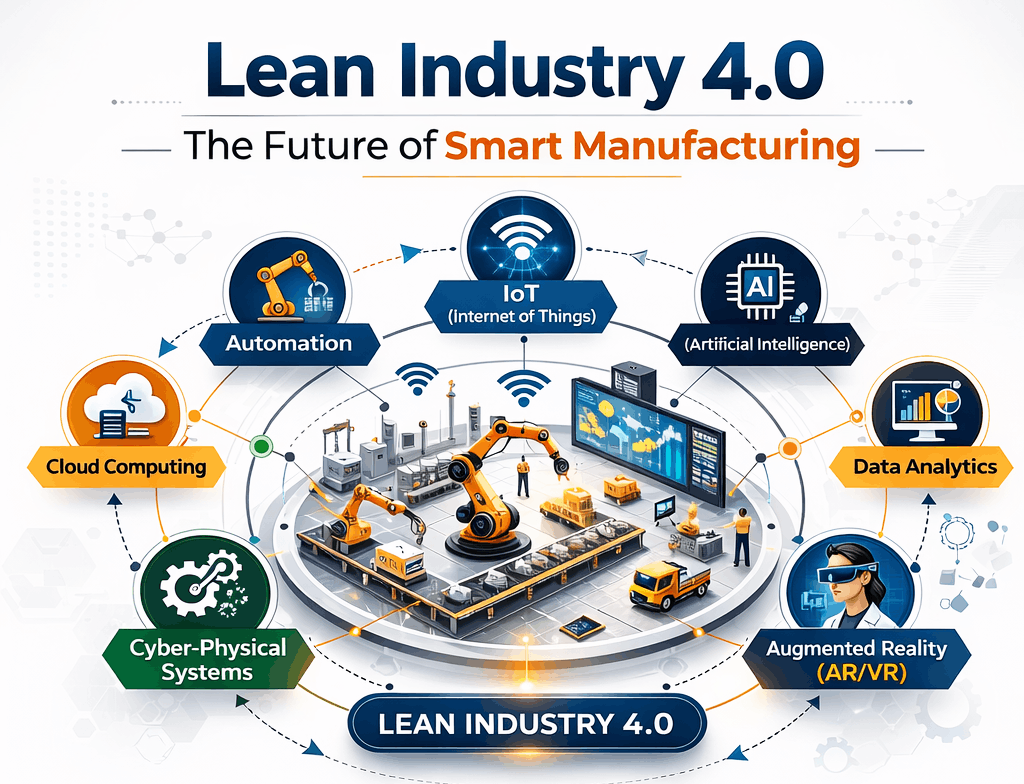
Key Technologies Powering Industry 4.0
Several advanced technologies form the foundation of Industry 4.0. These include the Internet of Things (IoT), which connects machines and sensors to collect real-time operational data, and Artificial Intelligence (AI), which helps systems analyse information and automate decision-making. Big Data analytics enables organisations to process massive volumes of industrial data, while Cloud Computing provides scalable storage and computing resources for connected systems. Other important technologies include Cyber-Physical Systems, which combine digital monitoring with physical machines, and advanced robotics that automate repetitive or dangerous tasks.
Transforming Traditional Manufacturing
Industry 4.0 technologies are transforming traditional factories into highly efficient smart environments. Machines can communicate with each other, production lines can adjust automatically, and systems can detect faults before they lead to downtime. Technologies such as Digital Twins allow companies to simulate machines and processes virtually, while Augmented Reality (AR) helps workers perform maintenance and training more effectively. This level of integration improves productivity and enables companies to respond quickly to market demands.
The Future of Smart and Connected Industries
As Industry 4.0 continues to evolve, organisations that adopt these technologies gain a competitive advantage through improved efficiency, better resource management, and smarter decision-making. By combining automation, data intelligence, and connectivity, Industry 4.0 technologies are shaping the future of modern manufacturing and industrial innovation.
Internet of Things (IoT) in Smart Manufacturing
Connecting Machines and Systems
The Internet of Things (IoT) plays a major role in Industry 4.0 by connecting machines, sensors, and devices through the internet. In smart manufacturing environments, IoT allows equipment to collect and share real-time data about performance, production levels, and machine conditions. This connectivity helps organisations monitor operations continuously and respond quickly to any issues that arise.
Real-Time Monitoring and Control
With IoT-enabled sensors installed on machines and production lines, manufacturers can monitor equipment health, energy usage, and workflow efficiency in real time. This visibility helps managers detect problems early and maintain smooth operations. Real-time monitoring also improves decision-making because leaders have access to accurate and up-to-date information.
Improving Efficiency and Reducing Downtime
IoT technology enables predictive maintenance by identifying potential equipment failures before they occur. By analysing machine data, systems can alert teams when maintenance is needed. This reduces unexpected downtime, increases equipment lifespan, and improves overall productivity within the factory.
Building the Foundation for Smart Factories
IoT acts as the foundation of smart factories by enabling machines, systems, and people to communicate seamlessly. With connected infrastructure, manufacturers can automate processes, optimise production schedules, and maintain higher levels of operational efficiency.
Artificial Intelligence and Machine Learning in Industry
Enhancing Decision-Making with Intelligent Systems
Artificial Intelligence (AI) and Machine Learning (ML) are key technologies driving Industry 4.0 innovation. These systems analyse large volumes of industrial data to identify patterns, predict outcomes, and automate complex decision-making processes. By using AI-driven insights, organisations can improve productivity and optimise operations.
Automating Quality Control
AI-powered computer vision systems are widely used for quality inspection in manufacturing. These systems can detect defects or irregularities in products much faster and more accurately than manual inspections. This helps maintain high product standards and reduces the risk of faulty goods reaching customers.
Predictive Analytics for Industrial Performance
Machine learning algorithms analyse historical data to forecast machine failures, production demand, and supply chain disruptions. These predictive capabilities allow organisations to prepare for potential challenges and maintain consistent production performance.
Driving Innovation Across Industries
AI technologies continue to expand across manufacturing, logistics, and energy sectors. By integrating AI into industrial systems, companies can develop smarter processes, reduce costs, and unlock new opportunities for growth.
Big Data and Advanced Analytics for Industrial Insights
Managing Large Volumes of Industrial Data
Modern industrial systems generate enormous amounts of data from machines, sensors, supply chains, and production lines. Big Data technologies allow organisations to collect, store, and analyse this information effectively. With advanced analytics, companies can transform raw data into meaningful insights that support better decision-making.
Identifying Patterns and Trends
Advanced analytics tools help manufacturers identify patterns in production performance, energy consumption, and operational efficiency. By analysing these trends, organisations can pinpoint areas for improvement and optimise processes to achieve higher productivity.
Supporting Strategic Planning
Data-driven insights enable leaders to make strategic decisions based on evidence rather than assumptions. Whether planning production schedules or improving product quality, big data analytics helps organisations operate more efficiently and respond to market demands quickly.
Strengthening Competitive Advantage
Companies that effectively use big data analytics gain a strong competitive advantage by improving efficiency, reducing waste, and identifying opportunities for innovation.
Cloud Computing for Scalable Industrial Operations
Accessing Industrial Data from Anywhere
Cloud computing provides a flexible platform for storing, processing, and managing industrial data through the internet. Instead of relying solely on local servers, organisations can use cloud platforms to access information from anywhere. This improves collaboration between teams and ensures that critical data is always available when needed.
Scalability and Cost Efficiency
Cloud solutions allow businesses to scale their computing resources according to demand. Manufacturers can increase or reduce storage and processing capacity without investing heavily in physical infrastructure. This flexibility makes cloud technology a cost-effective option for modern industrial operations.
Supporting Real-Time Analytics
Cloud platforms enable real-time data analysis by processing information collected from connected devices and machines. This allows organisations to monitor production performance, identify problems quickly, and make faster decisions.
Enhancing Collaboration Across Locations
With cloud computing, teams across different facilities or countries can access the same data and systems. This connectivity improves coordination, communication, and operational efficiency across the entire organisation.
Cyber-Physical Systems and Smart Factory Integration
Bridging Physical and Digital Systems
Cyber-Physical Systems (CPS) combine physical machines with digital technologies that monitor and control processes in real time. These systems integrate sensors, software, and network connectivity to create intelligent production environments.
Real-Time Communication Between Machines
In CPS environments, machines can communicate with each other automatically to coordinate tasks and optimise workflows. This interaction helps reduce delays, improve production accuracy, and maintain efficient operations across the factory floor.
Enhancing Automation and Control
By continuously analysing machine data, cyber-physical systems can adjust operations automatically when conditions change. This level of automation ensures smoother production processes and improved product quality.
Enabling the Smart Factory Vision
CPS technology forms the backbone of smart factories by integrating digital intelligence into physical manufacturing systems, allowing companies to create more adaptive and efficient production environments.
Industrial Robotics and Autonomous Automation
Automating Repetitive and Complex Tasks
Industrial robots are widely used in modern manufacturing to perform repetitive, precise, or hazardous tasks. These machines can operate continuously with high accuracy, increasing productivity and reducing human error.
Collaborative Robots in the Workplace
Collaborative robots, often called cobots, work alongside human workers to assist with assembly, packaging, and material handling. They improve workplace safety while enhancing efficiency.
Improving Production Speed and Quality
Robotics systems help manufacturers maintain consistent product quality and accelerate production processes. With advanced sensors and AI capabilities, robots can adapt to changing tasks and improve operational flexibility.
Supporting the Future of Automated Manufacturing
As robotics technology evolves, industries will continue to adopt more autonomous systems that reduce manual labour and increase production efficiency.
Digital Twin Technology for Simulation and Monitoring
Creating Virtual Models of Physical Systems
A Digital Twin is a virtual representation of a physical machine, product, or process. It uses real-time data from sensors and systems to replicate how the physical asset behaves in the real world.
Testing and Simulation Capabilities
Digital twins allow engineers to test changes, simulate scenarios, and predict outcomes before implementing them in real production environments. This reduces risk and improves planning accuracy.
Enhancing Maintenance Strategies
By analysing data from the digital twin, organisations can identify potential issues before they affect operations. This supports predictive maintenance and reduces downtime.
Optimising System Performance
Digital twin technology enables companies to continuously monitor and optimise their equipment and processes, leading to improved efficiency and innovation.
Additive Manufacturing and 3D Printing in Production
Building Products Layer by Layer
Additive manufacturing, commonly known as 3D printing, creates objects by adding material layer by layer based on digital designs. This technology allows manufacturers to produce complex shapes that are difficult or impossible to create using traditional methods.
Accelerating Product Development
3D printing enables rapid prototyping, allowing engineers to quickly design, test, and refine new products. This shortens development cycles and speeds up innovation.
Reducing Waste and Production Costs
Unlike traditional manufacturing processes that remove material, additive manufacturing uses only the material required for the product. This reduces waste and lowers production costs.
Supporting Customised Manufacturing
Industries such as aerospace, automotive, and healthcare use 3D printing to produce customised components tailored to specific requirements.
Augmented Reality (AR) and Virtual Reality (VR) in Industry
Enhancing Training and Skill Development
Augmented Reality and Virtual Reality technologies provide immersive training environments for industrial workers. Employees can practise operating machinery or handling complex tasks in simulated environments before working with real equipment.
Supporting Maintenance and Repairs
AR tools allow technicians to view digital instructions or diagrams overlaid on physical equipment through smart glasses or mobile devices. This helps them perform maintenance tasks more accurately and efficiently.
Improving Design and Visualization
VR systems enable engineers and designers to visualise and test product designs in virtual environments. This improves collaboration and helps identify design issues earlier in the development process.
Increasing Efficiency and Safety
By providing visual guidance and immersive simulations, AR and VR technologies enhance operational efficiency and reduce risks in industrial workplaces.
Cybersecurity for Secure Industry 4.0 Infrastructure
Protecting Connected Industrial Systems
As industrial systems become more connected, cybersecurity becomes increasingly important. Protecting networks, machines, and sensitive data from cyber threats is essential for maintaining safe and reliable operations.
Preventing Data Breaches and Attacks
Cybersecurity solutions help detect and prevent cyberattacks that could disrupt production or compromise sensitive information. Strong security frameworks protect industrial infrastructure from potential threats.
Ensuring Safe Communication Between Systems
Secure communication protocols ensure that data exchanged between machines, sensors, and cloud systems remains protected from unauthorised access.
Maintaining Trust in Digital Manufacturing
By implementing robust cybersecurity measures, organisations can safely adopt Industry 4.0 technologies while protecting their operations and intellectual property.
Smart Factories and Connected Manufacturing Systems
Transforming Traditional Production
Smart factories use Industry 4.0 technologies to create highly connected and automated manufacturing environments. Machines, systems, and workers communicate seamlessly to optimise production processes.
Automated and Adaptive Operations
Smart factory systems can adjust production schedules, manage resources efficiently, and respond to changing conditions automatically. This adaptability improves operational flexibility.
Real-Time Performance Monitoring
Connected systems provide real-time insights into production performance, allowing managers to identify inefficiencies and implement improvements quickly.
Driving the Future of Manufacturing
Smart factories represent the next stage of industrial innovation, where digital technologies and automation work together to deliver highly efficient and responsive manufacturing systems.
Predictive Maintenance Using Industrial Data
Preventing Equipment Failures
Predictive maintenance uses data collected from sensors and machines to forecast when equipment may fail. This allows maintenance teams to take action before breakdowns occur.
Reducing Downtime and Costs
By identifying maintenance needs early, organisations can schedule repairs at convenient times, reducing unexpected downtime and costly disruptions.
Improving Equipment Lifespan
Regular monitoring and predictive analysis help maintain equipment in optimal condition, extending its lifespan and improving reliability.
Enhancing Operational Efficiency
Predictive maintenance supports smoother operations by ensuring that machinery performs consistently and efficiently.
Digital Supply Chain and Intelligent Logistics
Connecting Supply Chain Operations
Digital supply chains use advanced technologies to connect suppliers, manufacturers, distributors, and customers through integrated digital platforms.
Improving Visibility and Coordination
Real-time tracking systems allow organisations to monitor shipments, inventory levels, and logistics operations more effectively.
Optimising Inventory and Delivery
Digital tools help companies forecast demand accurately and manage inventory efficiently, reducing delays and improving customer satisfaction.
Building Resilient Supply Networks
By digitising supply chain processes, organisations can respond faster to disruptions and maintain smooth operations.
The Future of Industry with Industry 4.0 Technologies
Advancing Digital Transformation
Industry 4.0 technologies are transforming industries by integrating digital intelligence, automation, and connectivity into production systems. These advancements enable organisations to operate more efficiently and adapt to changing market demands.
Encouraging Innovation and Growth
Companies adopting Industry 4.0 technologies can innovate faster, develop smarter products, and improve operational performance. This digital transformation supports long-term growth and competitiveness.
Building Sustainable and Efficient Operations
Smart technologies help optimise energy usage, reduce waste, and improve resource management. This contributes to more sustainable industrial practices.
Shaping the Next Generation of Manufacturing
As technology continues to evolve, Industry 4.0 will drive the development of more intelligent, automated, and connected manufacturing ecosystems across the world.