What Is a Balanced Scorecard and Why It’s Essential for Performance Management
Understanding the Balanced Scorecard
A balanced scorecard is a strategic management tool that helps organisations measure and monitor performance across multiple areas. Unlike traditional performance metrics that focus only on financial results, a balanced scorecard considers a combination of financial, customer, internal process, and learning and growth perspectives. This holistic approach provides a more complete view of organisational performance.
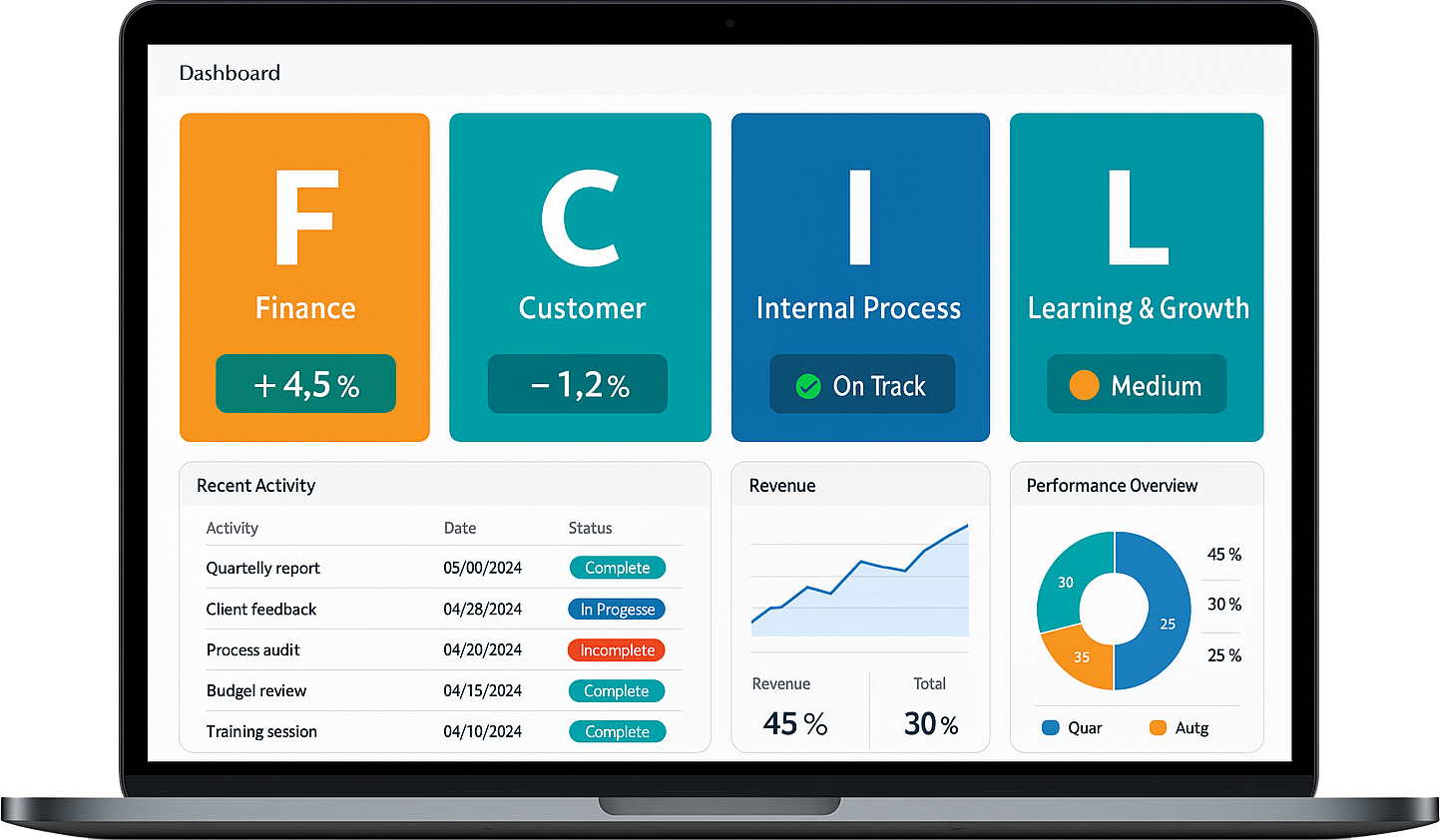
Linking Strategy to Measurable Goals
The Balanced Scorecard translates an organisation’s strategy into measurable objectives and key performance indicators (KPIs). By linking goals to specific metrics, it ensures that all activities and initiatives are aligned with strategic priorities. This helps teams understand how their daily work contributes to overall business success.
Enhancing Decision-Making and Accountability
Using a balanced scorecard improves decision-making by providing clear, real-time insights into performance. Managers can identify areas that need attention, allocate resources effectively, and take corrective action when necessary. It also promotes accountability, as employees can see how their performance impacts organisational outcomes.
Supporting Continuous Improvement
The Balanced Scorecard encourages continuous improvement by tracking progress and highlighting trends over time. Organisations can monitor performance, learn from results, and adjust strategies to achieve better outcomes. This ongoing process ensures that businesses remain agile, competitive, and focused on achieving long-term goals.
The Four Perspectives Explained: Financial, Customer, Internal Processes, Learning & Growth
Financial Perspective
The financial perspective focuses on measuring an organisation’s financial performance and stability. Key metrics include revenue growth, profitability, cost management, and return on investment. Monitoring these indicators helps businesses ensure that resources are used effectively and that strategic objectives are supported by solid financial results.
Customer Perspective
The customer perspective evaluates how well an organisation meets the needs and expectations of its clients. Metrics such as customer satisfaction, retention rates, and service quality provide insights into the customer experience. By prioritising this perspective, businesses can strengthen relationships, increase loyalty, and drive long-term growth.
Internal Processes Perspective
The internal processes perspective assesses the efficiency and effectiveness of core business operations. Metrics may include production efficiency, process cycle times, quality control, and operational bottlenecks. Focusing on this area helps organisations streamline workflows, reduce waste, and ensure that internal processes support strategic goals.
Learning & Growth Perspective
The learning and growth perspective emphasises employee development, innovation, and organisational learning. Key indicators include staff training, skill development, knowledge sharing, and employee engagement. Investing in this perspective ensures that the workforce is capable, motivated, and equipped to drive innovation and support long-term success.
Linking Strategic Goals to Measurable KPIs for Better Results
Understanding the Importance of KPIs
Key performance indicators (KPIs) are vital for tracking progress towards strategic goals. They provide clear, measurable benchmarks that help organisations evaluate performance and identify areas for improvement. By linking KPIs directly to strategic objectives, businesses can ensure that every action contributes meaningfully to overall success.
Translating Goals into Measurable Metrics
Strategic goals are often broad and long-term, which can make it difficult to measure progress. KPIs break these goals down into specific, quantifiable metrics. For example, a goal to improve customer satisfaction can be measured through customer feedback scores, response times, and retention rates. This approach makes objectives actionable and easier to monitor.
Enhancing Accountability and Focus
When KPIs are clearly defined and linked to strategic goals, employees understand their responsibilities and the impact of their work. This fosters accountability and encourages teams to focus on activities that drive results. Managers can use KPI data to provide guidance, recognise achievements, and address performance gaps effectively.
Supporting Data-Driven Decision-Making
Linking strategic goals to measurable KPIs enables organisations to make informed decisions. By analysing performance data, businesses can identify trends, anticipate challenges, and adjust strategies in real time. This ensures that efforts remain aligned with objectives and maximises the chances of achieving desired outcomes efficiently.
Financial Measures That Drive Organisational Performance
Understanding the Role of Financial Measures
Financial measures are critical indicators that help organisations evaluate their economic health and overall performance. They provide insights into profitability, cost efficiency, revenue growth, and return on investment. By monitoring these measures, businesses can make informed decisions that support strategic objectives and sustainable growth.
Key Financial Metrics
Some of the most important financial metrics include revenue, net profit, operating margin, and cash flow. These indicators help assess how effectively resources are being utilised and whether the organisation is achieving its financial goals. Regular tracking of these metrics ensures that strategies are on course and supports timely decision-making.
Linking Financial Measures to Strategy
Financial measures become most effective when linked directly to organisational strategy. For example, if a goal is to increase market share, monitoring revenue growth, cost management, and customer acquisition costs can highlight progress. This alignment ensures that every financial decision contributes to achieving long-term business objectives.
Enhancing Accountability and Performance
Tracking financial measures fosters accountability across teams and departments. Employees and managers can see how their actions impact the company’s financial outcomes, encouraging responsible spending and efficient operations. By using financial insights to guide decision-making, organisations can optimise performance, reduce risks, and drive sustainable success.
Customer-Centric Measures to Enhance Satisfaction and Loyalty
Understanding Customer-Centric Measures
Customer-centric measures focus on evaluating how well an organisation meets the needs and expectations of its clients. These measures provide insights into satisfaction, loyalty, and overall customer experience. By tracking these metrics, businesses can identify areas for improvement and make strategic decisions that enhance long-term relationships.
Key Metrics for Customer Satisfaction
Important customer-centric metrics include satisfaction scores, retention rates, repeat purchases, and service response times. Collecting feedback through surveys or direct interactions helps organisations understand customer perceptions and identify pain points. Monitoring these indicators ensures that businesses can address issues promptly and maintain high levels of customer satisfaction.
Driving Customer Loyalty
Customer loyalty is built on consistent positive experiences and trust. Metrics such as referral rates, repeat purchase behaviour, and net promoter scores provide valuable insights into how loyal customers are. By focusing on these measures, organisations can create strategies to reward loyalty, improve service quality, and foster stronger relationships with clients.
Supporting Strategic Decision-Making
Customer-centric measures help organisations make informed, data-driven decisions. By analysing trends and patterns, businesses can adjust products, services, and processes to better meet customer expectations. This approach not only enhances satisfaction and loyalty but also drives long-term growth and strengthens the organisation’s competitive position.
Internal Process Measures to Improve Efficiency and Quality
Understanding Internal Process Measures
Internal process measures help organisations evaluate how efficiently and effectively their operations are running. These measures track workflows, production times, error rates, and resource utilisation. By analysing these metrics, businesses can identify bottlenecks, reduce waste, and improve overall quality in processes.
Linking Processes to Strategic Goals
Internal process measures become most valuable when aligned with strategic objectives. For example, if a goal is to improve customer satisfaction, tracking order fulfilment speed, error rates, and service delivery times can indicate performance. This ensures that internal operations support broader organisational priorities.
Enhancing Efficiency and Quality
Monitoring these measures enables teams to take corrective actions, streamline workflows, and optimise resources. Regular tracking of internal processes encourages continuous improvement, reduces errors, and maintains high-quality standards across the organisation.
Fostering Accountability and Improvement
When internal process measures are transparent, employees understand their impact on organisational performance. Managers can guide teams more effectively, promote accountability, and ensure that operations contribute to both efficiency and quality improvements.
Learning and Growth Measures for Long-Term Organisational Success
Understanding Learning and Growth Measures
Learning and growth measures focus on employee development, skills, and innovation. These indicators help organisations evaluate whether staff have the knowledge and capabilities to achieve strategic goals. Tracking learning and growth metrics ensures that the workforce remains motivated, skilled, and ready for future challenges.
Key Metrics for Growth
Important metrics include training completion rates, skill development, knowledge sharing, and employee engagement. These measures highlight the organisation’s ability to innovate, adapt, and maintain high performance, which is essential for long-term success.
Linking Learning to Strategic Objectives
Learning and growth measures are most effective when connected to organisational goals. For example, if a company aims to enhance product innovation, monitoring employee training, creativity initiatives, and participation in development programs ensures that staff contribute directly to achieving these objectives.
Supporting Continuous Improvement
By tracking these measures, organisations foster a culture of continuous learning and improvement. Employees are empowered to enhance their skills, innovate, and take ownership of their performance, ensuring sustainable growth and long-term success.
How to Identify the Right KPIs for Your Business Objectives
Understanding the Role of KPIs
Key performance indicators (KPIs) help organisations measure progress toward strategic goals. Choosing the right KPIs ensures that efforts are focused on meaningful results. KPIs should be specific, measurable, and relevant to the objectives they support, providing clarity for teams and management.
Aligning KPIs with Business Objectives
Start by reviewing strategic goals and breaking them into measurable components. For example, a goal to improve customer satisfaction may be measured by retention rates, response times, and feedback scores. This alignment ensures that KPIs drive the desired outcomes effectively.
Choosing Actionable Metrics
The best KPIs are actionable, enabling teams to make decisions and improve performance. Avoid metrics that are too broad or difficult to influence. Instead, focus on indicators that provide insights into performance, highlight areas for improvement, and guide strategic decision-making.
Monitoring and Adjusting KPIs
Regularly review KPIs to ensure they remain relevant as business objectives evolve. Adjusting metrics when necessary helps maintain alignment with goals, supports continuous improvement, and ensures that the organisation stays on track to achieve its strategic priorities.
Aligning Employee Performance with Organisational Goals
Understanding Employee Alignment
Aligning employee performance with organisational goals ensures that every individual contributes to strategic objectives. Clear alignment provides direction, motivates teams, and maximises overall productivity, creating a stronger connection between daily tasks and long-term outcomes.
Setting Clear Objectives
Employees need clear, measurable goals that reflect organisational priorities. Linking personal performance targets to broader business objectives ensures that efforts are focused and effective. For example, a sales target can be tied to overall revenue growth, showing the direct impact of individual performance.
Monitoring Performance and Providing Feedback
Regularly tracking performance using measurable metrics helps managers identify strengths and areas for improvement. Constructive feedback and guidance enable employees to adjust their efforts and stay aligned with organisational goals, fostering accountability and growth.
Promoting Engagement and Motivation
When employees understand how their work contributes to business success, engagement and motivation increase. Recognition of achievements and alignment with goals encourages commitment, drives productivity, and helps build a high-performing, strategy-focused workforce.
Visualising Performance Trends to Make Smarter Decisions
Understanding Performance Trends
Visualising performance trends helps organisations understand how activities impact strategic objectives over time. Graphs, charts, and dashboards make it easy to identify patterns, highlight strengths, and spot areas needing improvement. This approach simplifies complex data, enabling smarter decision-making.
Linking Trends to Business Goals
Performance trends are most valuable when connected to organisational objectives. For example, tracking sales growth over months or customer service response times allows managers to evaluate whether initiatives are achieving intended results and to adjust strategies accordingly.
Enhancing Decision-Making
Visual tools provide immediate insights, making it easier for managers to respond quickly to challenges or opportunities. By presenting data clearly, teams can make informed, timely decisions that support strategic goals and improve overall organisational performance.
Encouraging Continuous Improvement
Regularly analysing trends fosters a culture of continuous improvement. Teams can learn from successes and setbacks, implement effective changes, and maintain a proactive approach to achieving objectives. This ensures long-term efficiency, productivity, and growth.
Supporting Continuous Improvement (Kaizen) with Balanced Scorecards
Understanding Continuous Improvement
Continuous improvement, or Kaizen, focuses on regularly enhancing processes, products, and performance. Balanced scorecards support this approach by tracking relevant metrics, measuring progress, and providing insights that guide improvement initiatives.
Linking Metrics to Strategic Objectives
Balanced scorecards connect performance measures directly to organisational goals. For instance, if a goal is to increase operational efficiency, metrics like cycle times, error rates, and process completion times become critical. This alignment ensures that improvement efforts have a meaningful impact.
Driving Data-Driven Improvements
By analysing scorecard data, managers can identify trends, uncover issues, and implement solutions based on evidence. This data-driven approach reduces guesswork and ensures that adjustments enhance performance and align with strategic priorities.
Fostering a Culture of Accountability
Using balanced scorecards for continuous improvement promotes accountability across teams. Employees can see the impact of their actions on organisational goals, encouraging responsibility, collaboration, and a commitment to ongoing growth and success.
Integrating Balanced Scorecards with Existing Business Systems
Understanding the Importance of Integration
Integrating balanced scorecards with existing business systems ensures seamless data flow and accurate performance tracking. Connecting scorecards to platforms such as finance, HR, or operations systems provides a unified view of metrics, supporting informed decision-making and strategic alignment.
Streamlining Data and Reporting
Integration allows data from multiple departments to be combined and analysed in one central system. This reduces manual data entry, improves accuracy, and saves time. Managers gain quick access to real-time performance information, enabling faster and more effective responses.
Enhancing Strategic Decision-Making
When balanced scorecards are integrated with existing systems, organisations can track progress against objectives more effectively. Data-driven insights highlight trends, reveal gaps, and support corrective actions, ensuring that strategic initiatives are implemented efficiently.
Promoting Accountability and Efficiency
Integrated systems foster accountability across teams by providing clear visibility into performance. Employees understand how their work contributes to organisational goals, and managers can guide resources effectively, improving efficiency, collaboration, and overall business success.
Common Pitfalls When Implementing Performance Measures and How to Avoid Them
Setting Unrealistic Expectations
One common pitfall in implementing performance measures is setting unrealistic expectations. Organisations may expect immediate results without considering the time needed for adoption and data collection. Establishing achievable milestones ensures steady progress and helps teams remain motivated.
Focusing Only on Financial Metrics
While financial performance is important, relying solely on financial metrics can provide a limited view of organisational success. Balanced performance measures, including customer satisfaction, internal processes, and learning and growth, provide a more complete picture and drive sustainable performance improvements.
Poor Communication and Engagement
Failure to clearly communicate objectives and metrics can lead to confusion and disengagement. Ensuring that all employees understand how their roles contribute to performance measures increases accountability, alignment, and collaboration.
Neglecting Regular Review and Adjustment
Another common mistake is not reviewing performance measures regularly. Metrics should be monitored consistently to identify trends, uncover issues, and make timely adjustments. Regular reviews help maintain alignment with organisational goals and support continuous improvement.
Using Balanced Scorecards to Track Strategic Initiatives Effectively
Aligning Metrics with Strategy
Balanced scorecards help organisations track strategic initiatives by connecting key performance indicators (KPIs) to strategic goals. This alignment ensures that every project and action contributes to achieving organisational objectives and provides a clear framework for measuring success.
Monitoring Multiple Perspectives
Balanced scorecards consider financial, customer, internal process, and learning and growth perspectives. By monitoring these areas simultaneously, organisations can gain a holistic view of performance and make informed decisions to support strategic initiatives effectively.
Providing Real-Time Insights
Scorecards allow managers to track initiatives in real time, enabling quick responses to challenges and opportunities. Dashboards and reports provide visibility across departments, ensuring that resources are allocated efficiently and initiatives remain on track.
Encouraging Accountability and Collaboration
Using balanced scorecards promotes accountability by making performance transparent. Teams can see how their work contributes to overall objectives, fostering collaboration, improving performance, and increasing the likelihood of achieving strategic goals successfully.
Creating a High-Performance Culture Through Balanced Scorecard Metrics
Defining a High-Performance Culture
A high-performance culture focuses on aligning employee behaviour and efforts with organisational goals. Balanced scorecard metrics help create this culture by measuring performance in financial results, customer satisfaction, internal processes, and learning and growth, encouraging employees to excel in all areas.
Linking Metrics to Individual and Team Goals
Balanced scorecard metrics translate organisational objectives into measurable targets for teams and individuals. This alignment ensures that every employee understands how their performance impacts overall success and motivates them to prioritise activities that drive results.
Promoting Accountability and Engagement
Clear metrics increase accountability by showing how individual contributions affect organisational outcomes. Regular tracking and feedback keep employees engaged, recognise achievements, and support continuous development, which strengthens performance across the business.
Supporting Continuous Improvement
Balanced scorecard metrics encourage ongoing evaluation and refinement of processes. Teams can analyse results, identify opportunities for improvement, and implement changes effectively. This culture of continuous improvement ensures long-term success and sustainable high performance.