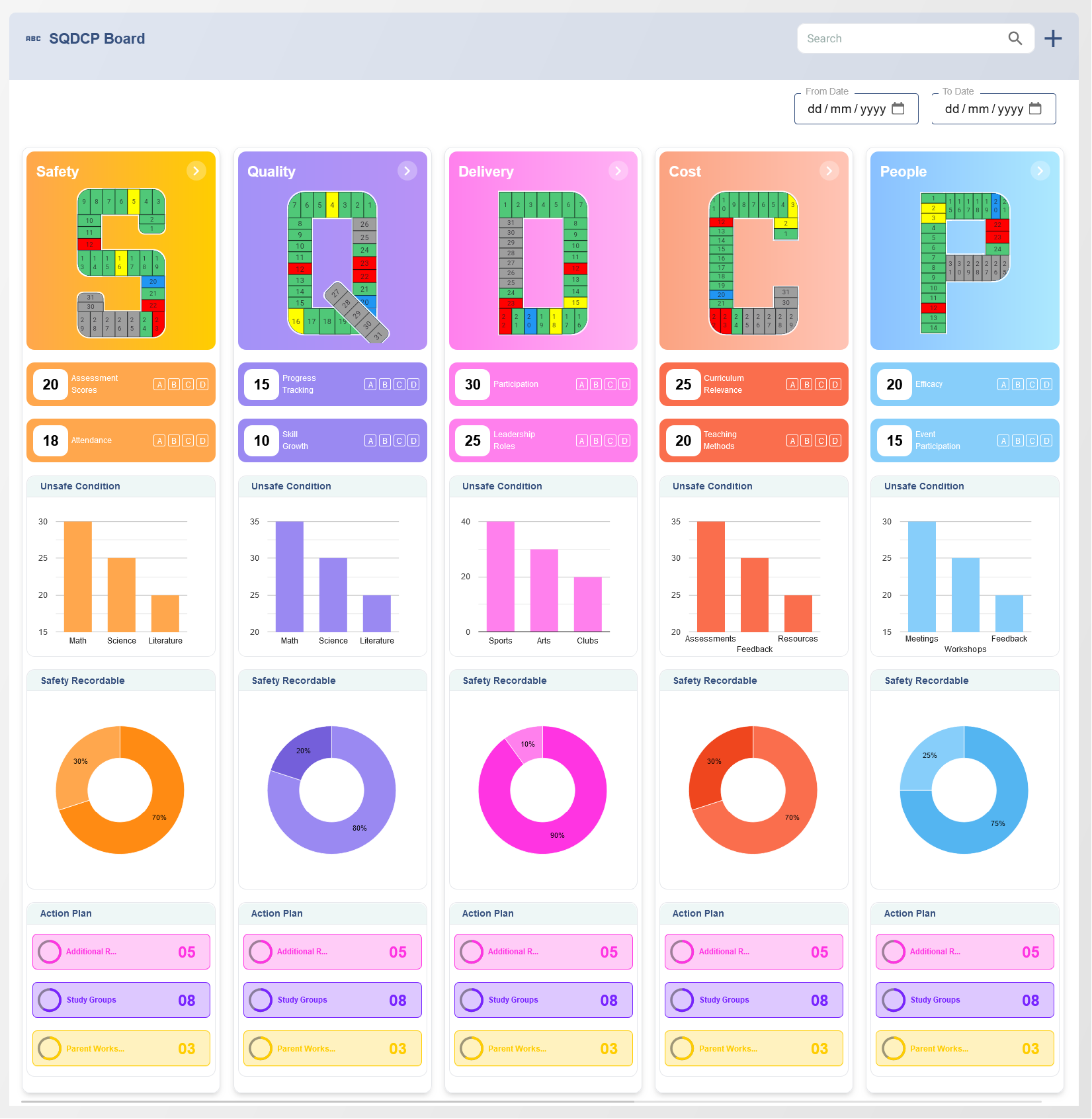
The SQDCP (Safety, Quality, Delivery, Cost, and People) process is a strategic approach to improving performance in manufacturing environments. This framework focuses on key performance indicators (KPIs) to enhance operational efficiency, reduce waste, and drive sustainable improvement. By addressing each component of SQDCP, manufacturers can foster a culture of continuous improvement, aligning all aspects of the organization to meet customer needs, improve profitability, and ensure long-term success. Here’s how the SQDCP process can be implemented in manufacturing for continuous improvement:
1. Safety
Safety is the foundation of any manufacturing process. Without a focus on safety, all other improvements are compromised. Implementing robust safety protocols helps reduce accidents, injuries, and downtime, thus ensuring a smooth, consistent workflow. In the SQDCP process, safety involves:
- Workplace Safety Standards: Establishing clear safety guidelines and ensuring compliance with industry regulations.
- Training and Education: Providing regular training to employees on best practices, potential hazards, and how to mitigate them.
- Monitoring and Reporting: Using safety audits and reporting mechanisms to track safety incidents and prevent future occurrences.
- Employee Involvement: Encouraging employees to report unsafe conditions and suggest improvements.
Safety improvements are closely linked to reducing downtime and increasing worker productivity, which ultimately impacts the overall performance of the manufacturing process.
2. Quality
Quality control is crucial in manufacturing, as poor-quality products can result in customer dissatisfaction, higher costs, and reputational damage. The SQDCP process emphasizes continuous quality improvement by focusing on:
- Standardization: Creating and enforcing standard operating procedures (SOPs) to ensure consistent quality throughout production processes.
- Quality Audits: Conducting regular inspections and audits to identify defects or areas of improvement.
- Root Cause Analysis: Using tools like the 5 Whys or Fishbone diagrams to identify the root causes of quality issues and implement corrective actions.
- Employee Involvement: Encouraging workers at all levels to contribute to quality improvement by fostering a mindset of ownership and pride in their work.
Improving quality results in fewer defects, less rework, and a stronger reputation in the market. It also reduces material waste, improves customer satisfaction, and leads to long-term profitability.
3. Delivery
Timely delivery is a critical aspect of manufacturing operations, as delays can disrupt supply chains, lead to customer dissatisfaction, and cause financial losses. The SQDCP process targets improving delivery performance by focusing on:
- Lead Time Reduction: Analyzing and improving lead times through better forecasting, streamlined processes, and improved supplier relationships.
- Inventory Management: Using lean manufacturing techniques, such as Just-In-Time (JIT), to optimize inventory levels and minimize stockouts or excess inventory.
- Supply Chain Optimization: Collaborating with suppliers to ensure they can meet delivery deadlines, and implementing contingency plans to address potential disruptions.
- Continuous Monitoring: Using real-time tracking systems to monitor the progress of production and shipping, ensuring that any delays are addressed promptly.
Improved delivery performance leads to stronger customer relationships, a higher rate of repeat business, and an increase in overall competitiveness in the market.
4. Cost
Cost control is essential for the profitability of a manufacturing operation. In the SQDCP process, managing costs efficiently while maintaining high standards of safety, quality, and delivery is key. Effective cost management involves:
- Waste Reduction: Implementing lean manufacturing principles to identify and eliminate waste in the production process, such as overproduction, defects, or waiting times.
- Energy Efficiency: Optimizing energy use through better equipment maintenance and energy-saving initiatives to reduce operational costs.
- Cost Optimization: Negotiating with suppliers for better pricing, reducing material costs through bulk purchases, and finding efficiencies in production schedules.
- Process Automation: Investing in automation technologies to reduce labor costs and improve efficiency in repetitive tasks.
By focusing on cost reduction while maintaining quality, manufacturers can increase their profit margins, invest in growth, and remain competitive in a price-sensitive market.
5. People
The success of the SQDCP process relies heavily on the people within the manufacturing organization. A motivated and skilled workforce is crucial to driving improvement across all areas. The SQDCP process addresses people development by focusing on:
- Training and Development: Offering ongoing training programs to upskill employees in areas such as safety, quality, and lean manufacturing techniques.
- Employee Engagement: Fostering a culture of involvement and ownership, where employees are encouraged to contribute ideas for process improvements and problem-solving.
- Leadership Development: Ensuring that leaders at all levels are equipped with the skills to manage teams, communicate effectively, and drive continuous improvement initiatives.
- Teamwork: Promoting collaboration between departments and creating cross-functional teams to tackle challenges and share best practices.
Investing in people ensures that the organization has the knowledge, skills, and motivation to continue improving processes, leading to enhanced productivity and performance.
SQDCP process for continuous improvement in manufacturing
What is the SQDCP process for continuous improvement in manufacturing?
The SQDCP process for continuous improvement in manufacturing is a structured approach focused on Supplier Quality (SQ), Development (D), Capability (C), and Performance (P). It aims to enhance the efficiency, quality, and capabilities of manufacturing processes through continuous assessment, improvement, and monitoring to achieve optimal performance.
How does the SQDCP process contribute to continuous improvement in manufacturing?
The SQDCP process contributes to continuous improvement by identifying areas for development, improving supplier quality, optimizing capabilities, and monitoring performance. This systematic approach allows manufacturers to address inefficiencies, reduce defects, enhance processes, and consistently meet production goals.
What are the key components of the SQDCP process in manufacturing?
The key components of the SQDCP process are:
- Supplier Quality (SQ): Ensuring that suppliers meet quality standards.
- Development (D): Fostering supplier and process improvement to meet evolving manufacturing needs.
- Capability (C): Enhancing the ability to meet demand and quality expectations.
- Performance (P): Continuously monitoring and evaluating manufacturing performance for improvements.
How does Supplier Quality (SQ) impact the SQDCP process in manufacturing?
Supplier Quality (SQ) plays a critical role in the SQDCP process by ensuring that the materials and components supplied meet the required specifications and quality standards. This ensures that the manufacturing process runs smoothly without defects, reducing the need for rework and minimizing production downtime.
How does the Development (D) phase of SQDCP support continuous improvement?
The Development (D) phase focuses on improving suppliers' and processes' capabilities through training, process redesign, and implementing new technologies. This phase encourages innovation, promotes better practices, and helps adapt manufacturing processes to meet future demands and quality expectations.
What role does Capability (C) play in the SQDCP process for manufacturing improvement?
Capability (C) involves assessing and improving the ability of the manufacturing process and suppliers to meet the required production volume, quality, and delivery schedules. It ensures that the manufacturing system is capable of scaling up when necessary and that it can consistently meet quality and efficiency goals without interruptions.
How is Performance (P) measured in the SQDCP process for manufacturing?
Performance (P) in the SQDCP process is measured using key performance indicators (KPIs) such as defect rates, on-time delivery, production efficiency, downtime, and overall equipment effectiveness (OEE). Regular monitoring of these metrics ensures that the manufacturing process is continuously improving and aligned with business goals.
What are the benefits of using the SQDCP process in manufacturing for continuous improvement?
The SQDCP process offers several benefits, including improved product quality, reduced defects, enhanced supplier performance, better resource utilization, and the ability to scale operations. This results in lower production costs, higher customer satisfaction, and a more efficient manufacturing process.
How do you track improvements using the SQDCP process?
Improvements are tracked through performance metrics, regular audits, and feedback from production teams. The use of dashboards and performance scorecards allows for real-time monitoring and provides visibility into areas that require further improvement, ensuring continuous progress in the manufacturing process.
How can the SQDCP process reduce defects in manufacturing?
The SQDCP process helps reduce defects by focusing on improving supplier quality, identifying root causes of quality issues, and providing targeted development initiatives. By enhancing the capability of both suppliers and internal processes, defects are minimized, and consistent product quality is achieved.
How can the Development (D) aspect of SQDCP help in reducing waste in manufacturing?
The Development (D) phase of SQDCP helps reduce waste by fostering process improvements such as lean manufacturing practices, better resource allocation, and optimizing production flows. This phase focuses on making incremental improvements that result in better efficiency and reduced material, labor, and energy waste.
What metrics should be used to measure success in the SQDCP process for continuous improvement?
Success can be measured using a range of metrics such as defect rates, customer satisfaction, production efficiency, throughput, downtime, cost reductions, and the ability to meet production schedules. These metrics provide a clear picture of how well the SQDCP process is driving continuous improvement.
How does SQDCP help in identifying bottlenecks in the manufacturing process?
The SQDCP process helps identify bottlenecks by continuously monitoring performance metrics and analyzing areas where delays or inefficiencies occur. By assessing suppliers’ capabilities and internal processes, the framework highlights areas of strain that hinder production flow, allowing for timely corrective actions.
How does the SQDCP process help with root cause analysis in manufacturing?
The SQDCP process facilitates root cause analysis by providing detailed performance data and identifying patterns of defects or inefficiencies. By assessing quality, capability, and performance issues, manufacturers can pinpoint the underlying causes of problems and implement effective solutions to prevent recurrence.
What is the role of data in supporting the SQDCP process for continuous improvement?
Data plays a crucial role in supporting the SQDCP process by providing actionable insights into supplier performance, quality issues, process inefficiencies, and areas for improvement. Data-driven decision-making helps prioritize improvements, optimize operations, and track progress over time to ensure sustained continuous improvement.