What Is an SQDCM Board and Why Should You Use One?
Understanding the Purpose of SQDCM
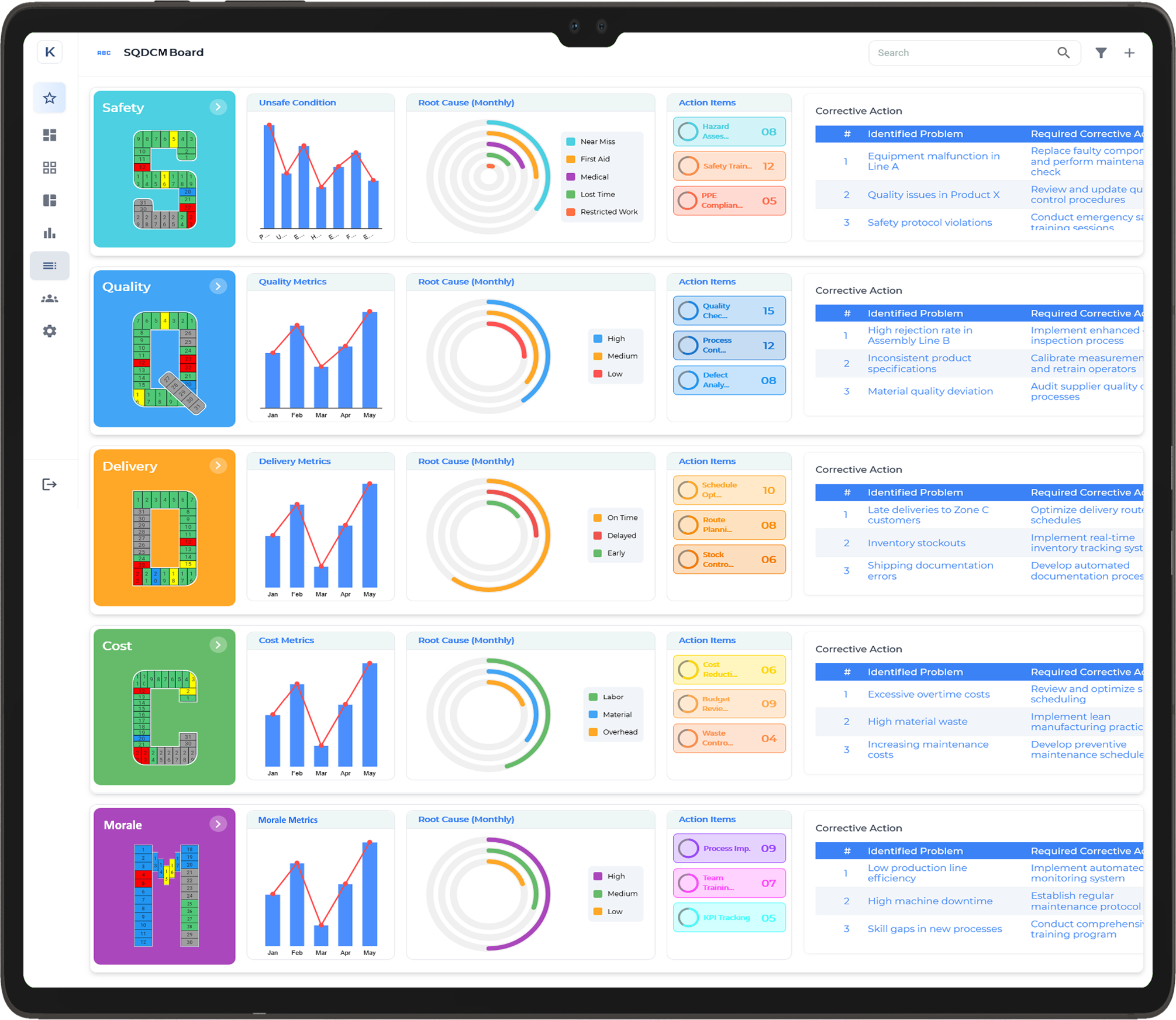
An SQDCM board is a visual management tool used by teams to track daily performance in five key areas: Safety, Quality, Delivery, Cost, and Morale. Each section helps highlight how well the team is meeting its targets, encouraging continuous improvement through clear and simple data. By reviewing the board daily, teams stay focused, spot issues early, and work together more effectively.
Improving Visibility and Awareness
One of the main benefits of using an SQDCM board is the immediate visibility it provides. When performance metrics are displayed clearly, everyone on the team understands what’s going well and what needs attention. This shared understanding leads to quicker action and better teamwork.
Encouraging Daily Accountability
With regular updates, SQDCM boards build a habit of daily ownership. Team members become more engaged as they take responsibility for updating and responding to the information shown. Over time, this builds a strong culture of accountability and pride in results.
Supporting Continuous Improvement
By focusing on five key areas, the SQDCM framework ensures teams don’t overlook important aspects of performance. Whether it’s reducing safety risks, improving product quality, meeting deadlines, controlling costs, or boosting team morale—this method helps drive steady progress across all fronts.
Making Performance Simple and Actionable
Clear indicators—such as colour coding or simple charts—make the board easy to read and understand. Teams can act quickly, communicate clearly, and stay aligned on shared goals. It turns complex data into simple, daily action points.
Understanding the Five Metrics: Safety, Quality, Delivery, Cost, and Morale
Safety: Protecting People and Processes
Safety is the first and most critical metric in the SQDCM framework. It focuses on ensuring a safe working environment, reducing risks, and preventing accidents or near misses. Tracking safety daily helps build a culture of care and awareness, where staff are actively involved in identifying and reporting hazards before they escalate.
Quality: Delivering Work to Standard
Quality measures how well the team maintains standards and reduces errors or rework. This can include tracking defects, customer complaints, or inspection results. A strong focus on quality leads to better products, greater customer satisfaction, and fewer delays caused by avoidable mistakes.
Delivery: Meeting Commitments on Time
Delivery refers to how reliably a team meets deadlines and fulfils customer or internal orders. Whether it's a manufacturing target, service schedule, or project milestone, tracking delivery ensures that work flows smoothly and consistently. Strong delivery performance improves trust and efficiency.
Cost: Using Resources Wisely
Cost control helps teams manage budgets, reduce waste, and improve efficiency. This may include tracking material usage, overtime, or downtime. Regular cost reviews encourage smarter decision-making and help teams find ways to achieve more with less without affecting quality or safety.
Morale: Supporting a Positive Team Culture
Morale reflects team spirit, motivation, and engagement. It can be influenced by feedback, communication, workload, or recognition. Tracking morale shows leaders how the team is feeling and helps maintain a healthy, productive environment where people want to do their best.
How to Prepare Your Team for SQDCM Board Implementation
Start with Clear Communication
Before introducing the SQDCM board, it’s important to explain its purpose and benefits to your team. Let them know it’s a tool to support daily performance, not just to monitor results. When everyone understands how the board works and how it can help, they are more likely to support the process and engage with it fully.
Involve the Team in Setup
Give team members a role in setting up the board. This could include deciding what indicators to track under each SQDCM category or choosing how the visuals should be presented. When the team helps shape the board, they feel ownership and are more invested in keeping it up to date.
Provide Training and Guidance
Make sure all staff understand how to read and update the board. Offer simple training that covers what each metric means, how performance is measured, and how colours or symbols are used. Clear guidance helps avoid confusion and builds team confidence from day one.
Set a Routine for Daily Reviews
Establish a consistent time each day for reviewing the board, ideally as part of a short team meeting. This routine helps reinforce the importance of the board and keeps everyone aligned. It also gives staff the chance to share updates and suggest improvements together.
Encourage Feedback and Support
During the early stages, check in regularly with the team to gather feedback. Be open to suggestions and provide support where needed. This collaborative approach helps smooth the transition and ensures the board becomes a valuable tool for ongoing performance.
Step 1: Define Clear Goals and Daily KPIs for Each Category
Setting a Strong Foundation with Clear Targets
The first step in using an SQDCM board effectively is to define clear goals and key performance indicators (KPIs) for each of the five categories: Safety, Quality, Delivery, Cost, and Morale. These goals give the team a shared direction and help focus daily efforts on what truly matters.
Make Goals Specific and Measurable
General goals like “improve safety” or “reduce costs” are not enough. Each goal should be specific and measurable. For example, a Safety goal could be “zero incidents per shift,” while a Delivery target might be “100% of orders completed by end of shift.” Clear metrics remove guesswork and support consistent tracking.
Keep KPIs Relevant to Daily Activities
Daily KPIs should reflect the work the team does every day. If a KPI feels disconnected from their role, engagement may drop. Choose indicators that team members can influence directly, such as error counts, downtime, or on-time task completion. This ensures the board reflects real performance and encourages ownership.
Balance Short-Term Results with Long-Term Goals
While the focus is on daily tracking, KPIs should also align with broader business goals. For example, consistent quality checks today help reduce long-term rework and complaints. This link between daily action and strategic goals helps the team see the bigger picture.
Involve the Team in Goal Setting
When teams help set the goals, they are more likely to take them seriously. Ask for input and agree on targets together. This encourages buy-in and helps create a culture of shared responsibility for performance and improvement.
Step 2: Choose the Right Format – Physical Whiteboard or Digital Dashboard?
Understanding the Two Main Options
When setting up an SQDCM board, the next important step is deciding on the format. You can choose a traditional physical whiteboard or a modern digital dashboard. Both options have their own strengths, and the right choice depends on your team’s needs, work environment, and communication style.
Benefits of a Physical Whiteboard
A physical board works well in shop floors or office spaces where teams gather daily. It’s easy to update with markers or magnetic labels and encourages team interaction during stand-up meetings. The board becomes a visual anchor, reminding everyone to check progress and share updates face-to-face.
Advantages of a Digital Dashboard
A digital format is ideal for teams working across shifts, remote locations, or hybrid environments. It allows for real-time updates, automatic data tracking, and remote access from any device. Digital dashboards also store historical data, making it easier to analyse trends and review progress over time.
Choosing Based on Team Needs
If your team prefers hands-on interaction and works closely together, a physical board may be more effective. For larger teams, those working in different locations, or roles that rely heavily on data, a digital dashboard offers greater flexibility and accessibility.
Blending Both Approaches
Some teams use a hybrid approach—updating a physical board for daily reviews while maintaining a digital version for reporting and analysis. This method ensures everyone stays informed and involved, regardless of their role or location.
Step 3: Design a Visual Layout That’s Easy to Understand at a Glance
Keep the Structure Simple and Organised
The effectiveness of an SQDCM board depends largely on how clearly the information is displayed. A well-designed layout allows team members to quickly understand performance without needing explanations. Start by dividing the board into five clear sections: Safety, Quality, Delivery, Cost, and Morale. Label each category boldly so the structure is instantly recognisable.
Use Consistent Colours and Symbols
Visual cues such as colour coding and simple symbols make it easier to grasp current performance at a glance. A common method is the traffic light system—green for on target, amber for caution, and red for issues. These colours should be used consistently across all categories to avoid confusion.
Display Daily KPIs Clearly
Each section should include space to write or update daily key performance indicators (KPIs). Keep the layout uncluttered by limiting each category to just a few core metrics. This ensures the board stays readable and focused on what matters most to the team.
Include Space for Comments or Actions
Allow space for brief notes or actions, especially next to red or amber indicators. This encourages quick updates and helps track what is being done to resolve issues. Notes also support team discussions during daily reviews.
Position the Board Where It’s Easily Seen
Place the board in a central, high-traffic area where it’s visible to the whole team. An accessible location helps make performance part of the daily routine and keeps everyone informed and involved in improvement.
Step 4: Assign Ownership for Data Collection and Updates
Establishing Clear Responsibility
For an SQDCM board to remain accurate and useful, it's essential to assign clear ownership for collecting and updating data. Without responsibility, updates may be missed or delayed, reducing the board’s effectiveness. Assigning team members to each SQDCM category ensures that the board reflects current performance at all times.
Involve the Right People
Choose individuals who are closely involved in the daily work linked to each metric. For example, someone on the production team may be ideal for updating Delivery metrics, while a team lead may be better suited to tracking Safety incidents. This ensures data is both accurate and meaningful.
Define Roles and Timings
Clearly define when and how updates should happen. Daily updates are recommended, ideally before team meetings or shift handovers. Having a fixed schedule builds routine and ensures the board remains current and relevant. Assigning a backup person for each category can also help maintain consistency.
Train Staff on What to Track
Make sure every assigned team member understands what data they need to collect and how to update it on the board. Provide simple guidelines for recording metrics, flagging issues, and adding brief notes where needed. This clarity reduces errors and builds confidence.
Promote Accountability and Engagement
When team members take responsibility for performance data, they become more engaged in the results. Ownership encourages regular review, honest reporting, and quicker action when problems arise—leading to better decision-making and continuous improvement over time.
Step 5: Set a Routine for Daily Reviews and Team Stand-Ups
Making Daily Check-Ins Part of the Culture
To keep your SQDCM board effective, it’s essential to establish a routine for daily reviews. A short stand-up meeting held at the same time each day helps the team stay focused and engaged. These reviews create a rhythm of accountability and provide a space for raising concerns, celebrating progress, and planning next steps together.
Keep Meetings Short and Purposeful
Daily stand-ups should be quick, ideally no longer than 10 to 15 minutes. The team gathers around the SQDCM board to review each metric—Safety, Quality, Delivery, Cost, and Morale. The aim is not to solve problems on the spot but to highlight key issues and assign follow-up actions where needed.
Encourage Open and Honest Communication
A routine review gives every team member a voice. Encourage honest feedback and observations, especially when a metric turns red or amber. By creating a safe space for discussion, you build trust and promote teamwork in tackling challenges.
Track Actions and Celebrate Progress
Use part of the meeting to follow up on previous action points. This shows the team that their input leads to real outcomes. Also, take time to recognise wins—green indicators, successful fixes, or improved morale. These moments keep energy levels high and reinforce good habits.
Support Cross-Shift Alignment
If your operation runs across multiple shifts, daily stand-ups help ensure smooth handovers. Updates from earlier shifts give the incoming team the context they need to maintain performance without delays or confusion.
Using Colour Indicators to Track Performance Trends and Variations
Turning Data into Instant Insights
Colour indicators are a simple yet effective way to track performance trends and variations across your SQDCM board. By using clear visual signals, such as green, amber, and red, teams can quickly see how each area is performing. This helps reduce time spent interpreting data and allows for faster, more informed decisions.
Green, Amber, and Red – What They Mean
Green shows that the team is meeting its target. Amber indicates that performance is slightly off track and may need attention. Red signals a problem that requires immediate action. These colour codes are easy to understand and can be used consistently across all five SQDCM categories—Safety, Quality, Delivery, Cost, and Morale.
Spotting Patterns Over Time
When tracked daily, these colours can reveal trends. For example, several red indicators in a row may show an ongoing issue, while a shift from amber to green could highlight an improvement. Recognising these patterns helps teams take proactive steps before problems grow or performance declines further.
Encouraging Team Engagement
Colour indicators make performance more visible and easier for all team members to follow. This shared understanding encourages open discussion, daily accountability, and quicker reactions when things go off track. It also gives staff a sense of progress as they see red turn to green through their efforts.
Keeping Focus on the Right Priorities
By making trends and changes easy to spot, colour indicators help the team focus on areas that need the most attention. This ensures that time and effort are used effectively, supporting better performance and continuous improvement across the board.
Training Staff on Reading, Updating, and Interpreting the SQDCM Board
Building Confidence Through Clear Instruction
For an SQDCM board to be effective, all team members must know how to read, update, and interpret it with confidence. Proper training ensures the board is used consistently and becomes a helpful tool rather than a confusing task. Begin with simple, hands-on sessions that explain the purpose of each section—Safety, Quality, Delivery, Cost, and Morale—and how they link to daily work.
Explaining Visual Indicators and Metrics
Teach staff how to recognise what each colour or symbol means. Whether it’s a green showing success or a red signalling a problem, these indicators must be clearly understood. Go over common KPIs for each category and explain what performance levels trigger each status colour. Visual examples help make learning easier.
Demonstrating the Update Process
Show step-by-step how to update the board during daily reviews. Include where to write numbers, when to change colours, and how to add notes or actions. Encourage accuracy and make sure staff know who is responsible for which updates. Use real examples so the process feels familiar and relevant.
Encouraging Team Participation and Questions
Invite staff to ask questions and share ideas during training. When team members understand not just how but why the board is used, they are more likely to take it seriously. Ongoing support and refresher sessions can help keep skills sharp and maintain high-quality updates every day.
Linking Interpretation to Team Action
Finally, explain how reading the board leads to decisions. Interpreting trends and changes should drive team actions, whether that’s fixing an issue, recognising a win, or discussing improvements. This closes the loop and shows how the board supports real progress.
How to Link the Board to Lean Tools Like 5 Whys and Root Cause Analysis
Making Problem-Solving a Natural Next Step
Linking the SQDCM board with simple Lean tools such as the 5 Whys and root cause analysis strengthens your team's ability to solve problems effectively. Instead of just flagging issues, the board can become a launch point for deeper thinking and lasting solutions.
Start with a Red or Amber Indicator
When a performance area shows red or amber on the board—such as a missed delivery target or a safety concern—it signals the need for action. Use this as a prompt to dig deeper. Encourage the team to pause and ask, “Why did this happen?” rather than jumping straight to fixes.
Apply the 5 Whys Technique
Use the simple approach of asking “Why?” repeatedly—typically five times—to get to the true source of a problem. Begin with the surface issue, then explore each reason behind it. This method uncovers hidden causes that might otherwise be overlooked and helps prevent the same issue from recurring.
Use Root Cause Analysis to Guide Action
Once the root cause is identified, teams can map out simple corrective actions and record them near the affected metric on the board. Following up on these actions during daily reviews reinforces learning and encourages accountability.
Build a Culture of Continuous Improvement
By linking visual performance with structured problem-solving tools, teams move from reacting to proactively improving. The board becomes more than a tracker—it becomes a key part of a culture focused on learning, teamwork, and sustainable improvement.
Encouraging Continuous Improvement Through Team Involvement
Making Improvement a Daily Habit
Continuous improvement works best when it’s part of the team’s everyday routine. Involving staff in daily reviews, updates, and small problem-solving actions builds a shared commitment to doing better. When improvement becomes part of how people work, not just something extra, progress becomes more natural and lasting.
Giving Everyone a Voice
Encouraging team involvement means creating space for all staff to share their ideas and concerns. Whether it’s during a stand-up review at the SQDCM board or a quick chat at shift change, every team member should feel their input matters. Many small improvements often come from those doing the work daily.
Celebrating Ideas and Efforts
Recognising staff who suggest improvements or help solve problems builds confidence and shows the value of participation. Even small wins—like reducing waiting time or improving handovers—can make a big difference over time. Positive feedback keeps motivation high and encourages others to get involved too.
Using the Board to Spark Conversations
The SQDCM board can act as a simple tool to guide team discussions. Red or amber indicators can lead to short team chats about what went wrong, what worked, and how to improve. This builds a sense of ownership and shared responsibility for performance.
Creating a Culture of Learning
When staff are involved in identifying and testing improvements, they learn by doing. This not only improves results but also strengthens skills and teamwork. A culture of continuous improvement grows when teams are trusted to lead change, not just follow instructions.
Avoiding Common Pitfalls in SQDCM Board Implementation
Ensuring Consistent Daily Updates
One of the most common pitfalls when using an SQDCM board is failing to update it regularly. If the board isn’t refreshed daily, it quickly loses value and trust among the team. To avoid this, assign clear responsibilities and set a fixed time for updates—such as before or after the daily stand-up meeting.
Keeping the Layout Simple and Clear
A cluttered or overly complicated board can confuse team members and reduce its usefulness. Make sure the layout is easy to read at a glance, using clear labels and consistent colour coding. Stick to tracking only the most relevant and actionable metrics in each SQDCM category.
Encouraging Full Team Engagement
Sometimes, boards are seen as tools for managers only. This limits their impact. Involve the whole team from the start—let them help define KPIs, update data, and discuss results. When everyone contributes, the board becomes a shared tool, not a top-down directive.
Acting on What the Board Shows
A board that highlights problems but leads to no action will quickly lose credibility. Make sure issues flagged on the board are followed up with clear steps. Use short-term fixes alongside longer-term improvements through team discussions or structured problem-solving methods.
Avoiding a Blame Culture
If the board is used to assign blame rather than drive improvement, staff may stop being honest about issues. Foster an open environment where problems are seen as opportunities to learn, not punish. This helps build trust and keeps the focus on solutions, not fault.
Reviewing and Adjusting Your SQDCM Setup for Long-Term Success
Keeping Your Board Relevant Over Time
As your team grows and processes evolve, your SQDCM board must also adapt. What worked at the beginning may not reflect the team’s current priorities. Regular reviews ensure your board stays aligned with goals, making it a useful and reliable tool for the long term.
Schedule Regular Review Sessions
Set a routine to review your SQDCM setup—this could be monthly or quarterly. Look at how each category is performing and whether the chosen KPIs still match what the team is aiming to achieve. This helps prevent the board from becoming outdated or losing impact.
Listen to Team Feedback
Team members who use the board daily are best placed to suggest improvements. Ask what’s working, what’s confusing, and what could be clearer. Their input can help fine-tune the layout, language, or process for updating the board, leading to better engagement and effectiveness.
Update KPIs When Needed
Business goals and team targets change over time, so your board must reflect those shifts. Replace KPIs that no longer serve a purpose with ones that match current challenges. This ensures your tracking remains focused and useful for decision-making.
Measure the Impact of Changes
When you make updates to the SQDCM setup, track how they affect performance and engagement. Are issues being resolved faster? Are team discussions improving? These observations help you understand what changes are helping and where further adjustment is needed.
Real-Life Examples of SQDCM Board Implementation in Manufacturing Teams
Improving Safety Through Daily Visibility
One manufacturing team introduced an SQDCM board to reduce minor injuries on the shop floor. By tracking daily safety checks and incident reports, they noticed a pattern around shift changeovers. With this insight, they adjusted their handover process and introduced quick reminders at shift start. Within weeks, incidents dropped, and the team became more safety-aware.
Boosting Delivery Performance
A production line facing frequent delivery delays added a Delivery section to their SQDCM board. By recording completed orders against daily targets, they identified bottlenecks in packaging. The team worked together to redesign part of the layout, cutting handling time and meeting targets more consistently. The visual board helped everyone see progress and maintain focus.
Reducing Quality Defects
Another team used the board to address recurring quality issues in a final assembly area. By reviewing quality-related KPIs daily, staff spotted that most defects came from one specific stage. They launched a quick improvement project and trained staff in that area. Defects dropped by 30%, and the quality score on the board turned from red to green in just two weeks.
Raising Team Morale with Visual Wins
In one facility, morale was low due to unclear expectations. The SQDCM board helped change that. With visible targets and daily green indicators, staff began to feel recognised and motivated. Regular praise during stand-ups, based on real performance, made morale scores steadily rise and improved teamwork across shifts.