The SQCPL Board is a structured tool designed to streamline quality control, enhance process efficiency, and ensure continuous improvement in manufacturing and operational workflows. By implementing an SQCPL Board, businesses can visualize key metrics, monitor quality performance, and drive informed decision-making.
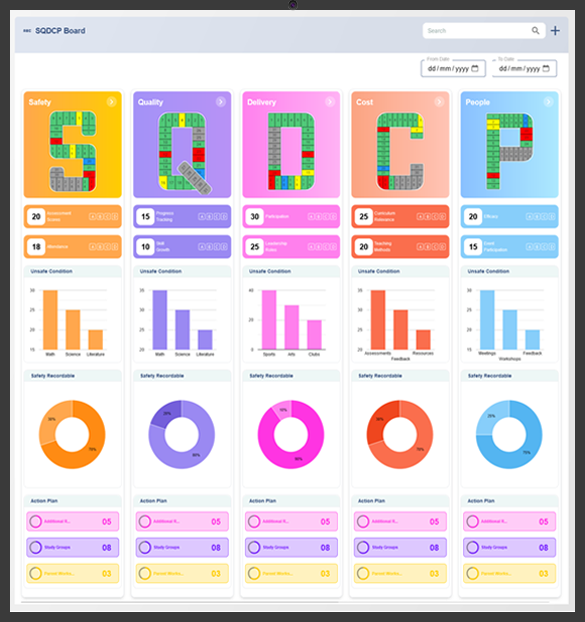
1. Key Features of an SQCPL Board
- Quality Performance Tracking: Monitor quality standards and ensure adherence to operational goals.
- Real-Time Data Visualization: Display critical metrics for instant review and action.
- Process Efficiency Monitoring: Track and optimize workflow effectiveness.
- Defect Identification and Resolution: Highlight production issues and implement corrective actions.
- Customizable Metrics: Adjust board parameters based on specific organizational needs.
- Continuous Improvement Support: Facilitate data-driven decision-making for long-term growth.
2. How to Implement an SQCPL Board
Step 1: Define Quality Control Objectives
Begin by outlining the primary goals for quality control and process improvement. Identify key areas that require monitoring, such as defect rates, production efficiency, or compliance standards.
Step 2: Identify Key Metrics
Select measurable indicators that align with quality control objectives. These may include defect rate percentages, process cycle times, or customer feedback scores.
Step 3: Design the SQCPL Board Layout
Customize the board to display relevant metrics clearly. This may involve creating sections for ongoing issues, resolved problems, and actionable insights.
Step 4: Integrate with Existing Processes
Ensure the board is seamlessly incorporated into daily operations. Train employees on how to use it effectively and encourage regular updates.
Step 5: Monitor and Optimize
Regularly review board data to assess trends and identify areas for improvement. Make necessary adjustments to enhance accuracy and effectiveness.
3. Benefits of Using an SQCPL Board
- Enhanced Quality Control: Maintain high standards and minimize defects.
- Increased Efficiency: Streamline production processes and improve workflow.
- Real-Time Insights: Make informed decisions based on up-to-date data.
- Improved Accountability: Clearly assign responsibilities for quality management.
- Data-Driven Improvements: Use historical data to refine and optimize operations.
4. Future of SQCPL Boards
With advancements in digital integration, SQCPL Boards are evolving into smart, automated solutions that provide predictive insights, trend analysis, and AI-powered recommendations for continuous improvement.
By leveraging an SQCPL Board, organizations can improve quality management, optimize efficiency, and achieve long-term operational excellence.
SQCPL Board
What is an SQCPL Board?
An SQCPL Board is a structured system used for monitoring and improving quality control processes within an organization.
How does an SQCPL Board improve quality control?
It provides a visual representation of quality metrics, helping teams track performance and identify areas for improvement.
What are the key features of an SQCPL Board?
Key features include real-time data tracking, defect monitoring, compliance tracking, and workflow visualization.
Can an SQCPL Board be customized for different industries?
Yes, it can be tailored to fit the specific quality control needs of different industries.
How does an SQCPL Board support process optimization?
It identifies bottlenecks and inefficiencies, allowing businesses to streamline processes and improve productivity.
Does the board provide real-time data tracking?
Yes, real-time tracking ensures that teams can monitor quality metrics and make informed decisions instantly.
How does an SQCPL Board help in defect analysis?
It records and categorizes defects, helping teams analyze trends and implement corrective actions.
Can multiple teams collaborate using an SQCPL Board?
Yes, multiple teams can access and update the board, ensuring smooth communication and coordination.
How does it enhance compliance with industry standards?
By tracking quality metrics and documenting compliance measures, it ensures adherence to industry regulations.
Does it integrate with other quality management systems?
Yes, it integrates with existing systems to provide a seamless quality control workflow.
Can an SQCPL Board generate performance reports?
Yes, automated reports provide insights into quality trends, defect rates, and process improvements.
Is the board suitable for both small and large businesses?
Yes, it is scalable and can be used by businesses of all sizes.
How does it support continuous improvement initiatives?
It tracks ongoing quality improvements and helps teams implement and monitor corrective actions.
Is the SQCPL Board accessible on mobile devices?
Yes, it is accessible via mobile devices, allowing teams to monitor quality metrics remotely.
What are the benefits of using an SQCPL Board?
Benefits include improved quality tracking, enhanced compliance, better collaboration, and streamlined processes.