What Is a Cloud ERP Balanced Scorecard?
Understanding the Purpose
A cloud ERP Balanced Scorecard is a structured performance management approach that helps organisations translate strategy into measurable actions. It connects long-term objectives with operational and financial data generated through enterprise systems. Rather than relying only on financial reports, this framework provides a broader view of performance across multiple business dimensions.
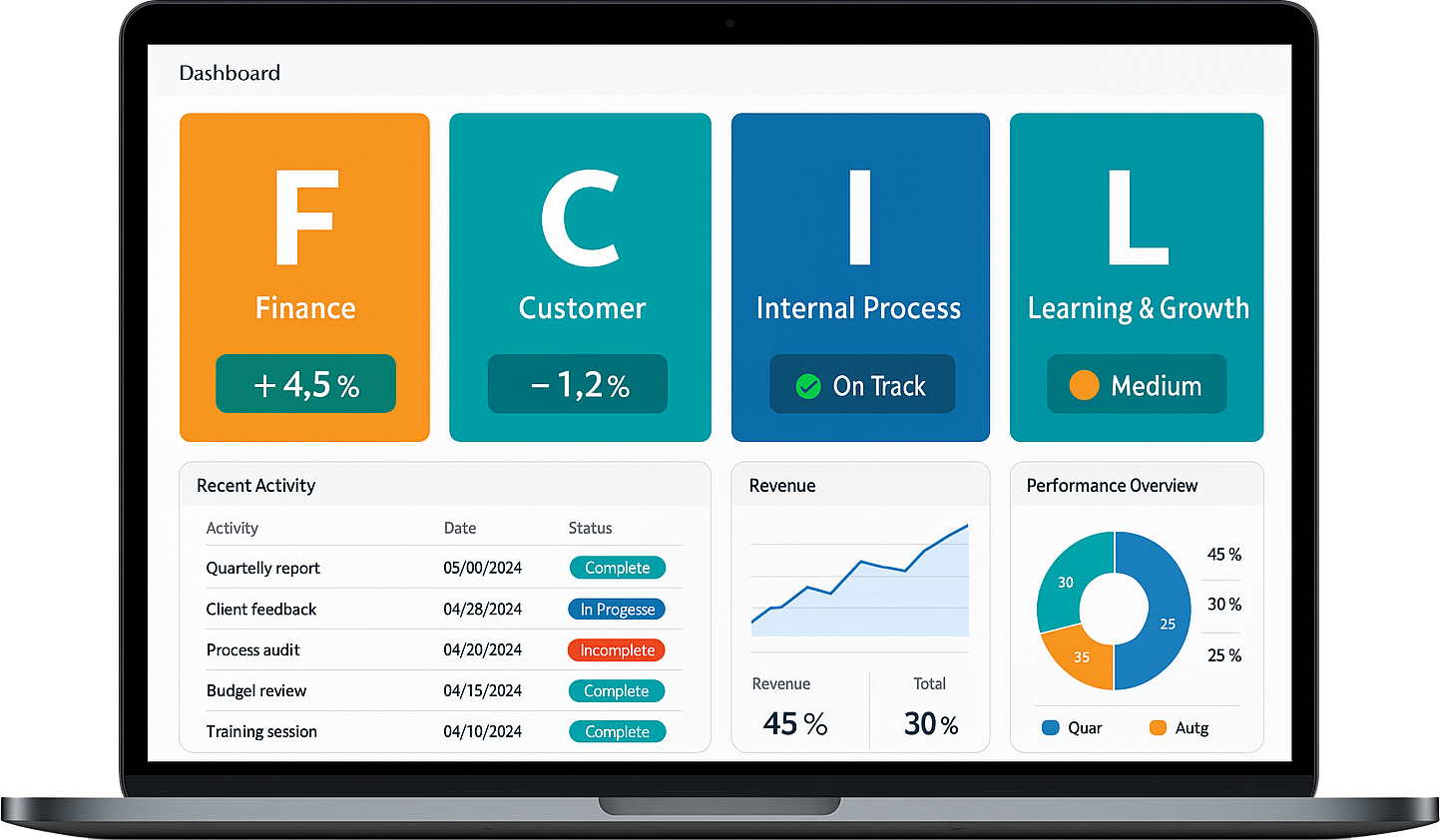
Combining Strategy with Operational Data
Enterprise systems collect valuable data related to finance, operations, customers, and workforce performance. A Balanced Scorecard organises this data into meaningful indicators that align directly with strategic objectives. This ensures that information is not just stored but actively used to measure progress, identify gaps, and guide improvement initiatives.
Value for Organisational Leadership
By presenting performance data in a structured and strategic format, leaders gain clarity on how well the organisation is executing its plans. This improves visibility, accountability, and decision-making. A cloud ERP balanced scorecard supports consistency, alignment, and long-term performance improvement across the entire organisation.
Why Strategic Alignment Matters in Data-Driven Organisations
Aligning Strategy and Daily Operations
Strategic alignment ensures that everyday activities support the organisation’s long-term objectives. Without alignment, teams may focus on local targets that do not contribute to overall success. Alignment creates a clear connection between strategy, goals, and actions.
Reducing Conflicting Priorities
In data-driven environments, large volumes of information can lead to confusion if priorities are unclear. Strategic alignment helps organisations focus on the most important objectives, reducing wasted effort and conflicting initiatives.
Improving Execution and Accountability
When strategy is clearly aligned with performance measures, employees understand expectations and responsibilities. This clarity improves accountability, strengthens collaboration, and increases the likelihood of successful strategy execution.
Linking Business Strategy to Cloud ERP Data
Making Strategy Measurable
Business strategies often fail because they are not clearly measured. Linking strategy to enterprise data allows organisations to define KPIs that reflect strategic priorities. This transforms abstract goals into trackable outcomes.
Using Data to Track Progress
Operational data provides insight into efficiency, quality, cost, and customer performance. When this data is aligned with strategy, leaders can see how daily operations influence long-term objectives.
Strengthening Strategic Control
Data-driven visibility enables organisations to monitor performance continuously. This allows faster adjustments, better risk management, and stronger control over strategic execution.
How Balanced Scorecards Improve Performance Management in ERP Environments
Creating a Structured Performance Framework
Balanced Scorecards improve performance management by providing a clear and structured framework for measuring success. Instead of focusing on isolated metrics, organisations can assess performance across financial results, customer outcomes, internal processes, and learning and development. This balanced view ensures that short-term results do not undermine long-term goals.
Linking Objectives to Measurable Outcomes
Performance management becomes more effective when objectives are directly linked to measurable indicators. Balanced Scorecards translate strategic goals into KPIs that can be tracked consistently. This helps managers understand not only what results are achieved, but also how those results are produced through operational activities.
Improving Review and Feedback Cycles
Regular scorecard reviews encourage ongoing performance discussions rather than annual evaluations. Managers can identify performance gaps early, provide targeted feedback, and support corrective action. This continuous approach improves accountability, enhances transparency, and supports steady performance improvement across teams and departments.
Aligning Financial Objectives with Operational Performance
Connecting Financial Goals to Daily Work
Financial objectives such as profitability, cost control, and revenue growth are achieved through everyday operational activities. Aligning financial goals with operational performance ensures that teams understand how their actions contribute to financial success. This connection reduces the gap between strategy and execution.
Using Operational Metrics to Drive Financial Results
Operational metrics such as productivity, efficiency, quality, and resource utilisation directly influence financial outcomes. By tracking these indicators within a balanced scorecard, organisations can identify cost drivers, eliminate inefficiencies, and improve value creation. This allows financial performance to be managed proactively rather than reactively.
Supporting Better Financial Decision-Making
When financial and operational data are aligned, leaders gain a clearer understanding of cause-and-effect relationships. This insight supports better forecasting, budgeting, and investment decisions. Over time, this alignment strengthens financial stability while supporting sustainable operational improvement.
Using Customer and Market Metrics Within Enterprise Systems
Measuring Customer Experience Effectively
Customer and market metrics provide insight into how well an organisation meets customer needs and expectations. Common indicators include satisfaction levels, retention rates, service quality, and response times. Measuring these factors helps organisations understand customer behaviour and identify opportunities for improvement.
Aligning Customer Metrics with Strategy
Customer metrics are most effective when they are directly linked to strategic objectives. For example, a strategy focused on growth may prioritise acquisition and retention metrics, while a service-focused strategy may emphasise response quality and resolution times. This alignment ensures customer efforts support long-term goals.
Strengthening Market Position
By consistently monitoring customer and market performance, organisations can respond more quickly to changes in demand, expectations, or competitive pressure. This insight supports better decision-making, stronger customer relationships, and improved market positioning over time.
Optimising Internal Processes Through Integrated Scorecards
Gaining Clear Visibility into Processes
Integrated scorecards help organisations gain clear visibility into how internal processes perform on a daily basis. By tracking process-related KPIs such as cycle times, error rates, throughput, and resource usage, teams can see where work slows down or quality issues arise. This visibility is essential for identifying inefficiencies that are often hidden within complex operational environments.
Using Data to Drive Process Improvement
When internal process metrics are linked to strategic objectives, improvement efforts become more focused and effective. Scorecards highlight which processes have the greatest impact on organisational goals, allowing teams to prioritise improvement initiatives. This prevents resources being wasted on changes that deliver little strategic value.
Supporting Consistency and Quality
Optimised processes lead to more consistent outputs and improved quality. Integrated scorecards support standardisation by monitoring performance against defined targets. Over time, this approach reduces variability, improves reliability, and ensures internal operations consistently support customer expectations and strategic priorities.
Supporting Learning and Growth with Performance Insights
Measuring Workforce Capability
Learning and growth metrics focus on developing the skills, knowledge, and engagement of the workforce. Performance insights help organisations track indicators such as training participation, skill development, productivity improvements, and employee engagement. These measures show whether people capabilities are keeping pace with strategic demands.
Linking Development to Strategy
Performance insights become more valuable when learning initiatives are aligned with strategic objectives. If an organisation aims to improve innovation or service quality, learning metrics can track progress in relevant skills and behaviours. This ensures development efforts directly support long-term goals.
Building Long-Term Organisational Strength
By regularly reviewing learning and growth data, leaders can identify capability gaps early and invest in targeted development. This proactive approach strengthens adaptability, supports innovation, and ensures the organisation remains competitive in changing environments.
Real-Time Performance Visibility Using Enterprise Data
Accessing Timely Performance Information
Real-time performance visibility allows organisations to monitor key metrics as they change. Access to up-to-date data helps leaders and managers understand current performance levels without waiting for periodic reports. This immediacy improves responsiveness and reduces reliance on outdated information.
Identifying Issues and Opportunities Early
With real-time insight, potential issues such as delays, cost overruns, or declining service levels can be detected quickly. Early identification allows corrective action before problems escalate. At the same time, positive trends can be recognised and reinforced.
Supporting Confident Decision-Making
Timely performance data strengthens decision-making by providing accurate, current insight. Leaders can act with greater confidence, knowing decisions are based on real conditions rather than assumptions or historical data.
Improving Decision-Making with Integrated Dashboards and KPIs
Creating a Single Source of Performance Insight
Integrated dashboards bring together key performance indicators from across the organisation into a single, easy-to-understand view. Instead of reviewing multiple reports or spreadsheets, decision-makers can see critical information in one place. This reduces complexity and ensures decisions are based on consistent and reliable data.
Turning Data into Actionable Insight
Dashboards do more than display numbers. They highlight trends, variances, and performance gaps that require attention. By visualising KPIs clearly, managers can quickly understand what is working well and where corrective action is needed. This improves the speed and quality of decision-making at both strategic and operational levels.
Maintaining Strategic Focus
When dashboards are aligned with strategic objectives, decisions remain focused on long-term priorities rather than short-term pressures. Integrated KPIs ensure that actions taken today support broader organisational goals. Over time, this disciplined approach strengthens execution and improves overall business performance.
Driving Accountability Across Teams with Scorecards
Defining Clear Ownership
Scorecards drive accountability by clearly assigning ownership to objectives and KPIs. When responsibilities are defined, employees understand what they are accountable for and how their performance will be measured. This clarity reduces confusion and encourages ownership of results.
Making Performance Transparent
Transparent performance measurement allows teams to see how their results compare against targets. Scorecards make progress visible, encouraging teams to take responsibility for outcomes rather than relying on explanations or assumptions. This openness supports honest performance discussions and continuous improvement.
Strengthening Team and Individual Performance
Accountability supported by scorecards motivates teams to focus on priorities that matter most. Regular performance reviews reinforce expectations, recognise achievement, and address underperformance early. This structured approach builds trust, improves collaboration, and strengthens execution across the organisation.
Supporting Continuous Improvement Through Performance Tracking
Measuring Progress Over Time
Continuous improvement depends on the ability to measure progress consistently. Performance tracking allows organisations to monitor trends over time rather than focusing on isolated results. This helps identify whether changes are delivering sustainable improvement.
Identifying Improvement Opportunities
Performance data highlights gaps between current performance and desired targets. These gaps point directly to opportunities for improvement. By focusing on measurable outcomes, teams can prioritise initiatives that deliver real value rather than relying on assumptions.
Embedding Improvement into Daily Work
When performance tracking is part of regular review cycles, improvement becomes a routine activity rather than a one-off effort. This approach encourages small, incremental changes that compound into significant long-term gains and support ongoing organisational development.
Implementation Considerations for Cloud ERP Balanced Scorecards
Starting with Clear Strategic Objectives
Successful implementation of a cloud ERP balanced scorecard begins with clearly defined strategic objectives. Organisations must first agree on what they are trying to achieve before selecting metrics or dashboards. Without strategic clarity, scorecards risk becoming collections of disconnected measures that fail to guide performance effectively.
Ensuring Data Quality and Consistency
Accurate and reliable data is critical for meaningful performance measurement. Organisations should review data sources, definitions, and ownership to ensure consistency across departments. Clear data governance helps avoid confusion, improves trust in performance reports, and supports informed decision-making.
Managing Change and User Adoption
Introducing a balanced scorecard represents a change in how performance is measured and managed. Employees must understand the purpose of the scorecard and how it benefits their work. Training, communication, and leadership support are essential to encourage adoption and ensure the scorecard becomes part of daily management rather than a reporting exercise.
Measuring ROI and Business Impact from Aligned Scorecards
Understanding Return on Investment
Measuring return on investment helps organisations evaluate whether a balanced scorecard delivers tangible value. ROI considers both the costs of implementation and the benefits gained through improved performance, efficiency, and alignment. This assessment supports informed decisions about continued investment and refinement.
Identifying Tangible and Intangible Benefits
Tangible benefits may include cost reduction, productivity gains, improved delivery performance, or increased revenue. Intangible benefits often include better strategic alignment, improved accountability, clearer communication, and stronger decision-making. Both types of benefits contribute to overall organisational value.
Tracking Impact Over Time
ROI should be measured over time rather than as a one-off exercise. Regular reviews of performance trends help demonstrate how the scorecard supports continuous improvement and long-term strategic execution. This ongoing assessment strengthens confidence in the scorecard’s business impact.
Building a Strategy-Focused, Performance-Driven Culture
Creating Shared Strategic Understanding
A strategy-focused culture begins with shared understanding. Balanced scorecards help communicate strategic priorities clearly, ensuring employees understand how their roles contribute to organisational success. This clarity strengthens engagement and alignment across teams.
Encouraging Accountability and Ownership
When objectives and KPIs are transparent, employees take greater ownership of results. Scorecards reinforce accountability by linking performance expectations to measurable outcomes. This encourages responsibility, trust, and consistent execution.
Sustaining High Performance Over Time
A performance-driven culture relies on regular review, learning, and improvement. Scorecards support this by embedding strategy into everyday management practices. Over time, this approach builds discipline, adaptability, and sustained high performance across the organisation.