What Is Overall Equipment Effectiveness (OEE) in Manufacturing
Understanding OEE in Manufacturing
Overall Equipment Effectiveness (OEE) is a standard performance metric used to evaluate how effectively manufacturing equipment operates. It combines three critical components: availability, performance, and quality. Availability measures the time equipment is operational compared to planned production time, performance assesses how fast machines operate relative to their ideal speed, and quality evaluates the proportion of good products produced. Together, these factors provide a comprehensive understanding of production efficiency and highlight areas that require improvement.
The Role of OEE Software
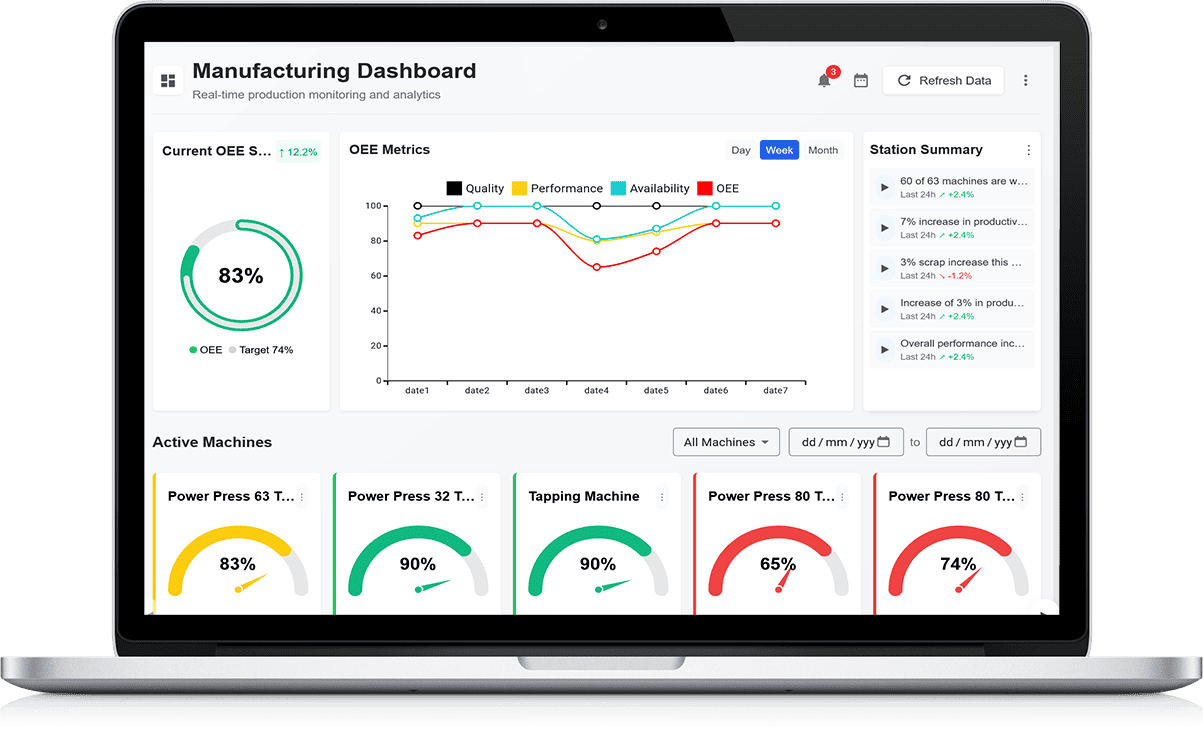
OEE software automates the collection, calculation, and analysis of equipment performance data. It captures real-time information directly from machines, enabling operators and managers to track efficiency, downtime, and defects accurately. This visibility allows teams to make informed decisions, respond quickly to production issues, and implement corrective actions that improve overall operations. OEE also helps standardise measurements across machines, making performance comparisons more meaningful.
Why OEE Matters
Using OEE helps manufacturers identify hidden losses that affect productivity, cost, and delivery schedules. By focusing on key efficiency metrics, organisations can reduce unplanned downtime, improve machine utilisation, and enhance product quality. Continuous monitoring of OEE encourages a culture of improvement, where decisions are driven by data rather than assumptions, supporting better resource allocation and operational planning across the manufacturing facility.
Supporting Strategic Goals
OEE links shop floor activities to business objectives such as cost reduction, timely delivery, and consistent quality. It allows management to prioritise improvement initiatives based on measurable impact, ensuring that operational efficiency aligns with overall organisational goals. By providing clear insights into equipment performance, OEE becomes an essential tool for long-term operational excellence.
Why OEE Matters Specifically for the Pulp and Paper Industry
Industry-Specific Challenges
The pulp and paper industry faces unique challenges, including continuous production cycles, complex machinery, and strict quality standards. Unplanned downtime or process inefficiencies can lead to significant production losses and higher operational costs. Implementing OEE in this sector helps manufacturers monitor performance accurately and identify areas where efficiency can be improved.
Improving Machine Reliability
OEE allows manufacturers to track availability, performance, and quality of paper production equipment. By identifying frequent downtime events and inefficiencies, maintenance teams can prioritise preventive maintenance and repairs. This ensures machines operate reliably, reducing the risk of unexpected breakdowns and production delays, which is crucial for continuous paper manufacturing processes.
Optimising Production Output
Paper production involves multiple stages where speed and quality are critical. OEE insights help operators optimise machine performance, ensuring maximum throughput without compromising product quality. By understanding bottlenecks and inefficiencies, production teams can adjust schedules, reduce waste, and maintain consistent output levels, contributing to overall profitability.
Linking OEE to Business Objectives
OEE in the pulp and paper industry directly supports business goals such as cost reduction, waste minimisation, and customer satisfaction. Accurate performance measurement enables managers to focus improvement efforts on high-impact areas, ensuring that production efficiency aligns with organisational priorities and strategic objectives.
Understanding Availability, Performance, and Quality Metrics for Paper Production
Measuring Availability
Availability measures the proportion of scheduled production time that paper machinery is operational. It accounts for unplanned downtime caused by equipment failures, maintenance, or changeovers. Monitoring availability ensures that machines are ready to operate when needed, reducing bottlenecks and maintaining continuous production flow.
Tracking Performance
Performance evaluates the speed of equipment relative to its designed capacity. In paper production, even small slowdowns can significantly impact throughput. Tracking performance helps identify inefficiencies such as minor stops, slow cycles, or operator delays, allowing teams to take corrective actions to maintain optimal production speed.
Monitoring Quality
Quality measures the ratio of defect-free paper produced compared to total output. Scrap, rework, or non-conforming paper affects efficiency, costs, and customer satisfaction. By monitoring quality, manufacturers can detect process issues early, reduce waste, and maintain consistent product standards, which is essential for competitive production.
Combining Metrics for Comprehensive Insight
OEE combines availability, performance, and quality into a single metric, giving a holistic view of machine efficiency. Analysing each component individually and collectively enables manufacturers to pinpoint losses and implement targeted improvements that enhance both machine performance and overall production effectiveness.
Identifying Downtime Causes in Pulp and Paper Machinery
Understanding Downtime Types
Downtime in pulp and paper machinery can be planned, such as maintenance or cleaning, or unplanned, like mechanical failures or process interruptions. Identifying the type and cause of downtime is crucial for improving machine efficiency and maintaining continuous production.
Tracking Downtime Accurately
OEE software captures detailed downtime data in real time, recording when and why machines stop. This allows operators and managers to analyse patterns, understand recurring issues, and quantify the impact of downtime on overall production. Accurate tracking is essential for targeted improvements.
Analysing Root Causes
Downtime analysis involves identifying underlying causes, such as equipment wear, operator error, or process inefficiencies. By categorising stoppages and understanding their origin, teams can prioritise corrective actions and reduce future interruptions, increasing reliability and output.
Implementing Proactive Measures
Once causes are identified, manufacturers can introduce preventive maintenance, process adjustments, or staff training. Reducing downtime improves machine availability, increases throughput, and enhances overall operational efficiency in pulp and paper production.
Using OEE to Improve Machine Performance and Throughput
Monitoring Performance Metrics
OEE software tracks machine performance by measuring actual output against designed capacity. This helps identify slowdowns, inefficiencies, or recurring stoppages. By monitoring these metrics, operators can understand where machines are underperforming and take action to restore optimal speed.
Addressing Bottlenecks
Machine performance data highlights bottlenecks in the production process. In pulp and paper manufacturing, certain stages may limit overall throughput. By analysing OEE, managers can optimise machine allocation, adjust workflows, or implement process improvements to increase overall production capacity.
Enhancing Operational Efficiency
Using OEE insights, manufacturers can implement corrective actions such as equipment upgrades, preventive maintenance, or staff training. These improvements not only enhance machine performance but also contribute to smoother production flow, reduced downtime, and higher throughput, ultimately improving overall operational efficiency.
Supporting Continuous Improvement
Tracking machine performance over time allows teams to measure the impact of improvement initiatives. Continuous monitoring ensures that machines maintain high efficiency levels, production targets are met consistently, and operational excellence is sustained throughout the facility.
Tracking Waste and Quality Losses in Paper Manufacturing
Understanding Quality Losses
Waste and defects in paper production reduce efficiency, increase costs, and affect customer satisfaction. OEE tracks quality losses in real time, capturing defective or non-conforming paper. By monitoring these losses, manufacturers can quickly identify issues and implement corrective actions.
Analysing Causes of Waste
OEE software helps pinpoint root causes of quality problems, whether due to equipment malfunction, raw material inconsistencies, or process variations. Understanding these factors allows production teams to address the underlying issues, reducing scrap and rework.
Implementing Targeted Solutions
Once causes are identified, corrective measures such as process adjustments, operator training, or equipment upgrades can be applied. This targeted approach reduces waste, improves product quality, and ensures consistent output while lowering production costs.
Enhancing Overall Production Efficiency
Tracking and reducing quality losses contributes to higher machine utilisation and better operational performance. Continuous monitoring of waste ensures improvements are sustainable, maintaining efficiency and supporting overall business goals in pulp and paper manufacturing.
Optimising Production Scheduling with OEE Insights
Understanding Real Capacity
OEE provides accurate information on machine availability, performance, and quality. Using this data, production planners can determine actual capacity, ensuring schedules are realistic and achievable. This prevents overloading equipment and reduces delays caused by unrealistic planning assumptions.
Aligning Production with Performance
By integrating OEE insights, planners can prioritise reliable machines and processes, ensuring that production flows smoothly. This alignment reduces bottlenecks, minimises idle time, and helps maintain consistent output across all production lines.
Reducing Downtime and Overload
Optimised scheduling balances workloads across machines, preventing frequent stops and overloading of critical equipment. This approach maximises throughput, enhances operational efficiency, and improves overall production reliability.
Supporting Continuous Improvement
OEE-based scheduling allows continuous monitoring and adjustment of production plans. By analysing performance trends and responding to operational changes, manufacturers can refine scheduling practices, maintain efficiency, and achieve strategic production objectives.
Integrating OEE Data with ERP and MES Systems in Paper Mills
Connecting Production and Business Systems
Integrating OEE with ERP and MES systems in paper mills creates a unified view of operations. MES captures real-time production data from machines, while ERP manages planning, inventory, and scheduling. Linking these systems allows plant managers to see how shop floor performance affects overall business objectives. This integration ensures that decisions are based on accurate, timely information, enhancing responsiveness and efficiency across all production processes.
Improving Visibility and Decision-Making
With integration, managers can track availability, performance, and quality metrics alongside planned production schedules and resource allocations. This helps identify bottlenecks, optimise maintenance, and ensure product quality. By combining operational and business data, paper mills can make informed decisions that align with strategic goals, reduce waste, and maintain delivery reliability. Integration also supports reporting and KPI monitoring, providing a complete view of operational health.
Driving Continuous Improvement
Connected OEE, ERP, and MES systems enable proactive problem-solving and continuous improvement. Patterns in performance can be identified quickly, and corrective actions can be implemented efficiently. Standardised data across systems helps share best practices between production lines, reinforces accountability, and supports long-term operational excellence. Ultimately, integrated systems transform isolated data points into actionable insights that improve productivity, reliability, and competitiveness in the paper industry.
Visualising Real-Time Production Metrics with Dashboards
Making Complex Data Understandable
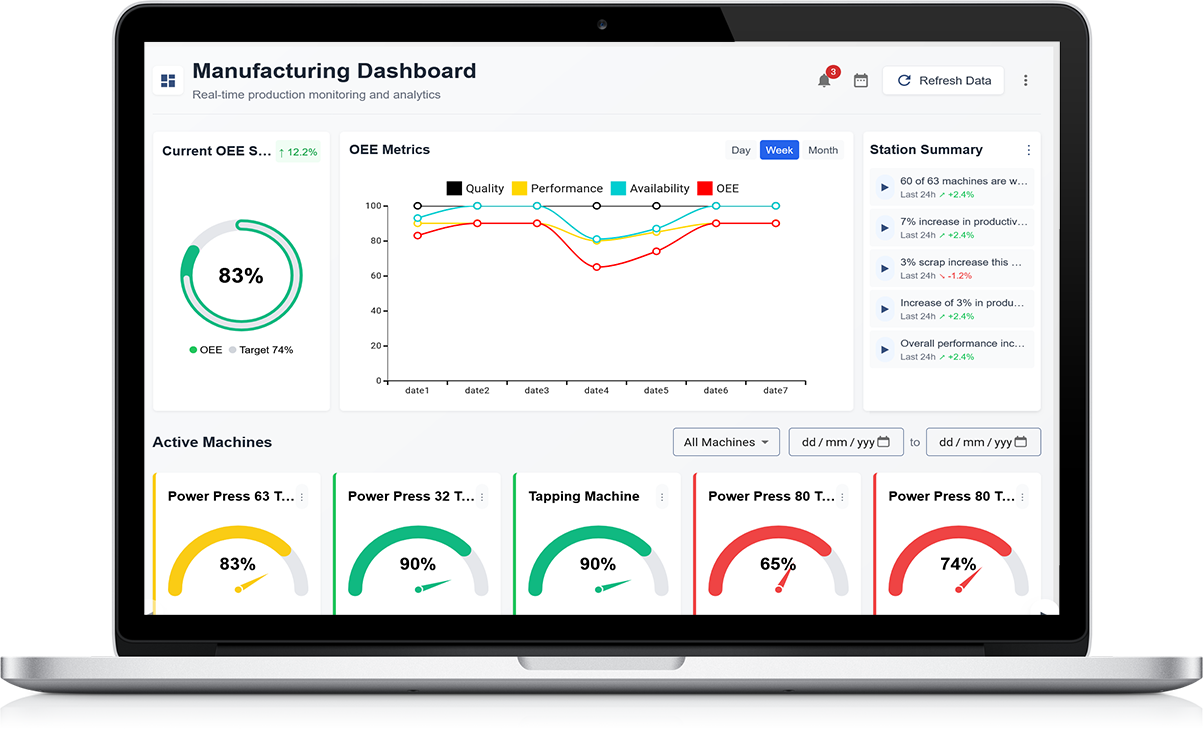
Real-time dashboards are essential for visualising production metrics in paper mills. They convert raw data from machines into clear, actionable information, helping operators and supervisors quickly understand current performance. By highlighting availability, performance, and quality, dashboards make it easy to identify issues such as downtime, slow production, or defects. This visual representation supports faster, informed decision-making and reduces reliance on manual reports or post-shift reviews.
Supporting Proactive Operations
Dashboards allow teams to respond immediately to problems, improving overall efficiency. Alerts and trend indicators guide operators in prioritising tasks and taking corrective action before minor issues escalate. Visualising key metrics in real time also enhances coordination between operators, supervisors, and maintenance teams, creating a collaborative environment focused on optimising production flow and product quality. Dashboards thus become a central tool for daily operational management.
Driving Continuous Improvement
Beyond immediate problem-solving, dashboards support continuous improvement initiatives. Performance trends highlight recurring issues, allowing teams to refine processes and implement targeted interventions. By providing clear insights into machine performance and operational efficiency, dashboards empower teams to maintain high production standards while aligning daily work with broader business objectives. Consistent use ensures sustainable improvements across the plant.
Empowering Operators with OEE Data for Better Decision-Making
Enabling Real-Time Action
OEE data empowers operators in paper mills by giving them visibility into equipment performance and production progress. Operators can see availability, speed, and quality metrics at a glance, enabling them to take immediate action when performance drops. This real-time insight reduces downtime, ensures consistent output, and supports proactive problem-solving, turning operators into active participants in process optimisation.
Improving Daily Operational Decisions
Access to accurate OEE metrics allows operators to make informed decisions without waiting for management guidance. By monitoring performance trends, they can adjust machine settings, optimise workflow, and coordinate with maintenance teams effectively. Clear visual indicators of production targets versus actual results also foster accountability and help operators prioritise tasks based on business objectives.
Supporting Continuous Improvement and Engagement
When operators understand the impact of their work on OEE results, they are more engaged in continuous improvement activities. Tracking the effects of changes reinforces a feedback-driven environment and encourages knowledge sharing between teams. By empowering operators with actionable data, paper mills can enhance efficiency, quality, and overall production performance while building a culture of ownership and operational excellence.
Supporting Lean Manufacturing and Continuous Improvement in Paper Production
Identifying Waste and Inefficiencies
OEE provides valuable insights for lean manufacturing in paper mills. By tracking availability, performance, and quality, plants can identify waste such as machine downtime, slow cycles, and defective output. This information allows teams to prioritise improvements, eliminate inefficiencies, and optimise production flow. Continuous monitoring ensures that gains are maintained and reinforces a culture focused on operational excellence.
Encouraging Incremental Improvements
Lean principles emphasise small, consistent improvements rather than large, disruptive changes. OEE data allows teams to test process adjustments, measure results, and implement effective solutions iteratively. This incremental approach minimises risk, ensures sustainability, and contributes to long-term efficiency gains across production lines. Employees see the impact of their work, motivating proactive engagement.
Engaging Teams for Continuous Improvement
Operators and supervisors who understand OEE metrics actively participate in identifying problems and implementing solutions. Cross-functional collaboration encourages knowledge sharing and best practice adoption, improving overall plant performance. Embedding OEE into daily routines ensures continuous improvement initiatives are aligned with business objectives and support operational consistency and quality in paper production.
Predictive Maintenance Using OEE Metrics to Reduce Breakdowns
Using Data to Anticipate Issues
OEE metrics provide early warning signs of potential equipment problems. Tracking patterns in availability, performance, and quality allows maintenance teams to identify machines at risk of failure. In paper mills, this predictive approach reduces unplanned downtime, ensures consistent production, and avoids costly emergency repairs. Historical OEE data informs maintenance scheduling and highlights recurring issues, supporting proactive intervention before disruptions occur.
Optimising Maintenance Resources
Predictive maintenance based on OEE ensures that maintenance activities are planned efficiently. Resources can be allocated based on actual machine condition and performance trends rather than fixed schedules, improving labour productivity and reducing unnecessary maintenance tasks. Targeted interventions extend equipment life, maintain high operational efficiency, and minimise production interruptions, directly contributing to cost savings and reliability.
Supporting Operational Excellence
By combining predictive insights with real-time monitoring, paper mills can enhance production planning and reduce variability in output. Teams can prioritise critical maintenance tasks, anticipate potential bottlenecks, and continuously refine preventive strategies. OEE-driven predictive maintenance reinforces a culture of reliability, operational discipline, and continuous improvement, ensuring optimal machine performance and long-term operational efficiency.
Calculating ROI and Efficiency Gains from OEE Implementation
Quantifying Operational Improvements
Implementing OEE in paper mills enables organisations to quantify efficiency gains across machines and production lines. Improvements in availability, performance, and quality directly translate into increased throughput, reduced waste, and lower operating costs. By comparing performance metrics before and after implementation, companies can measure tangible benefits such as reduced downtime, higher output, and improved product quality, providing a clear view of return on investment.
Assessing Financial and Operational Value
ROI includes both tangible and intangible benefits. Tangible returns include cost savings, productivity improvements, and better resource utilisation, while intangible gains include improved decision-making, team engagement, and faster problem resolution. Combining these factors provides a complete understanding of OEE’s impact on operational and financial performance, helping leadership make informed investment decisions.
Supporting Continuous Performance Optimisation
Accurate ROI calculations allow paper mills to track ongoing improvements and justify further investment in OEE systems or process enhancements. By demonstrating measurable efficiency gains, organisations can expand the use of OEE across additional lines or plants. Monitoring ROI also reinforces a culture of continuous improvement, ensuring that operational gains are maintained and optimised over time, contributing to long-term competitiveness and productivity.
Scaling OEE Practices Across Multiple Pulp and Paper Lines
Standardising Metrics and Processes
Scaling OEE across multiple lines requires consistent metrics and standardised processes. Uniform tracking of availability, performance, and quality ensures that performance comparisons are meaningful and actionable. Standardisation also facilitates operator training, reporting consistency, and process optimisation across all pulp and paper lines, allowing best practices to be replicated efficiently.
Maintaining Oversight and Accountability
Integrated dashboards and centralised reporting provide managers with real-time visibility across production lines. Trends and alerts allow teams to respond quickly to performance issues, reducing downtime and maintaining product quality. Clear visibility also reinforces accountability, ensuring that operators and supervisors remain aligned with performance expectations and business objectives.
Encouraging Knowledge Sharing and Continuous Improvement
Scaling OEE enables cross-line collaboration, where successful strategies and improvements are shared between teams. Employees learn from each other’s successes and challenges, creating a culture of continuous improvement. This approach ensures that performance gains are maintained across all lines, increasing overall productivity, operational efficiency, and competitiveness in paper production.
Building a High-Performance Culture Focused on Equipment Reliability and Productivity
Promoting Accountability and Ownership
Developing a high-performance culture in paper mills requires accountability at all levels. Operators, supervisors, and maintenance teams must understand their roles in maintaining equipment performance and production efficiency. OEE metrics provide objective insights, allowing teams to see the direct impact of their actions. Transparency fosters ownership and motivates proactive engagement in process improvement initiatives.
Prioritising Preventive and Predictive Maintenance
A reliability-focused culture emphasises preventive and predictive maintenance. OEE data helps identify patterns that indicate potential failures, allowing teams to act before breakdowns occur. Scheduling maintenance based on performance trends optimises resources, reduces downtime, and ensures machines operate at peak efficiency. This approach enhances productivity and supports operational stability across the plant.
Embedding Continuous Improvement and Collaboration
High-performance cultures encourage collaboration and continuous learning. Operators and maintenance teams share insights, implement corrective actions, and adopt best practices. By embedding these behaviours into daily routines, paper mills create sustainable operational excellence, improved reliability, and stronger overall performance. A focus on equipment reliability and productivity ensures long-term efficiency and competitiveness in production operations.