What Is OEE Software with IoT Integration and Why Does It Matter?
OEE software with IoT integration combines Overall Equipment Effectiveness (OEE) tracking with smart data collection through connected devices. This powerful pairing helps businesses monitor machine performance in real-time, making it easier to improve efficiency and reduce downtime.
Understanding OEE
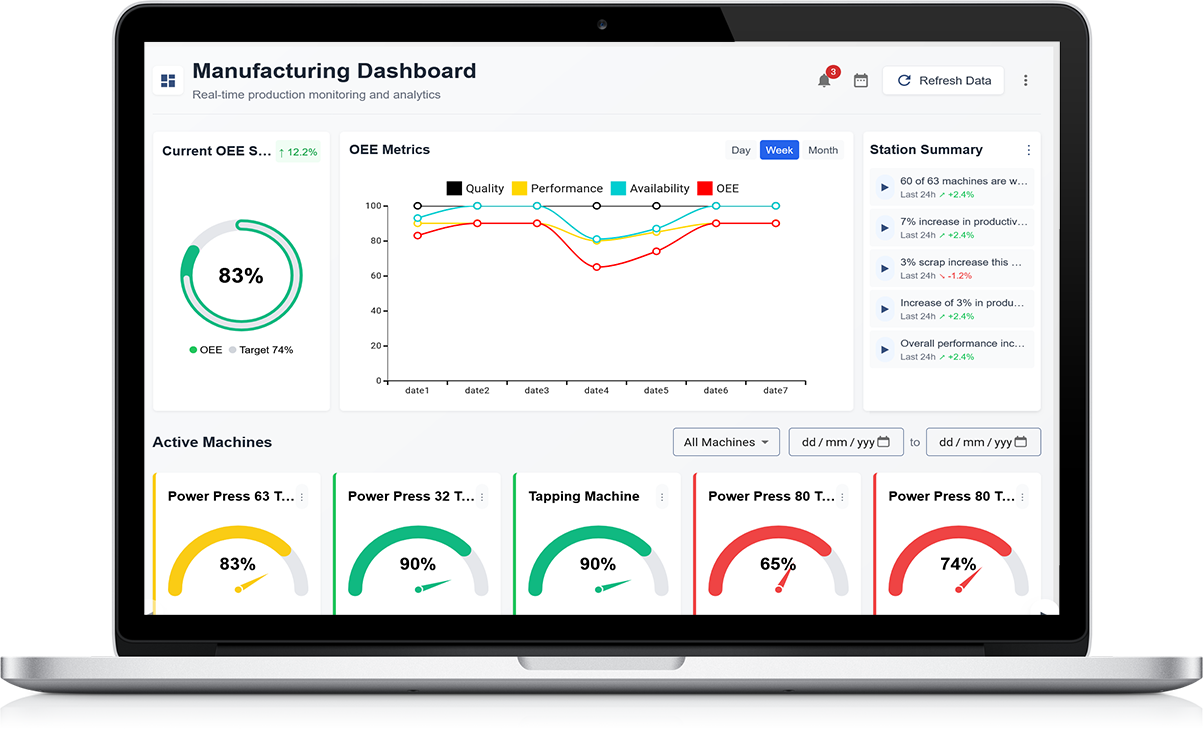
OEE is a key metric used to measure how effectively equipment is running. It considers three main factors: availability, performance, and quality. By tracking these elements, businesses can identify where losses are happening and take steps to improve overall output.
The Role of IoT
When OEE software is integrated with IoT (Internet of Things) technology, it can automatically collect data from machines without manual input. Sensors and connected devices provide instant feedback on machine status, production speed, and product quality. This allows for quicker decisions and more accurate reporting.
Why It Matters
This integration offers clear benefits. It helps reduce human error, speeds up problem-solving, and gives teams a live view of factory performance. Managers can respond faster to issues and make better-informed decisions. Over time, this leads to improved productivity, less waste, and more reliable operations.
Boosting Efficiency
By using OEE software with IoT, businesses can spot patterns and trends that may not be obvious through manual tracking. This helps in planning maintenance, managing shifts, and improving the use of resources, making the entire operation more efficient and cost-effective.
In summary, combining OEE software with IoT creates a smart, data-driven approach to equipment management that supports better decision-making and continuous improvement.
How IoT Enhances Real-Time Equipment Monitoring in OEE Systems
The integration of IoT with OEE systems has changed how equipment is monitored in real-time. By using connected devices, teams can now track machine performance as it happens, helping improve efficiency, reduce downtime, and boost overall output.
What IoT Brings to Equipment Monitoring
IoT, or the Internet of Things, involves the use of sensors and smart devices that send data instantly from machines to a central system. This means information like run time, speed, output quality, and machine status is always up to date, without the need for manual checks or input.
Faster Response to Issues
When something goes wrong, IoT-enabled OEE systems alert teams straight away. Whether it’s a drop in performance or an unexpected stop, the system highlights the issue in real time. This quick feedback helps operators take action faster, reducing the length and impact of disruptions.
Better Use of Data
Real-time data helps shift managers and maintenance teams see patterns and spot weak points in equipment performance. This insight supports smarter scheduling of preventive maintenance and reduces the risk of breakdowns, leading to smoother operations.
Greater Visibility and Control
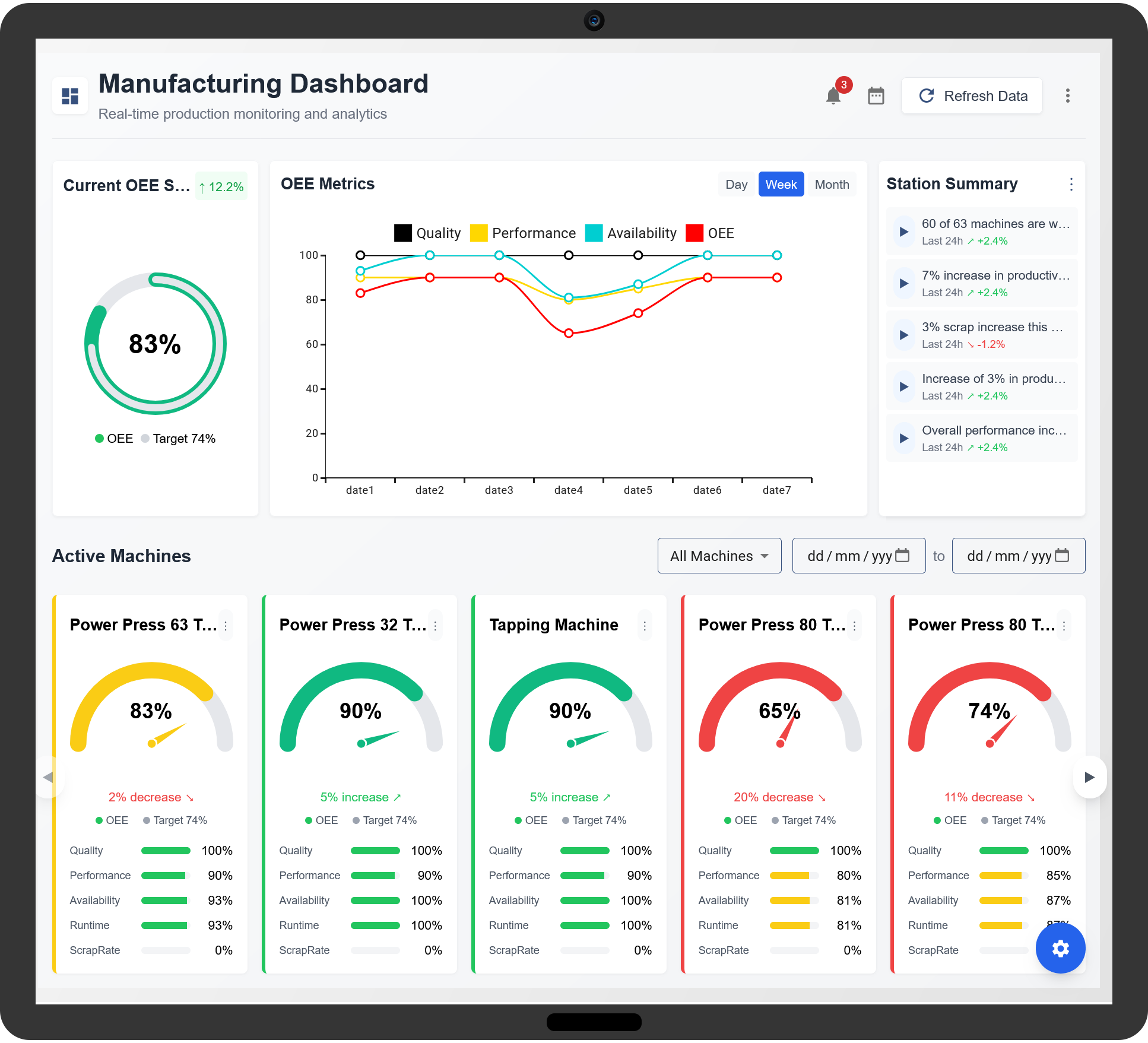
With live dashboards powered by IoT, all team members can clearly see how equipment is performing. This shared visibility supports teamwork and helps everyone stay aligned on performance goals, shift targets, and quality standards.
In short, IoT enhances real-time equipment monitoring in OEE systems by making data accurate, immediate, and actionable—leading to better decisions and stronger performance overall.
The Benefits of Using IoT-Enabled OEE Software in Manufacturing
IoT-enabled OEE software offers many benefits for manufacturing operations. By combining real-time data collection with performance tracking, it helps manufacturers improve productivity, reduce waste, and gain full visibility into how their equipment is running.
Accurate and Instant Data Collection
With IoT devices connected directly to machines, data is gathered automatically and in real time. This removes the need for manual entry, reduces errors, and ensures that performance data is always current and reliable.
Improved Equipment Efficiency
OEE software with IoT highlights inefficiencies as they happen. Downtime, slow cycles, or quality issues are flagged instantly, allowing quick response and reducing the impact on overall production. Over time, this leads to better use of machines and fewer disruptions.
Smarter Maintenance Planning
IoT sensors can track patterns in equipment use and wear, making it easier to plan maintenance before a problem occurs. Predictive maintenance cuts down on unplanned downtime and helps extend the life of machines.
Better Decision Making
With real-time insights and clear visual dashboards, managers can make informed decisions based on live data. This supports stronger planning, faster issue resolution, and continuous improvement across the factory floor.
Increased Productivity and Quality
When issues are found and fixed quickly, and machines are running at peak efficiency, the result is higher output with better quality. IoT-enabled OEE software helps teams stay on target and meet production goals with fewer delays or defects.
Tracking Downtime Automatically with IoT Sensors and OEE Tools
Reducing unplanned downtime is vital for keeping production lines running smoothly. With the help of IoT sensors and OEE tools, downtime tracking can now be automated, giving shift teams and managers accurate insights without manual effort. This leads to faster responses and better decision-making.
Real-Time Monitoring of Equipment
IoT sensors are attached to machines to detect their operating state in real time. These sensors can pick up when a machine stops, slows down, or experiences faults, instantly sending data to the OEE system without delay.
Automatic Downtime Recording
Unlike manual logs, automated tracking removes guesswork. Every downtime event is captured the moment it happens, including how long it lasts. This creates a complete and accurate record of equipment performance across shifts.
Identifying Root Causes
With detailed downtime data, teams can start spotting patterns—whether it’s due to a specific part, shift time, or process. OEE tools help categorise downtime causes, making it easier to focus on areas that need the most attention.
Faster Problem Solving
Live alerts can be triggered when downtime occurs, helping teams respond quicker. This not only shortens the duration of stoppages but also helps avoid production delays and missed targets.
Supporting Continuous Improvement
By automatically collecting and analysing downtime data, manufacturers can make smarter decisions. Improvements can be measured over time, making it easier to boost efficiency and reduce lost production hours.
Boosting Equipment Efficiency with Smart IoT Data in OEE Platforms
In today’s competitive manufacturing environment, equipment efficiency is crucial. By integrating smart IoT data into OEE (Overall Equipment Efficiency) platforms, businesses can enhance productivity, reduce downtime, and optimise their operations. This powerful combination offers real-time insights and supports data-driven decisions.
Real-Time Data Collection
IoT sensors attached to machinery collect continuous performance data, such as speed, temperature, and operational status. This information is then fed directly into the OEE system, providing real-time updates on equipment performance without the need for manual input.
Improved Accuracy and Insights
By eliminating human error in data collection, IoT-powered OEE systems provide more accurate, up-to-date information. This allows manufacturers to closely monitor key metrics, such as availability, performance, and quality, giving a clearer picture of equipment health and efficiency.
Predictive Maintenance
IoT sensors not only track current performance but can also predict when a machine is likely to fail. This predictive capability enables maintenance teams to address issues before they result in costly breakdowns, reducing unplanned downtime and extending the lifespan of machinery.
Optimising Equipment Usage
By monitoring performance in real time, OEE systems can identify trends or inefficiencies that may go unnoticed in traditional tracking methods. With this data, managers can optimise equipment usage, improve workflows, and make better decisions regarding scheduling and resource allocation.
Driving Continuous Improvement
Integrating IoT data into OEE platforms provides valuable insights that drive continuous improvement initiatives. Manufacturers can measure the impact of changes, track progress, and implement strategies to boost overall equipment efficiency, helping to stay ahead in the industry.
Predictive Maintenance Made Easy with IoT-Powered OEE Software
Predictive maintenance is transforming the way manufacturers approach equipment upkeep. With IoT-powered OEE (Overall Equipment Efficiency) software, businesses can take proactive steps to prevent breakdowns and reduce downtime. By leveraging real-time data, predictive maintenance becomes not just possible, but easy to implement and manage.
Real-Time Monitoring for Early Detection
IoT sensors continuously monitor equipment conditions, tracking key metrics such as temperature, vibrations, and wear levels. These sensors send real-time data to OEE software, allowing maintenance teams to detect early signs of potential issues before they lead to costly failures. By catching problems early, businesses can schedule maintenance only when necessary, rather than relying on a reactive, "fix-it-when-it-breaks" approach.
Predictive Analytics for Better Decision-Making
IoT-powered OEE software uses advanced analytics to predict when equipment is likely to fail based on historical performance data. This enables maintenance teams to act in advance, avoiding unexpected downtimes and improving overall production schedules. With predictive insights, manufacturers can plan maintenance during non-peak hours, minimising disruption and maximising productivity.
Cost Savings and Improved Equipment Lifespan
By switching from reactive to predictive maintenance, companies can significantly reduce repair costs and extend the lifespan of their equipment. The ability to replace or repair parts only when needed, rather than based on a fixed schedule, ensures that resources are used efficiently, resulting in both cost savings and reduced downtime.
Enhancing Operational Efficiency
IoT-powered OEE software not only helps in identifying maintenance needs but also aids in optimising the overall equipment efficiency. By addressing issues before they escalate, businesses can maintain higher productivity, lower operational costs, and achieve greater machine uptime, leading to long-term operational efficiency.
How IoT Devices Help Capture Accurate Production Data for OEE
In the world of manufacturing, capturing accurate production data is key to optimising efficiency and improving performance. IoT devices play a pivotal role in this process by providing real-time insights into every aspect of production. Integrated with OEE (Overall Equipment Efficiency) systems, these devices help businesses track critical metrics that directly impact productivity.
Real-Time Data Collection
IoT sensors installed on machines capture real-time data on performance, availability, and quality. These sensors monitor key factors such as speed, temperature, vibration, and cycle times, sending this information to OEE software systems. This data collection occurs continuously without human intervention, ensuring high accuracy and reliability.
Minimising Human Error
Manual data entry is prone to errors, leading to inaccuracies that can affect decision-making. IoT devices eliminate this risk by automatically collecting and transmitting data directly to OEE platforms. This reduces the likelihood of mistakes, ensuring that the data used for analysis is precise and up-to-date.
Enhanced Performance Tracking
By capturing granular data about machine operations, IoT devices allow manufacturers to measure performance more accurately. This includes tracking machine uptime, downtime, and the causes behind any inefficiencies. With this data, OEE systems can calculate performance rates, identify areas for improvement, and help businesses optimise their operations.
Data-Driven Decision Making
With IoT devices feeding real-time data into OEE platforms, manufacturers can make informed decisions based on facts rather than assumptions. This enables faster response times to issues, the ability to implement improvements, and the opportunity to continuously enhance production processes for better efficiency and reduced costs.
Reducing Manual Data Entry Through IoT Integration in OEE Systems
Manual data entry has long been a time-consuming and error-prone task in manufacturing environments. However, with the integration of IoT (Internet of Things) devices into OEE (Overall Equipment Efficiency) systems, businesses can now automate data collection, significantly reducing the need for manual input. This not only improves the accuracy of production data but also enhances overall operational efficiency.
Automation of Data Collection
IoT sensors placed on equipment continuously capture real-time data related to machine performance, availability, and quality. This data is automatically transmitted to the OEE software, eliminating the need for operators to manually record or input data into spreadsheets or systems. The result is faster, more reliable data collection without human intervention.
Eliminating Human Error
Manual data entry is susceptible to mistakes, which can lead to inaccurate performance metrics and hinder decision-making. By automating data collection through IoT integration, manufacturers can ensure that the data is accurate and up-to-date. This reduces the risk of errors and provides a more reliable basis for performance analysis and improvement.
Time and Cost Savings
By reducing the reliance on manual processes, manufacturers can save valuable time and resources. Operators no longer need to spend time on data entry tasks, allowing them to focus on more critical activities. Additionally, the automation of data collection helps reduce administrative costs associated with manual data management.
Improved Decision-Making
With IoT-powered data, manufacturers can access real-time insights into machine performance and overall efficiency. This enables better decision-making, faster troubleshooting, and the ability to identify inefficiencies before they become costly issues. Ultimately, integrating IoT into OEE systems helps businesses achieve higher productivity and lower operational costs.
How to Connect Machines to Your OEE Software Using IoT
Integrating machines with your OEE (Overall Equipment Efficiency) software through IoT (Internet of Things) technology is a game-changer for manufacturers looking to optimise operations. This process allows real-time data collection and analysis, helping to boost productivity and reduce downtime. Here’s how you can connect your machines to OEE software using IoT devices.
Step 1: Install IoT Sensors on Equipment
The first step is to install IoT sensors on your machines. These sensors track critical metrics such as machine speed, operating time, downtime, and quality output. The sensors capture real-time data and transmit it to your OEE software, offering a continuous stream of performance insights.
Step 2: Configure IoT Devices
Once installed, the IoT devices must be properly configured to work with your OEE software. This involves ensuring that the sensors can communicate with your system and send data in the correct format. It may require some customisation to align with your factory's specific needs, such as the type of machines used or the metrics you wish to monitor.
Step 3: Integrate with OEE Software
The next step is to integrate the IoT devices with your OEE software. This can usually be done through a secure, wireless connection. Ensure the software is set up to receive the data, process it in real time, and display it through dashboards or alerts. This integration allows you to monitor machine performance 24/7 and take corrective actions quickly when needed.
Step 4: Monitor and Optimise Performance
After the connection is established, you can start monitoring your machines’ performance directly through the OEE software. The system will analyse the data and provide insights on machine availability, performance, and quality. This enables you to identify inefficiencies, prevent downtime, and optimise production processes in real time.
Live Performance Dashboards: OEE Metrics from IoT in Real Time
Live performance dashboards that display OEE (Overall Equipment Efficiency) metrics in real time are revolutionising the way manufacturers monitor and improve their operations. By integrating IoT (Internet of Things) technology, these dashboards offer valuable insights that allow businesses to make data-driven decisions instantly. Here’s how real-time OEE dashboards enhance production efficiency.
Real-Time Data Monitoring
With IoT devices embedded in machines, real-time data on key OEE metrics such as availability, performance, and quality is continuously collected. These metrics are displayed on live dashboards, giving operators and managers immediate access to the performance status of every machine on the factory floor. The visualisation of this data helps to quickly identify any potential issues, enabling faster response times to prevent or address downtime.
Identifying Bottlenecks
Real-time dashboards make it easy to spot bottlenecks in the production process. If a machine is underperforming, the dashboard immediately highlights it, providing detailed metrics that help teams understand the cause. This instant visibility allows for quick intervention, ensuring minimal disruption to production schedules and reducing overall downtime.
Continuous Performance Optimisation
By continuously monitoring OEE metrics through live dashboards, manufacturers can track trends over time and identify areas for improvement. Whether it’s improving machine efficiency or reducing waste, real-time insights enable better decision-making, leading to a more streamlined and cost-effective production process.
Using IoT for Better Root Cause Analysis in OEE Reports
In modern manufacturing, using IoT technology for better root cause analysis in OEE (Overall Equipment Efficiency) reports has become essential for improving operational efficiency. By connecting machines and equipment with IoT sensors, manufacturers can gain deeper insights into the factors affecting performance, downtime, and quality. This data-driven approach makes identifying the root causes of issues more accurate and faster.
Enhanced Data Collection
IoT sensors collect real-time data on machine performance, availability, and quality. This data provides a detailed overview of the entire production process, capturing every event that may lead to inefficiencies. By analysing these metrics, manufacturers can pinpoint exact times when performance dips or downtime occurs, allowing for more precise root cause identification.
Faster Problem Diagnosis
Traditional methods of troubleshooting can be slow and often inaccurate. With IoT-powered OEE systems, problems can be identified almost immediately. For example, if a machine shows a sudden drop in efficiency, IoT data can quickly reveal whether it’s due to mechanical failure, operator error, or material issues. This rapid diagnosis allows teams to resolve issues quickly and minimise downtime.
Improved Decision-Making
IoT-enabled OEE reports offer actionable insights that lead to smarter decision-making. Once the root cause of an issue is identified, appropriate corrective actions can be taken, whether it’s adjusting processes, performing maintenance, or retraining operators. This results in continuous improvement and enhanced productivity across the operation.
Scalable IoT and OEE Solutions for Growing Manufacturing Operations
As manufacturing operations expand, the need for scalable solutions to monitor and optimise performance becomes increasingly important. Integrating IoT with OEE (Overall Equipment Efficiency) systems provides manufacturers with the flexibility and scalability required to meet the demands of growing operations. These solutions enable businesses to efficiently track machine performance, quality, and downtime as they scale their production processes.
Adapting to Business Growth
One of the key benefits of IoT-enabled OEE solutions is their ability to grow with your business. As production lines expand or new machines are added, IoT sensors can be easily integrated into existing systems without significant disruptions. This scalability ensures that manufacturers can continue to monitor equipment performance and gather valuable data without the need for major infrastructure changes.
Real-Time Data for Better Decision-Making
With IoT sensors collecting real-time data, manufacturers can track key performance indicators (KPIs) at every stage of production. This data helps identify areas of improvement and highlight potential issues before they become critical. As production volumes increase, the ability to access real-time insights allows manufacturers to make informed decisions quickly, keeping the operation running smoothly and preventing costly downtime.
Optimising Resources and Reducing Costs
IoT-based OEE solutions not only optimise equipment efficiency but also help in better resource allocation. By monitoring the performance of machinery and identifying inefficiencies, manufacturers can reduce energy consumption, maintenance costs, and waste. This leads to a more cost-effective and sustainable operation, making the business more competitive as it grows.
Improving Shift Productivity with IoT-Supported OEE Monitoring
Optimising shift productivity is crucial for manufacturers looking to maximise efficiency and output. IoT-supported OEE (Overall Equipment Efficiency) monitoring plays a vital role in achieving this goal by providing real-time data on equipment performance, downtime, and production quality. With this valuable information, manufacturers can make data-driven decisions that enhance productivity during each shift.
Real-Time Data for Improved Performance
IoT-enabled OEE monitoring systems capture live data from machines, offering immediate insights into their performance. Shift managers can quickly identify issues such as equipment malfunctions, production delays, or quality problems, enabling swift corrective actions. This instant visibility reduces the time spent troubleshooting and ensures that the production line remains focused on meeting targets.
Efficient Resource Allocation
By continuously tracking OEE metrics such as availability, performance, and quality, manufacturers can optimise resource allocation. IoT data helps managers schedule maintenance activities during periods of low production, reducing the risk of unexpected breakdowns. This proactive approach ensures that equipment is operating at its full potential, improving shift productivity without compromising quality.
Minimising Downtime
Downtime is one of the biggest barriers to high productivity. IoT-supported OEE monitoring helps identify patterns in machine performance, allowing manufacturers to predict and prevent potential failures. By addressing issues before they cause significant disruptions, manufacturers can keep production running smoothly and maximise the output during every shift.
How to Choose the Right IoT Devices for Your OEE Software
Choosing the right IoT devices for your OEE (Overall Equipment Efficiency) software is essential for maximising the performance and reliability of your manufacturing processes. The right IoT devices allow you to collect accurate, real-time data, helping you monitor equipment, track downtime, and optimise operations effectively.
Consider Compatibility with Your OEE Software
The first step in selecting IoT devices is ensuring they are compatible with your OEE software. The devices need to integrate seamlessly with your system to collect and transmit data accurately. Whether your OEE software is cloud-based or on-premise, make sure the IoT devices can interface with it to allow easy data exchange.
Data Accuracy and Reliability
For effective OEE monitoring, it's crucial that the IoT devices provide precise and reliable data. Choose devices with sensors that can capture key performance indicators such as machine speed, downtime, and production quality. Accurate data helps you make informed decisions and avoid costly mistakes caused by poor data quality.
Ease of Installation and Maintenance
Opt for IoT devices that are easy to install and require minimal maintenance. Devices with user-friendly installation processes save time and effort, while low-maintenance models ensure that your equipment runs smoothly without frequent interruptions. Look for devices with durable designs that can withstand harsh manufacturing environments.
Scalability for Future Needs
As your business grows, your OEE system will need to scale. Choose IoT devices that can accommodate future expansion, whether you're adding more equipment or increasing production capacity. Scalable devices help you future-proof your OEE system and ensure long-term efficiency improvements.
Success Stories: Manufacturers Using IoT and OEE to Drive Results
Many manufacturers are successfully leveraging IoT and OEE (Overall Equipment Efficiency) software to enhance their operations, reduce downtime, and improve productivity. By integrating IoT devices into their OEE systems, these companies have gained real-time insights into machine performance and taken steps to optimise their production processes.
Improved Equipment Performance in Automotive Manufacturing
One automotive manufacturer implemented IoT-enabled OEE software to monitor their assembly line machinery. By tracking key metrics such as machine uptime, speed, and quality, they identified patterns of inefficiency. This insight allowed them to schedule maintenance before equipment failure occurred, reducing unplanned downtime by 20%. The result was a significant increase in overall production efficiency and reduced maintenance costs.
Streamlined Operations in Food Processing
A food processing plant used IoT sensors to collect real-time data from their production lines. By connecting their equipment to OEE software, they were able to pinpoint slowdowns and quality issues quickly. This led to the implementation of corrective actions that increased production output by 15%. The plant also reduced waste by improving the accuracy of its machinery, contributing to both cost savings and higher product quality.
Increased Productivity in Textile Manufacturing
A textile manufacturer deployed IoT devices to track the performance of their weaving machines. With real-time data integrated into their OEE system, they were able to analyse machine downtime and set optimal maintenance schedules. As a result, the company saw a 10% increase in productivity and a 5% reduction in overall operating costs. The improvements were instrumental in boosting their competitiveness in a fast-paced industry.
These success stories show that integrating IoT with OEE software can lead to substantial improvements in efficiency, productivity, and cost reduction across various manufacturing sectors.