What Is OEE Software and Why Integration Matters
Understanding OEE in Manufacturing
Overall Equipment Effectiveness software is used to measure how effectively manufacturing equipment is being utilised. It combines availability, performance, and quality into a single view that shows where productivity losses occur. This helps organisations understand not just what is happening on the shop floor, but why it is happening.
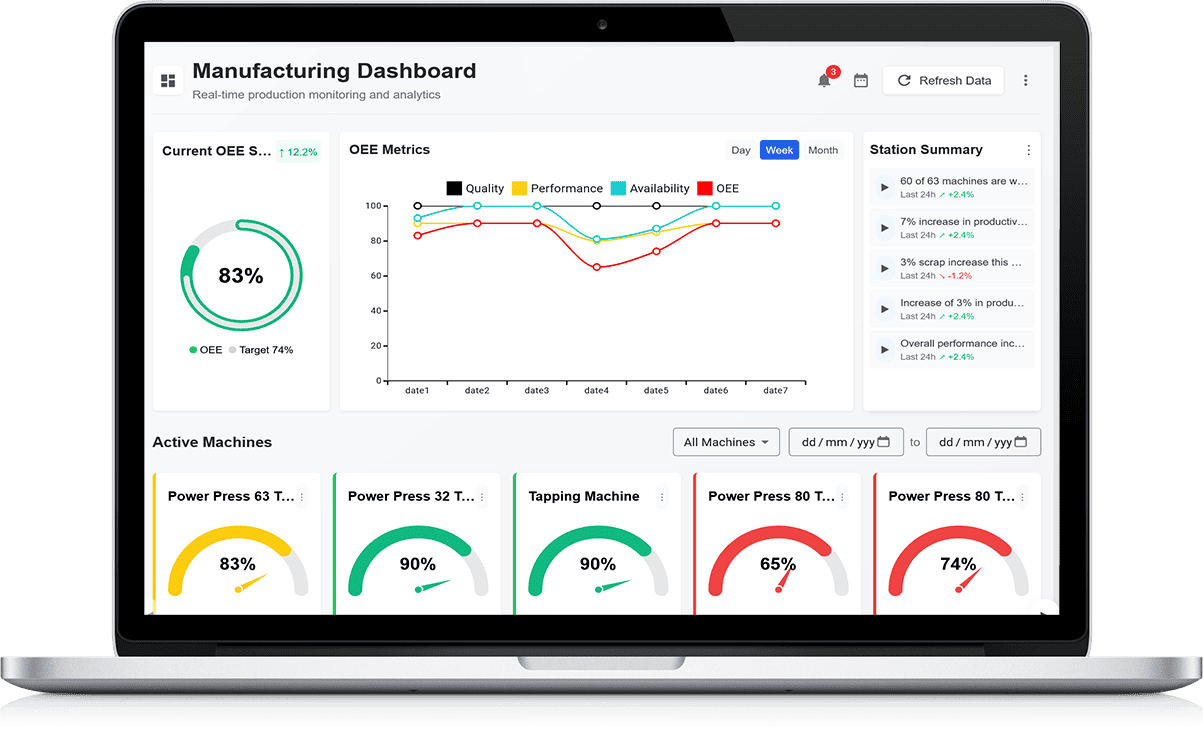
The Importance of Integration
On its own, OEE data provides valuable insight into machine performance. However, when it is integrated with other manufacturing systems, its value increases significantly. Integration allows production data to be connected with planning, inventory, and operational decision-making.
Reducing Data Gaps and Manual Effort
Without integration, teams often rely on manual data entry or disconnected reports. This leads to delays, errors, and incomplete information. Integrated OEE software ensures data flows automatically and consistently across systems.
Supporting Smarter Manufacturing Decisions
By connecting OEE data with wider operational systems, manufacturers gain a clearer understanding of how equipment performance impacts production output, costs, and delivery commitments.
Understanding ERP and MES Systems in Manufacturing
The Role of ERP Systems
Enterprise resource planning systems focus on managing high-level business processes such as production planning, inventory control, procurement, and financial tracking. They provide a broad overview of operations and support strategic decision-making.
The Purpose of MES Systems
Manufacturing execution systems operate closer to the shop floor. They track production activities in real time, manage work orders, monitor machine status, and ensure production follows defined processes.
How ERP and MES Complement Each Other
ERP systems plan what should happen, while MES systems track what is actually happening. Together, they create a bridge between strategic planning and operational execution.
Why Clear Integration Is Essential
When ERP and MES systems work together seamlessly, manufacturers benefit from improved accuracy, reduced delays, and better alignment between plans and actual production results.
How OEE, ERP, and MES Work Together in a Connected Factory
Creating a Unified Data Environment
In a connected factory, OEE Software captures machine-level performance data, MES systems manage production execution, and ERP systems handle planning and resource management. Integration ensures these systems share consistent information.
Aligning Shop Floor and Business Operations
OEE data feeds real-time performance insights into MES, which then updates ERP with accurate production status. This alignment helps ensure plans reflect actual capacity and performance.
Improving End-to-End Visibility
When systems are connected, teams gain visibility from machine performance through to order fulfilment. This reduces surprises and improves coordination across departments.
Supporting Faster and More Informed Decisions
Connected systems enable quicker responses to issues, helping organisations maintain steady production flow and meet delivery commitments.
Key Integration Benefits for Production Performance
Improved Production Accuracy
Integration ensures production data is consistent across systems, reducing discrepancies between planned and actual output.
Faster Issue Identification
When OEE, MES, and ERP data are connected, performance issues are identified earlier, allowing corrective action before delays escalate.
Better Use of Resources
Accurate performance data supports smarter allocation of labour, materials, and machine time.
More Reliable Delivery Performance
Improved coordination across systems helps manufacturers meet schedules and maintain stable service levels.
Real-Time Data Flow Between Machines, MES, and ERP
Capturing Live Machine Data
OEE Software collects real-time data from machines, providing immediate insight into availability, speed, and quality.
Updating MES in Real Time
This data feeds into MES systems, enabling accurate tracking of work orders, production status, and process compliance.
Keeping ERP Systems Up to Date
ERP systems receive timely updates on production progress, inventory usage, and capacity changes.
Reducing Delays and Errors
Real-time data flow eliminates manual reporting delays and ensures decisions are based on current information.
Improving Production Planning and Scheduling Accuracy
Using Real Performance Data
Integrated systems allow planners to base schedules on actual machine performance rather than assumptions.
Reducing Schedule Disruptions
Accurate data helps identify capacity constraints early, reducing last-minute changes and delays.
Aligning Demand and Capacity
Better visibility supports more realistic production plans that match available resources.
Improving Customer Commitments
Reliable schedules improve delivery accuracy and strengthen customer confidence.
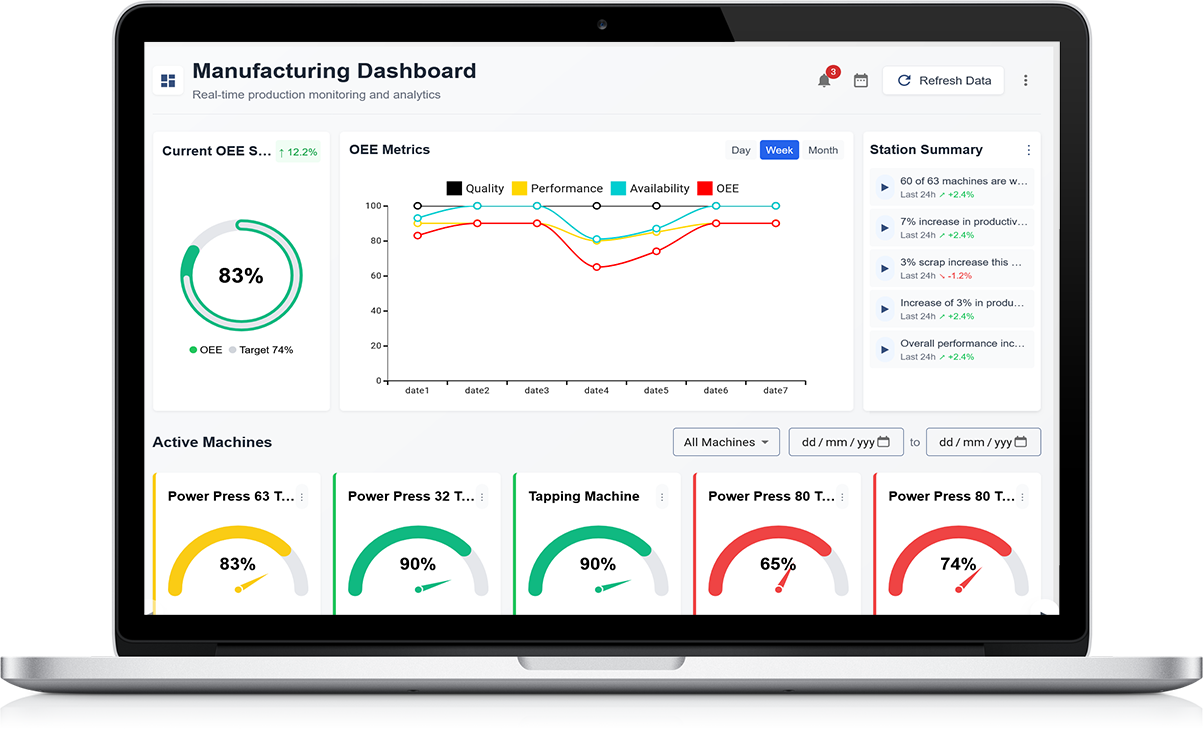
Enhancing Quality and Downtime Tracking Through Integration
Capturing Downtime Causes Accurately
Integrated OEE systems record downtime events directly from machines, improving accuracy and detail.
Linking Quality Issues to Production Data
Quality losses can be analysed alongside production conditions, helping teams identify root causes.
Supporting Preventive Action
Clear insight into downtime and quality trends allows teams to address issues before they escalate.
Driving Continuous Improvement
Accurate tracking supports ongoing improvement efforts focused on reliability, quality, and performance.
Aligning Shop Floor Performance with Business Objectives
Connecting Daily Work to Strategic Goals
Shop floor activities directly influence overall business performance, yet they are often measured separately from business objectives. Aligning shop floor performance with organisational goals ensures that daily production efforts support wider priorities such as cost control, delivery reliability, and quality improvement.
Using Performance Data to Drive Alignment
When production data is connected to business targets, teams gain clarity on how their actions affect results. Metrics such as equipment availability, output levels, and defect rates become meaningful indicators rather than isolated figures.
Improving Communication Between Teams
Alignment improves communication between operational and management teams. Clear performance data helps everyone understand expectations and focus on shared outcomes.
Supporting Consistent Decision-Making
When shop floor performance is linked to business objectives, decisions are made with a clear understanding of both operational impact and strategic value.
Automating Data Collection to Reduce Manual Reporting
Challenges of Manual Data Collection
Manual reporting is time-consuming and prone to errors. Operators often spend valuable time recording data instead of focusing on production activities.
Benefits of Automated Data Capture
Automated data collection captures information directly from machines and processes. This ensures accuracy, consistency, and real-time availability of data.
Reducing Administrative Workload
By removing manual entry tasks, teams can focus on problem-solving and improvement rather than paperwork.
Improving Data Reliability
Reliable data supports better analysis, reporting, and decision-making across manufacturing operations.
Gaining End-to-End Visibility Across Manufacturing Operations
Seeing the Full Production Picture
End-to-end visibility connects machine performance, production execution, and business planning into a single view. This helps organisations understand how each stage of production affects the next.
Identifying Gaps and Inefficiencies
When data flows across systems, bottlenecks, delays, and quality issues become easier to identify and address.
Improving Cross-Department Collaboration
Shared visibility helps production, planning, and management teams work from the same information.
Supporting Faster Responses
With full visibility, teams can respond quickly to changes in demand, capacity, or performance.
Supporting Lean Manufacturing and Continuous Improvement
Eliminating Waste Through Visibility
Lean manufacturing focuses on reducing waste and improving flow. Integrated performance data highlights inefficiencies such as downtime, rework, and delays.
Using Data to Guide Improvements
Accurate performance data helps teams prioritise improvement actions based on real impact rather than assumptions.
Encouraging Team Involvement
When teams can see performance trends, they become more engaged in identifying and solving problems.
Sustaining Continuous Improvement
Ongoing measurement ensures improvements are maintained and refined over time.
Common Integration Challenges and How to Overcome Them
Dealing with Data Silos
Disconnected systems create information gaps. Integration removes silos by enabling consistent data flow across platforms.
Managing Change Effectively
Change resistance can slow integration efforts. Clear communication and phased implementation help teams adapt.
Ensuring Data Accuracy
Standardising data definitions ensures consistency and trust in reported information.
Planning for Scalability
Well-designed integration supports future growth without major rework.
Data Security and Reliability in Integrated Manufacturing Systems
Protecting Sensitive Operational Data
Manufacturing data is critical to operations. Secure access controls and monitoring help protect sensitive information.
Ensuring System Reliability
Reliable data flow is essential for real-time decision-making. Stable integration reduces system downtime and data loss.
Maintaining Data Integrity
Consistent validation ensures data remains accurate as it moves between systems.
Building Trust in Digital Systems
Secure and reliable systems increase confidence in digital manufacturing solutions.
Measuring ROI from OEE, ERP, and MES Integration
Understanding Investment Value
Return on investment includes improvements in productivity, quality, and delivery performance.
Tracking Performance Improvements
Metrics such as reduced downtime, improved output, and better schedule adherence demonstrate measurable value.
Identifying Cost Savings
Automation and efficiency gains reduce labour costs and operational waste.
Supporting Long-Term Business Growth
Sustained performance improvements contribute to long-term competitiveness and profitability.
Preparing Your Organisation for Smart Manufacturing and Industry 4.0
Building a Connected Manufacturing Environment
Smart manufacturing relies on connected systems that share real-time data across operations.
Using Data for Predictive Insights
Integrated data enables advanced analysis that supports proactive decision-making.
Developing Digital Capabilities
Teams need skills and processes that support digital workflows and data-driven thinking.
Creating a Future-Ready Operation
Strong integration lays the foundation for scalable, intelligent manufacturing operations.