Overall Equipment Effectiveness (OEE) is a vital metric in energy manufacturing, ensuring that production processes operate at maximum efficiency. Given the industry's focus on reliability, sustainability, and cost control, OEE helps manufacturers optimize resource utilization, minimize downtime, and enhance productivity.
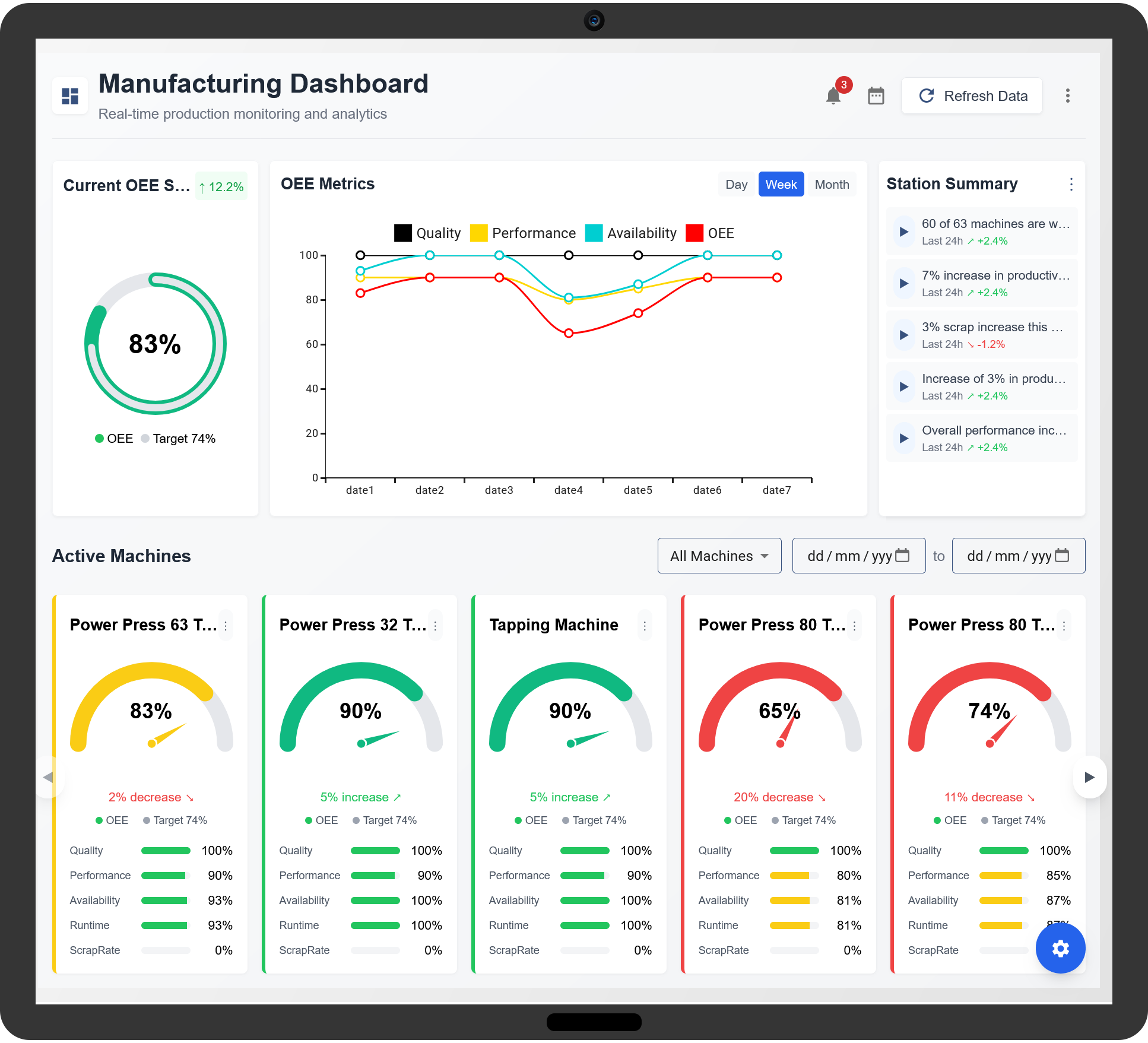
1. Key Components of OEE in Energy Manufacturing
- Availability: Ensures machines and equipment run during planned production time by reducing downtime.
- Performance: Measures whether production assets operate at optimal speeds without slow cycles or inefficiencies.
- Quality: Evaluates the proportion of defect-free components produced, maintaining high industry standards.
2. How to Improve OEE in Energy Manufacturing
Step 1: Implement Real-Time Performance Monitoring
Utilize digital monitoring systems to track machine availability, performance, and efficiency in real time.
Step 2: Minimize Downtime Through Predictive Maintenance
Adopt predictive maintenance strategies to identify potential failures before they occur, reducing unexpected disruptions.
Step 3: Optimize Production Workflows
Streamline operational processes to eliminate bottlenecks and improve production efficiency.
Step 4: Strengthen Quality Control Measures
Implement rigorous inspection protocols and automation to reduce defects and improve output quality.
Step 5: Enhance Workforce Training
Equip employees with the necessary skills and training to operate machinery efficiently and respond to issues proactively.
3. Benefits of Implementing OEE in Energy Manufacturing
- Improved Operational Efficiency: Reduces waste and increases output.
- Higher Equipment Reliability: Ensures production assets run smoothly with fewer breakdowns.
- Lower Production Costs: Minimizes energy and material wastage.
- Data-Driven Decision Making: Uses real-time analytics to optimize performance.
- Sustainability: Supports energy-efficient manufacturing practices.
4. Future of OEE in Energy Manufacturing
Advancements in automation, IoT, and AI will further enhance OEE in energy manufacturing. Predictive analytics and smart monitoring will drive efficiency gains, making production more sustainable and cost-effective.
By focusing on OEE, energy manufacturers can boost productivity, maintain quality, and remain competitive in a rapidly evolving industry.
OEE in Energy Manufacturing
What is OEE in energy manufacturing?
OEE (Overall Equipment Effectiveness) in energy manufacturing is a key metric used to measure the efficiency, performance, and availability of equipment in energy production facilities.
Why is OEE important in energy production?
OEE helps energy manufacturers maximize equipment utilization, minimize losses, and improve overall productivity in power generation and energy production.
How is OEE calculated in energy manufacturing?
OEE is calculated using the formula: Availability × Performance × Quality, measuring uptime, operational speed, and defect-free output.
What are the key factors affecting OEE in energy plants?
Factors include equipment failures, maintenance delays, inefficient processes, and power supply fluctuations.
How does OEE help reduce downtime in energy production?
By identifying causes of inefficiencies and breakdowns, OEE helps minimize downtime and optimize operational performance.
Can OEE be applied to renewable energy manufacturing?
Yes, OEE can be used to optimize solar panel production, wind turbine manufacturing, and other renewable energy systems.
How does OEE improve equipment efficiency in energy plants?
OEE helps track equipment performance, detect inefficiencies, and implement corrective actions to improve overall output.
What role does OEE play in quality control for energy manufacturing?
OEE ensures quality by identifying defects, reducing rework, and maintaining compliance with industry standards.
How does OEE support predictive maintenance in energy facilities?
OEE data helps predict equipment failures, allowing for proactive maintenance and reducing unplanned downtime.
Can OEE be used to optimize energy production schedules?
Yes, OEE provides real-time data that helps plan production schedules, ensuring maximum efficiency and minimal waste.
What are common causes of downtime in energy manufacturing?
Common causes include equipment malfunctions, power grid instability, maintenance delays, and inefficient process flows.
How does OEE impact cost savings in energy production?
By reducing inefficiencies, minimizing waste, and optimizing resource usage, OEE helps lower overall operational costs.
What are the best practices for improving OEE in energy manufacturing?
Best practices include preventive maintenance, real-time monitoring, automation, and continuous performance analysis.
How can OEE help track energy efficiency in production?
OEE enables tracking of energy consumption, process optimization, and reduction of energy waste in production systems.
Is OEE applicable to both small and large energy manufacturers?
Yes, OEE can be scaled to benefit small energy startups and large-scale production plants by improving operational efficiency.