What Are Real-Time OEE and SQDCP Systems in Modern Manufacturing?
Introduction to Real-Time OEE and SQDCP
Understanding how real-time OEE and SQDCP can elevate factory performance and engagement is essential for manufacturers aiming to improve operational efficiency, production transparency, workforce collaboration, and customer satisfaction.
The integration of Overall Equipment Effectiveness (OEE) and SQDCP (Safety, Quality, Delivery, Cost, People) creates a structured operational framework that allows organisations to monitor manufacturing performance continuously while improving communication and operational responsiveness.
Real-time OEE and SQDCP systems provide immediate visibility into production activities, equipment performance, operational KPIs, workforce engagement, and manufacturing targets across the factory floor.
This connected approach helps organisations identify operational inefficiencies quickly, reduce production downtime, improve product consistency, and strengthen collaboration between departments.
Modern manufacturing operations require accurate information, rapid decision-making, and consistent communication to maintain productivity and customer satisfaction.
By implementing real-time visibility systems, manufacturers can respond faster to operational disruptions while improving planning, scheduling, and resource allocation.
Digital dashboards, live reporting tools, and automated performance monitoring systems help organisations maintain greater control over daily manufacturing activities.
Improved visibility also supports stronger accountability by ensuring employees understand operational priorities, production targets, and performance expectations.
When operational information is easily accessible, organisations can improve responsiveness, strengthen operational discipline, and maintain more stable manufacturing processes.
Understanding the Relationship Between OEE and SQDCP
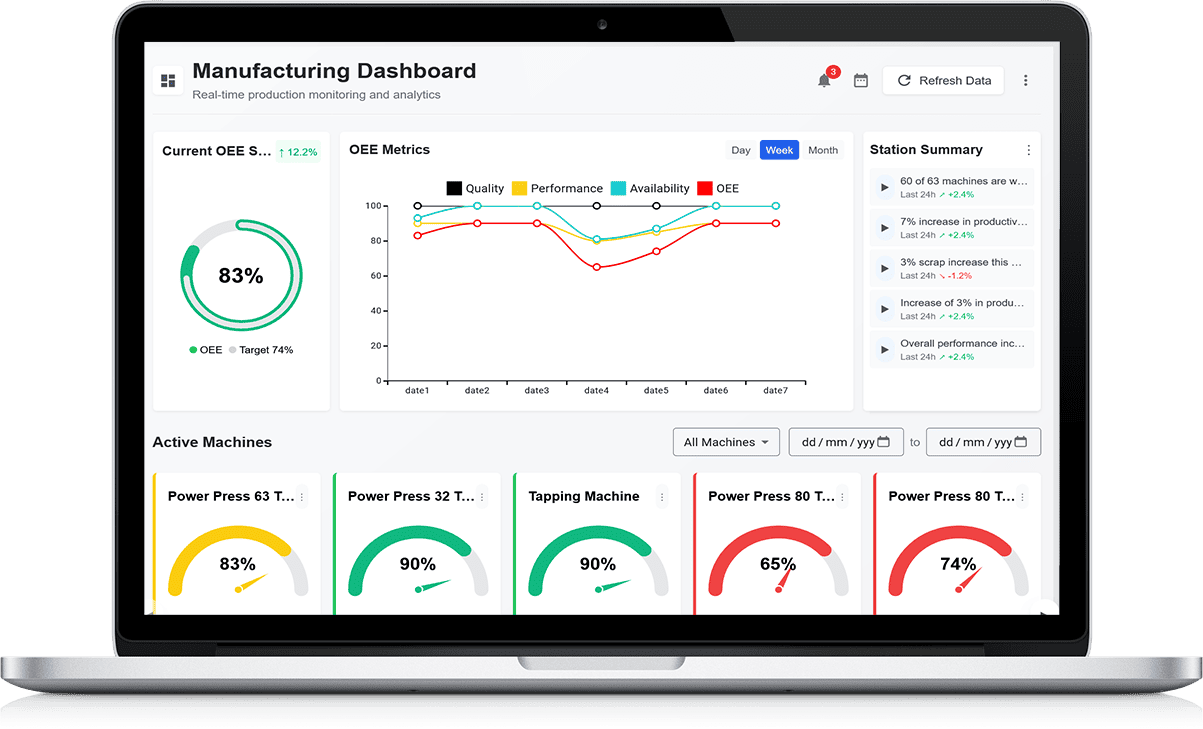
OEE focuses on measuring manufacturing equipment effectiveness through three key performance areas: availability, performance, and quality.
These measurements allow organisations to identify equipment losses, reduce downtime, improve machine utilisation, and strengthen operational reliability.
SQDCP complements OEE by providing a broader management framework that monitors workplace safety, product quality, delivery efficiency, operational costs, and workforce engagement.
Together, these frameworks create a comprehensive operational management system that supports continuous improvement and factory-wide visibility.
Real-time monitoring allows production teams, supervisors, and managers to access up-to-date operational data at every stage of the manufacturing process.
This visibility improves decision-making and helps organisations resolve operational issues before they affect wider production performance.
The framework also encourages stronger collaboration by aligning departments with shared operational goals, performance metrics, and improvement priorities.
Manufacturers increasingly rely on integrated OEE and SQDCP systems to improve operational resilience and maintain competitive manufacturing performance.
As manufacturing environments become more digitally connected, real-time operational frameworks continue to play a major role in improving efficiency and workforce engagement.
Real-Time Visibility Across Factory Operations
Real-time visibility is one of the most important benefits of implementing OEE and SQDCP systems within manufacturing operations.
Production teams can monitor machine performance, downtime events, maintenance activities, production output, quality metrics, and delivery performance in real time.
This immediate access to operational data allows organisations to detect issues earlier and minimise delays in corrective action.
Improved operational transparency strengthens communication between production, maintenance, engineering, quality, and management teams.
Managers gain better control over factory operations while employees remain informed about operational priorities and performance expectations.
Real-time visibility also helps organisations improve production scheduling, resource planning, and workforce coordination.
Visual management tools such as KPI dashboards, live production boards, and automated alerts support faster operational decision-making across the factory.
Greater visibility reduces operational uncertainty and improves manufacturing stability during changing production demands.
Manufacturers with strong real-time operational visibility are often better positioned to improve productivity, customer satisfaction, and long-term operational performance.
Supporting Lean Manufacturing and Continuous Improvement
Real-time OEE and SQDCP systems strongly support lean manufacturing initiatives by helping organisations eliminate waste, reduce inefficiencies, and improve operational consistency.
Continuous monitoring enables manufacturers to identify recurring operational problems and implement targeted improvement strategies more effectively.
Daily performance reviews and structured operational meetings encourage teams to focus on productivity, quality improvement, and operational discipline.
Real-time reporting also allows organisations to measure the effectiveness of improvement initiatives using accurate operational data.
Lean manufacturing activities become more effective when production teams have access to live operational information and clearly defined performance objectives.
Manufacturers can track operational trends over time and identify opportunities to improve efficiency, reduce waste, and strengthen process reliability.
Continuous improvement becomes embedded within the organisational culture when employees are actively involved in operational problem-solving and performance reviews.
This structured approach strengthens operational resilience and supports long-term manufacturing excellence.
Organisations that maintain strong continuous improvement cultures are more likely to achieve sustainable operational growth and stronger customer confidence.
Improving Accountability and Workforce Engagement
Real-time OEE and SQDCP frameworks improve accountability by making operational targets, production performance, and workforce responsibilities clearly visible throughout the factory.
Employees become more engaged when they understand how their daily activities contribute to wider manufacturing objectives and business performance.
Clear visibility of operational metrics encourages ownership, responsibility, and stronger operational discipline across departments.
Managers can use real-time production data to provide targeted coaching, support, and performance feedback to manufacturing teams.
Workforce engagement improves significantly when employees participate in operational reviews, problem-solving discussions, and continuous improvement initiatives.
The framework also strengthens collaboration between departments by ensuring everyone works with the same operational information and shared performance goals.
Greater workforce involvement often leads to improved productivity, reduced staff turnover, and stronger operational consistency.
Employees are more likely to remain motivated when operational expectations are clear and performance achievements are regularly recognised.
By combining operational visibility with employee engagement, manufacturers create a more resilient, efficient, and performance-focused manufacturing environment.
Why Real-Time OEE and SQDCP Matter for Factory Performance and Engagement
Aligning Factory Operations with Business Objectives
Real-time OEE and SQDCP frameworks help manufacturers align daily production activities with wider organisational goals and long-term business strategies.
This alignment ensures that operational teams remain focused on improving productivity, reducing waste, maintaining quality standards, and meeting customer expectations consistently.
Clear operational targets support stronger coordination between departments while improving manufacturing efficiency across the organisation.
Manufacturers can also respond more effectively to changing market conditions, customer demands, and supply chain pressures when operational visibility is improved.
Strong alignment between factory operations and business priorities supports long-term competitiveness and operational stability.
Real-time performance monitoring allows management teams to identify operational gaps quickly and implement corrective actions before productivity is affected.
Manufacturers that integrate OEE and SQDCP into daily management routines often achieve greater operational consistency and improved manufacturing performance.
The framework also helps organisations prioritise improvement activities based on measurable operational data rather than assumptions.
This structured approach creates stronger connections between operational activities, workforce performance, and long-term business growth.
Improving Visibility Across Manufacturing Operations
One of the most significant advantages of real-time OEE and SQDCP systems is improved visibility across all manufacturing activities.
Production teams can continuously monitor equipment performance, downtime events, production output, quality performance, delivery schedules, and workforce activities.
This visibility enables organisations to identify operational issues earlier and reduce delays in problem resolution.
Improved transparency strengthens communication between departments and encourages collaborative operational decision-making.
Managers gain better oversight of factory operations while employees remain informed about production priorities and performance expectations.
Real-time operational visibility also supports faster responses to production disruptions, equipment failures, and changing customer requirements.
Greater operational awareness helps organisations minimise inefficiencies and maintain more stable manufacturing processes.
Manufacturers with strong operational visibility are better positioned to maintain production consistency, improve delivery reliability, and strengthen customer satisfaction.
Operational transparency also encourages accountability and supports more effective workforce engagement throughout the organisation.
Supporting Faster Data-Driven Decision-Making
Real-time OEE and SQDCP systems provide accurate operational insights that support faster and more informed manufacturing decisions.
Managers can analyse production trends, identify root causes of inefficiencies, and implement targeted improvement strategies using reliable operational data.
Data-driven decision-making reduces uncertainty and improves operational consistency across manufacturing activities.
Reliable performance information also supports forecasting, production planning, workforce scheduling, and maintenance management.
Manufacturers can prioritise operational improvements more effectively when production metrics are continuously monitored and clearly displayed.
Digital manufacturing technologies further strengthen reporting capabilities by automating data collection and improving access to real-time operational information.
Improved access to operational data allows organisations to respond more quickly to changing production conditions and customer demands.
Manufacturers that use operational data effectively often achieve higher productivity, improved equipment reliability, and stronger manufacturing performance.
Real-time analytics also support long-term operational planning and continuous improvement initiatives across the factory environment.
Encouraging Standardisation and Operational Discipline
Standardisation is essential for maintaining efficient and reliable manufacturing operations, and real-time OEE and SQDCP systems help organisations strengthen process consistency.
Standardised procedures reduce operational variation and improve manufacturing reliability across production activities.
Consistent working methods also support safer operations, improved product quality, and more effective workforce training programmes.
Clear operational standards help employees understand expectations while improving communication between departments.
Manufacturers can scale production more effectively when processes are monitored, documented, and consistently followed.
Operational discipline also supports compliance with customer requirements, industry regulations, and quality management standards.
By improving standardisation, organisations reduce production errors, minimise waste, and improve overall manufacturing efficiency.
Real-time visibility ensures that operational deviations can be identified quickly and corrected before they affect wider production activities.
This level of consistency supports sustainable operational growth and long-term manufacturing excellence.
Creating a Stronger Culture of Continuous Improvement
Real-time OEE and SQDCP frameworks encourage a manufacturing culture focused on continuous improvement and operational learning.
Employees are encouraged to identify inefficiencies, contribute improvement ideas, and participate in structured problem-solving activities.
Regular operational reviews create opportunities for collaboration, innovation, and performance improvement across departments.
Continuous improvement initiatives help manufacturers remain competitive within rapidly changing industrial environments.
Small operational improvements often deliver significant long-term gains in productivity, efficiency, and cost reduction.
The framework also strengthens organisational adaptability by encouraging proactive operational management and workforce involvement.
Manufacturers that embed continuous improvement into daily operations are more likely to achieve sustainable operational success and stronger workforce engagement.
Operational learning becomes more effective when employees have access to real-time production data and performance feedback.
Over time, this improvement-focused culture strengthens resilience, operational flexibility, and customer confidence across the organisation.
Boosting Delivery Performance and Production Visibility in Real Time
Improving Delivery Reliability Through Real-Time Monitoring
Delivery performance is one of the most critical factors influencing customer satisfaction and operational success within modern manufacturing environments.
Real-time OEE and SQDCP systems help manufacturers improve delivery reliability by providing immediate visibility into production schedules, machine performance, operational bottlenecks, and manufacturing progress.
When production teams can monitor operations continuously, organisations are better equipped to identify delays before they impact customer commitments and shipping deadlines.
Real-time monitoring also allows manufacturers to respond more effectively to changing production priorities, supply chain disruptions, and unexpected equipment failures.
Manufacturers that maintain strong delivery performance are more likely to strengthen customer relationships and improve long-term business competitiveness.
Live operational data helps organisations maintain greater control over production timelines while reducing uncertainty across manufacturing operations.
Improved production visibility also supports better coordination between production planning, logistics, warehouse operations, and customer service teams.
When departments work with accurate and up-to-date information, delivery processes become more consistent, reliable, and efficient.
Real-time delivery monitoring supports stronger operational stability while helping manufacturers maintain customer confidence and service quality.
Enhancing Production Visibility Across Operations
Production visibility is essential for maintaining efficient manufacturing operations and reducing operational disruption.
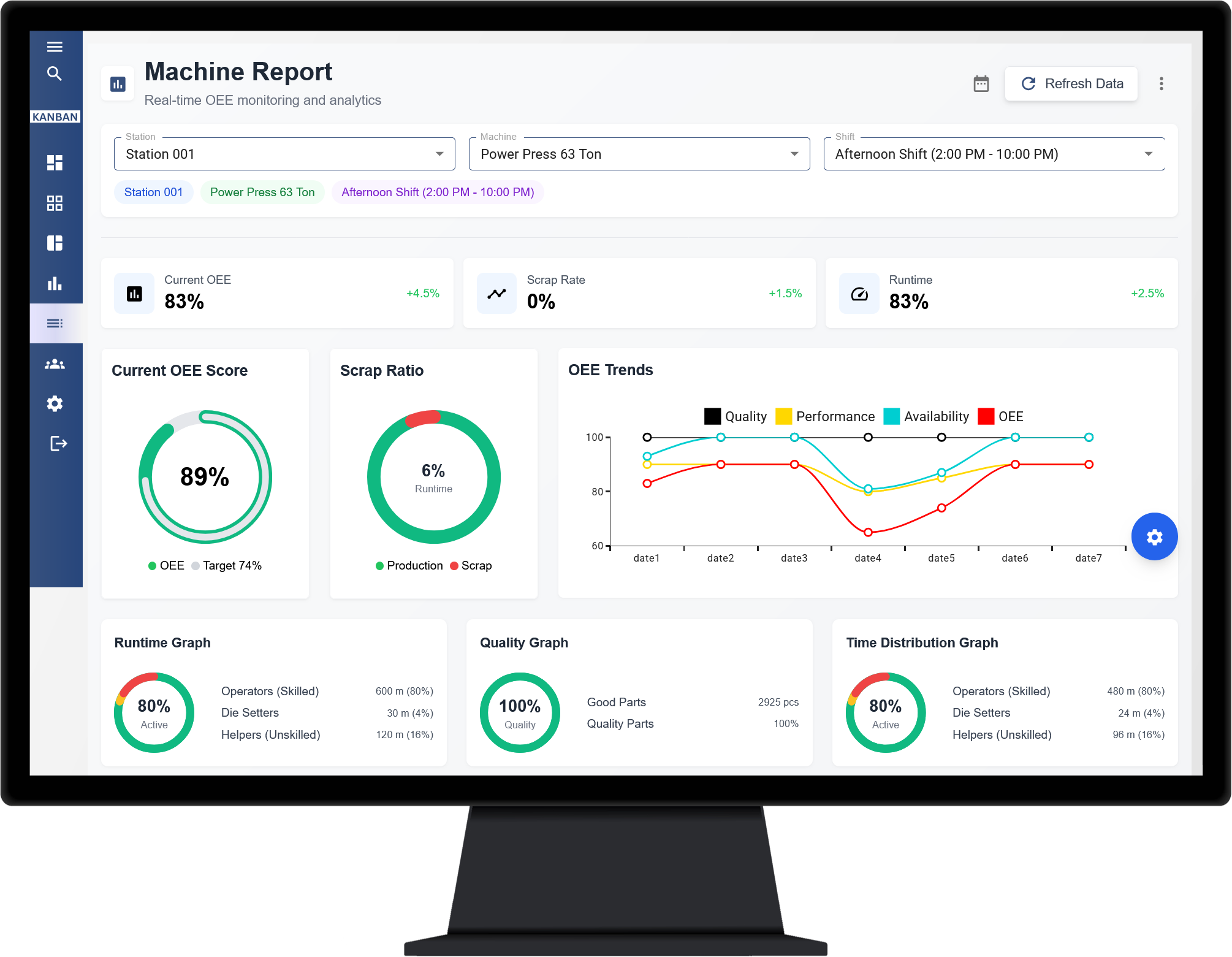
Real-time OEE systems allow manufacturers to track machine utilisation, production output, downtime events, cycle times, and operational performance continuously.
SQDCP boards complement this visibility by displaying critical operational KPIs related to safety, quality, delivery, cost management, and workforce performance.
Improved visibility enables supervisors and production managers to identify inefficiencies earlier and implement corrective actions more quickly.
Manufacturers can also monitor production progress against operational targets throughout the day, helping teams remain focused on meeting manufacturing objectives.
Digital dashboards and visual reporting systems strengthen transparency by making operational data visible across the entire factory environment.
This level of operational awareness improves communication between departments and supports faster decision-making during changing production conditions.
Organisations that improve production visibility often experience higher productivity, reduced downtime, and stronger operational consistency.
Clear visibility into operational performance also helps manufacturers improve forecasting, resource planning, and production scheduling activities.
Reducing Delays and Improving Operational Responsiveness
Manufacturing delays can significantly affect customer satisfaction, operational efficiency, and financial performance.
Real-time OEE and SQDCP systems help organisations identify production delays early by providing continuous operational updates and automated performance alerts.
Production teams can respond immediately to machine stoppages, material shortages, quality concerns, or staffing issues before they impact wider manufacturing activities.
Faster problem resolution reduces operational disruption and helps maintain stable production flow across manufacturing lines.
Improved responsiveness also supports better coordination between maintenance teams, production supervisors, and operational management.
Manufacturers that respond quickly to operational issues are more likely to maintain delivery schedules and reduce production inefficiencies.
Real-time operational data also improves escalation processes by ensuring that critical production problems receive immediate attention.
Continuous monitoring strengthens operational agility and helps organisations maintain consistent manufacturing performance under changing operational conditions.
As manufacturing operations become increasingly complex, operational responsiveness plays a vital role in maintaining efficiency and customer satisfaction.
Supporting Better Production Planning and Scheduling
Accurate production planning is essential for balancing operational capacity, customer demand, and manufacturing efficiency.
Real-time OEE systems provide manufacturers with accurate production performance data that supports more effective scheduling and resource allocation.
Production managers can adjust manufacturing schedules dynamically based on machine availability, workforce capacity, and operational priorities.
SQDCP frameworks also support operational planning by highlighting delivery risks, production bottlenecks, and workforce challenges in real time.
Improved planning reduces unnecessary downtime, minimises production conflicts, and helps organisations achieve greater operational stability.
Real-time operational insights allow manufacturers to optimise production flow and improve manufacturing flexibility.
Manufacturers can also improve inventory management by aligning production output more accurately with customer demand and delivery schedules.
Efficient planning and scheduling contribute to improved productivity, reduced waste, and stronger customer service performance.
Organisations that strengthen production planning capabilities are often better positioned to manage growth and maintain long-term operational resilience.
Reducing Manufacturing Costs Through Real-Time OEE Insights
Identifying Operational Inefficiencies in Real Time
Reducing operational costs is a major priority for manufacturers seeking to improve profitability and maintain long-term competitiveness.
Real-time OEE systems help organisations identify operational inefficiencies by continuously monitoring equipment availability, production speed, and product quality.
Manufacturers can quickly detect downtime events, excessive cycle times, equipment losses, and process inefficiencies that contribute to unnecessary operational costs.
Immediate access to operational data allows teams to take corrective action before inefficiencies escalate into larger production and financial problems.
Real-time visibility also helps organisations improve equipment utilisation and reduce productivity losses across manufacturing operations.
Manufacturers that actively monitor operational performance are often able to reduce waste, improve output, and strengthen overall operational efficiency.
Improved operational awareness supports better decision-making and helps management teams prioritise cost reduction initiatives more effectively.
Digital manufacturing technologies further strengthen efficiency by automating data collection and reducing manual reporting processes.
As operational efficiency improves, organisations can achieve stronger financial performance while maintaining production quality and customer satisfaction.
Reducing Downtime and Improving Equipment Performance
Equipment downtime is one of the most significant contributors to manufacturing inefficiency and operational cost increases.
Real-time OEE systems allow manufacturers to monitor machine performance continuously and identify downtime causes more accurately.
Production teams can respond immediately to equipment failures, maintenance issues, or operational disruptions before they affect wider manufacturing performance.
Improved equipment monitoring also supports preventative maintenance strategies that reduce the risk of unexpected machine breakdowns.
Manufacturers can analyse downtime trends over time and implement targeted improvements to strengthen equipment reliability.
Reducing downtime improves production throughput while lowering operational costs associated with delays, overtime, and lost productivity.
Reliable equipment performance also supports better delivery reliability and improved customer service standards.
Organisations that maintain high equipment efficiency are better positioned to achieve sustainable operational growth and long-term manufacturing stability.
Continuous equipment monitoring plays an increasingly important role in modern smart manufacturing environments.
Minimising Waste and Improving Resource Efficiency
Waste reduction is a key objective within lean manufacturing and operational improvement programmes.
Real-time OEE and SQDCP systems help manufacturers identify waste related to production inefficiencies, excess downtime, quality defects, and resource overuse.
Continuous operational monitoring improves material utilisation and helps organisations reduce scrap, rework, and unnecessary production losses.
Improved process visibility also supports more efficient energy consumption, labour allocation, and production scheduling.
Manufacturers can use operational data to identify recurring inefficiencies and implement targeted process improvements.
Reducing waste contributes to lower operational costs while supporting more sustainable manufacturing practices.
Real-time operational insights also strengthen inventory control by helping organisations align production output more effectively with customer demand.
Efficient resource management improves operational flexibility and supports stronger long-term financial performance.
Manufacturers that minimise waste often experience improved productivity, stronger profitability, and enhanced operational resilience.
Supporting Continuous Cost Improvement Strategies
Continuous improvement is essential for maintaining operational efficiency and controlling manufacturing costs over time.
Real-time OEE insights provide organisations with accurate operational data that supports long-term cost improvement strategies.
Manufacturers can monitor operational trends, evaluate process performance, and measure the effectiveness of improvement initiatives continuously.
Data-driven improvement activities allow organisations to focus resources on the areas delivering the greatest operational and financial benefits.
Continuous monitoring also supports benchmarking activities that help manufacturers compare performance across departments, production lines, and facilities.
Operational transparency strengthens accountability and encourages teams to contribute ideas for improving efficiency and reducing waste.
Manufacturers that embed continuous improvement into daily operations are more likely to maintain strong operational discipline and sustainable cost control.
Real-time reporting systems also improve communication between management teams and production employees by providing shared visibility into operational performance.
Over time, continuous cost improvement strengthens competitiveness, profitability, and manufacturing resilience.
Strengthening Workforce Engagement with the SQDCP Framework
Creating a More Engaged Manufacturing Workforce
Workforce engagement plays a major role in improving operational performance, productivity, and manufacturing stability.
The SQDCP framework helps manufacturers strengthen employee engagement by creating clear visibility into operational targets, production priorities, and performance expectations.
When employees understand how their work contributes to wider organisational goals, they are more likely to remain motivated and actively involved in manufacturing activities.
Real-time operational visibility encourages greater ownership and accountability across departments while improving collaboration between teams.
Employees become more engaged when they have access to accurate information and opportunities to contribute to operational improvements.
Manufacturers that prioritise workforce involvement often experience improved morale, lower staff turnover, and stronger operational consistency.
Engaged employees are also more likely to identify inefficiencies, suggest improvements, and support continuous improvement initiatives.
The SQDCP framework encourages regular communication and collaboration, helping organisations create a more positive and performance-focused workplace culture.
As workforce engagement improves, manufacturers often achieve better operational results and stronger long-term organisational resilience.
Improving Communication Between Teams and Departments
Effective communication is essential for maintaining operational efficiency and ensuring manufacturing teams remain aligned with production objectives.
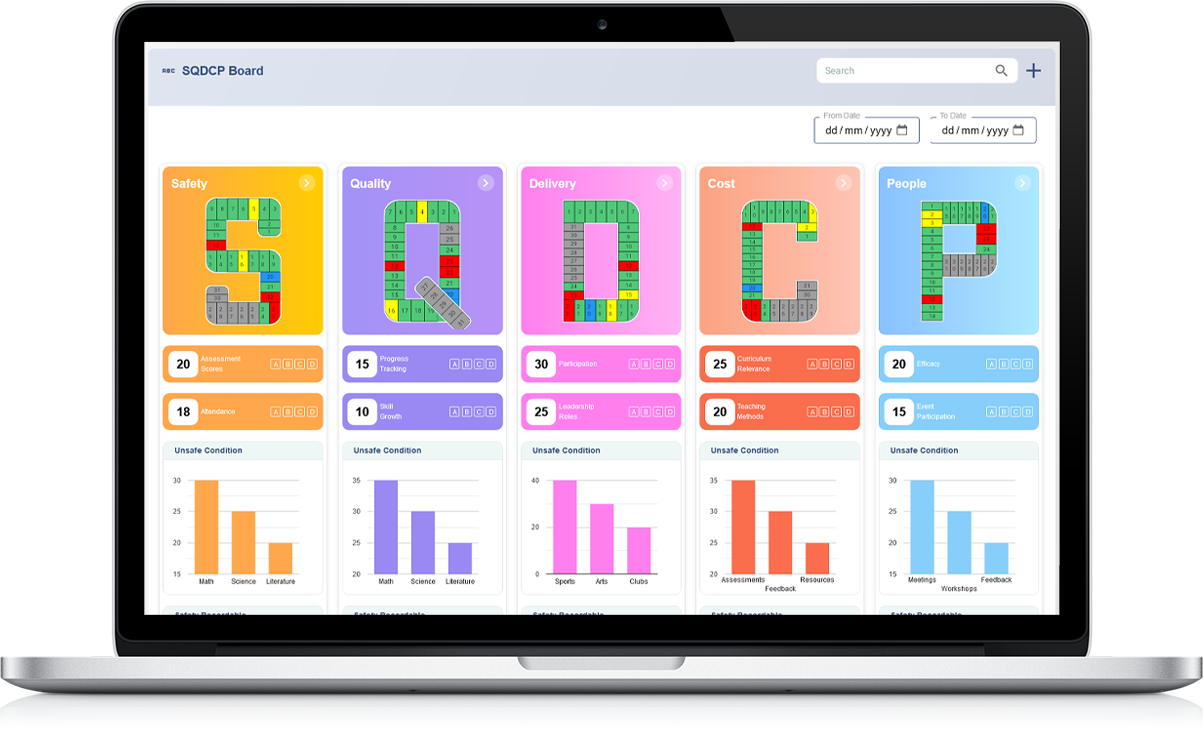
Real-time SQDCP boards improve communication by displaying operational metrics, performance targets, and production updates clearly across the factory environment.
Employees can quickly understand operational priorities and identify areas requiring immediate attention.
Improved communication reduces misunderstandings, strengthens collaboration, and supports faster operational decision-making.
Production, maintenance, quality, and management teams can work more effectively together when operational data is visible and accessible in real time.
Daily operational meetings supported by SQDCP reporting also encourage structured discussions and collaborative problem-solving.
Stronger communication improves operational coordination and helps organisations respond more effectively to manufacturing challenges.
Manufacturers with strong communication systems are often better positioned to maintain productivity and operational stability during changing production conditions.
Transparent communication also supports greater workforce trust and stronger employee engagement across the organisation.
Encouraging Employee Participation in Continuous Improvement
The SQDCP framework encourages employees to become actively involved in continuous improvement activities and operational problem-solving.
Employees working directly within production environments often provide valuable insights into operational inefficiencies and improvement opportunities.
Real-time operational data helps teams identify recurring problems and evaluate the effectiveness of improvement initiatives more accurately.
Manufacturers that involve employees in decision-making processes often achieve stronger operational discipline and greater workforce commitment.
Continuous improvement programmes become more effective when employees feel their contributions are recognised and valued.
Regular feedback sessions, operational reviews, and improvement discussions help organisations build a culture of collaboration and innovation.
Employee involvement also strengthens adaptability and helps manufacturers respond more effectively to operational change.
When workforce participation increases, organisations often experience improved productivity, stronger operational consistency, and reduced resistance to change.
Over time, continuous employee involvement strengthens organisational learning and long-term manufacturing performance.
Improving Factory Communication and Operational Transparency
Enhancing Operational Transparency Across the Factory
Operational transparency is essential for maintaining efficient manufacturing processes and supporting effective decision-making.
Real-time OEE and SQDCP systems improve transparency by providing continuous visibility into production performance, equipment efficiency, workforce activities, and operational KPIs.
Employees and management teams can access the same operational information, helping departments remain aligned with manufacturing objectives and production priorities.
Improved transparency reduces operational uncertainty and supports faster responses to manufacturing challenges.
Manufacturers can identify performance gaps more quickly and implement corrective actions before operational issues escalate.
Visual management systems such as digital dashboards, KPI displays, and live reporting boards strengthen operational awareness throughout the organisation.
Transparent manufacturing environments also improve accountability by making operational expectations and performance results clearly visible.
When employees understand operational priorities and production goals, collaboration and workforce engagement often improve significantly.
Strong operational transparency supports greater manufacturing stability, productivity, and continuous improvement.
Using Visual Management to Support Communication
Visual management plays a major role in improving communication within manufacturing environments.
Manufacturers use digital dashboards, production boards, KPI displays, and automated alerts to communicate operational information clearly in real time.
These tools allow employees and supervisors to monitor production progress, downtime events, quality performance, and operational targets more effectively.
Visual indicators such as graphs, charts, colour coding, and status alerts help teams identify operational issues quickly and respond without unnecessary delay.
Improved visual communication strengthens collaboration between production, maintenance, engineering, and management teams.
Real-time reporting systems also help organisations reduce communication delays and improve operational coordination across departments.
Visual management supports faster decision-making while improving overall manufacturing responsiveness.
Manufacturers that implement strong visual communication systems often achieve improved productivity, reduced downtime, and stronger workforce engagement.
As manufacturing environments become increasingly data-driven, visual management continues to play an important role in operational success.
Supporting Faster Decision-Making and Collaboration
Fast and accurate decision-making is essential for maintaining efficient manufacturing operations and meeting customer expectations.
Real-time OEE and SQDCP systems provide operational teams with immediate access to performance data, helping organisations make informed decisions more quickly.
Managers can identify production issues, evaluate operational trends, and coordinate corrective actions using accurate real-time information.
Improved collaboration between departments also strengthens operational responsiveness and reduces delays in problem resolution.
Production teams, maintenance engineers, quality specialists, and supervisors can work together more effectively when operational data is shared transparently.
Daily operational reviews supported by real-time reporting encourage collaborative discussions and continuous improvement activities.
Faster decision-making improves manufacturing flexibility and helps organisations adapt more effectively to changing production conditions.
Manufacturers that improve communication and collaboration are often better positioned to maintain stable operations and deliver consistent customer service.
Strong collaboration also contributes to improved workforce morale, operational efficiency, and long-term manufacturing resilience.
By implementing real-time OEE and SQDCP systems, organisations can elevate factory performance through improved operational visibility, faster decision-making, stronger workforce engagement, and more effective management of production efficiency, quality, delivery, cost, and safety across all manufacturing activities.
Using Real-Time Manufacturing Data for Faster Decision-Making
Real-time manufacturing data is essential for organisations seeking to improve operational responsiveness, production efficiency, and workforce engagement through OEE and SQDCP frameworks.
Manufacturers operate within highly competitive environments where delays in decision-making can lead to downtime, production disruption, missed deliveries, and increased operational costs.
Real-time OEE and SQDCP systems provide instant visibility into machine performance, production output, safety incidents, quality trends, delivery status, and workforce activities.
Access to accurate operational data allows managers and production teams to respond immediately when issues occur on the factory floor.
Instead of waiting for end-of-shift reports or manual updates, teams can identify operational inefficiencies as they happen and implement corrective actions without delay.
Digital dashboards, automated alerts, and visual management systems improve awareness across all manufacturing departments.
Production supervisors can quickly identify bottlenecks, downtime events, material shortages, or performance losses before they escalate into larger operational problems.
Real-time visibility also strengthens communication between production, maintenance, logistics, and quality teams.
When operational information is shared instantly across departments, organisations can coordinate responses more effectively and minimise production disruption.
Manufacturers can also improve planning accuracy by using live production data to support scheduling, inventory management, labour allocation, and maintenance activities.
Real-time analytics help organisations identify recurring trends and operational risks that may impact long-term manufacturing performance.
Data-driven decision-making reduces reliance on assumptions and improves operational consistency across all areas of production.
Manufacturers that use real-time data effectively often achieve greater agility, stronger operational control, and improved customer responsiveness.
As modern manufacturing environments become increasingly complex, real-time operational visibility continues to play a critical role in maintaining stable and efficient factory operations.
Key Real-Time OEE Metrics for Factory Performance Monitoring
Real-time OEE metrics provide manufacturers with a structured method for monitoring operational performance, equipment efficiency, and production reliability.
Overall Equipment Effectiveness is commonly measured through three core performance areas: availability, performance, and quality.
Availability measures machine uptime and identifies losses caused by breakdowns, changeovers, adjustments, or planned stoppages.
Performance monitoring evaluates how efficiently equipment operates compared with its maximum production capability.
Quality metrics focus on production accuracy by monitoring defect rates, scrap, rework, and rejected products.
When these metrics are monitored in real time, manufacturers can identify operational issues immediately and reduce production losses more effectively.
Real-time dashboards allow teams to monitor machine conditions, production output, cycle times, and downtime events continuously throughout the working day.
Visual KPI boards improve operational awareness by displaying current performance levels clearly across production areas.
Managers can compare live production performance against operational targets and identify areas requiring corrective action.
Real-time OEE monitoring also supports predictive maintenance by highlighting unusual machine behaviour or declining equipment efficiency before failures occur.
Manufacturers can improve maintenance planning and reduce unplanned downtime through continuous equipment monitoring.
Operational teams become more proactive when performance data is visible and accessible throughout the factory.
Real-time KPI tracking also strengthens accountability because employees remain aware of production targets and operational expectations.
Manufacturers that consistently monitor real-time OEE metrics often achieve improved productivity, reduced waste, stronger machine reliability, and better production consistency.
Continuous performance monitoring creates a more responsive manufacturing environment that supports operational excellence and long-term business growth.
Standardising Manufacturing Operations with SQDCP Boards
SQDCP boards help manufacturers standardise operational monitoring and improve consistency across production environments.
The SQDCP framework focuses on Safety, Quality, Delivery, Cost, and People performance, providing organisations with a balanced operational management structure.
Standardised operational reporting ensures that all departments follow consistent performance measurement methods and communication processes.
Manufacturers use SQDCP boards to display production targets, operational KPIs, safety incidents, quality concerns, delivery schedules, and workforce performance.
Visual management improves transparency by ensuring that operational data remains visible and accessible to employees throughout the factory.
Clear operational standards reduce variation between production shifts and strengthen process consistency.
Employees can follow established procedures more effectively when performance expectations and operational priorities are clearly communicated.
Standardisation also improves workforce training by providing visible operational guidance and structured reporting methods.
Manufacturers that standardise production activities often experience improved quality control, reduced downtime, and stronger operational discipline.
SQDCP boards encourage collaboration between departments by ensuring that teams work with the same operational information and shared improvement goals.
Daily operational reviews supported by SQDCP systems help organisations identify inefficiencies and maintain continuous improvement activities.
Standardised management practices also support compliance with customer requirements, workplace regulations, and manufacturing quality standards.
As manufacturing operations expand, standardisation becomes increasingly important for maintaining operational stability and scalability.
By combining real-time visibility with structured operational management, SQDCP boards help manufacturers create more reliable and efficient production environments.
The Role of Digital Transformation in Real-Time OEE and SQDCP Systems
Digital transformation is reshaping manufacturing operations by improving real-time visibility, operational control, and production efficiency through advanced OEE and SQDCP systems.
Modern manufacturers increasingly rely on digital technologies to automate reporting, improve data accuracy, and strengthen operational communication.
Digital OEE systems provide live monitoring of machine availability, equipment performance, production output, and quality performance.
SQDCP dashboards complement these systems by displaying operational metrics related to safety, delivery performance, workforce engagement, and manufacturing costs.
Real-time operational data enables organisations to identify production inefficiencies quickly and implement corrective actions before disruptions escalate.
Cloud-based manufacturing platforms allow managers to access factory performance information remotely across multiple production facilities.
Automated data collection reduces manual reporting errors and improves the reliability of operational analysis.
Manufacturers can also use advanced analytics tools to identify long-term production trends and recurring operational issues.
Artificial intelligence and machine learning technologies are increasingly supporting predictive maintenance and production forecasting activities.
These technologies improve equipment reliability by identifying potential machine failures before breakdowns occur.
Digital transformation also improves workforce engagement because employees can access operational data more easily through interactive dashboards and mobile systems.
Connected manufacturing technologies strengthen collaboration between departments and improve production responsiveness.
Manufacturers that invest in digital OEE and SQDCP systems often achieve improved productivity, reduced downtime, and stronger operational resilience.
As smart manufacturing technologies continue to evolve, digital transformation will remain essential for maintaining competitiveness within modern industrial environments.
Integrating Real-Time OEE and SQDCP with Manufacturing Systems
Integrating real-time OEE and SQDCP systems with wider manufacturing platforms improves operational coordination and factory-wide visibility.
Modern manufacturing environments depend on connected systems to support communication between production, maintenance, quality, logistics, procurement, and finance departments.
Integrated systems eliminate operational data silos and ensure that departments work with consistent and accurate production information.
Manufacturers commonly integrate OEE and SQDCP frameworks with ERP, MES, warehouse management, and maintenance management systems.
This integration improves production planning, inventory visibility, maintenance scheduling, and resource allocation.
Real-time data sharing supports faster operational decision-making and strengthens collaboration between teams.
Integrated manufacturing systems also improve traceability by allowing organisations to monitor production activities, material usage, and machine performance more effectively.
Manufacturers gain greater control over operational performance throughout the entire production lifecycle.
Connected systems improve forecasting accuracy and help organisations respond more effectively to changing customer requirements.
Operational efficiency increases when departments can access live production data without delays or duplicated reporting processes.
Integrated systems also strengthen accountability because operational responsibilities and performance outcomes become more transparent.
Manufacturers that successfully integrate real-time operational systems often achieve improved productivity, stronger customer service, and better manufacturing agility.
As manufacturing operations become increasingly data-driven, integration between operational platforms will continue to play a critical role in supporting factory performance and engagement.
Visual Management Techniques to Improve Factory Performance and Engagement
Visual management techniques are essential for improving operational transparency, workforce engagement, and production control through real-time OEE and SQDCP systems.
Manufacturers use visual systems to communicate operational information clearly across production areas and support faster decision-making.
Digital dashboards, KPI displays, Andon systems, production boards, and performance charts provide real-time visibility into manufacturing performance.
These visual tools help employees monitor machine efficiency, production targets, quality performance, safety incidents, and delivery schedules.
Colour coding, visual alerts, and graphical indicators allow teams to identify operational issues quickly and respond without delay.
Visual management also improves communication between departments by ensuring that all employees work with the same operational data.
Production teams can identify bottlenecks, downtime events, or quality concerns more effectively when operational information is displayed clearly.
Daily SQDCP meetings supported by visual boards encourage collaboration and strengthen accountability across manufacturing operations.
Interactive dashboards and touchscreen systems improve employee engagement by making operational information easier to access and understand.
Manufacturers often combine physical boards with digital technologies to create flexible and scalable visual management systems.
Improved operational transparency supports proactive problem-solving and encourages continuous improvement activities throughout the organisation.
Visual management techniques also strengthen operational discipline by keeping teams focused on shared production goals and performance expectations.
Manufacturers that implement effective visual systems often experience reduced downtime, improved communication, and stronger workforce collaboration.
Real-time visibility supported by visual management creates a more connected and performance-driven manufacturing environment.
Steps to Implement Real-Time OEE and SQDCP in Manufacturing Facilities
Implementing real-time OEE and SQDCP systems requires a structured approach that aligns operational goals, technology, and workforce engagement.
Manufacturers should begin by identifying key operational challenges and defining measurable production objectives.
Clear KPIs related to safety, quality, delivery, cost, equipment effectiveness, and workforce performance should be established from the outset.
Organisations must determine how operational data will be collected, analysed, and displayed across production areas.
Digital dashboards, sensor technologies, and automated reporting systems are commonly used to support real-time operational visibility.
Standardised reporting processes improve consistency and strengthen communication between departments.
Manufacturers should also ensure that employees understand how to interpret operational data and use visual management systems effectively.
Training programmes are essential for building workforce confidence and supporting successful adoption of new operational systems.
Leadership involvement plays a major role in maintaining accountability and encouraging long-term operational discipline.
Daily performance reviews and SQDCP meetings help organisations monitor progress and address production issues proactively.
Assigning ownership to specific KPIs strengthens accountability and ensures that improvement actions are implemented consistently.
Manufacturers should regularly review operational performance and refine processes based on production trends and workforce feedback.
Gradual implementation often improves long-term success because teams can adapt more effectively to new operational methods and technologies.
Successful implementation creates a more transparent, data-driven, and continuously improving manufacturing environment.
Common Challenges When Implementing Real-Time OEE and SQDCP
Implementing real-time OEE and SQDCP systems can present operational, technical, and organisational challenges for manufacturers.
One of the most common difficulties is resistance to change, particularly when employees are unfamiliar with structured performance monitoring systems.
Some production teams may initially view operational tracking as additional administrative work rather than a tool for improvement.
Data accuracy is another major challenge because unreliable reporting can weaken operational decision-making and reduce confidence in performance metrics.
Manufacturers must ensure that data collection processes are consistent, accurate, and properly integrated across departments.
Legacy equipment and outdated manufacturing systems can also create integration difficulties during digital transformation projects.
Training gaps may reduce the effectiveness of OEE and SQDCP systems if employees do not fully understand operational KPIs or reporting requirements.
Maintaining long-term operational discipline is equally important because continuous monitoring requires consistent leadership support and workforce engagement.
Communication breakdowns between departments can weaken operational visibility and reduce collaboration during implementation.
Manufacturers should establish clear responsibilities, structured workflows, and regular review meetings to strengthen accountability.
Investment costs associated with digital technologies, sensors, and software platforms may also present challenges for some organisations.
However, manufacturers that address implementation challenges proactively often achieve significant long-term operational improvements.
Strong leadership, employee involvement, and continuous training are essential for maintaining successful operational transformation.
By overcoming these challenges, organisations can improve productivity, strengthen workforce engagement, and create more resilient manufacturing operations.
The Role of Leadership in Improving Factory Performance and Workforce Engagement
Leadership plays a critical role in improving factory performance and workforce engagement through real-time OEE and SQDCP systems.
Strong leadership helps organisations align operational priorities with wider business objectives and continuous improvement strategies.
Leaders establish performance expectations, encourage accountability, and support operational consistency across manufacturing departments.
Management involvement is essential for maintaining workforce engagement and ensuring that operational initiatives remain effective over time.
Employees are more likely to participate actively in improvement activities when leadership demonstrates visible commitment to operational excellence.
Regular participation in SQDCP meetings and operational reviews strengthens communication between management and frontline teams.
Leaders also play an important role in promoting a culture of collaboration, transparency, and continuous learning.
Open communication encourages employees to contribute improvement ideas and report operational concerns confidently.
Effective leadership supports workforce development by ensuring that employees receive appropriate training and operational guidance.
Managers can use real-time operational data to provide targeted coaching and performance feedback to production teams.
Recognition of employee contributions further strengthens morale, motivation, and operational ownership.
Leadership also ensures that operational visibility initiatives remain aligned with customer expectations and manufacturing growth objectives.
Manufacturers with strong leadership support often achieve improved productivity, stronger operational discipline, and greater workforce engagement.
Long-term manufacturing success depends heavily on leadership commitment to transparency, accountability, and continuous operational improvement.
How Real-Time OEE and SQDCP Support Continuous Improvement in Manufacturing
Continuous improvement is a core objective of real-time OEE and SQDCP systems within modern manufacturing environments.
These frameworks provide manufacturers with accurate operational data that supports structured performance monitoring and proactive decision-making.
Real-time visibility allows organisations to identify inefficiencies, downtime events, quality concerns, and process variations before they affect wider operations.
Manufacturers can analyse operational trends more effectively and implement targeted corrective actions to improve factory performance.
Daily SQDCP meetings encourage collaboration between production teams, maintenance engineers, quality specialists, and management.
Structured operational reviews create opportunities for problem-solving, root cause analysis, and performance optimisation.
Real-time OEE dashboards help organisations prioritise improvement projects based on measurable production losses and operational risks.
Continuous monitoring also supports lean manufacturing initiatives by reducing waste, improving workflow consistency, and strengthening operational discipline.
Manufacturers can track the effectiveness of improvement actions over time and refine operational processes continuously.
Employee involvement plays a major role in successful continuous improvement activities.
Operators and frontline employees often identify valuable improvement opportunities because they work closely with production processes every day.
Encouraging workforce participation strengthens accountability and supports a culture of operational ownership.
Continuous improvement initiatives improve productivity, manufacturing flexibility, and operational resilience over the long term.
By embedding improvement activities into daily operations, manufacturers create a stronger foundation for sustainable operational excellence and competitive growth.
Encouraging Workforce Collaboration and Accountability Through SQDCP
Workforce collaboration and accountability are essential for improving factory performance and operational engagement through SQDCP systems.
SQDCP boards provide employees with clear visibility into production priorities, operational targets, safety performance, delivery schedules, and quality expectations.
This transparency helps employees understand how their daily responsibilities contribute to wider organisational objectives.
Improved communication strengthens teamwork and encourages departments to work together more effectively when operational issues arise.
Daily SQDCP meetings support open discussion between operators, supervisors, maintenance teams, and management.
These discussions help organisations review performance, address operational concerns, and agree on improvement priorities.
Visual management systems strengthen accountability by clearly displaying operational metrics and production expectations.
Employees become more engaged when they can monitor performance results and see the impact of their contributions.
Workforce collaboration also improves problem-solving because employees from different departments can share operational insights and improvement ideas.
Manufacturers that encourage employee involvement often experience stronger morale, improved productivity, and reduced operational disruption.
Training and development programmes further support workforce engagement by ensuring employees possess the skills required for modern manufacturing environments.
Recognition of employee achievements strengthens motivation and contributes to a more positive workplace culture.
Manufacturers that prioritise collaboration and accountability through SQDCP frameworks often achieve stronger operational discipline and improved factory performance.
Engaged employees play a major role in supporting continuous improvement and long-term manufacturing success.
Benefits of Real-Time OEE and SQDCP for Factory Performance and Employee Engagement
Real-time OEE and SQDCP systems provide manufacturers with significant operational, financial, and workforce-related benefits.
One of the most important advantages is improved operational visibility across all manufacturing activities.
Manufacturers can monitor machine performance, production efficiency, safety metrics, delivery schedules, and workforce activities in real time.
This visibility enables organisations to identify issues quickly and respond proactively before disruptions escalate.
Real-time OEE monitoring improves equipment reliability by identifying downtime events, speed losses, and quality-related production issues.
SQDCP systems strengthen operational management by providing balanced visibility into safety, quality, delivery, cost, and people performance.
Improved communication across departments supports faster decision-making and stronger operational coordination.
Visual management systems ensure that operational information remains accessible and easy to understand throughout the factory.
Manufacturers also benefit from stronger workforce engagement because employees become more involved in performance monitoring and continuous improvement activities.
Real-time operational transparency strengthens accountability and encourages greater ownership across production teams.
Continuous monitoring helps organisations reduce waste, improve productivity, and maintain consistent production standards.
Cost management also becomes more effective when operational inefficiencies are identified and addressed quickly.
Manufacturers that implement real-time OEE and SQDCP systems often achieve higher productivity, reduced downtime, improved delivery reliability, and stronger customer satisfaction.
These operational improvements contribute directly to long-term manufacturing resilience, competitiveness, and sustainable business growth.
Future Trends in Real-Time OEE, SQDCP and Smart Manufacturing Performance
The future of real-time OEE and SQDCP systems is closely connected to the continued growth of smart manufacturing technologies and digital transformation.
Manufacturers are increasingly adopting connected operational systems that provide factory-wide visibility across production lines, supply chains, and business functions.
Advanced OEE and SQDCP platforms now offer automated reporting, predictive analytics, and improved operational intelligence.
Cloud-based systems allow organisations to monitor production performance remotely across multiple factory locations.
Artificial intelligence and machine learning technologies are expected to play a much larger role in future manufacturing environments.
These technologies can analyse large volumes of operational data and identify production trends that may not be visible through traditional analysis methods.
Predictive maintenance will continue improving machine reliability by forecasting equipment failures before breakdowns occur.
Internet of Things technologies are also improving factory connectivity by enabling continuous monitoring of machine conditions, energy usage, and production efficiency.
Mobile technologies and interactive dashboards are transforming how employees access operational information and performance alerts.
Manufacturers are also placing greater emphasis on sustainability and environmental monitoring within operational visibility systems.
Future SQDCP dashboards are likely to include energy consumption, carbon emissions, and waste reduction metrics alongside traditional manufacturing KPIs.
Cybersecurity will remain an important consideration as manufacturing operations become more digitally connected.
Greater integration between OEE, SQDCP, ERP, MES, and supply chain systems will continue improving operational coordination and business intelligence.
Manufacturers that invest in advanced real-time visibility technologies will improve agility, workforce engagement, operational resilience, and long-term competitiveness within global manufacturing markets.