How Lean 4.0 Reduces Costs by 30% in Manufacturing
Reducing Manufacturing Costs by 30% Through Lean 4.0 Integration
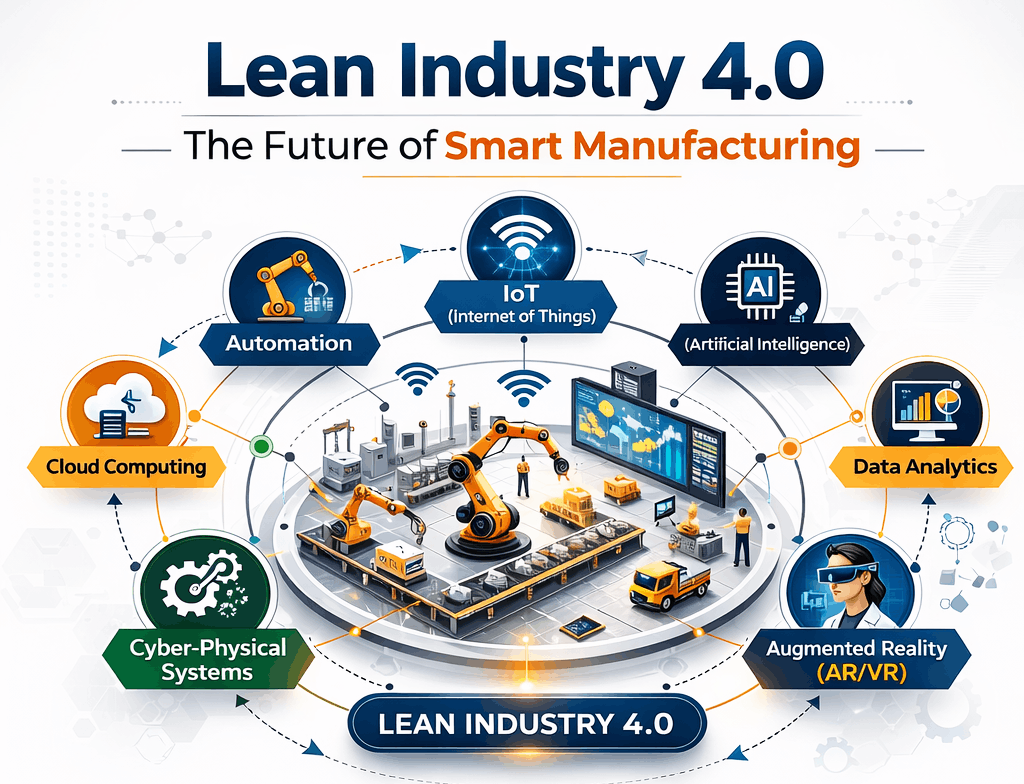
Lean manufacturing focuses on eliminating waste, improving flow, and maximising customer value. Lean 4.0 builds on these proven principles by integrating advanced technologies such as Industrial IoT (IIoT), artificial intelligence, automation, cloud platforms, and real-time analytics into modern manufacturing environments to significantly reduce operational costs.
By digitally connecting machines, systems, and teams, Lean 4.0 delivers full operational cost transparency. Real-time production data enables managers to identify inefficiencies, reduce waste, optimise resources, and make faster decisions that directly lower manufacturing expenses.
Smart sensors and connected devices continuously monitor equipment performance, downtime, energy usage, scrap rates, and material consumption. Instant alerts allow teams to address problems before they escalate into costly disruptions, helping organisations avoid unnecessary downtime and production losses.
Cost reductions accelerate through intelligent process optimisation. Monitoring cycle times, throughput, and bottlenecks improves workflow efficiency while reducing excess inventory, overproduction, and idle labour costs.
Digital work instructions, automated controls, and standardised workflows minimise errors, reduce rework, and prevent quality-related expenses. These improvements drive measurable savings across production, maintenance, and supply chain operations.
By combining lean methodologies with smart digital innovation, Lean 4.0 enables manufacturers to reduce operational costs by up to 30%, increase profitability, and build resilient, cost-efficient production systems.
Lowering Operational Expenses with Real-Time Cost Visibility
Lean 4.0 enhances financial control by delivering real-time visibility into production costs across machines, workflows, and facilities. Connected IIoT devices and intelligent dashboards provide immediate insights into material usage, labour productivity, machine utilisation, and downtime-related losses.
With live cost data available at every stage, inefficiencies can be addressed instantly. Teams can eliminate unnecessary energy consumption, reduce scrap, and prevent avoidable breakdowns before they impact budgets.
Automated alerts highlight cost overruns and process deviations, ensuring faster corrective action. Data-driven decisions protect margins and maintain consistent cost performance across production lines.
Continuous digital monitoring aligns manufacturing output with demand forecasts, preventing overproduction and excess inventory holding costs.
Minimising Waste to Maximise Financial Performance
Lean 4.0 strengthens traditional waste reduction strategies by digitising performance measurement. Automated data capture replaces manual reporting, reducing administrative overhead and improving accuracy.
Standardised digital workflows ensure consistent execution across shifts and facilities, lowering variability-related expenses and improving resource utilisation.
Connected systems enable cross-functional teams to collaborate using shared real-time dashboards, accelerating problem-solving and reducing costly delays.
Improved process discipline lowers scrap rates, rework costs, and warranty claims—directly increasing profit margins.
Cutting Downtime and Maintenance Costs with Predictive Intelligence
Lean 4.0 leverages predictive analytics to anticipate equipment failures before breakdowns occur. Early detection reduces emergency repairs, prevents extended downtime, and protects production schedules.
Predictive maintenance strategies improve overall equipment effectiveness (OEE), extend asset lifespan, and significantly lower maintenance spending.
Interactive dashboards track cost-related KPIs in real time, providing full transparency over savings initiatives and ROI from digital investments.
By integrating lean principles with advanced technologies, Lean 4.0 transforms cost structures across manufacturing operations—helping organisations achieve sustainable 30% cost reductions while strengthening competitiveness in a digital-first industrial landscape.
Understanding How Lean 4.0 Drives Cost Reduction
Aligning Lean Principles with Digital Cost Control
Lean 4.0 combines traditional lean manufacturing principles—waste elimination, continuous improvement, and value stream optimisation—with advanced digital technologies such as Industrial IoT (IIoT), artificial intelligence, automation, and cloud-based analytics to reduce operational expenses.
By digitally connecting machines, systems, and teams, manufacturers gain full visibility into production costs, downtime impact, material consumption, and labour efficiency. This transparency enables faster identification of financial inefficiencies across the value chain.
Real-time data replaces assumptions with measurable cost insights, allowing organisations to make proactive adjustments before small inefficiencies escalate into significant losses.
When lean thinking is reinforced with digital intelligence, cost-saving initiatives become structured, trackable, and scalable across departments and facilities.
This strategic integration ensures that every digital investment directly contributes to measurable cost reduction and long-term financial sustainability.
Reducing Operational Costs Through Digital Transformation
Using Real-Time Data to Protect Profit Margins
Digital transformation within Lean 4.0 environments enables continuous monitoring of production expenses, equipment efficiency, and resource utilisation in real time.
Live dashboards and automated alerts quickly highlight cost overruns, energy inefficiencies, excessive scrap, and downtime-related losses—allowing immediate corrective action.
Predictive analytics further reduce costs by identifying potential equipment failures before breakdowns occur, preventing expensive emergency repairs and unplanned stoppages.
Connected planning systems also improve demand forecasting and production scheduling, reducing overproduction and excess inventory holding costs.
Through smarter data-driven control, organisations can streamline operations, protect margins, and achieve sustainable operational savings.
Cutting Process Waste with Lean Principles
Eliminating Non-Value-Added Costs Across the Value Stream
Lean 4.0 enhances traditional waste reduction strategies by applying advanced analytics to uncover inefficiencies in material flow, cycle times, and process variation.
Continuous digital monitoring helps identify bottlenecks, rework, waiting time, and excess motion—each contributing directly to avoidable costs.
Standardised digital workflows reinforce best practices across shifts and locations, reducing variability and minimising expensive quality deviations.
Real-time root cause analysis tools accelerate problem resolution, preventing recurring losses and stabilising operational performance.
By combining structured lean methodology with digital precision, organisations reduce waste systematically while strengthening overall financial performance.
Lowering Labor and Production Costs with Smart Automation
Driving Efficiency Through Intelligent Systems
Lean 4.0 leverages robotics, collaborative automation, and AI-driven control systems to reduce manual intervention and eliminate non-value-added labour costs.
Intelligent automation adjusts production parameters in real time, maintaining consistent quality while reducing material waste and process variation.
Digital work instructions, automated scheduling, and integrated control systems streamline coordination across departments—reducing delays and improving overall equipment effectiveness (OEE).
Automation also enhances workplace safety, lowering costs associated with injuries, disruptions, and compliance risks.
With smart automation embedded into lean systems, manufacturers achieve lower production costs, higher output stability, and stronger long-term profitability.
Improving Cost Control with Real-Time Data
Lean 4.0 delivers continuous financial visibility across machines, production lines, and facilities through connected sensors and intelligent dashboards.
Live cost tracking of materials, labor, downtime, and energy consumption allows immediate corrective action when spending deviates from targets.
Real-time alerts prevent minor inefficiencies from escalating into major financial losses, protecting operational margins.
Historical cost data combined with live metrics enables long-term budget optimisation strategies.
With full digital transparency, decision-makers gain precise control over manufacturing expenses.
Eliminating Material and Time Waste
Advanced analytics identify costly waste such as overproduction, excess motion, waiting time, scrap, and rework.
Real-time monitoring highlights inefficiencies instantly, enabling structured waste reduction initiatives.
Trend analysis uncovers recurring financial drains and supports root cause elimination.
Automated reporting ensures waste metrics remain visible and accountable across departments.
Systematic elimination of non-value-added activities directly reduces operational costs.
Reducing Maintenance Costs with Predictive Analytics
Predictive analytics uses real-time equipment data to forecast potential failures before breakdowns occur.
Condition-based maintenance reduces unnecessary servicing while preventing expensive emergency repairs.
Optimised maintenance scheduling lowers spare parts costs and improves asset lifespan.
Reduced downtime improves overall equipment effectiveness (OEE) and protects revenue streams.
Proactive cost control strengthens long-term financial efficiency.
Minimising Downtime-Related Losses
Smart monitoring systems detect performance anomalies early, preventing extended production stoppages.
Faster diagnostics reduce repair time and limit lost production hours.
Integrated scheduling systems resynchronise workflows quickly after disruptions.
Reduced downtime stabilises output and lowers indirect overhead expenses.
Consistent operational uptime directly contributes to stronger profit margins.
Lowering Quality Costs Through Digital Monitoring
Digital quality systems analyse production parameters in real time to detect deviations instantly.
Automated inspections prevent defect propagation and reduce rework expenses.
Predictive quality analytics identify trends before defects increase warranty or return costs.
Improved compliance management reduces regulatory risks and penalties.
Consistent quality performance protects brand value while lowering cost of poor quality.
Optimising Resource Utilisation to Reduce Expenses
Lean 4.0 improves visibility across labour, materials, energy, and machine capacity for optimal allocation.
Real-time tracking identifies underutilised assets and balances workloads efficiently.
Data-driven scheduling prevents overstaffing and excessive overtime costs.
Material consumption analytics minimise waste and control procurement spending.
Optimised resources increase throughput while lowering operating expenses.
Building a Lean and Cost-Efficient Manufacturing Model
Digitally connected systems enable rapid adaptation to demand shifts without inflating operational costs.
Integrated production planning tools reduce financial risk during market fluctuations.
Scenario modelling helps organisations prepare cost-effective contingency strategies.
Standardised workflows stabilise processes and minimise cost variation.
An agile cost structure ensures sustainable profitability in dynamic markets.
Tracking Cost KPIs in Real Time
Interactive dashboards provide live visibility into cost-related KPIs such as cost per unit, downtime expenses, and scrap rates.
Continuous KPI tracking supports faster financial decision-making.
Benchmarking tools compare cost performance across shifts and facilities.
Customised reporting aligns metrics with financial targets and improvement goals.
Real-time measurement transforms cost management into continuous discipline.
Driving Continuous Cost Improvement
Lean 4.0 platforms continuously analyse operational spending to uncover savings opportunities.
Digital feedback loops accelerate implementation of cost-reduction initiatives.
Automated validation measures the financial impact of improvements.
Cross-functional collaboration strengthens organisation-wide cost accountability.
Structured digital improvement ensures sustainable, compounding cost savings.
Aligning Lean 4.0 Cost Strategy with Business Growth
Operational cost metrics integrate directly with financial dashboards and strategic objectives.
Leadership teams gain visibility into how shop-floor savings improve profitability.
Digital cost intelligence supports smarter investment prioritisation.
Reduced operational expenses create capital for innovation and expansion.
Strategic cost alignment ensures sustainable competitive advantage.
Reducing Supply Chain Costs with Digital Integration
Connected supplier systems improve procurement transparency and reduce excess ordering.
Real-time logistics tracking minimises delays and transportation inefficiencies.
Data-sharing platforms improve coordination and prevent costly disruptions.
Demand-driven replenishment reduces safety stock and holding costs.
Digitally integrated supply chains strengthen end-to-end cost efficiency.
Optimising Inventory to Lower Carrying Costs
Real-time inventory monitoring prevents overstocking and material shortages.
Demand forecasting tools improve purchasing accuracy.
Automated replenishment systems maintain optimal stock levels.
Reduced storage requirements lower warehousing expenses.
Efficient inventory management directly protects cash flow.
Managing Energy Consumption to Reduce Utility Costs
Energy monitoring systems track machine-level consumption in real time.
Usage analytics identify peak load inefficiencies and waste.
Automated controls optimise equipment operation during non-peak periods.
Sustainability initiatives reduce environmental impact and operational expenses.
Lower energy costs strengthen overall manufacturing profitability.
Improving Workforce Efficiency to Cut Expenses
Workforce analytics align staffing levels with production demand.
Digital task management reduces idle time and productivity loss.
Automation reduces reliance on repetitive manual processes.
Performance insights support targeted training and skill development.
Optimised labour utilisation lowers overall operational costs.
Making Cost-Effective Decisions with Data Analytics
Advanced analytics convert raw production data into actionable financial insights.
Scenario modelling supports smarter capital investment planning.
Cost simulations evaluate financial impact before implementation.
Accurate forecasting reduces financial uncertainty.
Data-driven decisions improve long-term cost stability.
Shortening Production Cycles to Reduce Overhead
Lean 4.0 identifies cycle inefficiencies through real-time monitoring.
Bottleneck analysis accelerates process flow improvements.
Reduced lead times lower overhead and work-in-progress costs.
Streamlined workflows increase throughput without expanding resources.
Faster production cycles enhance profitability and customer responsiveness.