Kanban is a visual workflow management system that helps manufacturing businesses streamline operations, reduce waste, and enhance overall efficiency. Originally developed for lean manufacturing, Kanban has become a powerful tool for tracking production processes, managing inventory, and ensuring smooth workflow transitions. By implementing Kanban, manufacturers can achieve greater operational control, minimize bottlenecks, and maintain a continuous improvement cycle.
1. The Role of Kanban in Manufacturing
Kanban provides a structured approach to managing production workflows. It enables manufacturers to:
- Optimize Workflows: Ensure tasks move efficiently through different production stages.
- Reduce Waste: Eliminate overproduction and excess inventory.
- Enhance Visibility: Monitor the status of production processes in real-time.
- Improve Productivity: Align team efforts with demand-driven production.
- Enhance Just-in-Time (JIT) Manufacturing: Produce only what is needed, when it is needed.
2. Key Components of a Kanban System
A manufacturing Kanban system typically consists of the following components:
- Kanban Cards: These represent tasks, raw materials, or finished products and provide details such as quantity, location, and status.
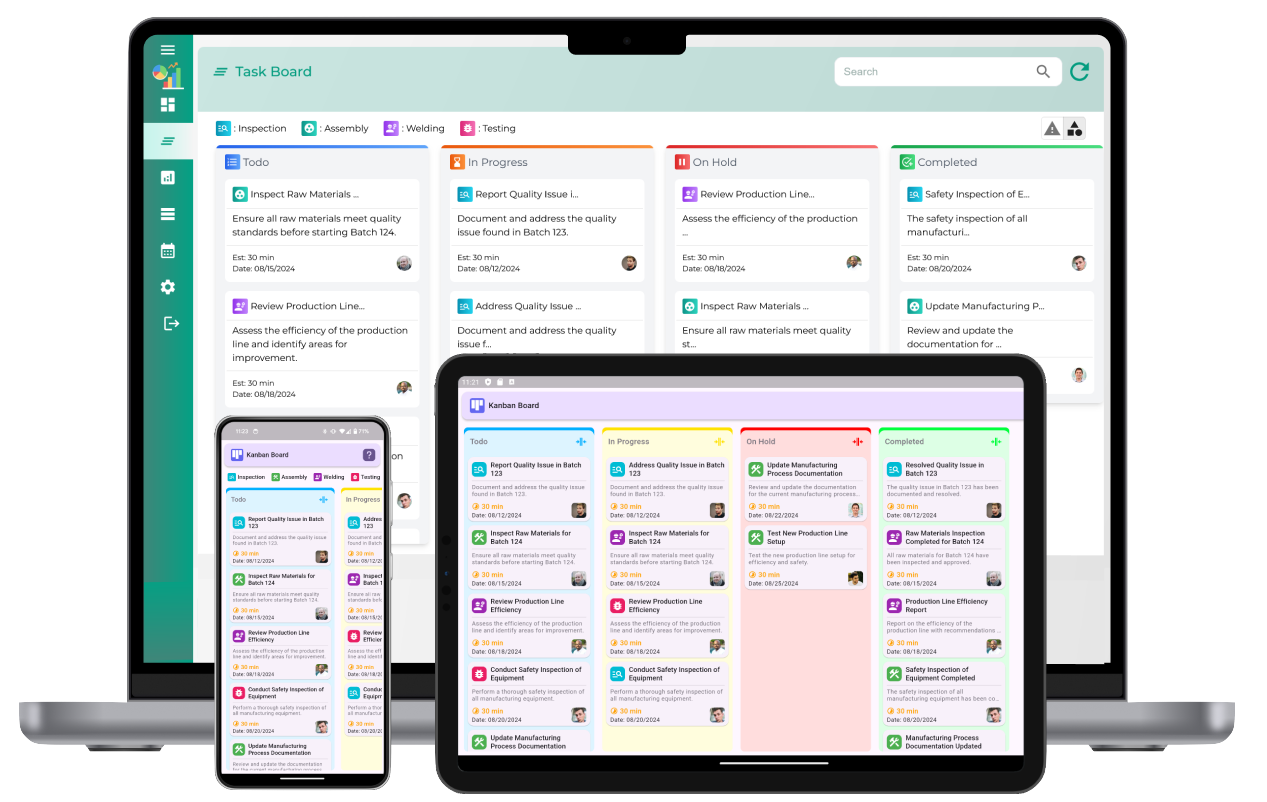
- Kanban Board: A visual representation of the workflow, divided into stages like "To Do," "In Progress," and "Completed."
- Work-in-Progress (WIP) Limits: Restrictions on the number of active tasks to prevent bottlenecks.
- Pull System: Production is driven by actual demand rather than forecasts, reducing excess inventory.
3. Benefits of Kanban for Manufacturing
Kanban offers several advantages to manufacturers, including:
- Enhanced Efficiency: Tasks are processed in an organized and systematic manner.
- Reduced Lead Times: Faster movement of materials and products through the production process.
- Better Inventory Control: Minimized stock levels and reduced carrying costs.
- Real-Time Monitoring: Improved visibility into production performance.
- Increased Flexibility: Quick adaptation to changing production demands.
4. How to Implement Kanban in Manufacturing
Introducing Kanban into a manufacturing environment requires a structured approach. Follow these steps for successful implementation:
Step 1: Define Workflow Stages
Identify the different stages of the manufacturing process and map them onto a Kanban board. Common stages include:
- Raw Materials: Materials required for production.
- Processing: Active production tasks.
- Quality Control: Inspection and testing of completed items.
- Finished Goods: Completed products ready for shipment.
Step 2: Establish Work-in-Progress (WIP) Limits
Set limits on the number of tasks in progress at each stage to avoid bottlenecks and improve efficiency.
Step 3: Implement a Pull System
Ensure that production activities are triggered by actual demand rather than estimates. This reduces overproduction and aligns inventory with real-time requirements.
Step 4: Monitor and Optimize
Regularly review Kanban board data to identify inefficiencies and make necessary improvements.
5. Overcoming Challenges in Kanban Implementation
While Kanban improves efficiency, manufacturers may face challenges such as:
- Resistance to Change: Employees may need training to adapt to the new system.
- Inconsistent Updates: Failure to update Kanban boards can lead to inaccurate workflow tracking.
- Overloaded Workstations: If WIP limits are not followed, certain areas may become overwhelmed.
To ensure success, businesses should provide training, establish clear guidelines, and encourage continuous feedback from teams.
6. The Future of Kanban in Manufacturing
As manufacturing processes evolve, Kanban systems are integrating with digital technologies for greater efficiency. Emerging trends include:
- Digital Kanban Boards: Cloud-based solutions for real-time workflow tracking.
- Automation: AI-powered analytics for optimizing production schedules.
- IoT Integration: Real-time machine data feeding directly into Kanban systems.
By adopting Kanban, manufacturers can achieve leaner operations, improve workflow efficiency, and maintain a competitive edge in the industry.
Kanban for Manufacturing: Improving Efficiency
What is Kanban in manufacturing?
Kanban is a visual workflow management system that helps manufacturers optimize production by ensuring materials and tasks flow efficiently through the process.
How does Kanban improve efficiency in manufacturing?
Kanban reduces overproduction, minimizes downtime, and optimizes resource utilization by aligning production with real-time demand.
What are the key principles of Kanban?
Key principles include visualizing work, limiting work in progress, managing flow, making process policies explicit, and continuously improving workflows.
How does Kanban help in reducing waste?
By ensuring just-in-time production, Kanban prevents excess inventory, reduces waiting times, and eliminates unnecessary movement of materials.
Can Kanban be integrated with lean manufacturing?
Yes, Kanban complements lean principles by focusing on reducing waste, optimizing workflow, and maintaining a continuous production flow.
How does Kanban improve inventory management?
Kanban ensures materials are replenished only when needed, preventing stock shortages while reducing excess inventory.
What are the different types of Kanban systems used in manufacturing?
Common types include production Kanban, withdrawal Kanban, supplier Kanban, and emergency Kanban for managing unexpected demand changes.
How does Kanban enhance production scheduling?
Kanban helps align production with actual demand, preventing overproduction and ensuring a steady workflow.
Can Kanban be used in both small and large-scale manufacturing?
Yes, Kanban is scalable and can be effectively implemented in both small workshops and large manufacturing facilities.
What role does Kanban play in demand-driven production?
Kanban enables manufacturers to produce only what is needed, when it is needed, reducing lead times and improving responsiveness.
How does Kanban help in identifying bottlenecks?
By visualizing workflow stages, Kanban allows teams to identify and resolve bottlenecks before they affect production.
How does a digital Kanban system improve manufacturing processes?
Digital Kanban provides real-time data, automation, and better integration with enterprise systems, improving efficiency and reducing manual errors.
What are the benefits of using Kanban for quality control?
Kanban ensures quality checks are integrated into the workflow, reducing defects and maintaining product consistency.
How can Kanban support continuous improvement in manufacturing?
By continuously monitoring and refining processes, Kanban enables teams to improve productivity and efficiency over time.
What are the best practices for implementing Kanban in manufacturing?
Best practices include starting with a simple board, limiting work in progress, regularly reviewing performance, and integrating with existing production workflows.