The Kanban board is an essential tool in lean manufacturing that helps visualize workflow, optimize production processes, and eliminate waste. Originating from the Japanese manufacturing philosophy, Kanban enables teams to manage work efficiently and maintain continuous flow in production. By using a visual representation of tasks and work items, a Kanban board streamlines operations, fosters better communication, and enhances overall productivity within a lean manufacturing environment.
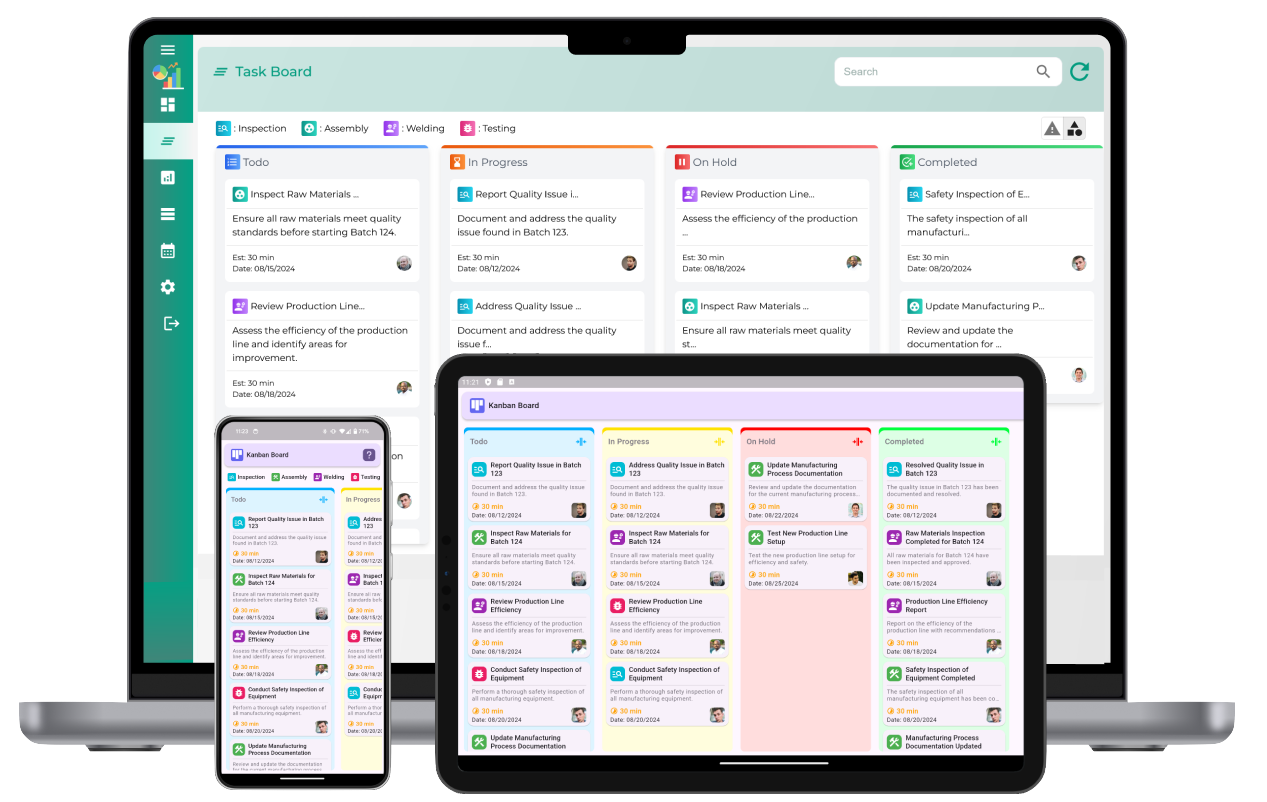
Key Features of a Kanban board in Lean Manufacturing
A Kanban board is typically divided into several columns that represent different stages of the manufacturing process. These stages can be customized based on the specific needs of the production environment. The core objective is to ensure that work items move smoothly through the system with minimal delays and without overburdening any stage of the process. Below are the key features of a Kanban board for lean manufacturing:
1. Workflow Visualization
The main feature of a Kanban board is its ability to visualize the entire workflow. This helps teams understand the flow of materials, tasks, and products throughout the manufacturing process. By laying out each step visually, teams can identify bottlenecks, delays, or inefficiencies in the system, making it easier to take corrective actions.
2. WIP Limits (Work in Progress)
One of the key principles of lean manufacturing is reducing excess inventory and work in progress (WIP). The Kanban board supports this principle by limiting the number of tasks or work items that can be in any given column or stage of the process at one time. By setting WIP limits, teams can prevent overproduction, reduce waste, and ensure that tasks move smoothly through the system.
3. Task Prioritization
Each task or work item on the Kanban board is typically represented by a card that includes relevant information such as task description, priority, deadlines, and the person responsible for the task. This allows teams to prioritize tasks based on urgency or importance and helps them focus on completing the most critical tasks first.
4. Continuous Flow
The goal of lean manufacturing is to achieve a continuous flow of work. With a Kanban board, teams can monitor the progress of work items and ensure that they move smoothly from one stage to the next. The board provides clear visibility of which tasks are blocked or delayed, enabling teams to quickly resolve issues and maintain a steady flow.
Kanban board Setup for Lean Manufacturing
Setting up a Kanban board for lean manufacturing requires careful consideration of the workflow, WIP limits, and task prioritization. Here’s how to set up a Kanban board for a lean manufacturing environment:
1. Define Workflow Stages
The first step in setting up a Kanban board is to define the stages of the manufacturing process. For example, a typical board may have columns such as:
- To Do: Tasks that are yet to be started.
- In Progress: Tasks that are currently being worked on.
- Under Inspection: Tasks that have been completed and are awaiting quality checks.
- Completed: Finished tasks or products that are ready for delivery or storage.
Each of these stages will become a column on the Kanban board, where work items will be moved as they progress through the manufacturing process.
2. Set WIP Limits
To prevent bottlenecks and ensure a smooth flow of work, it’s important to set WIP limits for each stage of the process. For example, only a limited number of tasks should be in the "In Progress" column at any time. Setting these limits helps ensure that the team isn’t overwhelmed with too many tasks, and work is completed before new tasks are added to the system.
3. Assign Tasks and Prioritize
Each task or work item should be assigned to a team member, with clear descriptions and priorities. Using cards to represent tasks, teams can prioritize work items based on importance or urgency. This can include deadlines, customer requirements, or production goals. By ensuring tasks are prioritized correctly, teams can focus on the most valuable work.
4. Monitor Progress and Adjust
As work progresses, team members move the cards across the board from one stage to the next. The board should be regularly reviewed to ensure that work is progressing smoothly, and any issues or delays are identified quickly. Teams should make adjustments to WIP limits, workflow stages, or task prioritization as needed to keep the system running efficiently.
Benefits of Using a Kanban board in Lean Manufacturing
There are numerous advantages to using a Kanban board in a lean manufacturing environment. Some of the key benefits include:
1. Improved Efficiency
By visualizing the workflow and limiting WIP, Kanban helps identify bottlenecks and inefficiencies in the system. This allows teams to take corrective action quickly and maintain a steady flow of work. As a result, manufacturing operations become more efficient, and overall production time is reduced.
2. Increased Transparency
A Kanban board provides a clear and transparent view of the entire manufacturing process. All team members can easily see the status of each task, which improves communication and coordination. This transparency helps identify problems early and fosters collaboration among team members to resolve issues.
3. Waste Reduction
Kanban boards help reduce waste by ensuring that only the necessary work is being done at each stage. By setting WIP limits and prioritizing tasks, teams prevent overproduction and minimize the waste of time, resources, and materials.
4. Enhanced Flexibility
Kanban boards are highly adaptable to changes in production needs. If there are changes in demand or adjustments to the workflow, the board can easily be modified to reflect these changes. This flexibility helps manufacturers respond quickly to shifts in production requirements and external factors.
5. Better Resource Allocation
With a Kanban board, it’s easy to identify which tasks require more resources or additional support. By monitoring the flow of work and the status of tasks, teams can allocate resources more effectively, ensuring that the right people are working on the right tasks at the right time.
Kanban board for lean manufacturing process management
What is a Kanban board for lean manufacturing process management?
A Kanban board for lean manufacturing process management is a visual tool used to track and manage the flow of work in a manufacturing environment. It helps monitor tasks at different stages of production, ensuring optimal resource usage, minimal waste, and improved efficiency in manufacturing processes.
How does a Kanban board improve process management in lean manufacturing?
A Kanban board improves process management by providing a clear visual representation of work in progress (WIP), helping teams to track tasks, identify delays or bottlenecks, and maintain a smooth and efficient workflow. It enables manufacturers to see exactly where processes are, preventing overproduction and reducing waste.
What are the key benefits of using a Kanban board in lean manufacturing?
Key benefits of using a Kanban board in lean manufacturing include improved task visibility, better resource allocation, reduced waste, faster production cycles, and the ability to easily identify and resolve bottlenecks or inefficiencies in the workflow.
What are the different stages represented on a Kanban board for lean manufacturing?
The typical stages represented on a Kanban board for lean manufacturing include: - **To Do**: Tasks that need to be started. - **In Progress**: Tasks that are currently being worked on. - **Completed**: Tasks that have been finished. Some boards may include additional stages like "Waiting" or "On Hold" to reflect the specific needs of the manufacturing process.
How does a Kanban board help with inventory management in lean manufacturing?
A Kanban board helps with inventory management by visually tracking the flow of materials and products through different stages of production. It allows teams to monitor inventory levels, prevent overstocking, and reorder materials just in time to maintain efficient production without excess waste.
How do you set up a Kanban board for lean manufacturing?
To set up a Kanban board for lean manufacturing, start by defining the stages of the production process, such as "To Do", "In Progress", and "Completed". Then, create cards for each task, product, or work item and assign them to the relevant column as they move through the production process. You can also implement WIP limits for each column to optimize workflow and prevent bottlenecks.
How can a Kanban board help identify bottlenecks in lean manufacturing?
A Kanban board helps identify bottlenecks by providing a visual representation of tasks in progress. If a task or group of tasks remains stuck in one stage for a long period, it indicates a bottleneck in the production process. This visual cue allows teams to address the issue promptly, whether it requires additional resources or process adjustments.
How can a Kanban board help track production flow in lean manufacturing?
A Kanban board helps track production flow by showing the status of each task and work item as it moves through different stages. By observing the movement of tasks across columns, teams can identify where work is being delayed, ensure tasks are completed on time, and keep the production process flowing smoothly.
What is the role of WIP limits in a Kanban board for lean manufacturing?
WIP (Work In Progress) limits are a crucial feature of a Kanban board for lean manufacturing. WIP limits restrict the number of tasks that can be in any given stage at one time, preventing overloading and ensuring that each task receives the attention it needs. This helps reduce bottlenecks and maintain a smooth flow of work throughout the production process.
How does a Kanban board help in reducing waste in lean manufacturing?
A Kanban board helps reduce waste by ensuring that only the necessary amount of work is being done at any given time. By controlling WIP and visually tracking the flow of materials and tasks, it prevents overproduction, minimizes idle time, and ensures that resources are used efficiently.
How can Kanban boards improve team collaboration in lean manufacturing?
Kanban boards improve team collaboration by providing a shared, visual overview of the production process. Team members can easily see what tasks are in progress, what needs attention, and where help is required. This transparency encourages communication and helps teams work together more effectively to meet production goals.
How does a Kanban board support continuous improvement in lean manufacturing?
A Kanban board supports continuous improvement by allowing teams to identify inefficiencies and bottlenecks in the production process. As tasks move through the board, teams can regularly review performance and adjust processes, leading to improved workflows, reduced waste, and more efficient manufacturing over time.
How do you manage task prioritization with a Kanban board in lean manufacturing?
Task prioritization in a Kanban board for lean manufacturing can be managed by labeling or color-coding tasks based on priority levels, such as high, medium, or low priority. This helps teams focus on the most critical tasks first, ensuring that production goals and deadlines are met.
What metrics can be tracked on a Kanban board for lean manufacturing?
Metrics that can be tracked on a Kanban board for lean manufacturing include lead time, cycle time, WIP (work in progress), throughput, and task completion rates. Tracking these metrics helps teams understand production efficiency and identify areas for improvement in the manufacturing process.
How can a Kanban board be used to manage lead times in lean manufacturing?
A Kanban board can be used to manage lead times by tracking the amount of time it takes for tasks to move from one stage to another. By analyzing the flow of tasks across the board, teams can identify delays and take corrective actions to reduce lead times, thus improving overall production efficiency.