What is an Industry 4.0 Production System?
Introduction to Industry 4.0 in Manufacturing
In modern manufacturing, an Industry 4.0 Production System is a smart and connected framework that leverages advanced technologies such as IoT, automation, artificial intelligence, and real-time data analytics to optimise production processes. It goes beyond traditional manufacturing by enabling seamless communication between machines, systems, and people, helping organisations achieve higher efficiency, flexibility, and innovation. This approach allows companies to transform their production environments into intelligent ecosystems aligned with strategic business goals.
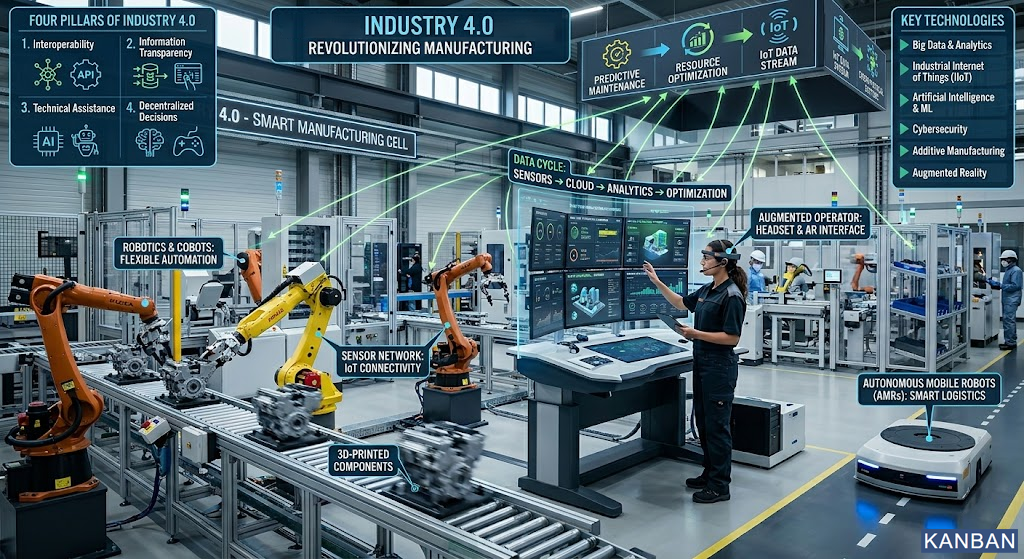
Smart Factory: Enabling Connected and Automated Production
The smart factory concept lies at the core of Industry 4.0, where machines, sensors, and systems are interconnected to enable autonomous and efficient production processes. These connected systems can self-monitor, analyse performance, and make real-time adjustments to improve productivity and reduce downtime.
IoT Integration: Real-Time Monitoring and Data Exchange
Internet of Things (IoT) integration allows manufacturing equipment to collect and exchange data continuously. This real-time data flow provides insights into machine performance, production status, and potential issues, enabling proactive maintenance and improved operational efficiency.
Automation & Robotics: Enhancing Productivity and Precision
Automation and robotics play a critical role in Industry 4.0 by reducing manual intervention and increasing production speed and accuracy. Advanced robots can perform repetitive and complex tasks with high precision, ensuring consistent product quality while minimising errors.
Data Analytics & AI: Driving Intelligent Decision-Making
Data analytics and artificial intelligence enable manufacturers to process large volumes of data and generate actionable insights. These technologies support predictive maintenance, demand forecasting, and process optimisation, helping organisations make smarter and faster decisions.
Why Industry 4.0 Production Systems Matter
By integrating advanced digital technologies, Industry 4.0 Production Systems provide a comprehensive view of manufacturing operations. They enhance decision-making, improve efficiency, ensure product quality, and enable continuous innovation. Ultimately, they serve as a foundation for achieving sustainable growth and maintaining competitiveness in a rapidly evolving industrial landscape.
Why Industry 4.0 Production Systems are Important in Modern Manufacturing
Aligning Strategy with Smart Operations
Industry 4.0 Production Systems play a crucial role in aligning organisational strategy with intelligent, automated operations. They help translate complex business goals into data-driven processes that can be monitored and optimised in real time.
This alignment ensures that production, maintenance, supply chain, and quality control functions work cohesively toward shared objectives.
By leveraging digital technologies, organisations can clearly define performance targets and ensure consistent execution across all levels of operations.
Real-time insights also allow businesses to adapt quickly to market changes and evolving customer demands.
Ultimately, this integration enhances operational efficiency and strategic alignment.
Improving Visibility Across Production Systems
Industry 4.0 enhances visibility by providing real-time monitoring of production processes, equipment performance, and operational metrics.
Advanced dashboards and analytics tools present complex data in an easy-to-understand format, enabling faster decision-making.
This transparency helps identify inefficiencies, bottlenecks, and potential failures before they impact production.
Improved visibility also strengthens communication across departments by ensuring access to consistent and accurate data.
As a result, organisations can optimise workflows and maintain high productivity levels.
Enhancing Decision-Making with Data
With access to real-time and historical data, Industry 4.0 Production Systems empower organisations to make informed and strategic decisions.
Leaders can analyse trends, predict outcomes, and implement improvements based on reliable insights.
AI-driven analytics further enhances decision-making by identifying patterns and recommending optimal actions.
This reduces reliance on guesswork and minimises operational risks.
Overall, data-driven decision-making leads to improved performance and competitiveness.
Ensuring Operational Compliance and Standards
Industry 4.0 systems support compliance by continuously monitoring production processes and ensuring adherence to industry standards.
Automated tracking and reporting simplify documentation and audit processes.
Real-time alerts help identify deviations and enable quick corrective actions.
This ensures consistent product quality and operational reliability.
Ultimately, it helps organisations maintain trust and meet regulatory requirements efficiently.
Core Components of an Industry 4.0 Production System
Understanding the Integrated Ecosystem
An Industry 4.0 Production System is built on a set of interconnected technologies that work together to create a smart manufacturing environment. These include IoT, cloud computing, big data analytics, artificial intelligence, and advanced robotics.
This integrated ecosystem enables seamless communication between machines, systems, and humans, improving coordination and efficiency.
By combining these technologies, organisations can achieve greater flexibility, scalability, and responsiveness in their operations.
It also supports continuous monitoring and optimisation of production processes.
As a result, manufacturers can adapt quickly to changing demands and market conditions.
Creating a Holistic Smart Manufacturing System
Industry 4.0 enables organisations to build a holistic production system where all components are digitally connected and centrally managed.
This integration provides a comprehensive view of operations, allowing businesses to understand how different processes impact overall performance.
For example, data from machines can be analysed to improve maintenance schedules, which in turn enhances production efficiency.
Such insights enable better planning and resource allocation.
Ultimately, this holistic approach ensures that all aspects of manufacturing contribute to achieving business objectives.
Smart Factory: Measuring Efficiency and Productivity
The smart factory is a key element of an Industry 4.0 Production System, focusing on enhancing production efficiency, flexibility, and overall operational performance. It uses connected systems and automation to streamline manufacturing processes and reduce manual intervention.
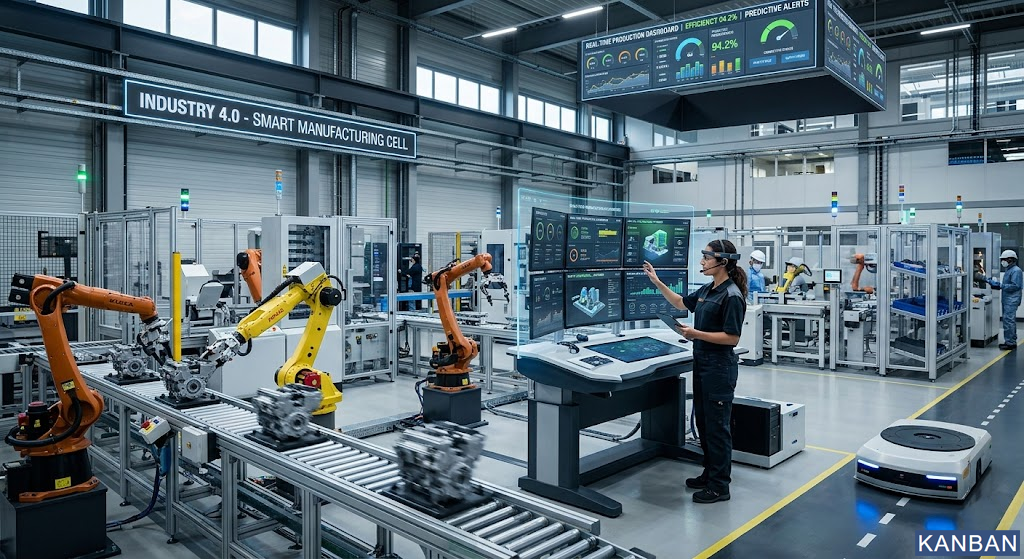
Key metrics in a smart factory include machine uptime, production cycle time, throughput, and energy efficiency. These indicators help organisations evaluate how effectively their production systems are operating.
Real-time monitoring enables manufacturers to quickly identify inefficiencies, equipment failures, or process delays, allowing for immediate corrective actions.
Additionally, smart factories support predictive maintenance, reducing downtime and extending equipment lifespan.
By continuously optimising production processes, organisations can improve productivity, reduce costs, and maintain consistent product quality.
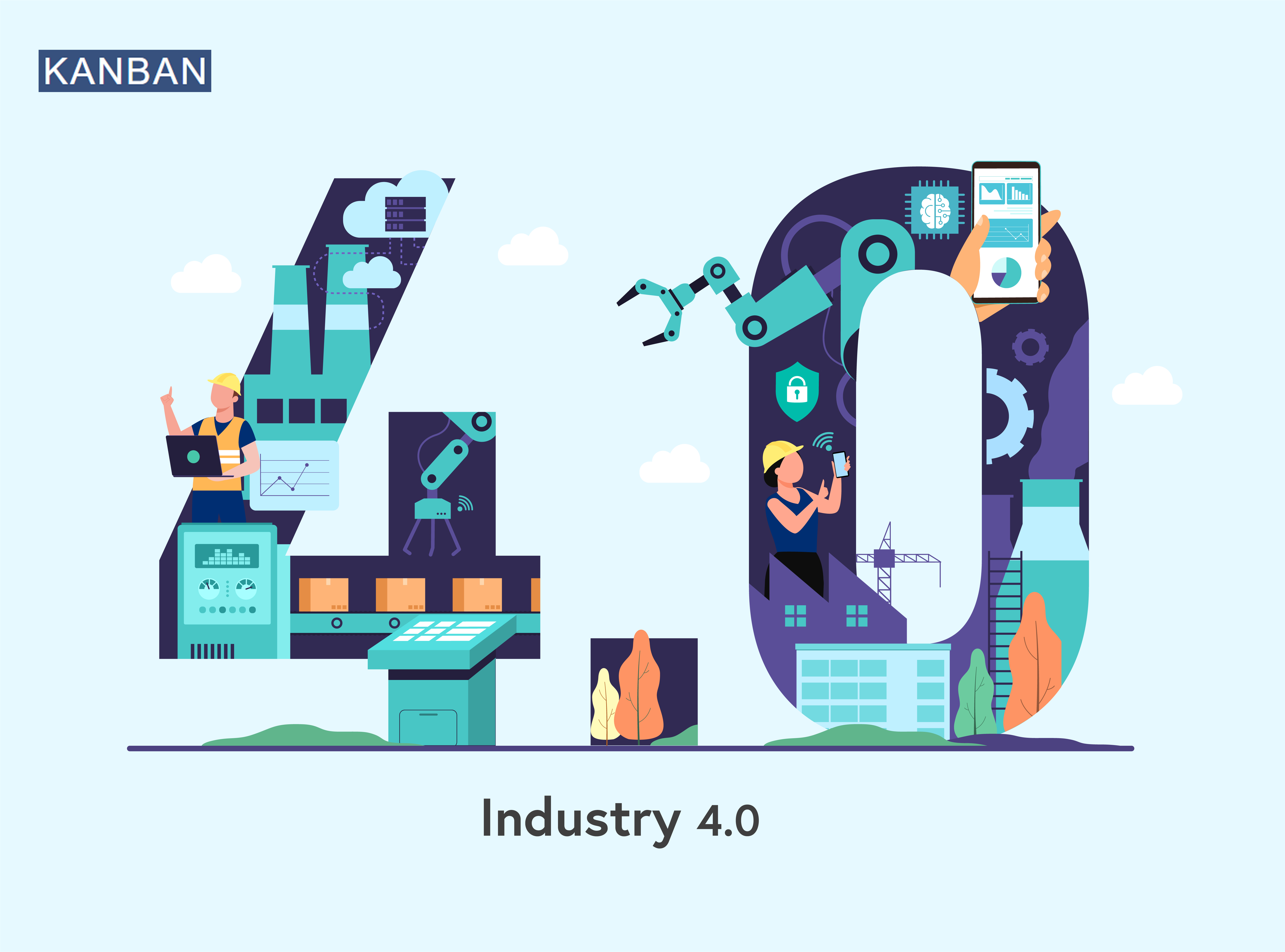
IoT Integration: Ensuring Real-Time Visibility and Operational Efficiency
In an Industry 4.0 Production System, IoT integration focuses on how manufacturing organisations capture and utilise real-time data from connected devices, machines, and sensors. It enables seamless communication across production environments, ensuring transparency and operational control.
Modern manufacturing environments demand continuous monitoring of equipment performance, production status, and environmental conditions. Key metrics such as machine uptime, sensor data accuracy, and real-time production tracking are essential indicators.
IoT-enabled systems allow organisations to monitor these metrics continuously, helping identify potential failures, inefficiencies, or disruptions before they escalate. This proactive approach improves reliability and reduces downtime.
Furthermore, IoT integration supports predictive maintenance and process optimisation by providing actionable insights based on live data streams. This ensures smooth and uninterrupted production workflows.
By leveraging IoT technologies, manufacturers can enhance operational visibility, improve decision-making, and maintain consistent production performance.
Automation & Robotics: Optimising Production and Precision
Automation and robotics in Industry 4.0 Production Systems focus on improving manufacturing efficiency, accuracy, and scalability. These technologies reduce manual intervention while ensuring consistent and high-quality output.
Key performance indicators in this area include production speed, error rates, robot utilisation, and process consistency. These metrics help organisations evaluate how effectively automation is integrated into operations.
Advanced robotic systems enable continuous monitoring and optimisation of production processes, allowing organisations to minimise waste and improve throughput.
Automation also enhances compliance with production standards by ensuring repeatability and reducing human error.
By optimising automation strategies, manufacturers can increase productivity, reduce operational costs, and maintain high levels of precision in their processes.
Data Analytics & AI: Driving Intelligent Manufacturing Decisions
Data analytics and artificial intelligence are central to Industry 4.0 Production Systems, enabling organisations to transform raw data into meaningful insights that drive decision-making.
These technologies analyse large volumes of data generated across production systems, identifying trends, patterns, and anomalies that impact performance.
Key metrics include predictive maintenance accuracy, forecasting efficiency, and process optimisation outcomes. These indicators help organisations measure the effectiveness of their analytics capabilities.
AI-powered systems support scenario planning and automation of decision-making processes, reducing reliance on manual analysis.
By leveraging analytics and AI, manufacturers can enhance operational efficiency, reduce risks, and achieve smarter, data-driven production management.
Key Performance Indicators (KPIs) for Industry 4.0 Production Systems
Defining Relevant Metrics
Defining relevant KPIs is essential for measuring the success of an Industry 4.0 Production System, as these metrics provide clear insights into operational and strategic performance.
Organisations must select KPIs that align with business goals, digital transformation objectives, and production efficiency targets.
These metrics ensure consistent evaluation across different systems and departments.
Well-defined KPIs also enable continuous monitoring and improvement of manufacturing processes.
Ultimately, they provide a strong foundation for data-driven decision-making.
Examples of Operational and Performance KPIs
Common KPIs in Industry 4.0 environments include overall equipment effectiveness (OEE), production cycle time, downtime reduction, and energy efficiency.
These indicators help organisations evaluate system performance, resource utilisation, and productivity levels.
Tracking these KPIs allows manufacturers to identify inefficiencies and implement optimisation strategies.
It also supports better planning and operational control.
As a result, organisations can achieve higher efficiency and improved production outcomes.
Ensuring Cybersecurity in Industry 4.0 Environments
Cybersecurity is a critical component of Industry 4.0 Production Systems, as increased connectivity and data exchange expose manufacturing environments to potential cyber threats.
Organisations must implement robust security measures to protect sensitive data, intellectual property, and operational systems from unauthorised access or attacks.
Key practices include network security monitoring, data encryption, access control, and continuous threat detection.
Real-time security monitoring enables organisations to identify vulnerabilities and respond quickly to potential threats.
By prioritising cybersecurity, manufacturers can ensure safe and reliable operations while maintaining trust and compliance.
Role of Industry 4.0 in Digital Transformation of Manufacturing
Industry 4.0 Production Systems are a driving force behind digital transformation in manufacturing, enabling organisations to transition from traditional processes to intelligent and connected operations.
Digital technologies such as cloud computing, IoT, and AI allow manufacturers to automate workflows, improve data accuracy, and enhance operational efficiency.
Integration with systems like ERP and MES ensures seamless data flow and coordination across departments.
This transformation improves agility, allowing organisations to respond quickly to market demands and operational challenges.
Ultimately, Industry 4.0 enables manufacturers to achieve higher efficiency, innovation, and competitiveness.
Integrating Real-Time Data and Advanced Analytics
Integrating real-time data and analytics is essential for maximising the benefits of Industry 4.0 Production Systems. It enables organisations to make informed decisions based on accurate and up-to-date information.
Data is collected from various sources, including machines, sensors, and enterprise systems, creating a unified view of operations.
This integration eliminates data silos and improves transparency across the organisation.
Advanced analytics tools help identify trends, predict issues, and optimise production processes.
By leveraging real-time insights, manufacturers can improve efficiency, reduce risks, and achieve continuous improvement.
Steps to Implement an Industry 4.0 Production System
Defining Digital Transformation Objectives
The first step in implementing an Industry 4.0 Production System is defining clear digital transformation goals aligned with business strategy.
These objectives should focus on improving efficiency, automation, and data-driven decision-making.
They provide a roadmap for technology adoption and process improvement.
Clear goals ensure alignment across all organisational levels.
This clarity is essential for successful implementation.
Selecting the Right Technologies
Once objectives are defined, organisations must select appropriate technologies such as IoT, AI, and automation tools.
These technologies should align with operational needs and strategic priorities.
Choosing the right solutions ensures effective implementation and scalability.
It also helps maximise return on investment.
This step is critical for achieving long-term success.
Common Challenges in Adopting Industry 4.0 Systems
Adopting Industry 4.0 Production Systems can be complex due to the need for integrating advanced technologies with existing infrastructure. Organisations often face challenges in aligning digital initiatives with business objectives.
One major challenge is selecting the right technologies and ensuring they deliver measurable value. Poor implementation can lead to inefficiencies and increased costs.
Data integration is another critical issue, as manufacturers must combine information from multiple systems into a unified platform.
Resistance to change among employees can also hinder adoption, especially when new technologies disrupt traditional workflows.
To overcome these challenges, organisations must invest in strategic planning, training, and change management to ensure successful implementation.
Role of Leadership in Successful Industry 4.0 Adoption
Leadership plays a vital role in the successful adoption of Industry 4.0 Production Systems by setting the vision and driving organisational change.
Leaders must ensure that digital transformation goals are clearly defined and communicated across all teams.
They are responsible for aligning departments and ensuring collaboration between technology and operations.
Strong leadership also fosters a culture of innovation and continuous improvement.
By providing resources, training, and support, leaders enable organisations to fully realise the benefits of Industry 4.0.
Continuous Improvement through Smart Manufacturing Systems
An Industry 4.0 Production System serves as a powerful driver of continuous improvement by enabling real-time monitoring and optimisation of manufacturing processes through advanced digital technologies.
By continuously analysing data from connected systems, organisations can identify inefficiencies, performance gaps, and opportunities for optimisation across production lines.
Industry 4.0 ensures that improvement initiatives are aligned with strategic and operational goals, allowing organisations to focus on high-impact changes rather than isolated efforts.
With real-time insights and predictive analytics, manufacturers can quickly adapt to changing conditions, minimise disruptions, and enhance process efficiency.
This ongoing cycle of monitoring, analysis, and optimisation helps organisations maintain competitiveness, improve quality, and achieve sustainable growth.
Additionally, continuous improvement in Industry 4.0 environments is supported by machine learning algorithms that refine processes over time. These systems learn from historical data and automatically suggest improvements, reducing the need for manual intervention.
This data-driven approach not only accelerates innovation but also ensures that improvements are measurable, scalable, and aligned with long-term business objectives.
Enhancing Workforce Engagement with Smart Technologies
Industry 4.0 Production Systems enhance workforce engagement by providing employees with real-time access to performance data, smart tools, and digital interfaces that improve decision-making and productivity.
When employees can clearly see how their roles impact production outcomes, they become more motivated and accountable for their contributions.
Digital dashboards and connected systems promote transparency across operations, fostering collaboration and informed decision-making among teams.
Smart technologies also enable organisations to recognise performance based on measurable outcomes, encouraging continuous improvement and innovation.
By aligning workforce efforts with digital systems and organisational goals, manufacturers can build a more skilled, engaged, and productive workforce.
Furthermore, training programs supported by augmented reality (AR) and virtual reality (VR) technologies allow employees to learn complex processes in a safe and interactive environment, improving skill development.
This focus on employee empowerment ensures that the workforce remains adaptable and capable of managing advanced manufacturing systems effectively.
Benefits of Industry 4.0 Production Systems
Improved Operational Efficiency
Industry 4.0 Production Systems streamline manufacturing processes through automation, real-time monitoring, and data-driven optimisation.
They enable organisations to reduce waste, minimise downtime, and improve resource utilisation.
Enhanced efficiency leads to faster production cycles and increased output.
It also supports continuous process improvement.
As a result, manufacturers achieve higher productivity and cost savings.
In addition, predictive maintenance capabilities reduce unexpected equipment failures, ensuring smoother operations and lower maintenance costs over time.
Enhanced Product Quality
Advanced monitoring and analytics ensure consistent product quality across production systems.
Early detection of defects and process deviations reduces errors and rework.
This improves reliability and customer satisfaction.
It also ensures compliance with industry standards.
Ultimately, it strengthens brand reputation and market competitiveness.
Continuous feedback loops from production systems further help refine quality standards and ensure consistent improvement in output.
Future Trends in Industry 4.0 Production Systems
Integration with Advanced Analytics and AI
The future of Industry 4.0 Production Systems lies in deeper integration with advanced analytics and artificial intelligence technologies.
These innovations will enable predictive and autonomous decision-making across manufacturing operations.
Organisations will be able to anticipate disruptions and optimise processes proactively.
This will significantly enhance efficiency and innovation.
Ultimately, it will drive smarter and more adaptive manufacturing ecosystems.
As AI capabilities evolve, systems will become increasingly self-learning, enabling fully autonomous production environments with minimal human intervention.
Real-Time and Autonomous Production Systems
Real-time monitoring and autonomous systems will become increasingly central to Industry 4.0 environments.
Live dashboards and AI-driven controls will enable continuous tracking and optimisation of production performance.
This improves responsiveness to operational challenges and market demands.
It also enhances agility and decision-making speed.
As a result, organisations can maintain high levels of efficiency, flexibility, and competitiveness.
Future systems will also incorporate edge computing, allowing faster data processing directly at the source, further enhancing real-time responsiveness and operational efficiency.