What Are SQDCP Boards and How They Integrate with Daily Huddles
Overview of SQDCP Boards
SQDCP boards are visual management tools used in lean manufacturing to track key operational metrics across five areas: Safety, Quality, Delivery, Cost, and People. These boards provide teams with a clear, at-a-glance understanding of current performance, helping identify areas that need attention and supporting continuous improvement initiatives.
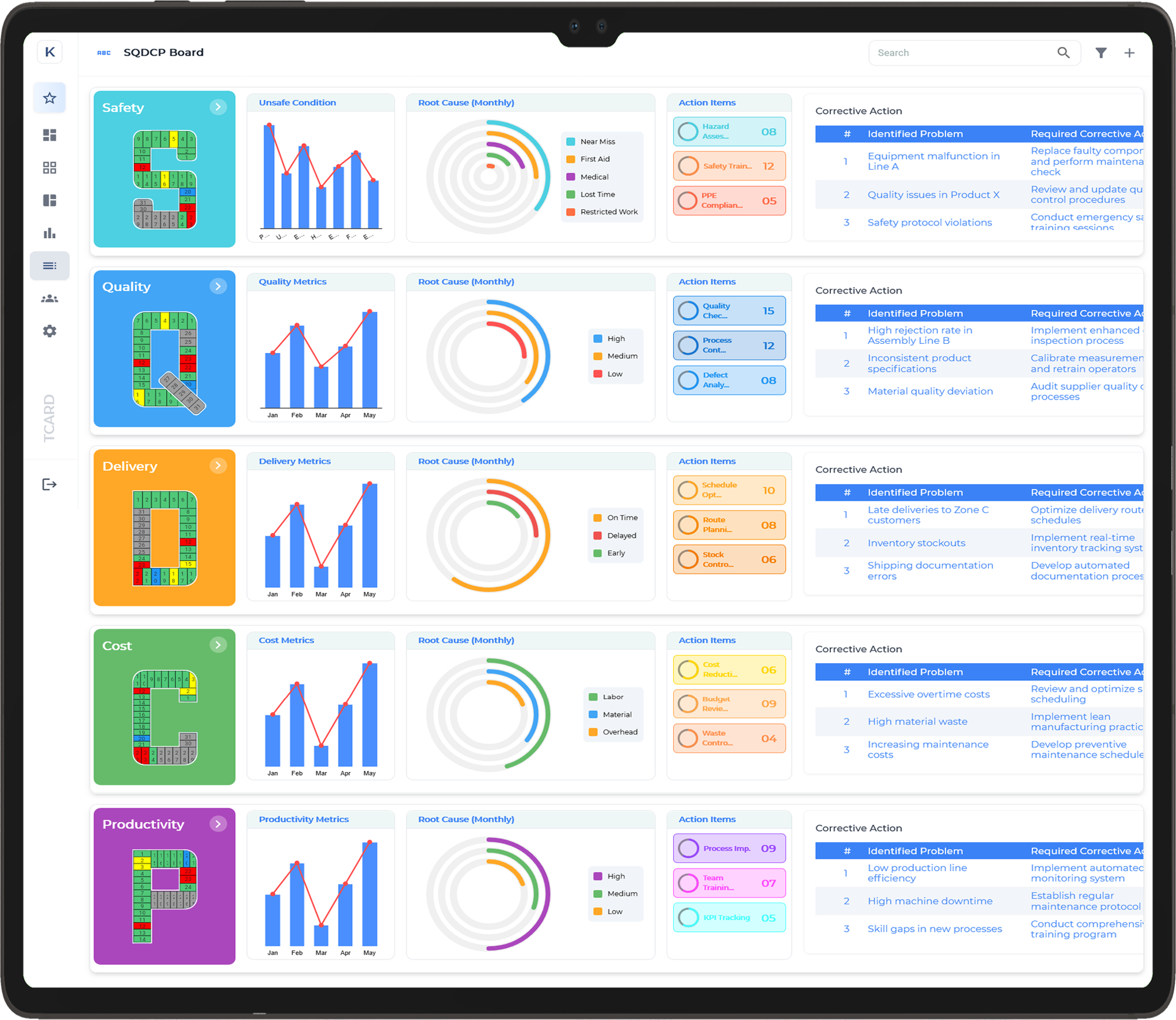
Integration with Daily Huddles
Daily huddles are short, focused meetings where teams review performance metrics displayed on SQDCP boards. Integrating boards into daily huddles ensures that all team members are aware of current performance, issues, and priorities. This visual approach encourages active participation, fosters accountability, and allows immediate problem-solving.
Driving Alignment and Focus
By combining SQDCP Boards with daily huddles, organisations align operational activities with strategic goals. Teams can quickly assess whether safety standards are met, quality levels maintained, delivery targets achieved, and costs controlled. This consistent review ensures that everyone works toward common objectives, enhancing overall operational efficiency.
Supporting Continuous Improvement
Regularly using boards in huddles encourages teams to identify trends, share improvement ideas, and implement corrective actions promptly. The visual representation of metrics simplifies discussions, highlights key issues, and strengthens a culture of continuous improvement across the organisation.
Understanding the Five Pillars: Safety, Quality, Delivery, Cost, and People
Safety
Safety is the foundational pillar of SQDCP Boards. Tracking incidents, near misses, and compliance ensures a secure working environment. Visualising safety metrics in daily huddles reminds teams of the importance of safe practices and encourages proactive measures to prevent accidents.
Quality
Quality metrics such as defect rates, rework, and customer complaints are monitored continuously. Displaying these metrics helps teams identify patterns, take corrective action, and maintain high standards of product quality. Consistent discussion of quality ensures continuous improvement and customer satisfaction.
Delivery
Delivery performance focuses on on-time production and meeting scheduled commitments. Highlighting these metrics enables teams to detect delays, adjust workflows, and maintain reliable delivery, which is crucial for operational efficiency and customer trust.
Cost
Cost metrics track resource utilisation, scrap, and production expenses. Reviewing these in daily huddles allows teams to spot inefficiencies, optimise resource use, and reduce operational costs without compromising quality or delivery targets.
People
People metrics measure employee engagement, skill development, and participation in improvement initiatives. By monitoring these indicators, organisations ensure their workforce remains motivated, competent, and aligned with operational goals, promoting a culture of accountability and growth.
Improving Team Communication Through Visual Metrics
Enhancing Clarity and Understanding
Visual metrics on SQDCP Boards make complex operational data easier to understand. Teams can quickly see performance trends, identify problems, and grasp priorities, reducing confusion and miscommunication across departments.
Facilitating Structured Discussions
Daily huddles using visual metrics create a structured communication framework. Team members discuss results, share observations, and propose solutions in a focused manner, leading to more productive and actionable conversations.
Encouraging Participation
Visible performance data engages all team members, empowering them to contribute insights, suggest improvements, and take ownership of outcomes. This open communication fosters collaboration and strengthens team dynamics.
Aligning Goals and Expectations
Visual metrics help ensure that everyone understands organisational objectives and their role in achieving them. This alignment improves coordination, reduces misunderstandings, and ensures that operational activities support strategic priorities effectively.
Tracking Safety Performance in Daily Huddles
Monitoring Key Safety Indicators
Safety metrics such as incident reports, near misses, and compliance checks are reviewed during daily huddles. This ensures that safety performance is visible to all team members and any issues are addressed promptly to prevent accidents.
Proactive Risk Management
By discussing safety performance regularly, teams can identify potential hazards early, implement preventive measures, and reduce the likelihood of accidents. This proactive approach strengthens workplace safety and reinforces accountability.
Promoting a Safety-First Culture
Regular review of safety metrics in huddles encourages employees to prioritise safety in daily operations. Visibility and discussion of safety data help embed a culture where everyone is responsible for maintaining a secure work environment.
Supporting Compliance and Reporting
Daily tracking ensures that safety procedures are followed consistently, helping organisations meet regulatory requirements and maintain accurate records. This visibility supports audits and continuous improvement initiatives.
Using Quality Metrics to Discuss Defects and Improvements
Visualising Quality Performance
Quality metrics displayed on SQDCP boards provide a clear view of defects, rework rates, and customer complaints. Daily meetings allow teams to analyse these metrics, identify trends, and determine root causes of quality issues effectively.
Driving Continuous Improvement
By discussing quality metrics regularly, teams can implement corrective actions promptly, reduce waste, and improve product consistency. Continuous monitoring fosters a culture of ongoing improvement and higher standards.
Enhancing Accountability
Visible quality data ensures that all team members understand their role in maintaining product quality. This transparency encourages responsibility and motivates employees to actively contribute to improving outcomes.
Supporting Customer Satisfaction
Regular attention to quality metrics ensures defects are minimised, improving product reliability and customer satisfaction. Engaging the team in discussions about quality enhances performance and reinforces operational excellence.
Monitoring Delivery Performance During Daily Meetings
Tracking On-Time Production
Delivery metrics include on-time completion, production throughput, and adherence to schedules. Daily meetings allow teams to review these metrics and identify any delays or bottlenecks that could impact delivery commitments.
Adjusting Resources and Priorities
Real-time review of delivery performance helps managers make quick adjustments to resources, workflows, or schedules. This ensures that production targets are met and customer expectations are maintained.
Improving Coordination Across Teams
Daily discussions based on delivery metrics enhance communication between departments, ensuring everyone understands priorities and works collaboratively to meet targets efficiently.
Enhancing Customer Reliability
Consistently monitoring and improving delivery performance ensures that products reach customers on time. This reliability strengthens trust, improves satisfaction, and supports long-term business success.
Reviewing Cost-Related KPIs for Better Operational Decisions
Tracking Operational Costs
Cost-related KPIs such as resource utilisation, scrap, energy consumption, and production expenses are reviewed in daily meetings. This visibility allows teams to monitor spending, identify inefficiencies, and take corrective action where necessary.
Optimising Resource Allocation
Regular review of cost metrics helps managers allocate resources effectively, reduce waste, and control expenses without compromising quality or delivery. This ensures operational efficiency and sustainable production.
Supporting Data-Driven Decisions
Cost KPI discussions provide actionable insights that enable managers to make informed decisions on process adjustments, investments, or workflow improvements. Real-time access to data supports better planning and operational control.
Driving Continuous Improvement
By monitoring cost performance daily, teams can implement small, consistent improvements that reduce expenses and improve profitability over time. This proactive approach encourages lean practices and long-term operational excellence.
Highlighting People Metrics to Boost Team Engagement
Tracking Employee Performance and Contribution
People metrics provide insight into individual and team contributions, such as task completion, attendance, safety compliance, and skill utilisation. By visualising this data, employees understand how their work impacts overall business performance, fostering a sense of ownership and accountability.
Enhancing Engagement and Motivation
When team members see tangible results of their efforts, motivation and engagement increase. Transparent metrics allow staff to recognise achievements, focus on improvement areas, and contribute more actively to operational goals. Managers can provide timely feedback and support based on clear performance data.
Supporting Growth and Development
People-focused metrics highlight skills gaps and development needs, enabling tailored training programmes. Employees gain opportunities for personal and professional growth, which improves overall workforce capability and strengthens engagement across departments.
Fostering Collaboration and Accountability
Shared visibility of people metrics encourages teamwork and cross-functional collaboration. Employees understand their responsibilities relative to colleagues and can work together to achieve targets, promoting a culture of accountability, transparency, and continuous improvement.
Identifying Bottlenecks and Roadblocks Quickly
Spotting Operational Constraints in Real-Time
Daily monitoring of processes allows teams to detect bottlenecks and roadblocks before they escalate. Whether it is delayed approvals, equipment downtime, or resource shortages, real-time visibility ensures issues are addressed promptly, minimising disruption and improving workflow efficiency.
Optimising Resource Allocation
By identifying constraints early, managers can reassign resources, adjust schedules, and prioritise critical tasks. This optimises the use of manpower, equipment, and materials, maintaining smooth operations and reducing waste.
Supporting Continuous Process Improvement
Regular identification of bottlenecks enables teams to implement corrective measures and process improvements. Trends and patterns can be analysed over time, allowing root causes to be addressed, ensuring long-term operational efficiency.
Promoting Team Accountability
Clear visibility of roadblocks encourages teams to take ownership of resolving issues. Collaborative problem-solving and proactive engagement are reinforced, driving a culture of accountability, teamwork, and operational excellence.
Supporting Continuous Improvement (Kaizen) Through Daily Insights
Embedding Improvement into Daily Operations
Continuous improvement thrives when small, incremental changes are implemented daily. Visual metrics and dashboards provide real-time insights, enabling teams to identify opportunities for improvement and act promptly, reinforcing a Kaizen mindset across operations.
Tracking Impact and Effectiveness
Daily insights allow teams to measure the impact of improvement initiatives. By comparing data trends before and after interventions, organisations can ensure that process changes deliver tangible benefits and inform future improvement actions.
Encouraging Team Participation
When employees can see the effect of their suggestions, engagement and ownership increase. Active participation in problem-solving fosters collaboration and strengthens the culture of continuous learning and operational excellence.
Driving Sustainable Performance
Daily improvement practices accumulate over time, enhancing efficiency, quality, and safety. By integrating continuous improvement into daily routines, organisations ensure sustained performance gains and long-term operational success.
Standardising Daily Huddle Discussions Across Teams and Shifts
Creating Consistent Communication Practices
Standardising daily huddles ensures all teams receive the same information, discuss critical issues, and align on priorities. A consistent format improves efficiency and guarantees that important updates and metrics are reviewed systematically.
Enhancing Team Awareness
Daily huddles provide visibility into challenges, progress, and performance trends. Teams become aware of potential issues early, enabling proactive problem-solving and reducing delays or miscommunication between shifts.
Driving Accountability and Collaboration
When daily discussions follow a structured approach, responsibilities are clearly defined. Teams can coordinate effectively, share insights, and work collaboratively to resolve issues, reinforcing a culture of accountability.
Supporting Continuous Improvement
Standardised huddles allow teams to track daily improvements, identify recurring challenges, and implement corrective actions. Regular reflection and discussion support a continuous improvement mindset and operational excellence.
Integrating Digital SQDCP Boards for Real-Time Updates
Connecting Metrics Across Systems
Integrating digital SQDCP boards with ERP and performance systems centralises safety, quality, delivery, cost, and people metrics. Teams gain a unified view of operational health, enabling faster decision-making and more accurate reporting.
Reducing Manual Effort and Errors
Automated integration eliminates repetitive data entry and reduces errors. Operators and managers can focus on analysing trends and implementing improvements rather than managing spreadsheets or manual reporting processes.
Enhancing Collaboration Across Teams
Centralised digital boards make real-time data accessible to all relevant teams. Cross-functional collaboration improves as everyone shares the same information, enabling coordinated responses to issues and performance challenges.
Supporting Strategic and Operational Decisions
Integrated boards provide visibility into long-term trends and day-to-day operations. Managers can make informed decisions about process improvements, resource allocation, and operational priorities based on accurate, up-to-date data.
Empowering Team Members to Take Immediate Action
Enabling Real-Time Responses
Visible metrics and dashboards empower employees to identify issues and act immediately. Teams no longer wait for managerial intervention, which accelerates problem-solving and reduces downtime, keeping operations efficient and responsive.
Encouraging Ownership and Accountability
When team members see the direct impact of their actions, they take ownership of their tasks. Accountability is reinforced, as employees understand how their efforts influence performance and outcomes.
Facilitating Collaboration and Coordination
Empowered teams can communicate and coordinate effectively to resolve issues quickly. Shared visibility of challenges ensures that all stakeholders work together to achieve operational goals.
Supporting Continuous Improvement
Immediate action on identified problems contributes to ongoing improvement. Teams can test solutions, monitor results, and refine processes iteratively, creating a culture of operational excellence and Kaizen-driven performance.
Measuring the Impact of Daily Huddle Decisions on Overall Performance
Tracking Actions Taken During Huddles
Measuring the outcomes of decisions made in daily huddles ensures that actions are effective and aligned with business goals. Recording metrics such as task completion, issue resolution, and process improvements provides insight into the value of daily discussions.
Analysing Performance Trends
Data from daily huddles helps identify recurring problems and opportunities for improvement. Trend analysis supports informed decision-making and ensures that interventions are targeted to the areas with the highest impact.
Enhancing Team Accountability
Visible measurement reinforces accountability, as teams understand how decisions influence operational performance. This motivates consistent follow-through and encourages proactive problem-solving.
Supporting Continuous Improvement
Evaluating the impact of huddles drives continuous improvement by highlighting successes, challenges, and areas needing further attention. Teams learn from daily experiences and refine processes iteratively, improving efficiency and outcomes.
Creating a High-Performance, Lean Culture with Consistent Daily Reviews
Embedding Lean Principles in Daily Operations
Consistent daily reviews reinforce lean practices by making processes, metrics, and priorities visible. Teams can quickly identify waste, inefficiencies, or deviations from standards and take corrective action immediately.
Driving Engagement and Accountability
Regular reviews ensure employees understand expectations and their role in achieving operational objectives. Visible results motivate teams to take ownership, enhancing engagement and accountability across all levels of the organisation.
Supporting Continuous Improvement
Daily reviews enable teams to identify incremental improvement opportunities and measure progress over time. This encourages a Kaizen mindset, ensuring continuous performance enhancement and operational excellence.
Fostering a Sustainable High-Performance Culture
Integrating lean principles with daily performance reviews creates a culture of operational discipline, efficiency, and proactive problem-solving. Employees develop habits that sustain long-term productivity, quality, and engagement, reinforcing organisational success.