What Is an SQDCM Board and Why Should Your Organisation Use One?
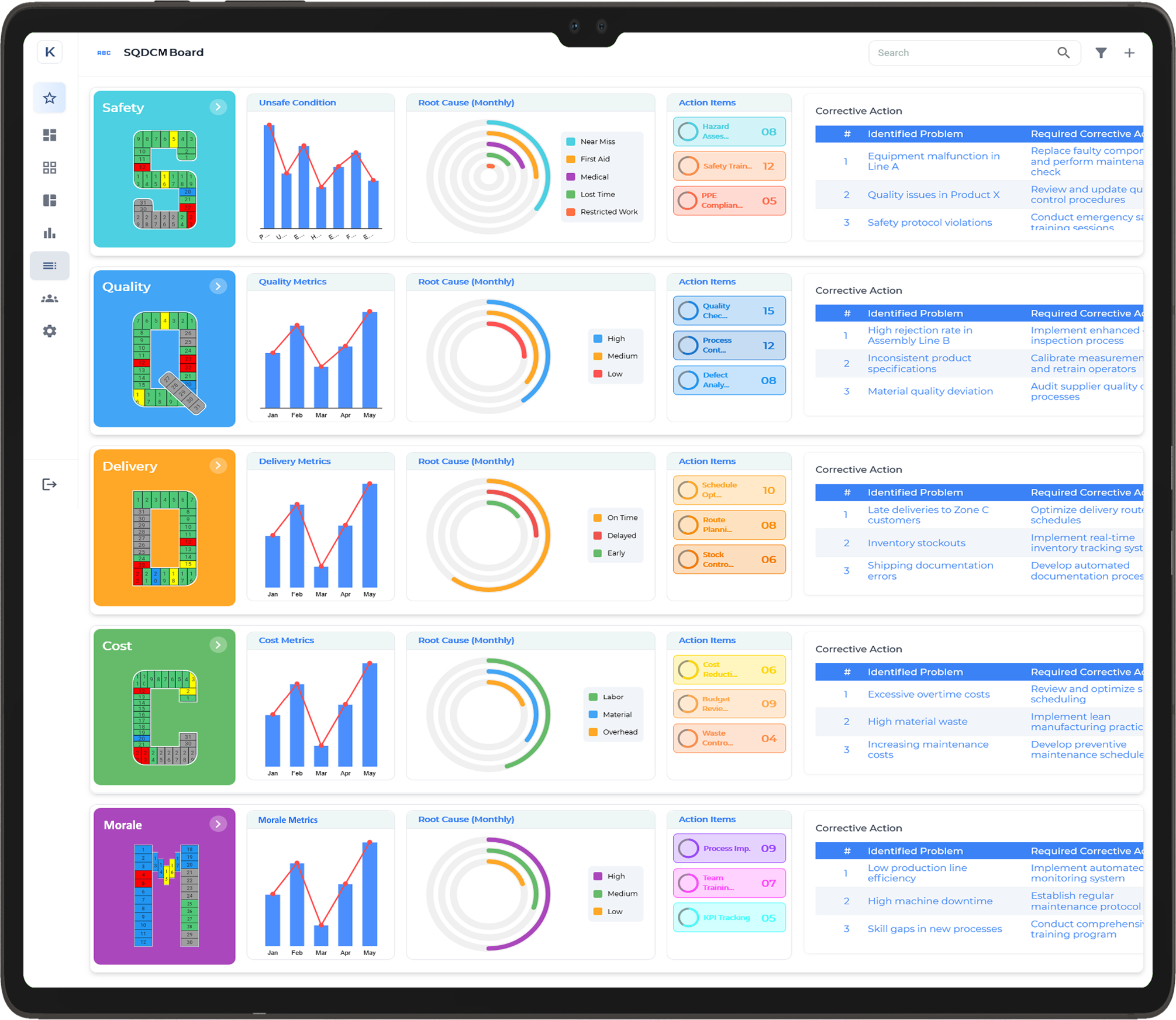
An SQDCM board is a visual management tool used in workplaces to monitor and improve performance across five key areas: Safety, Quality, Delivery, Cost, and Morale. Each of these areas plays a crucial role in daily operations, and by tracking them regularly, teams can spot issues early, take corrective action, and maintain consistent progress.
1. Clear Focus on Key Performance Areas
The SQDCM board helps your team stay focused on what truly matters. It ensures that attention is given not only to product quality and timely delivery, but also to the safety of staff, control of costs, and employee morale. These five areas together provide a balanced view of performance, rather than looking at one area in isolation.
2. Encourages Daily Accountability
By using the board in daily meetings or reviews, teams can take ownership of their performance. Regular updates keep everyone informed and promote transparency. This process builds a culture of responsibility, where issues are discussed openly and improvements are made as a team.
3. Easy to Understand and Use
One of the main strengths of an SQDCM board is its simplicity. Colour-coded sections and visual indicators make it quick to read and easy to understand, even for new team members. This allows faster decision-making and keeps everyone aligned with operational goals.
In summary, an SQDCM board is a simple but powerful tool that helps organisations maintain control, improve efficiency, and support a culture of continuous improvement across all areas of work.
A Step-by-Step Guide to Setting Up an SQDCM Board That Works
Setting up an SQDCM (Safety, Quality, Delivery, Cost, and Morale) board is a simple yet highly effective way to improve your organisation's performance. By following these easy steps, you can create a board that tracks key metrics and drives continuous improvement across your operations.
1. Define Your Key Metrics
The first step is to identify the key performance indicators (KPIs) for each of the five SQDCM areas. For example, under Safety, you might track accident rates; for Quality, focus on defect rates; for Delivery, monitor on-time shipments; for Cost, track operational expenses; and for Morale, measure employee satisfaction. Choose metrics that are relevant to your team and goals.
2. Choose a Board Format
Next, decide whether you want a physical board or a digital solution. A physical board works well for small teams or workspaces, while a digital board offers flexibility and easy access for larger teams or remote workers. The board should be large enough to clearly display your chosen metrics, with enough space to update them regularly.
3. Set Up Visual Indicators
Make your SQDCM board visually appealing and easy to interpret. Use colour coding (e.g., red for issues, green for success) to quickly highlight areas that need attention or are performing well. Clear visual indicators, such as graphs, charts, or trend lines, will help team members understand performance at a glance.
4. Assign Responsibility
Assign team members or departments to each metric, ensuring that everyone knows who is responsible for updating and monitoring the board. Regular updates will help keep the board relevant and encourage ownership of key performance areas.
5. Review and Act on the Data
Finally, hold regular review sessions to discuss the board’s data, identify trends, and decide on corrective actions. This promotes continuous improvement and helps your team stay focused on achieving your organisational goals.
By following these simple steps, you can set up an SQDCM board that enhances visibility, accountability, and performance, ultimately driving success within your organisation.
Defining Safety, Quality, Delivery, Cost & Morale: The Core of SQDCM
The SQDCM framework, which stands for Safety, Quality, Delivery, Cost, and Morale, is a powerful tool used by organisations to monitor and improve performance across key areas. Each component plays a crucial role in ensuring smooth operations and sustainable growth. Here’s a closer look at each of these five core areas:
1. Safety
Safety is the cornerstone of any effective organisation. It focuses on ensuring that employees are protected from harm while performing their tasks. By tracking safety metrics such as accident rates or near-miss incidents, businesses can identify potential hazards and take steps to minimise risks. A strong safety culture not only reduces accidents but also fosters a positive work environment.
2. Quality
Quality refers to the consistency and reliability of the products or services provided. It involves monitoring defect rates, customer satisfaction, and compliance with industry standards. Ensuring high-quality output reduces waste, improves customer loyalty, and helps maintain a strong brand reputation.
3. Delivery
Delivery measures the efficiency and timeliness of the organisation’s operations. Tracking delivery metrics, such as on-time shipments or service completion times, ensures that customers receive products or services as promised. Timely delivery is crucial for customer satisfaction and retention.
4. Cost
Cost is the financial aspect of performance, focusing on controlling operational expenses. By tracking costs, organisations can identify areas for improvement, streamline processes, and optimise resource usage. Effective cost management helps improve profitability and maintain competitiveness in the market.
5. Morale
Morale is a measure of employee satisfaction and engagement. High morale leads to increased productivity, lower turnover, and a more positive work environment. Monitoring morale through surveys or feedback helps organisations identify areas where employee well-being can be improved, contributing to better overall performance.
In conclusion, the SQDCM framework helps organisations track these five key areas to improve performance, drive growth, and create a sustainable work environment.
How to Align Your SQDCM Board with Daily Operational Goals
Aligning your SQDCM (Safety, Quality, Delivery, Cost, and Morale) board with your organisation's daily operational goals is key to driving continuous improvement. By ensuring that the board reflects the immediate priorities of your team, you can optimise performance, encourage accountability, and maintain focus on key objectives. Here’s how you can align your SQDCM board effectively with daily goals.
1. Set Clear Daily Objectives
Start by identifying specific daily goals for each of the five SQDCM areas. For example, your safety goal might be to reduce the number of near-miss incidents, or your delivery goal could focus on improving on-time shipments. Make these objectives clear, measurable, and achievable within the day to ensure they align with the broader operational goals.
2. Use Real-Time Data
To align the board with daily operations, use real-time data to update the SQDCM board. Daily reviews of key metrics ensure that the information remains relevant and actionable. For instance, tracking defects or delivery delays on a daily basis will help the team make timely decisions and adjustments that directly impact operational success.
3. Focus on Key Areas of Improvement
By tracking daily performance, you can pinpoint areas that need immediate attention. For example, if you notice a spike in safety incidents or a drop in morale, these are clear indicators that require action. Directing attention to these key areas ensures the SQDCM board remains a tool for continuous improvement.
4. Involve the Team
For successful alignment, involve your team in the daily updates and reviews of the SQDCM board. Encourage staff to take ownership of their areas, update performance metrics, and provide feedback on any challenges. This collaborative approach fosters accountability and ensures that the daily goals are consistently met.
By aligning your SQDCM board with daily operational goals, you can ensure that your organisation stays on track, identifies areas for improvement, and drives continuous performance gains.
Choosing the Right Metrics for Your SQDCM Categories
Choosing the right metrics for your SQDCM (Safety, Quality, Delivery, Cost, and Morale) categories is crucial for tracking performance and driving improvements across your organisation. The right metrics provide clarity, highlight areas for improvement, and align team efforts with organisational goals. Here's how you can select the most effective metrics for each of the SQDCM categories.
1. Safety: Track Key Risk Indicators
For the safety category, focus on metrics that highlight workplace risks and safety compliance. Common metrics include accident rates, near-miss incidents, and safety audits. By tracking these, you can pinpoint hazards and take proactive measures to protect your workforce, ensuring a safe working environment.
2. Quality: Measure Product Consistency
In the quality category, the goal is to monitor how well your products or services meet defined standards. Key metrics include defect rates, customer complaints, and product returns. These metrics help you identify recurring issues and drive improvements in your production processes, leading to higher customer satisfaction.
3. Delivery: Focus on Timeliness and Accuracy
For delivery, it’s important to track how efficiently products or services are delivered to customers. Metrics such as on-time delivery percentage, lead time, and order accuracy are essential. These metrics ensure that your team is meeting customer expectations and operating efficiently.
4. Cost: Monitor Operational Efficiency
Cost metrics should focus on controlling operational expenses while maintaining quality and productivity. Common metrics include production costs, cost per unit, and waste levels. Monitoring these costs helps optimise resource usage and boosts profitability.
5. Morale: Assess Employee Engagement
Morale is an often-overlooked category, but it’s vital for long-term success. Track employee satisfaction, retention rates, and engagement through surveys or feedback. High morale is directly linked to productivity and a positive work culture, which ultimately impacts overall performance.
In summary, selecting the right metrics for your SQDCM categories ensures that you are tracking the most important aspects of your operations, enabling you to drive continuous improvement and achieve your organisational goals.
How to Make SQDCM Boards Part of Your Daily Team Meetings
Incorporating an SQDCM (Safety, Quality, Delivery, Cost, and Morale) board into your daily team meetings is an effective way to ensure that everyone stays aligned with key performance goals. Regularly reviewing the board in these meetings promotes transparency, accountability, and continuous improvement across your team. Here’s how to make it a seamless part of your daily routine.
1. Start with a Quick Review
Begin each daily meeting by quickly reviewing the metrics on the SQDCM board. Ensure everyone understands what each category represents and what is being tracked. Focus on key areas that need attention, and use visual cues, such as colour coding, to highlight critical points. This ensures that the team is aware of where improvements are needed.
2. Discuss Results and Challenges
Encourage open discussions about the results displayed on the board. Identify any issues or areas where performance is below expectations, such as safety incidents or delays in delivery. By addressing these challenges in real-time, you can develop action plans to tackle them immediately, keeping operations on track.
3. Set Daily Targets
During the meeting, set achievable daily targets for each category. For example, you might aim to reduce defects by a certain percentage or improve on-time delivery rates. These targets give the team clear goals to strive for each day, ensuring a focused approach to daily operations.
4. Assign Responsibilities
Assign specific team members to monitor and update the board for each category. This encourages accountability and ensures that everyone understands their role in improving performance. It also helps maintain the accuracy and relevance of the data displayed on the board.
5. End with Positive Reinforcement
Finish each meeting by recognising achievements, even small improvements, to boost morale. Positive reinforcement motivates the team and reinforces the importance of the SQDCM metrics in driving continuous improvement.
By integrating the SQDCM board into your daily meetings, you create a culture of transparency, accountability, and continuous improvement, helping your team stay focused on achieving their operational goals.
Using SQDCM Boards to Create a Culture of Accountability
Creating a culture of accountability within your organisation is essential for improving performance and achieving long-term success. One of the most effective tools to achieve this is the SQDCM (Safety, Quality, Delivery, Cost, and Morale) board. By clearly displaying key performance metrics, you can foster a sense of responsibility among your team members and drive continuous improvement. Here’s how to use SQDCM boards to create a culture of accountability.
1. Set Clear Expectations
The first step to fostering accountability is to set clear expectations for each SQDCM category. Define the specific metrics you want to track, such as accident rates for Safety, defect rates for Quality, or on-time delivery for Delivery. When everyone knows what is expected, they are more likely to take ownership of their responsibilities.
2. Involve the Entire Team
For accountability to be truly effective, everyone must be involved. Assign team members to monitor and update specific metrics on the SQDCM board. When individuals are directly responsible for tracking and improving key performance indicators, they are more likely to take pride in their work and strive to meet or exceed expectations.
3. Regularly Review Progress
Regular reviews of the SQDCM board help keep everyone focused and ensure that progress is being made. Discuss any issues or setbacks during team meetings and highlight areas where performance is improving. Recognising success and addressing challenges promptly keeps the team engaged and reinforces accountability.
4. Encourage Ownership and Transparency
The SQDCM board should be a tool for transparency. By making performance data visible to everyone, you create a sense of collective responsibility. Team members are more likely to hold each other accountable when they can see the impact of their actions on the overall performance of the organisation.
By using SQDCM boards to promote accountability, you can encourage a proactive approach to problem-solving and foster a culture of continuous improvement. This leads to higher performance, greater employee satisfaction, and a more successful organisation.
Tips for Training Staff to Use SQDCM Boards Effectively
Training staff to effectively use SQDCM (Safety, Quality, Delivery, Cost, and Morale) boards is essential for ensuring that the board becomes a valuable tool in your organisation. Proper training helps employees understand how to interpret data, set goals, and make decisions based on the metrics. Here are some tips to train your staff to use SQDCM boards effectively.
1. Start with the Basics
Begin training by explaining the purpose of the SQDCM board and how each category—Safety, Quality, Delivery, Cost, and Morale—contributes to the organisation's overall goals. Make sure staff understand the importance of each metric and how it impacts their work and the company’s performance. Clear explanations will help them see the relevance of the board in their daily tasks.
2. Provide Hands-On Experience
Allow staff to interact with the SQDCM board during training. Walk them through updating metrics, adding new data, and reading the performance indicators. Hands-on practice will build confidence and ensure that employees are comfortable using the board in real-world situations. This practical experience is crucial for effective learning.
3. Keep the Process Simple
Avoid overwhelming staff with too much information at once. Focus on key metrics and ensure that the process for updating the board is straightforward and easy to follow. Encourage staff to start small and gradually expand their use of the board as they become more comfortable with it.
4. Promote Continuous Learning
Training shouldn’t stop after the initial session. Regularly reinforce the importance of the SQDCM board during team meetings. Use the board to highlight areas for improvement and celebrate successes. Encouraging continuous learning ensures that the board remains a central tool for ongoing development.
By following these tips, you can ensure that your staff uses SQDCM boards effectively to track performance, identify improvements, and drive operational success.
Visual Management: Designing a Clear and Engaging SQDCM Board
Effective visual management is key to making your SQDCM (Safety, Quality, Delivery, Cost, and Morale) board a powerful tool for improving team performance and achieving operational goals. A well-designed board not only tracks key performance indicators (KPIs) but also engages and motivates your team. Here’s how to design a clear and engaging SQDCM board using visual management techniques.
1. Use Clear, Simple Layouts
Start by designing a clean, organised layout. The SQDCM board should be divided into distinct sections for each of the five categories—Safety, Quality, Delivery, Cost, and Morale. Use bold headings and simple graphics, like charts or colour-coded markers, to make each section easy to understand at a glance. Keep the board free of clutter, ensuring that only essential information is displayed.
2. Colour Code for Easy Interpretation
Colour coding is an effective way to quickly communicate the status of different metrics. Use green for targets that are being met, yellow for areas needing attention, and red for issues that require immediate action. This visual representation makes it easy for team members to spot problem areas and take quick action to resolve them.
3. Include Visual Indicators and Trends
Incorporate visual indicators such as graphs, progress bars, or trend lines to show performance over time. This allows your team to see how key metrics are evolving, helping them identify patterns and areas for improvement. For example, a trend line showing the decrease in defects over the past month can be motivating for the team.
4. Ensure Easy Accessibility and Updates
Make sure that the SQDCM board is placed in a central, visible location where everyone can easily access and update it. Consider using magnetic boards or digital displays to allow quick changes to metrics. Regular updates keep the information relevant and encourage daily interaction with the board.
By applying these visual management techniques, your SQDCM board will become a more effective tool for tracking performance, motivating your team, and driving continuous improvement across your organisation.
Common Pitfalls When Implementing SQDCM Boards—and How to Avoid Them
Implementing an SQDCM (Safety, Quality, Delivery, Cost, and Morale) board can significantly improve team performance and operational efficiency. However, there are several common pitfalls that organisations often encounter. By being aware of these challenges and taking proactive steps, you can ensure that your SQDCM board becomes a valuable tool for continuous improvement. Here’s how to avoid the most frequent mistakes.
1. Overloading the Board with Too Much Data
One of the most common mistakes is overloading the SQDCM board with excessive data, making it overwhelming and difficult to interpret. To avoid this, focus on key performance indicators (KPIs) that are most relevant to your organisation’s goals. Keep the board simple, with clear, actionable information that your team can easily understand and track.
2. Not Regularly Updating the Board
If the board isn’t updated regularly, it loses its effectiveness as a tool for driving improvement. Make sure to review and update the metrics at least daily or weekly, depending on your workflow. Consistent updates ensure that the board remains accurate and provides real-time insights into performance.
3. Failing to Engage the Team
An SQDCM board is most effective when the entire team is engaged and takes ownership of the metrics. Avoid the mistake of having only a few people update the board. Instead, encourage everyone to interact with it, suggest improvements, and actively track their own performance. This collective involvement fosters accountability and drives better results.
4. Ignoring the Importance of Visual Design
A cluttered or poorly designed SQDCM board can be difficult to navigate. Ensure the board has a clean, organised layout with clear headings, colour coding, and simple visual elements. This makes it easier for team members to quickly spot issues and take corrective actions.
By avoiding these common pitfalls, you can maximise the impact of your SQDCM board, helping your team stay aligned and continuously improve performance.
How Digital SQDCM Boards Improve Tracking and Accessibility
Digital SQDCM (Safety, Quality, Delivery, Cost, and Morale) boards offer several advantages over traditional physical boards. By leveraging digital tools, organisations can improve the tracking, accessibility, and effectiveness of their performance monitoring. Here’s how digital SQDCM boards can transform the way you track key performance indicators (KPIs) and enhance accessibility for your team.
1. Real-Time Updates
One of the biggest advantages of digital SQDCM boards is the ability to update performance metrics in real-time. This ensures that everyone has access to the latest data, enabling quicker decision-making and allowing teams to respond to issues immediately. Real-time updates also help eliminate the delays that can occur with manual updates on traditional boards.
2. Enhanced Accessibility
Digital boards provide greater accessibility, as they can be accessed from any device, anywhere, at any time. Whether your team is working on-site or remotely, they can easily view and update the board. This flexibility ensures that all team members stay informed and aligned with the organisation's goals, regardless of their location.
3. Improved Data Analysis
Digital SQDCM boards often come with built-in analytics tools that make it easier to track trends and identify areas for improvement. With visual data representation, such as graphs and charts, you can quickly spot performance patterns, helping to make informed decisions and focus efforts on the areas that need attention.
4. Streamlined Collaboration
Digital SQDCM boards allow multiple team members to collaborate in real-time, making it easier to share insights, update progress, and discuss solutions. This encourages greater communication and teamwork, which ultimately contributes to more effective problem-solving and performance improvement.
By adopting a digital SQDCM board, your organisation can streamline tracking, improve accessibility, and foster collaboration, all of which contribute to higher efficiency and better performance outcomes.
Encouraging Team Participation Through Regular SQDCM Updates
Regular updates on an SQDCM (Safety, Quality, Delivery, Cost, and Morale) board are crucial for maintaining engagement and encouraging team participation. When updated consistently, the SQDCM board serves as a powerful tool for driving performance, fostering collaboration, and ensuring that everyone is aligned with the organisation’s goals. Here are some key strategies for encouraging team participation through regular SQDCM updates.
1. Set Clear Expectations for Updates
To encourage participation, it’s essential to set clear expectations for regular updates. Establish a routine, whether it’s daily or weekly, where team members update the board with relevant data and performance metrics. This consistency helps keep everyone engaged and aware of the status of key indicators in Safety, Quality, Delivery, Cost, and Morale.
2. Involve the Entire Team
Encourage all team members to actively participate in updating the board. Assign specific responsibilities for tracking different metrics, such as quality control or safety measures, to ensure everyone is involved. When everyone has ownership of a part of the SQDCM board, they are more likely to take pride in keeping it up to date and monitoring progress.
3. Foster Open Communication
Use the SQDCM board as a platform for open communication. Team members should feel comfortable discussing challenges, improvements, and successes during regular update sessions. Regularly reviewing the board as a team allows for collaboration and problem-solving, ensuring that everyone is on the same page and focused on achieving common goals.
4. Recognise and Celebrate Achievements
Celebrating small wins and progress on the SQDCM board helps motivate team members to stay engaged. Recognise improvements, whether it's a reduction in defects, better on-time delivery, or enhanced safety practices. Positive reinforcement encourages continued participation and fosters a sense of accomplishment.
By implementing these strategies, you can create a more engaging environment where everyone is motivated to contribute to the SQDCM board, driving continuous improvement and achieving operational excellence.
Reviewing and Refreshing Your SQDCM Board for Continuous Improvement
To maximise the effectiveness of your SQDCM (Safety, Quality, Delivery, Cost, and Morale) board, it’s essential to regularly review and refresh the board’s content. Continuous improvement is at the core of successful operations, and keeping your SQDCM board up to date plays a crucial role in driving that progress. Here’s how to review and refresh your board to ensure it remains a valuable tool for your team.
1. Regularly Evaluate Key Metrics
To keep your SQDCM board relevant, regularly assess the key performance indicators (KPIs) for each category—Safety, Quality, Delivery, Cost, and Morale. Ensure that the metrics you are tracking still align with your team’s goals and organisational objectives. If necessary, update these metrics to reflect any changes in priorities or operations. Regular evaluation ensures that the board remains a true reflection of your current goals.
2. Involve the Team in Updates
Engage your team in the review process. Ask for their feedback on the board’s design, the metrics tracked, and how the data is being used. Getting input from the team helps identify areas for improvement and ensures that the board is user-friendly and motivating. Collaboration in the review process also encourages ownership and increases participation.
3. Keep the Visuals Fresh and Clear
The visual design of your SQDCM board should be simple, clear, and engaging. Over time, visuals may become cluttered or outdated. Regularly refresh the design by updating charts, graphs, and colour coding to keep the board visually appealing. A well-organised, easy-to-read board motivates the team to interact with it regularly.
4. Celebrate Progress and Identify Areas for Improvement
Use your SQDCM board to highlight both successes and areas for improvement. Celebrating achievements fosters a positive work environment, while identifying areas that need attention keeps the team focused on continuous improvement. Regular reviews of progress will help you spot trends, track growth, and adjust goals accordingly.
By regularly reviewing and refreshing your SQDCM board, you can ensure that it continues to serve as a powerful tool for tracking performance, promoting accountability, and driving continuous improvement in your organisation.
Real Examples of SQDCM Implementation Success in UK Organisations
Implementing an SQDCM (Safety, Quality, Delivery, Cost, and Morale) board can have a transformative impact on organisations across various industries. Many UK businesses have successfully adopted this visual management tool to drive performance and improve key operational metrics. Below are a few examples of SQDCM success stories from UK organisations.
1. Manufacturing: Improved Safety and Quality
A UK-based manufacturing company implemented an SQDCM board to track safety incidents, product quality, and delivery timelines. By visualising these key metrics, the company identified a significant drop in safety-related incidents within the first three months. With clear visibility, the team was able to address risks proactively, leading to fewer accidents and better compliance with safety standards. Additionally, the company’s quality control process saw improvements, with fewer defects and faster issue resolution.
2. Retail: Enhancing Delivery Performance and Customer Satisfaction
In the retail sector, a UK retailer adopted an SQDCM board to monitor delivery performance and customer satisfaction. By tracking delivery accuracy and on-time performance, the company saw a noticeable reduction in late deliveries. The board’s transparency also encouraged the team to address issues promptly, improving overall customer satisfaction. Regular updates helped staff stay focused on delivery targets, leading to improved customer loyalty and retention.
3. Healthcare: Boosting Morale and Cost Efficiency
A NHS trust in the UK successfully implemented an SQDCM board to track hospital performance, including patient safety, cost management, and staff morale. The board’s visibility encouraged open discussions around cost-saving measures, improving budget efficiency. Additionally, regular team meetings focused on morale led to better staff engagement, reduced turnover, and enhanced patient care quality.
These examples demonstrate how SQDCM boards can be tailored to meet the specific needs of various industries. By focusing on key metrics, organisations can achieve improved performance, safety, quality, and morale, ultimately driving long-term success.
How SQDCM Boards Support Lean Thinking and Daily Operational Excellence
SQDCM boards—Safety, Quality, Delivery, Cost, and Morale—are essential tools for organisations committed to lean thinking and continuous improvement. By providing a clear visual representation of key performance indicators (KPIs), these boards help teams track daily progress and drive operational excellence. Here’s how SQDCM boards support lean thinking and daily operational improvement.
1. Visualising Key Metrics for Faster Decision-Making
One of the fundamental principles of lean thinking is eliminating waste and making quick, informed decisions. SQDCM boards enable teams to visualise critical metrics, such as safety performance, product quality, and delivery efficiency, in real-time. This immediate access to data allows teams to spot issues early and take corrective actions before they escalate, reducing delays and improving operational flow.
2. Fostering a Culture of Continuous Improvement
Lean thinking revolves around continuous improvement, or "Kaizen." SQDCM boards support this by encouraging teams to regularly review performance, identify inefficiencies, and propose improvements. By tracking Safety, Quality, Delivery, Cost, and Morale, teams can focus on small, incremental changes that lead to significant improvements over time, making operational excellence an ongoing process.
3. Empowering Teams and Enhancing Accountability
SQDCM boards empower teams to take ownership of their performance. By involving everyone in the process, these boards foster a sense of accountability and collective responsibility. When each team member can clearly see their contributions to the overall success, it drives motivation and enhances engagement, which is crucial for achieving lean operational goals.
In conclusion, SQDCM boards are powerful tools that support lean thinking and operational excellence by providing clear insights into performance, driving continuous improvement, and fostering accountability. By integrating these boards into daily operations, organisations can achieve higher efficiency, reduced waste, and sustained success.