What Is a Balanced Scorecard and Its Role in Banking Performance
Understanding the Balanced Scorecard in Banking
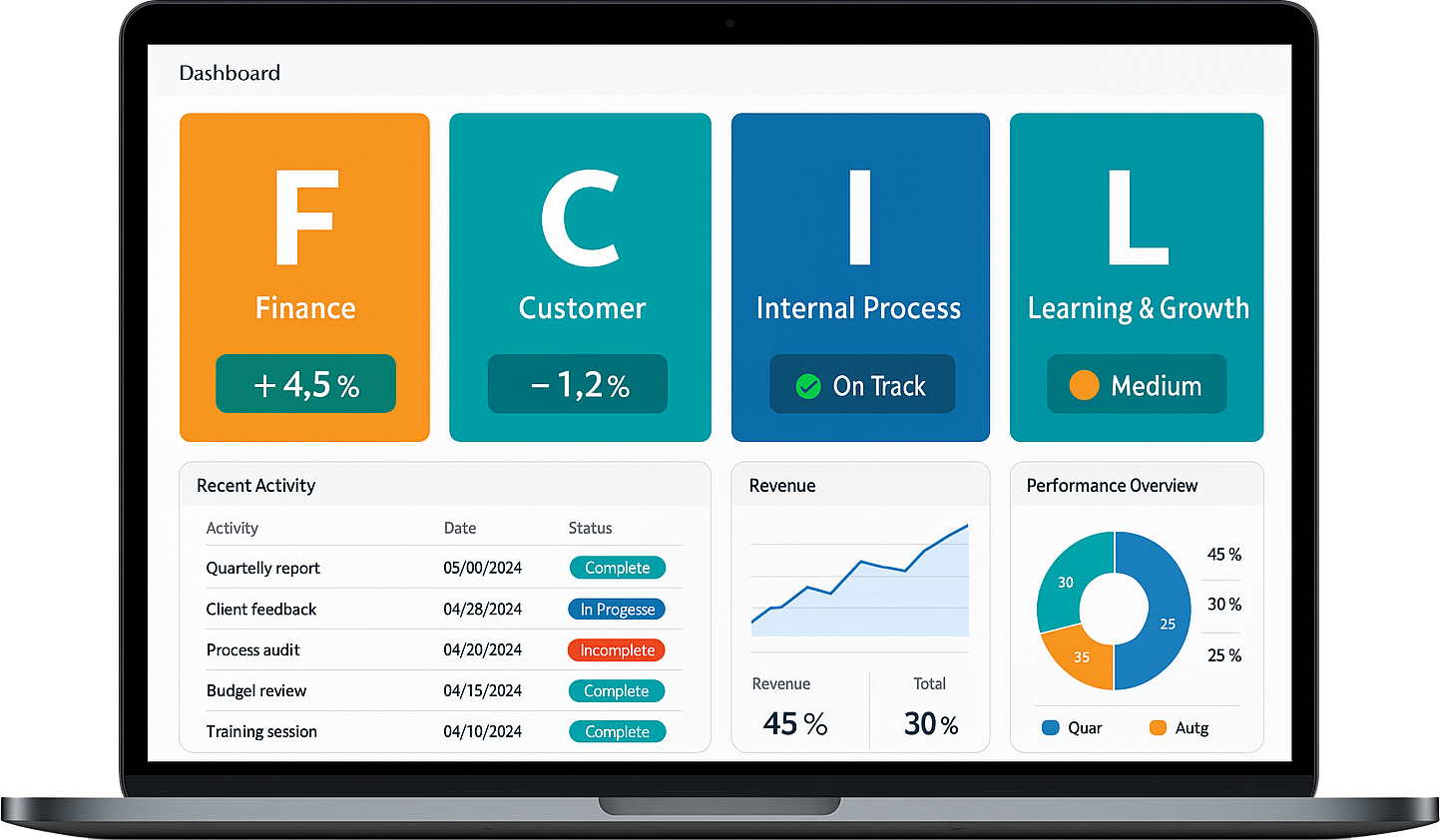
A balanced scorecard is a strategic management framework that allows banks to track and measure performance across multiple dimensions. In banking, it combines financial, customer, internal process, and learning and growth perspectives to provide a comprehensive view of organisational health. This approach ensures that strategic objectives are consistently monitored and achieved.
Supporting Strategic Decision-Making
For banks, the Balanced Scorecard enables leaders to align operational activities with strategic priorities. By integrating KPIs into day-to-day management, banks can monitor profitability, assess customer satisfaction, and evaluate internal efficiency. This structured approach provides actionable insights, supporting better decision-making and long-term stability.
Enhancing Organisational Alignment
Balanced Scorecards also foster alignment across departments and teams. Employees at all levels can see how their contributions impact broader banking goals, improving engagement, accountability, and collaboration. This clarity strengthens the connection between strategy and execution, helping banks achieve sustainable performance improvements.
The Importance of KPI Tracking for Banks and Financial Institutions
Measuring Performance Accurately
KPI tracking is vital for banks to monitor their performance against strategic goals. Financial institutions rely on KPIs to assess profitability, risk management, operational efficiency, and customer satisfaction. Accurate measurement allows leaders to make informed decisions, optimise resource allocation, and maintain competitive advantage in a fast-paced industry.
Supporting Risk Management and Compliance
KPI tracking helps banks identify potential risks and ensure compliance with regulatory standards. Monitoring operational and financial metrics enables early detection of issues, reducing exposure to financial losses and reputational damage. This proactive approach strengthens internal controls and enhances organisational resilience.
Driving Continuous Improvement
Tracking KPIs over time allows banks to identify trends, inefficiencies, and opportunities for improvement. By analysing performance data, institutions can implement process optimisations, enhance customer experiences, and strengthen employee productivity. This approach ensures that KPIs are not only measured but actively used to drive sustainable growth and operational excellence.
Aligning Strategic Goals with Bank-Wide KPIs
Connecting Strategy to Performance Metrics
Aligning strategic goals with bank-wide KPIs ensures that every department and employee contributes to organisational objectives. By mapping goals to measurable indicators, banks can monitor progress, identify gaps, and evaluate the impact of initiatives on overall performance. This alignment bridges the gap between strategy formulation and execution.
Ensuring Departmental and Team Alignment
Bank-wide KPIs should cascade down to departments and teams, creating a unified approach to achieving strategic priorities. Each unit understands how its work impacts key objectives, fostering collaboration, accountability, and focused effort. This alignment ensures that resources are directed toward high-value initiatives.
Enhancing Decision-Making and Agility
With clear alignment between goals and KPIs, bank leaders can make data-driven decisions quickly. Real-time monitoring enables timely adjustments to processes, resource allocation, or strategic plans, ensuring that objectives are consistently met and the organisation remains agile in a dynamic financial environment.
Financial KPIs: Measuring Profitability, Cost, and Revenue Effectively
Tracking Profitability
Financial KPIs such as net profit margin, return on equity, and cost-to-income ratio help banks measure profitability accurately. These indicators provide insights into how efficiently the organisation generates revenue relative to costs, guiding strategic and operational decisions.
Monitoring Costs and Expenses
Cost-related KPIs allow banks to control operational and administrative expenses. Monitoring overhead, operational efficiency, and resource utilisation ensures that budgets are managed effectively, maximising the value of financial resources and supporting sustainable growth.
Driving Revenue Growth
Revenue KPIs track loan performance, interest income, fee-based income, and other revenue streams. Analysing these metrics allows banks to identify opportunities for growth, optimise product offerings, and maintain financial stability. Together, these KPIs create a comprehensive view of financial health and support informed decision-making.
Customer KPIs: Tracking Satisfaction, Retention, and Engagement
Measuring Customer Satisfaction
Customer KPIs evaluate how clients perceive the bank’s services. Metrics such as satisfaction scores, complaint resolution rates, and service quality assessments provide insight into client experiences and identify areas for improvement, helping banks strengthen relationships and loyalty.
Monitoring Retention and Loyalty
Retention KPIs measure the percentage of customers who continue using the bank’s services over time. Understanding retention trends allows institutions to implement strategies that reduce churn, improve client engagement, and maintain a stable customer base critical to sustainable growth.
Enhancing Customer Engagement
Engagement KPIs track the frequency of interactions, adoption of new services, and responsiveness to communication initiatives. These metrics provide actionable insights into customer behaviour, enabling banks to tailor services, improve experiences, and strengthen overall market positioning.
Internal Process KPIs: Optimising Efficiency and Reducing Operational Risk
Measuring Operational Efficiency
Internal process KPIs focus on the efficiency of banking operations, including transaction processing times, error rates, and workflow optimisation. Monitoring these metrics ensures that resources are utilised effectively and operational targets are consistently met.
Reducing Operational Risk
KPIs related to risk management help banks identify process vulnerabilities, minimise errors, and ensure compliance with internal policies and regulations. Tracking operational risk metrics allows proactive mitigation, safeguarding the bank’s reputation and financial stability.
Enhancing Process Improvement
Regular analysis of internal process KPIs highlights bottlenecks and inefficiencies. This insight enables continuous improvement initiatives, streamlining workflows, reducing costs, and enhancing service delivery. Effective process management supports overall organisational performance and strategic objectives.
Learning and Growth KPIs: Enhancing Employee Skills and Performance
Tracking Employee Development
Learning and growth KPIs measure staff training, skill development, and professional certifications. Monitoring these metrics ensures employees acquire the knowledge and capabilities necessary to support evolving banking strategies and maintain competitive advantage.
Measuring Engagement and Motivation
KPIs such as employee satisfaction, retention, and participation in development programs indicate workforce engagement. Highly engaged teams are more productive, deliver better customer experiences, and contribute to the successful execution of strategic objectives.
Driving Organisational Capability
Learning and growth KPIs provide insights into overall organisational capability. Tracking knowledge sharing, innovation initiatives, and leadership development ensures that the bank has the talent and expertise required for long-term success, supporting continuous improvement and strategic alignment.
How Real-Time Balanced Scorecards Improve Decision-Making
Immediate Access to Performance Data
Real-time balanced scorecards provide banks with instant access to critical performance metrics. Financial, customer, operational, and learning indicators are continuously updated, allowing leaders to understand current performance accurately. This immediate visibility ensures that decisions are informed, timely, and based on reliable data rather than assumptions or outdated reports.
Enhancing Agility in Banking Operations
With real-time insights, banks can respond quickly to emerging challenges or opportunities. For example, managers can adjust lending strategies, resource allocation, or customer service initiatives instantly. This agility reduces risk, increases efficiency, and ensures that strategic objectives remain on track despite changing market conditions.
Supporting Strategic Alignment
Real-time scorecards help maintain alignment between operational activities and strategic goals. Teams across departments can see how their work impacts broader objectives, improving collaboration, accountability, and coordination. This alignment ensures that decisions at every level contribute meaningfully to the organisation’s overall success and sustainability.
Visualising KPIs to Spot Trends and Performance Gaps Quickly
Using Visual Dashboards Effectively
Visualising KPIs allows banks to convert complex data into clear, actionable insights. Dashboards with charts, graphs, and colour-coded indicators highlight trends, performance gaps, and areas requiring attention. This visual approach simplifies decision-making and enables leaders to grasp key information at a glance.
Identifying Opportunities and Risks
When KPIs are visualised, it becomes easier to detect patterns in performance, such as declining customer satisfaction or rising operational costs. Banks can proactively address issues, optimise processes, and capitalise on opportunities. This proactive approach reduces risk and enhances operational effectiveness.
Enhancing Team Communication
Visual dashboards improve communication by making performance data accessible and understandable to all team members. Employees can track their contributions to organisational goals, fostering accountability, engagement, and collaboration. This shared understanding ensures that everyone works towards the same objectives efficiently.
Using Balanced Scorecards to Drive Accountability Across Teams
Clarifying Roles and Responsibilities
Balanced scorecards provide clear metrics for each team and individual, ensuring that everyone understands their responsibilities. By linking KPIs to strategic goals, employees can see the direct impact of their work on organisational success, reinforcing accountability and ownership of outcomes.
Monitoring and Feedback Mechanisms
Regular review of scorecard metrics allows managers to monitor progress, recognise achievements, and address performance issues promptly. Transparent reporting ensures that accountability is maintained across teams, and corrective actions are implemented efficiently when targets are not met.
Aligning Efforts with Organisational Goals
Scorecards create a structured approach to ensure all teams are aligned with strategic objectives. When accountability is clear, teams collaborate effectively, reduce redundancies, and focus on delivering measurable results. This alignment drives performance consistency and supports long-term organisational growth.
Supporting Continuous Improvement (Kaizen) in Banking Operations
Implementing Incremental Enhancements
Balanced scorecards support Kaizen by highlighting areas for incremental improvements in banking operations. Tracking operational, customer, and financial metrics enables teams to identify inefficiencies and implement changes that enhance processes gradually, driving sustainable performance improvements over time.
Data-Driven Improvement Initiatives
Continuous improvement relies on accurate data to evaluate the impact of changes. Scorecards provide comprehensive insights into KPIs, allowing banks to prioritise initiatives based on measurable outcomes. This ensures that improvement efforts deliver tangible results and support strategic objectives effectively.
Embedding a Culture of Excellence
Using scorecards for Kaizen encourages employees to participate actively in problem-solving and process optimisation. Regular review of performance metrics fosters accountability, engagement, and a culture of continuous learning, ensuring that improvement becomes a standard part of banking operations.
Integrating Balanced Scorecards with Banking Systems and Dashboards
Creating a Centralised Performance View
Integration of balanced scorecards with banking systems consolidates performance data from multiple sources into a single view. Financial, operational, and customer metrics are unified, providing leaders with a comprehensive overview of organisational performance that supports informed decision-making.
Improving Efficiency and Accuracy
Integrated systems reduce manual reporting, eliminate data duplication, and improve accuracy. Automation ensures that KPIs are updated in real time, enabling teams to respond quickly to changes and maintain alignment with strategic objectives.
Supporting Strategic Insights
By linking scorecards to existing dashboards, banks gain actionable insights that facilitate performance monitoring, resource allocation, and operational adjustments. Integration ensures that data drives strategy execution, fostering accountability and continuous improvement across the organisation.
Common Mistakes in KPI Tracking and How to Avoid Them
Focusing on the Wrong Metrics
One common mistake in KPI tracking is measuring irrelevant or misaligned metrics. KPIs should directly support strategic objectives. Choosing the right indicators ensures that efforts are focused on activities that drive meaningful results, avoiding wasted resources and misaligned priorities.
Lack of Regular Review
Failing to monitor KPIs regularly can result in missed opportunities or unaddressed performance issues. Continuous tracking and timely analysis allow banks to make informed decisions, adjust processes, and maintain alignment with strategic goals.
Insufficient Communication and Accountability
Without clear communication of KPIs and responsibilities, teams may lack accountability. Sharing performance data transparently and linking it to objectives ensures employees understand expectations, take ownership of results, and collaborate effectively toward achieving organisational targets.
Measuring ROI and Business Impact from KPI Improvements
Tracking Financial Returns
ROI measurement focuses on the financial impact of initiatives designed to improve KPIs. By analysing revenue growth, cost savings, and efficiency gains, banks can quantify the value of performance improvements and evaluate whether initiatives are delivering expected results.
Assessing Operational and Customer Benefits
Beyond financial outcomes, ROI assessment includes operational efficiency and customer satisfaction. Improved KPIs in service quality, response times, and process optimisation contribute to enhanced client experiences and long-term business performance.
Guiding Future Strategy and Investment
Measuring ROI from KPI improvements enables banks to prioritise initiatives that deliver the greatest value. Data-driven insights inform resource allocation, strategic planning, and investment decisions, ensuring that efforts continue to support sustainable growth and organisational success.
Building a High-Performance, Data-Driven Banking Culture
Embedding Performance Metrics in Daily Work
A high-performance banking culture relies on integrating performance metrics into everyday operations. Balanced scorecards link KPIs to strategic objectives, ensuring employees understand the impact of their actions and remain focused on achieving measurable outcomes.
Encouraging Engagement and Accountability
Transparent metrics foster employee engagement and accountability. When teams can see the results of their work and how it contributes to organisational success, collaboration and motivation increase, driving consistent performance improvements.
Supporting Continuous Learning and Improvement
Data-driven culture emphasises learning from performance insights. Regular review of scorecard metrics allows banks to refine processes, enhance capabilities, and implement best practices. This approach ensures sustainable growth, operational excellence, and alignment with long-term strategic goals.