In today’s highly competitive manufacturing industry, maximizing operational efficiency is essential for staying ahead. One of the most effective ways to enhance efficiency is by using SQDCP (Safety, Quality, Delivery, Cost, and People) boards. These boards provide a structured approach to tracking and improving key aspects of the manufacturing process, enabling managers and teams to identify challenges and opportunities for improvement in real-time. By focusing on the five critical areas represented by SQDCP, manufacturers can create a more efficient, safe, and productive environment that drives sustainable growth.
1. Understanding SQDCP Boards
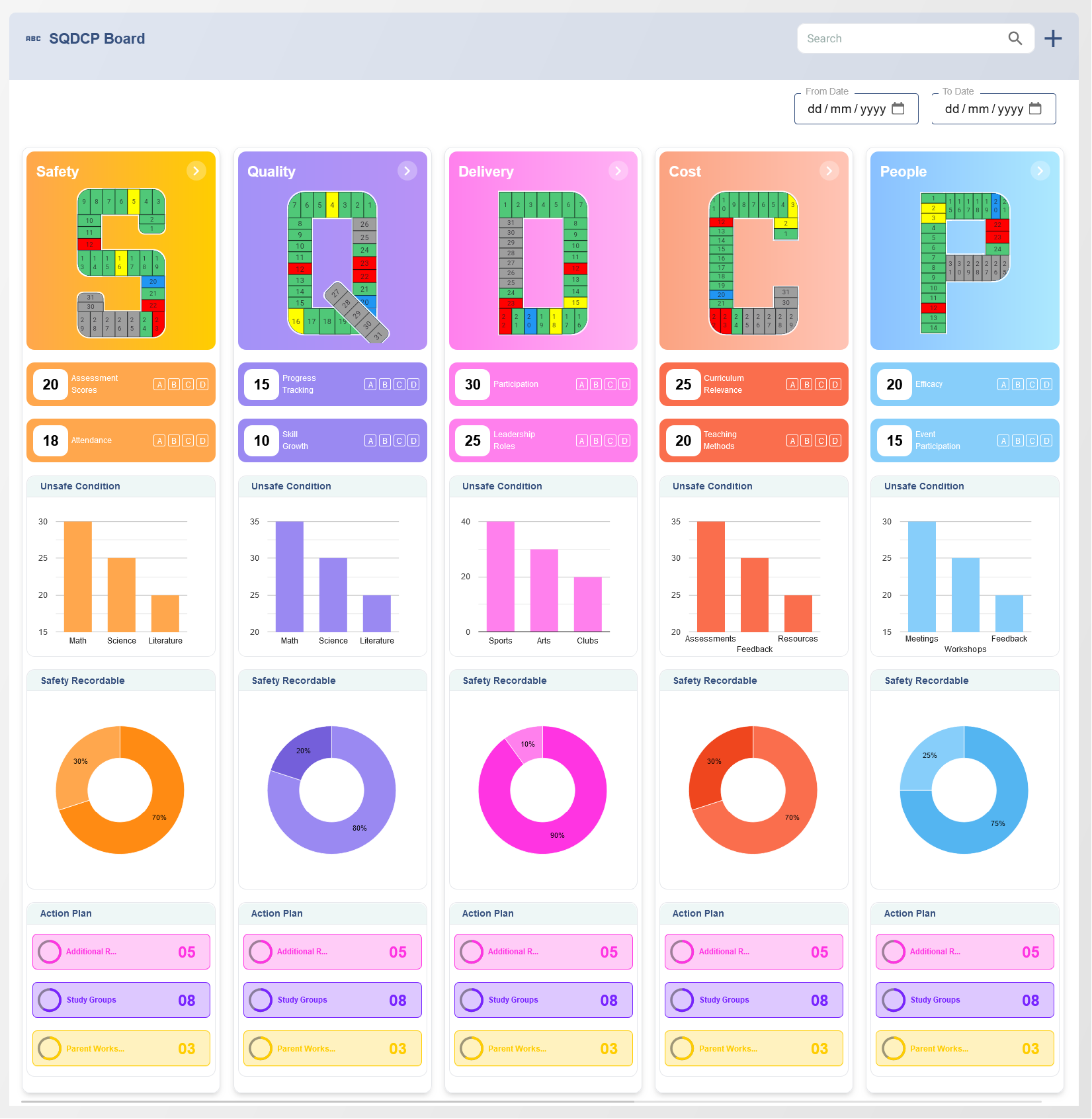
SQDCP boards are visual management tools used in manufacturing environments to monitor and improve five key performance indicators: Safety, Quality, Delivery, Cost, and People. These boards display critical data in real-time, enabling managers and employees to make informed decisions, spot potential problems, and address issues promptly. The five components of SQDCP are:
- Safety: Focuses on ensuring that the workplace is free from hazards, promoting a culture of safety and reducing accidents.
- Quality: Ensures that products meet established standards and specifications, minimizing defects and improving overall product quality.
- Delivery: Measures the ability to meet production schedules, ensuring timely delivery of products to customers.
- Cost: Monitors production costs, looking for opportunities to reduce waste and optimize resource utilization.
- People: Focuses on employee engagement, training, and development to ensure that the workforce is skilled, motivated, and aligned with company goals.
The SQDCP approach integrates these five elements into a unified system, allowing teams to take a holistic view of manufacturing performance and improve each area simultaneously. Using these boards, companies can ensure a balanced focus on all critical areas to drive continuous improvement and operational excellence.
2. Key Features of SQDCP Boards
SQDCP boards are designed to provide clear, visual information that is easy to understand and act upon. Some of the key features of these boards include:
- Real-Time Data Display: SQDCP boards provide live updates on safety, quality, delivery, cost, and people metrics. This enables quick decision-making and immediate corrective actions when performance deviates from targets.
- Color-Coding: These boards often use color coding to represent different levels of performance. For example, green may indicate a good performance, yellow might indicate a need for attention, and red highlights areas that require immediate intervention.
- Visual Indicators: The boards typically include visual indicators such as graphs, charts, and trend lines to illustrate performance over time. This helps identify patterns and provides a clear picture of performance fluctuations.
- Daily or Weekly Updates: SQDCP boards are updated regularly, either daily or weekly, depending on the company’s needs. Frequent updates ensure that the team is always informed and can make adjustments as necessary.
- Employee Involvement: These boards often encourage employee participation, where workers contribute data, report issues, and suggest improvements. This fosters a sense of ownership and accountability among staff.
3. Benefits of Using SQDCP Boards
The use of SQDCP boards in manufacturing environments provides several benefits that contribute to overall operational efficiency:
- Improved Communication: SQDCP boards enhance communication across all levels of the manufacturing floor by providing clear, visual representations of performance metrics. This transparency ensures that all employees are aligned with company goals and are aware of their role in achieving them.
- Faster Problem Resolution: With real-time data available, managers and teams can quickly identify and resolve issues. Whether it’s a safety concern, quality problem, or delivery delay, the board enables immediate corrective actions, minimizing downtime and preventing escalation.
- Increased Accountability: When employees see performance metrics displayed on SQDCP boards, it holds everyone accountable for their contributions. Each team member becomes aware of how their actions impact the overall success of the organization, which leads to better performance and motivation.
- Enhanced Continuous Improvement: The SQDCP methodology promotes continuous improvement by regularly reviewing and addressing performance issues. By tracking key metrics, companies can identify trends, set goals, and implement solutions to optimize processes over time.
- Better Decision-Making: SQDCP boards provide management with a clear, data-driven overview of operations, helping them make informed decisions. With accurate, real-time information, managers can prioritize actions, allocate resources efficiently, and ensure that manufacturing goals are being met.
4. Implementing SQDCP Boards in Manufacturing
To successfully implement SQDCP boards in a manufacturing environment, it’s important to follow a structured approach. Here’s a step-by-step guide to implementing these boards effectively:
- Define Key Metrics: Begin by identifying the key performance indicators (KPIs) that will be tracked on the SQDCP board. These should align with your overall manufacturing goals and provide actionable insights.
- Select the Right Board Format: Choose a board format that works best for your team and manufacturing environment. This could be a physical whiteboard, digital dashboard, or a combination of both, depending on your needs and resources.
- Set Clear Targets: Establish clear performance targets for each of the five areas (Safety, Quality, Delivery, Cost, and People). These targets should be realistic, measurable, and aligned with your company’s strategic objectives.
- Involve Employees: Engage employees in the process by encouraging them to participate in tracking, updating, and analyzing the data. Involving the workforce fosters a sense of ownership and encourages collaboration.
- Review and Adjust Regularly: The SQDCP board should be reviewed regularly, either on a daily or weekly basis. Managers and teams should assess performance, identify areas for improvement, and make adjustments to achieve better results.
5. Overcoming Challenges in Using SQDCP Boards
While SQDCP boards offer numerous benefits, there are also challenges that manufacturers must address to ensure their effectiveness:
- Data Accuracy: Ensuring the accuracy and consistency of the data displayed on the boards is critical. Regular audits and checks should be conducted to verify that the information being tracked is reliable.
- Employee Resistance: Some employees may resist change or be reluctant to adopt the SQDCP system. It’s important to provide training, highlight the benefits of the system, and involve staff in the decision-making process to gain their buy-in.
- Maintenance of the System: The SQDCP boards need to be maintained regularly, with updates made frequently to keep them relevant. If the boards become outdated or poorly managed, they may lose their effectiveness as a communication tool.
Enhancing Manufacturing Efficiency with SQDCP Boards
What is an SQDCP board?
An SQDCP board is a visual management tool used in manufacturing environments to track and monitor key performance indicators like Safety, Quality, Delivery, Cost, and People (SQDCP) to enhance operational efficiency.
How do SQDCP boards help in manufacturing efficiency?
By providing a clear visual representation of performance metrics, SQDCP boards help teams identify areas of inefficiency, take corrective actions, and maintain focus on continuous improvement.
What does SQDCP stand for?
SQDCP stands for Safety, Quality, Delivery, Cost, and People. These are the key performance areas monitored on an SQDCP board to drive improvements in manufacturing processes.
How do SQDCP boards track performance?
SQDCP boards display real-time data on performance indicators, allowing teams to visualize and track progress across different metrics. This helps in monitoring and improving each critical aspect of the production process.
What are the key elements of an SQDCP board?
Key elements of an SQDCP board include visual indicators for each of the five areas (Safety, Quality, Delivery, Cost, People), data tracking charts, goal-setting sections, and space for notes or action items.
How can SQDCP boards be integrated into existing manufacturing systems?
SQDCP boards can be integrated with existing manufacturing systems by linking them to production data sources such as ERP or MES systems. This ensures that the board is updated with real-time data for better decision-making.
Can SQDCP boards help reduce manufacturing waste?
Yes, by tracking key metrics like quality and cost, SQDCP boards can help identify sources of waste in production and provide insights into areas where improvements can be made to minimize waste.
How do SQDCP boards enhance quality control in manufacturing?
SQDCP boards help enhance quality control by providing a visual representation of quality metrics, enabling quick identification of defects or deviations from standards, allowing for immediate corrective actions.
How are SQDCP boards used to monitor safety standards?
Safety metrics, such as incident reports or safety audits, are displayed on SQDCP boards, enabling teams to track safety performance, reduce hazards, and improve workplace safety over time.
What role do SQDCP boards play in continuous improvement efforts?
SQDCP boards support continuous improvement by providing transparent, real-time data that teams can use to identify problems, track performance, and implement corrective actions to drive operational excellence.
Can SQDCP boards be customized for different manufacturing processes?
Yes, SQDCP boards can be tailored to meet the specific needs of various manufacturing processes, with custom metrics and performance tracking aligned to industry-specific goals.
How does the use of SQDCP boards improve employee engagement?
By making performance metrics visible and allowing employees to actively participate in tracking and improving performance, SQDCP boards increase employee ownership and accountability, boosting engagement.
How often should an SQDCP board be updated in a manufacturing environment?
SQDCP boards should be updated regularly, ideally in real-time or at least daily, to ensure that the data reflects the most current manufacturing performance and that timely corrective actions can be taken.
What are the benefits of using SQDCP boards over traditional management methods?
SQDCP boards provide a visual and immediate way to assess and act on performance, making them more effective than traditional methods that rely on reports or meetings, which can delay decision-making and corrective actions.
How can SQDCP boards be used to monitor production goals?
SQDCP boards track production goals by displaying progress towards key metrics like delivery schedules, cost targets, and quality standards, enabling teams to stay focused on meeting their objectives.