What Is a Balanced Scorecard and Why It Matters for Operational Excellence
Understanding the Balanced Scorecard
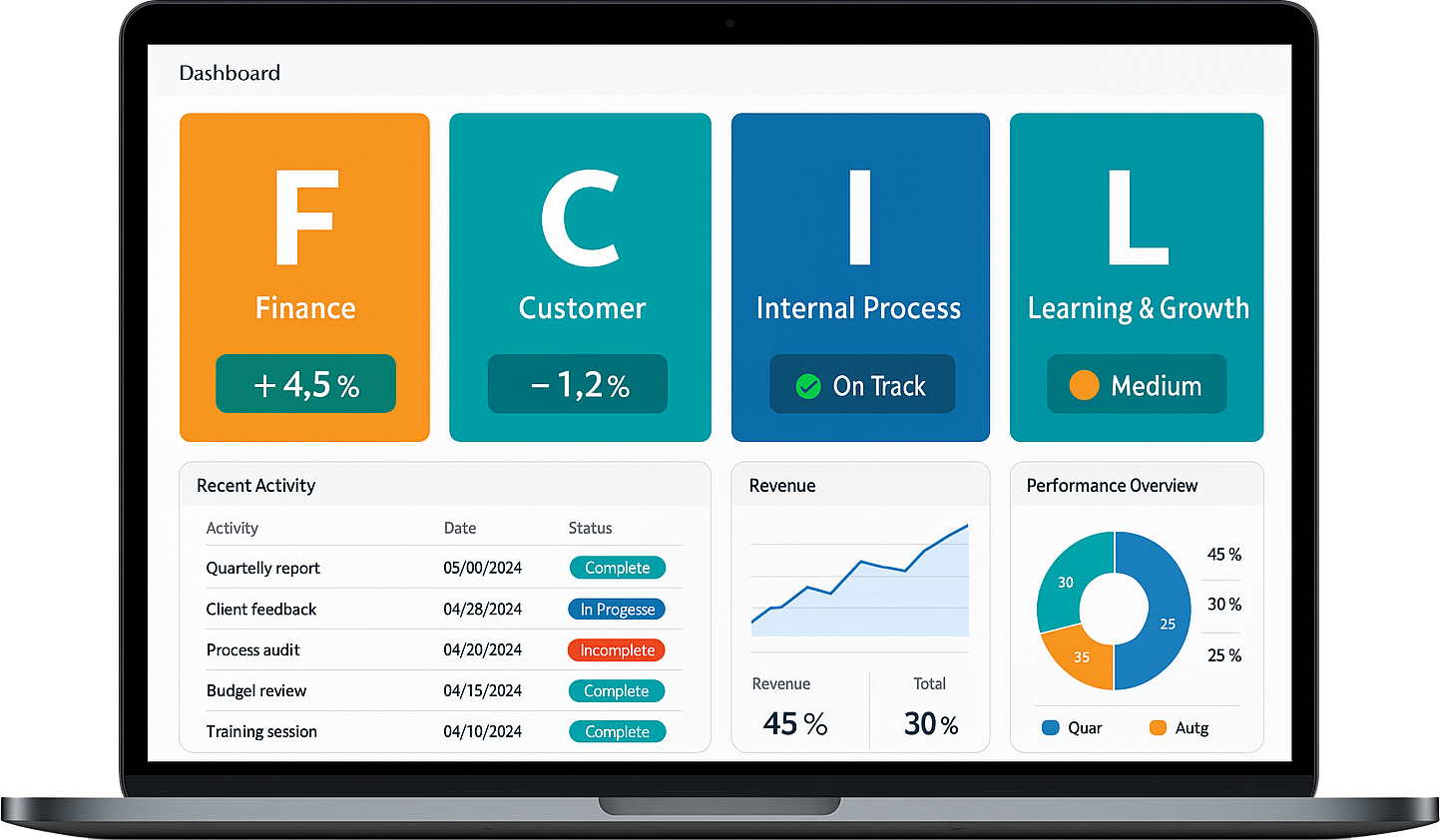
A Balanced Scorecard is a strategic management tool that helps organisations measure and improve performance across multiple areas. It goes beyond financial metrics to include customer satisfaction, internal processes, and learning and growth perspectives. This holistic approach ensures that all aspects of the business contribute to achieving strategic goals.
Linking Strategy to Daily Operations
The balanced scorecard translates high-level organisational strategy into actionable objectives and measurable key performance indicators (KPIs). By linking strategy to daily operations, teams can focus on the tasks that have the greatest impact on overall performance. This alignment helps maintain consistency across departments and ensures that resources are used effectively.
Enhancing Decision-Making
By providing a clear view of performance across multiple perspectives, a Balanced Scorecard enables managers to make informed decisions. It highlights areas of strength, identifies underperforming processes, and supports prioritisation of initiatives. This insight allows teams to address challenges proactively and optimise operations for better results.
Driving Operational Excellence
Implementing a balanced scorecard fosters accountability, continuous improvement, and efficiency. Teams can monitor progress in real time, adjust strategies as needed, and ensure that all efforts contribute to organisational objectives. This structured approach helps organisations achieve operational excellence, improve productivity, and deliver consistent value to customers.
How Scorecards Align Daily Activities with Strategic Goals
Understanding the Role of Scorecards
Scorecards are powerful tools that connect an organisation’s strategic objectives with day-to-day operations. By defining key performance indicators (KPIs) and measurable goals, scorecards provide a clear framework for employees to understand how their daily tasks contribute to overall business success.
Translating Strategy into Action
Scorecards break down high-level strategies into actionable tasks. Each department or team can see which activities directly impact key objectives, ensuring that efforts are focused on priorities that drive results. This translation from strategy to action helps prevent misalignment and wasted resources.
Tracking Performance and Progress
Through regular monitoring of KPIs, scorecards provide real-time insights into performance. Employees and managers can track progress, identify gaps, and adjust activities as needed. This visibility ensures that everyone is aware of their contribution to organisational goals and can make informed decisions to stay on track.
Promoting Accountability and Continuous Improvement
By linking daily activities to strategic goals, scorecards foster accountability across all levels of the organisation. Teams understand their responsibilities and can take ownership of results. Additionally, continuous monitoring allows for ongoing improvements, helping organisations optimise workflows, enhance efficiency, and maintain alignment with strategic objectives.
Tracking KPIs Across Financial, Customer, Internal, and Learning Perspectives
Understanding the Four Perspectives
Tracking key performance indicators (KPIs) across multiple perspectives ensures a holistic view of organisational performance. The financial perspective focuses on revenue, costs, and profitability. The customer perspective measures satisfaction, retention, and engagement. Internal processes track efficiency, quality, and operational performance, while the learning and growth perspective monitors employee development, training, and innovation. Together, these perspectives provide a complete picture of organisational health.
Financial Perspective
Monitoring financial KPIs helps organisations assess profitability and resource allocation. Real-time tracking allows managers to identify trends, control costs, and make data-driven decisions that support strategic objectives. This perspective ensures that financial goals are met while maintaining operational efficiency.
Customer Perspective
Tracking customer-related KPIs provides insights into satisfaction levels, loyalty, and service effectiveness. Organisations can adjust strategies to improve customer experience, strengthen relationships, and boost retention. Data-driven insights help identify areas where customer expectations are not being met and drive targeted improvements.
Internal Processes and Learning Perspectives
Internal process KPIs monitor workflow efficiency, quality standards, and productivity, highlighting areas for operational improvement. Learning and growth KPIs track employee skills, training progress, and innovation initiatives, ensuring the organisation remains adaptive and competitive. By monitoring these areas, organisations can foster continuous improvement and long-term success.
Visualising Performance Data for Better Decision-Making
Understanding the Importance of Data Visualisation
Visualising performance data transforms complex information into clear, actionable insights. Instead of relying on spreadsheets and lengthy reports, organisations can use visual tools such as dashboards, charts, and graphs to quickly understand performance trends. This approach helps managers and teams make informed decisions with greater speed and accuracy.
Enhancing Clarity and Focus
Data visualisation highlights key metrics, patterns, and anomalies, making it easier to identify areas that require attention. Teams can focus on critical issues rather than sifting through large volumes of raw data. This clarity enables prioritisation of tasks, better allocation of resources, and timely corrective actions.
Supporting Strategic Decision-Making
Visual dashboards allow leaders to see performance across financial, customer, internal process, and learning perspectives. By providing a holistic view, decision-makers can assess how initiatives impact overall objectives. Trends and insights become immediately apparent, helping organisations adjust strategies proactively and align operations with goals.
Driving Efficiency and Accountability
With visualised data, teams can monitor progress in real time, track KPIs, and take responsibility for outcomes. Managers gain transparency into performance at all levels, while employees understand how their work contributes to organisational success. This approach encourages accountability, improves collaboration, and supports continuous improvement, ultimately leading to better decision-making and stronger overall performance.
Using Balanced Scorecards to Identify Gaps Between Strategy and Execution
Understanding Strategy-Execution Gaps
Many organisations struggle to translate strategic goals into effective daily operations. Gaps between strategy and execution can lead to missed targets, inefficiencies, and wasted resources. Balanced scorecards provide a structured framework to identify and address these gaps by linking high-level objectives with measurable performance indicators.
Tracking Key Performance Indicators
Balanced scorecards track KPIs across financial, customer, internal process, and learning and growth perspectives. By monitoring these metrics, managers can detect areas where performance does not align with strategic goals. This visibility helps identify underperforming initiatives, misallocated resources, or inefficient processes that hinder organisational success.
Analysing Performance and Making Adjustments
Using the data from balanced scorecards, organisations can analyse trends, pinpoint problem areas, and understand why certain objectives are not being met. Managers can then implement corrective actions, reallocate resources, or adjust strategies to close the gap between intended outcomes and actual results. This ensures that daily activities contribute effectively to overall goals.
Enhancing Alignment and Accountability
Balanced scorecards promote alignment by making strategic priorities clear to all teams. Employees understand how their work impacts organisational objectives, while managers can hold teams accountable for performance. By continuously monitoring progress and addressing gaps, organisations can improve efficiency, enhance operational effectiveness, and achieve long-term strategic success.
Enhancing Team Accountability with Transparent Metrics
Understanding Transparent Metrics
Transparent metrics provide a clear view of team performance and responsibilities. When employees can see how their work impacts organisational goals, it promotes accountability and encourages consistent effort. Transparent metrics also help managers monitor progress and make informed decisions to improve overall performance.
Tracking Performance in Real Time
By using tools that track key performance indicators (KPIs) in real time, organisations can ensure that team members stay aware of their responsibilities. Real-time data allows managers to identify bottlenecks, underperformance, or misaligned tasks promptly. This immediate feedback encourages proactive problem-solving and keeps teams on track.
Fostering Collaboration and Responsibility
Transparent metrics support collaboration by making goals and progress visible across departments. Teams understand how their roles connect to broader objectives, fostering shared responsibility and alignment. Employees can take ownership of their tasks, and managers can provide support or guidance where needed, improving overall efficiency.
Driving Continuous Improvement
With transparent metrics, organisations can identify areas for improvement and implement targeted interventions. Teams can adjust workflows, optimise processes, and prioritise high-impact activities based on clear performance insights. This approach strengthens accountability, encourages data-driven decision-making, and ensures that teams consistently contribute to strategic goals, enhancing long-term success.
Customising Scorecards to Fit Your Organisation’s Strategic Priorities
Understanding Customisable Scorecards
Customisable scorecards allow organisations to tailor performance tracking tools to their unique strategic priorities. By defining key objectives, selecting relevant KPIs, and focusing on critical areas, businesses can ensure that their scorecards reflect what truly matters for success. This tailored approach supports better alignment between strategy and daily operations.
Aligning Metrics with Strategic Goals
Custom scorecards translate high-level strategies into measurable indicators. Organisations can select KPIs that directly reflect their financial, customer, internal process, and learning and growth priorities. This alignment ensures that teams focus on initiatives that drive meaningful outcomes and contribute to overall business objectives.
Enhancing Visibility and Decision-Making
By customising scorecards, managers gain clear visibility into performance across departments and initiatives. Tailored dashboards highlight progress, identify gaps, and provide actionable insights. Teams can make data-driven decisions, adjust workflows, and prioritise tasks that align with strategic priorities, improving efficiency and effectiveness.
Supporting Continuous Improvement
Customised scorecards foster accountability and continuous improvement by monitoring outcomes against organisational goals. Teams understand their impact on overall strategy and can implement changes to optimise performance. Over time, this approach enables organisations to remain agile, enhance operational effectiveness, and achieve long-term strategic success.
Linking Projects and Initiatives to Measurable Objectives
Understanding the Importance of Alignment
Linking projects and initiatives to measurable objectives ensures that every effort contributes to the organisation’s strategic goals. Without clear connections, resources may be wasted on activities that do not drive meaningful outcomes. Measurable objectives provide clarity, focus, and direction for teams, enabling them to prioritise tasks effectively.
Defining Clear Objectives
Each project or initiative should have well-defined objectives with specific, quantifiable outcomes. By setting measurable targets, teams can track progress and evaluate success. Objectives may include key performance indicators (KPIs) related to financial performance, customer satisfaction, process efficiency, or learning and growth, depending on organisational priorities.
Monitoring Progress and Performance
By linking initiatives to measurable objectives, organisations can monitor progress in real time. Managers can assess whether projects are on track, identify bottlenecks, and take corrective actions as needed. This visibility ensures accountability and allows teams to make data-driven decisions that improve performance and outcomes.
Driving Strategic Impact
Aligning projects with measurable objectives ensures that all activities contribute directly to strategic goals. Teams understand how their work affects organisational success, fostering accountability and motivation. Over time, this approach supports continuous improvement, optimises resource allocation, and enhances overall performance, helping the organisation achieve its long-term vision efficiently and effectively.
How Digital Scorecards Facilitate Continuous Improvement
Understanding Digital Scorecards
Digital scorecards are modern tools that track and visualise organisational performance across key areas. By consolidating data from various sources into an interactive dashboard, they provide real-time insights that help teams understand how their actions impact overall goals. This transparency forms the foundation for continuous improvement.
Monitoring Key Performance Indicators
Digital scorecards allow organisations to track KPIs in financial, customer, internal process, and learning and growth perspectives. Regular monitoring highlights trends, identifies areas of underperformance, and ensures that critical metrics are always visible. Teams can quickly recognise deviations from targets and take action to address them.
Driving Informed Decision-Making
With real-time data and visualisation, digital scorecards enable managers to make informed decisions. Insights from the dashboard help prioritise initiatives, optimise workflows, and allocate resources effectively. Teams gain clarity on which tasks will have the greatest impact, promoting strategic alignment and operational efficiency.
Fostering a Culture of Continuous Improvement
By providing regular feedback and performance insights, digital scorecards encourage ongoing evaluation and refinement of processes. Employees can track progress, identify opportunities for improvement, and implement changes proactively. This approach strengthens accountability, enhances productivity, and ensures that the organisation continuously evolves to meet strategic objectives effectively.
Real-Time Insights: Making Quick Decisions to Drive Efficiency
Understanding Real-Time Insights
Real-time insights provide immediate visibility into organisational performance, allowing managers and teams to respond quickly to changing conditions. By monitoring key metrics as they happen, businesses can identify issues, track progress, and seize opportunities without delay, enhancing overall efficiency.
Enhancing Operational Responsiveness
With real-time data, teams can make faster, more informed decisions. Whether it is adjusting production schedules, reallocating resources, or addressing bottlenecks, immediate access to performance metrics enables managers to act decisively. This responsiveness reduces downtime, prevents errors, and ensures that operations remain aligned with strategic goals.
Supporting Data-Driven Decision Making
Real-time insights provide actionable information across financial, customer, internal process, and learning perspectives. By visualising performance through dashboards and reports, managers can quickly identify trends and deviations. This data-driven approach ensures that decisions are based on facts rather than assumptions, improving accuracy and accountability.
Driving Continuous Improvement
By leveraging real-time insights, organisations can implement changes proactively, optimise workflows, and enhance productivity. Teams gain a clear understanding of which actions have the greatest impact, enabling continuous improvement. Over time, this approach fosters agility, strengthens operational efficiency, and helps organisations achieve long-term success by making every decision count.
Integrating Balanced Scorecards with ERP and Business Intelligence Tools
Understanding the Integration
Integrating Balanced Scorecards with ERP and business intelligence (BI) tools enables organisations to connect strategic planning with operational data. This integration ensures that performance metrics, financial data, and operational insights are available in one platform, providing a comprehensive view of organisational performance.
Enhancing Data Accuracy and Consistency
Linking scorecards with ERP systems ensures that key metrics are automatically updated with accurate and consistent data. Manual errors are reduced, and teams can rely on real-time information for tracking performance against strategic objectives. BI tools further enhance this by analysing data trends and presenting actionable insights.
Supporting Informed Decision-Making
With integrated systems, managers gain a complete picture of financial, customer, internal process, and learning and growth performance. Insights from BI dashboards allow leaders to identify gaps, forecast outcomes, and prioritise initiatives effectively. This connection between data and strategy enables informed, timely, and impactful decisions.
Driving Operational Efficiency and Strategic Alignment
The integration of scorecards with ERP and BI tools promotes operational efficiency by streamlining reporting, tracking progress, and highlighting performance gaps. Teams can align daily activities with strategic goals, monitor KPIs in real time, and adjust workflows to optimise outcomes. Over time, this approach enhances organisational agility, accountability, and long-term success.
Setting SMART Goals and Monitoring Progress Effectively
Understanding SMART Goals
SMART goals are specific, measurable, achievable, relevant, and time-bound objectives that provide clear direction for teams and organisations. By setting SMART goals, businesses can focus on priorities, track performance accurately, and ensure that every effort contributes to strategic objectives. This structured approach improves clarity and accountability.
Defining Clear and Measurable Objectives
Specific and measurable objectives allow teams to understand exactly what needs to be achieved and how success will be evaluated. Clear targets eliminate ambiguity, helping employees focus on high-impact tasks. Metrics and KPIs associated with each goal provide tangible evidence of progress and success.
Tracking Progress in Real Time
Monitoring progress against SMART goals ensures that teams stay on track and identify challenges early. Real-time tracking tools and dashboards provide insights into performance, highlight deviations from expected outcomes, and support timely corrective actions. This transparency enhances accountability and encourages continuous improvement.
Aligning Goals with Organisational Strategy
SMART goals are most effective when aligned with the organisation’s broader strategic objectives. By linking daily tasks and initiatives to these goals, teams can prioritise work effectively and contribute directly to long-term success. Regular reviews and progress monitoring ensure that strategies remain on course, resources are optimised, and organisational performance continues to improve efficiently.
Encouraging Collaboration Across Departments Through Shared Metrics
Understanding the Role of Shared Metrics
Shared metrics provide a common framework for teams across different departments to work towards unified goals. By making performance indicators visible and accessible, organisations create a sense of shared responsibility and encourage collaboration. Teams can see how their work impacts other departments and the organisation as a whole.
Aligning Departments Around Common Goals
When departments use shared metrics, they gain clarity on how their objectives contribute to organisational priorities. This alignment reduces conflicts, minimises duplicated efforts, and ensures that resources are directed towards initiatives that deliver maximum value. Teams can coordinate activities more effectively, leading to smoother workflows and improved outcomes.
Facilitating Communication and Transparency
Shared metrics foster transparency by providing all teams with the same performance information. Regular reporting and dashboards allow employees to track progress, identify challenges, and share insights. Open communication around metrics encourages problem-solving, knowledge exchange, and collaboration, helping teams overcome obstacles and achieve collective success.
Driving Continuous Improvement
By using shared metrics, organisations can continuously monitor performance across departments and implement improvements based on data-driven insights. Collaboration becomes more focused and efficient, as teams understand their impact on broader goals. This approach enhances accountability, strengthens interdepartmental relationships, and supports long-term organisational growth through coordinated efforts.
Reviewing Scorecard Performance Regularly for Operational Excellence
Understanding the Importance of Regular Reviews
Regularly reviewing scorecard performance ensures that organisations stay aligned with strategic objectives. By evaluating key performance indicators (KPIs) consistently, managers can monitor progress, identify gaps, and take corrective actions before issues escalate. This proactive approach supports operational excellence and continuous improvement.
Monitoring Key Metrics Across Perspectives
Scorecards track performance across financial, customer, internal process, and learning and growth perspectives. Regular reviews of these metrics help organisations understand overall health, detect underperformance, and pinpoint areas that require attention. This holistic view ensures that all departments work cohesively towards shared goals.
Facilitating Data-Driven Decisions
Frequent scorecard assessments provide managers with actionable insights, enabling informed decision-making. By analysing trends and performance patterns, organisations can prioritise initiatives, optimise workflows, and allocate resources effectively. This data-driven approach reduces guesswork and improves operational efficiency.
Driving Accountability and Continuous Improvement
Regular review of scorecard performance fosters accountability by highlighting individual and team contributions to strategic objectives. Teams can adjust their efforts based on real-time feedback, enhancing productivity and alignment with organisational goals. Over time, this process encourages continuous improvement, strengthens performance culture, and drives long-term operational excellence.
Case Studies: Organisations Achieving Strategic Alignment and Efficiency with Scorecards
Aligning Strategy with Daily Operations
Several organisations have successfully used scorecards to bridge the gap between strategy and daily operations. By linking key performance indicators (KPIs) to strategic objectives, these companies ensured that every team member understood their role in achieving organisational goals. This alignment allowed departments to prioritise high-impact tasks and eliminate activities that did not contribute to overall success.
Improving Operational Efficiency
In one example, a manufacturing organisation implemented Balanced Scorecards to monitor productivity, quality, and resource utilisation. By regularly reviewing performance data, managers identified bottlenecks, streamlined workflows, and optimised resource allocation. The result was increased efficiency, reduced downtime, and improved output, all of which contributed to stronger operational performance.
Enhancing Decision-Making and Accountability
Another organisation used scorecards to provide transparent metrics across financial, customer, internal process, and learning perspectives. Teams could track progress, detect underperformance, and make data-driven decisions. This transparency fostered accountability, ensured alignment with strategic priorities, and allowed managers to take timely corrective actions, enhancing overall organisational effectiveness.
Driving Continuous Improvement
Across these case studies, scorecards enabled continuous improvement by highlighting gaps between planned and actual performance. Organisations could implement adjustments quickly, refine strategies, and maintain alignment with long-term objectives. By integrating scorecards into daily operations, these companies achieved sustainable efficiency gains, strengthened collaboration, and realised their strategic vision effectively.