Why Digital Transformation Through Lean Industry 4.0 Matters
Common Challenges in Digital Transformation
Digital transformation initiatives often fail not because of technology limitations, but because organisations implement advanced tools without aligning them with operational processes. In many industries, companies invest in automation, data analytics, and smart manufacturing technologies without first establishing efficient workflows. Lean Industry 4.0 addresses this challenge by combining digital innovation with lean principles such as waste reduction, continuous improvement, and value-driven processes. Without clearly defined production flows and operational priorities, digital systems may only collect data rather than improving productivity or decision-making.
Integrating Lean Principles with Industry 4.0 Technologies
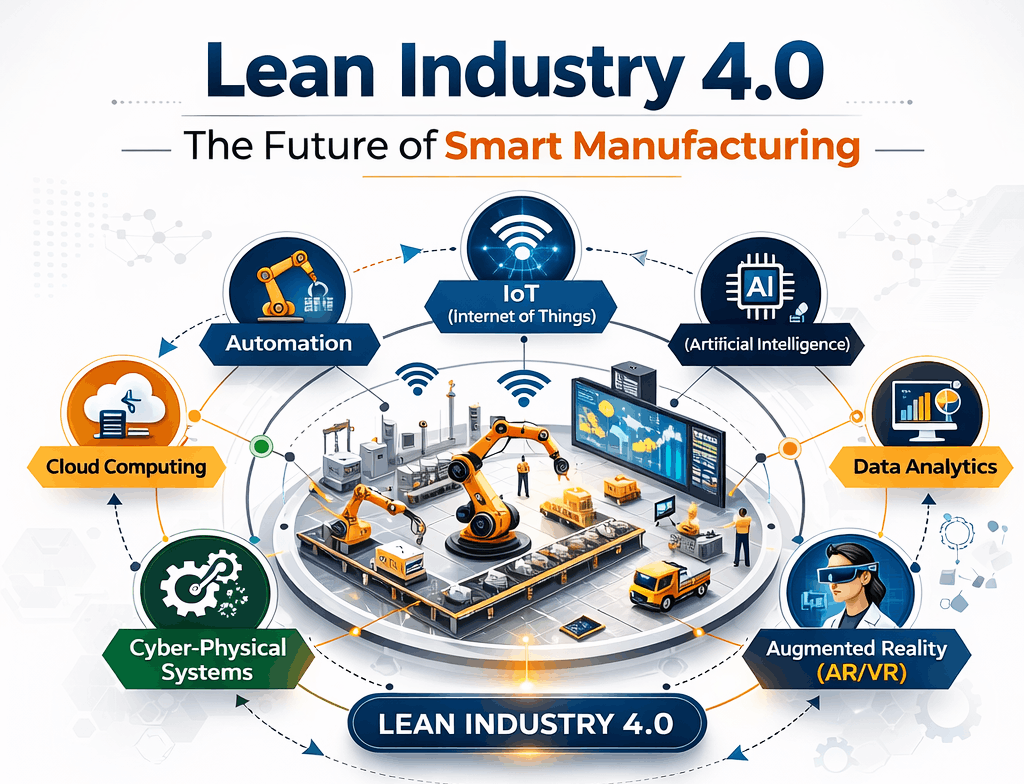
Successful digital transformation begins with integrating lean thinking into digital strategies. Lean Industry 4.0 uses technologies such as IoT sensors, real-time data analytics, artificial intelligence, and cloud platforms to monitor production processes and identify inefficiencies. These technologies provide real-time insights into equipment performance, production schedules, and resource utilisation. When combined with lean methodologies, organisations can quickly detect waste, reduce downtime, and optimise workflow efficiency across operations.
Enhancing Workforce Collaboration and Operational Visibility
Digital tools in Lean Industry 4.0 improve communication and collaboration across departments. Smart dashboards and connected systems allow managers and employees to track performance, monitor production status, and identify operational issues instantly. Real-time visibility ensures that teams can respond quickly to disruptions, adjust schedules, and maintain smooth workflow coordination. By connecting employees, machines, and data systems, organisations create a more transparent and responsive operational environment.
Achieving Long-Term Operational Excellence
The long-term success of Lean Industry 4.0 depends on continuous improvement, employee engagement, and strategic leadership. Organisations must train their workforce to use digital tools effectively while maintaining lean thinking in daily operations. Data-driven insights, predictive maintenance, and automated monitoring systems help companies improve efficiency and reduce operational risks. When lean culture and digital innovation work together, organisations can achieve sustainable productivity improvements and maintain a strong competitive advantage in the modern industrial landscape.
How Lean Principles Support Digital Transformation in Industry 4.0
Understanding the Role of Lean Thinking
Lean principles focus on eliminating waste, improving efficiency, and delivering greater value to customers. When organisations begin their digital transformation journey, lean thinking provides a structured approach for improving operational processes before introducing advanced technologies. By analysing workflows and identifying inefficiencies, businesses can create streamlined systems that are easier to digitise. Combining lean methodologies with Industry 4.0 technologies allows companies to build smarter and more efficient operations.
Reducing Process Complexity
Lean principles encourage organisations to simplify workflows and remove unnecessary steps from production or service processes. This simplification makes digital systems more effective because fewer variables need to be managed. When processes are clear and well structured, digital tools such as automation platforms and analytics systems can deliver more accurate insights. Simplified operations also improve adaptability and reduce implementation risks.
Improving Continuous Improvement Practices
Continuous improvement is a core element of lean methodology. Digital technologies support this approach by providing real-time data that highlights inefficiencies and opportunities for optimisation. Managers can quickly analyse performance metrics and implement improvements based on accurate information. This combination of lean thinking and digital intelligence strengthens operational performance.
Strengthening Organisational Efficiency
When lean principles guide digital transformation, organisations achieve higher productivity and better resource utilisation. Employees can focus on value-adding activities while technology manages routine monitoring and analysis tasks. This balanced approach ensures that Industry 4.0 initiatives create meaningful operational improvements rather than simply introducing new technologies.
The Role of Leadership in Driving Lean Digital Transformation
Why Leadership Commitment Matters
Successful digital transformation requires strong leadership commitment. Leaders define the strategic vision for combining lean methodologies with Industry 4.0 technologies. Their involvement ensures that transformation initiatives remain aligned with organisational goals. When leaders actively support digital innovation, employees gain confidence in the change process.
Creating a Clear Transformation Strategy
Executives play a critical role in defining how digital technologies will improve operational processes. A clear transformation strategy helps organisations prioritise projects and allocate resources effectively. Leaders also ensure that digital initiatives support productivity improvements and long-term business growth. This strategic clarity reduces confusion during implementation.
Encouraging Collaboration Across Departments
Leadership engagement promotes collaboration between technical teams, operational staff, and management. By encouraging open communication and cross-functional cooperation, leaders help ensure that digital transformation projects address real operational needs. Collaboration improves problem solving and accelerates implementation.
Building Trust in Digital Innovation
Employees are more likely to adopt new technologies when leaders actively promote their benefits. Regular communication about progress and success stories strengthens organisational confidence in digital transformation. Leadership involvement also reinforces accountability and encourages consistent system usage.
Aligning People, Processes, and Technology for Lean Industry 4.0
Creating Balanced Transformation Strategies
Digital transformation is most effective when people, processes, and technology are aligned. Organisations must ensure that new digital tools support existing workflows and employee responsibilities. When these elements work together, operational performance improves significantly. Balanced strategies reduce disruption during implementation.
Designing Efficient Operational Processes
Before implementing Industry 4.0 technologies, organisations should review and optimise their operational processes. Lean analysis helps identify inefficiencies and remove unnecessary activities. Streamlined processes make digital tools easier to integrate and manage. Efficient workflows also increase productivity.
Empowering Employees with Technology
Employees play a vital role in successful digital transformation. Providing them with intuitive tools and proper training ensures they can use new technologies effectively. Empowered teams are more likely to adopt digital solutions and contribute to continuous improvement initiatives.
Ensuring Sustainable Digital Adoption
Alignment between people, processes, and technology ensures long-term sustainability of digital transformation initiatives. Organisations that maintain this balance experience smoother implementation and stronger operational performance.
Key Industry 4.0 Technologies Enabling Smart Manufacturing
Introduction to Smart Manufacturing
Industry 4.0 technologies enable organisations to transform traditional manufacturing systems into intelligent, connected environments. These technologies provide real-time insights into production activities and equipment performance. Smart manufacturing improves operational efficiency and flexibility.
Internet of Things (IoT)
IoT sensors connect machines, equipment, and systems to digital platforms that collect operational data. This connectivity allows managers to monitor production processes and detect inefficiencies instantly. IoT-based monitoring improves productivity and reduces downtime.
Artificial Intelligence and Data Analytics
AI and advanced analytics enable organisations to analyse large volumes of production data. These insights help identify patterns, predict equipment failures, and optimise production schedules. AI-driven analysis improves decision-making accuracy.
Cloud and Automation Technologies
Cloud platforms allow organisations to store and analyse operational data securely. Automation technologies streamline repetitive tasks and improve production consistency. Together, these systems create efficient and responsive manufacturing environments.
Using Digital Tools to Identify and Eliminate Operational Waste
Understanding Operational Waste
Operational waste includes unnecessary delays, inefficient processes, excess inventory, and resource underutilisation. Lean methodologies aim to eliminate these inefficiencies to improve productivity. Digital technologies make waste identification faster and more accurate.
Using Data for Waste Detection
Digital monitoring systems collect real-time operational data that highlights inefficiencies. Managers can analyse production performance and identify bottlenecks quickly. Accurate insights allow organisations to respond immediately.
Improving Workflow Efficiency
Once inefficiencies are identified, organisations can redesign workflows to remove unnecessary steps. Automation and analytics tools help maintain consistent process performance. Improved workflows enhance operational productivity.
Maintaining Continuous Waste Reduction
Digital platforms allow organisations to track improvement initiatives and measure results. Continuous monitoring ensures that waste reduction remains an ongoing effort rather than a one-time project.
Developing Workforce Skills for a Digital Lean Environment
Preparing Employees for Digital Transformation
Employees must develop new skills to operate effectively in a digitally connected environment. Training programs should introduce staff to smart manufacturing technologies and data-driven decision-making practices.
Encouraging Digital Literacy
Digital literacy helps employees understand how technology supports operational processes. Workers who understand data dashboards and digital tools can contribute more effectively to improvement initiatives.
Supporting Continuous Learning
Technology evolves quickly, making continuous learning essential for maintaining workforce competence. Regular training ensures employees remain comfortable with new systems and tools.
Strengthening Team Adaptability
Adaptable teams respond more effectively to operational changes and technology updates. Organisations that invest in workforce development achieve stronger digital transformation outcomes.
Integrating Industry 4.0 Technologies with Existing Business Systems
Creating a Connected Digital Ecosystem
Integrating digital technologies with existing business systems improves operational efficiency. Data flows seamlessly between production platforms, planning systems, and analytics dashboards.
Enhancing Operational Visibility
Connected systems provide managers with a comprehensive view of operational activities. Real-time insights improve decision-making speed and accuracy.
Reducing Manual Data Entry
Automation eliminates repetitive manual updates and reduces the risk of errors. Employees can focus on strategic tasks rather than administrative activities.
Improving Workflow Coordination
Integrated systems allow departments to collaborate more effectively by sharing accurate operational data. This connectivity strengthens organisational performance.
Building a Culture of Continuous Improvement in the Digital Era
Encouraging Innovation
A culture of continuous improvement encourages employees to identify new ways to improve operational processes. Digital tools support this mindset by providing accurate performance insights.
Promoting Data-Driven Thinking
Employees learn to rely on data rather than assumptions when making decisions. This shift improves organisational efficiency.
Supporting Collaborative Improvement
Teams collaborate to analyse workflow performance and implement improvements. Shared responsibility strengthens organisational results.
Maintaining Long-Term Improvement
Continuous improvement ensures that digital transformation initiatives continue delivering value over time.
Using Data Analytics for Lean and Real-Time Decision Making
Turning Data into Insights
Modern organisations generate large volumes of operational data. Advanced analytics tools convert this data into actionable insights that support lean decision-making.
Improving Operational Planning
Data analysis reveals patterns in production performance, enabling managers to optimise schedules and resource allocation.
Enhancing Decision Accuracy
Real-time analytics allow organisations to respond quickly to operational challenges and maintain efficient workflows.
Strengthening Strategic Planning
Long-term data trends help leaders make informed strategic decisions for sustainable growth.
Real-Time Production Monitoring with Smart Digital Systems
Improving Operational Visibility
Smart monitoring systems provide instant updates on production activities and equipment performance.
Detecting Operational Issues Early
Real-time monitoring helps identify potential equipment failures and workflow disruptions before they impact productivity.
Supporting Proactive Maintenance
Predictive maintenance systems use operational data to schedule repairs before equipment fails.
Strengthening Production Efficiency
Continuous monitoring ensures consistent performance across manufacturing operations.
Overcoming Common Challenges in Lean Industry 4.0 Implementation
Managing Organisational Change
Digital transformation often requires significant changes to existing processes and work practices.
Addressing Technology Integration Issues
Integrating new digital systems with legacy infrastructure can present technical challenges.
Improving Workforce Readiness
Training programs help employees adapt to new technologies and workflows.
Ensuring Strategic Alignment
Clear strategic planning ensures that digital initiatives support long-term organisational goals.
Ensuring Data Accuracy and Reliability in Smart Manufacturing
Why Data Quality Matters
Accurate operational data is essential for reliable analytics and decision-making.
Automating Data Collection
Digital systems automatically capture data from connected equipment and sensors.
Monitoring Data Consistency
Regular validation processes help maintain data accuracy across digital platforms.
Training Employees in Data Responsibility
Employees should understand the importance of accurate data entry and system updates.
Tracking Operational Performance through Digital Metrics
Measuring Productivity
Digital dashboards allow managers to monitor productivity indicators in real time.
Analysing Workflow Efficiency
Performance metrics reveal inefficiencies and opportunities for improvement.
Supporting Continuous Improvement
Regular performance tracking ensures that improvement initiatives remain effective.
Improving Strategic Oversight
Leaders gain better visibility into organisational performance through digital reporting.
Measuring ROI of Digital Transformation through Lean Industry 4.0
Evaluating Investment Benefits
Digital transformation investments should deliver measurable operational improvements.
Tracking Productivity Gains
Organisations can measure improvements in efficiency, production output, and resource utilisation.
Reducing Operational Costs
Automation and data-driven optimisation help reduce waste and operational expenses.
Ensuring Long-Term Value
Lean Industry 4.0 strategies provide sustainable benefits through continuous improvement and innovation.