What Is Balanced Scorecard Software and Its Role in Business Integration
Connecting Strategy with Operations
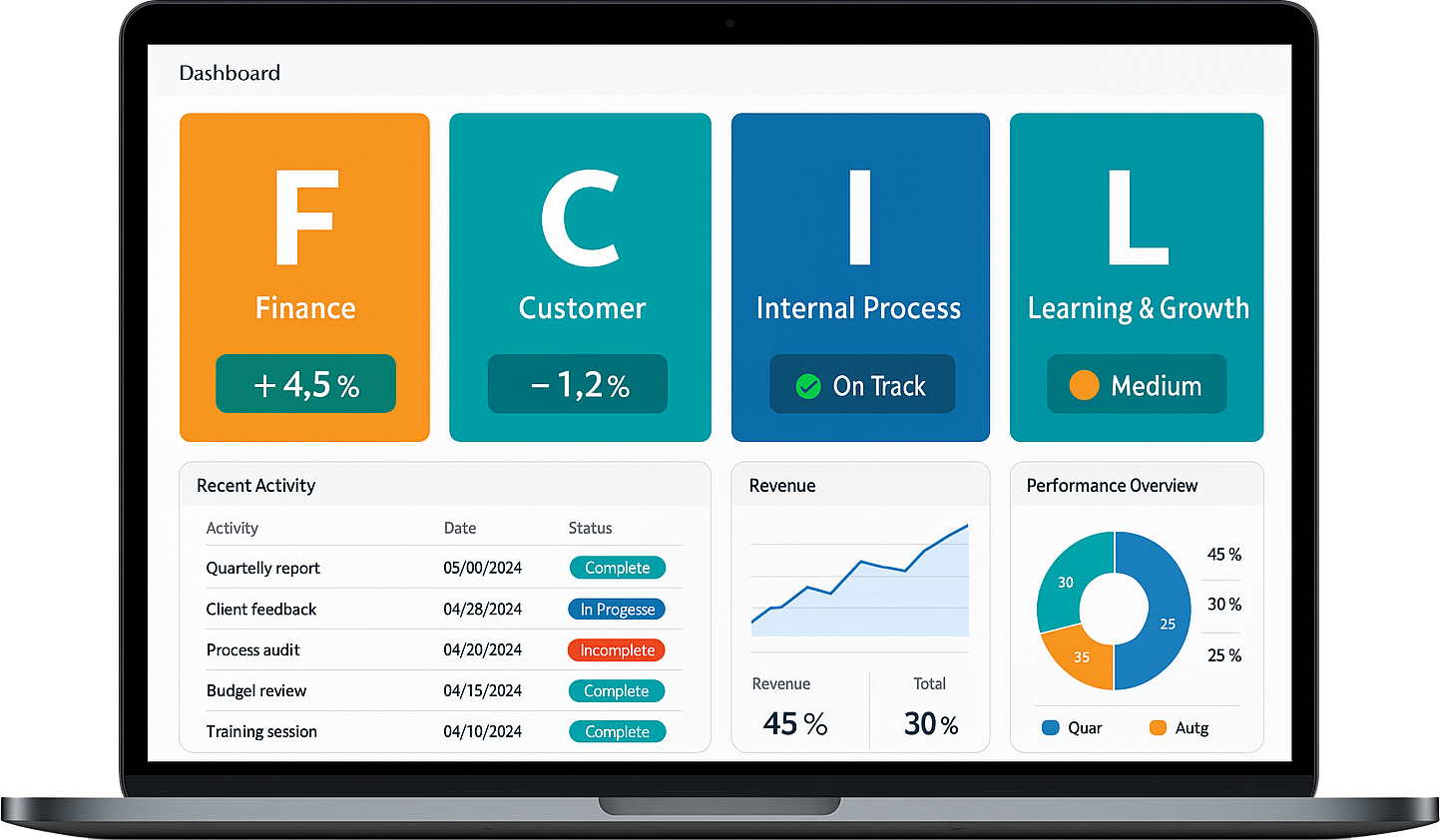
Balanced Scorecard (BSC) software plays a crucial role in integrating business processes with organisational strategy. It provides a framework to align daily operations with long-term objectives across financial, customer, internal process, and learning perspectives. By consolidating performance data from multiple departments, BSC software ensures that strategic initiatives are executed consistently throughout the organisation.
Facilitating Seamless Communication
Integration through BSC software allows teams to share real-time insights across departments. This visibility ensures that every part of the business understands how their activities contribute to overall goals. Communication of objectives, progress, and performance metrics becomes streamlined, improving collaboration and reducing silos.
Supporting Data-Driven Decisions
By consolidating key performance indicators and operational data, BSC software provides a comprehensive view of organisational performance. Leaders can make informed decisions, allocate resources effectively, and identify areas requiring improvement. This alignment between strategy and business operations ensures that strategic goals are not only defined but actively achieved.
Why Integrating BSC with ERP and CRM Systems Matters
Creating a Unified Data Ecosystem
Integrating BSC software with ERP and CRM systems consolidates performance, financial, and customer data into a single view. This unified ecosystem enables leaders to monitor business performance holistically, improving insights and reducing fragmented information across departments.
Enhancing Strategic Alignment
ERP and CRM integration ensures that operational processes and customer-focused activities are directly linked to strategic objectives. By aligning KPIs and performance metrics across systems, organisations can ensure consistent execution of strategy, improving efficiency and goal achievement.
Improving Decision-Making and Accountability
Integrated systems provide accurate, real-time data that supports timely decision-making. Managers can assess the impact of initiatives, track progress, and hold teams accountable for outcomes. This integration strengthens strategic execution and ensures that business objectives are consistently met.
Linking Strategic Goals Across ERP and CRM Platforms
Aligning KPIs Across Systems
BSC software enables organisations to link strategic goals with operational metrics in ERP and CRM platforms. Financial, process, and customer KPIs can be mapped to strategic objectives, ensuring that every system reflects progress toward overarching goals. This alignment reduces duplication and improves organisational focus.
Tracking Performance Across Functions
Connecting strategic objectives to ERP and CRM data allows leaders to track performance across departments in real time. Teams gain insight into how daily activities contribute to strategy, enabling proactive management and continuous improvement.
Strengthening Cross-Department Collaboration
When strategic goals are linked across systems, departments can collaborate more effectively. Shared visibility of metrics encourages coordination, ensures resources are optimised, and drives consistent execution of initiatives aligned with organisational priorities.
Enhancing Financial Reporting by Connecting BSC and ERP Data
Integrating Financial KPIs
Connecting BSC software with ERP systems enhances financial reporting by linking strategic objectives to financial performance. Metrics such as revenue, profitability, and cost efficiency can be monitored alongside operational and customer KPIs, providing a comprehensive view of business performance.
Providing Real-Time Insights
Integration allows leaders to access up-to-date financial data instantly. This real-time visibility helps in making informed decisions, identifying potential issues early, and adjusting strategies to maintain financial health and support organisational goals effectively.
Supporting Strategic Decision-Making
By combining financial data with broader strategic metrics, BSC software enables more accurate evaluation of initiatives. Leaders can assess ROI, allocate resources efficiently, and ensure financial strategies are aligned with overall business objectives, promoting sustainable growth.
Tracking Customer Metrics Through CRM Integration
Measuring Customer Satisfaction and Retention
Integrating BSC software with CRM systems allows organisations to monitor customer metrics such as satisfaction, loyalty, and retention. Tracking these indicators provides valuable insights into how customer-focused initiatives impact business objectives and overall strategic performance.
Linking Customer KPIs to Strategy
Customer data can be mapped to strategic goals to ensure that initiatives aimed at improving service, engagement, or market share are aligned with organisational priorities. This integration ensures that business decisions are informed by accurate, actionable customer insights.
Driving Continuous Improvement
CRM integration with BSC software enables timely identification of issues and trends affecting customer experience. Organisations can take corrective actions, implement improvements, and measure outcomes consistently, fostering a culture of customer-centric strategy execution.
Optimising Internal Processes with Combined BSC and ERP Insights
Identifying Inefficiencies
Combining BSC and ERP data provides a detailed view of internal processes. Organisations can identify bottlenecks, redundancies, and inefficiencies that hinder performance. This insight enables targeted interventions to streamline workflows, reduce costs, and improve operational effectiveness.
Aligning Processes with Strategy
ERP metrics combined with BSC KPIs ensure that internal processes are directly aligned with strategic objectives. Teams can prioritise initiatives that contribute most to organisational goals, ensuring that process improvements drive measurable strategic impact.
Monitoring and Sustaining Improvements
Continuous monitoring of process metrics allows organisations to assess the effectiveness of changes, implement corrective actions, and sustain high performance. This integration ensures that internal processes evolve to support strategy execution effectively.
Aligning Learning and Growth Metrics Across Systems
Tracking Employee Development
BSC software integrated with HR and ERP systems allows organisations to monitor learning and growth metrics across departments. Tracking training completion, skill development, and competency improvements ensures the workforce is prepared to support strategic objectives effectively.
Linking Growth Initiatives to Strategy
By connecting learning and growth KPIs to strategic goals, organisations can prioritise development programs that have the greatest impact on performance. This alignment ensures that workforce initiatives directly support organisational success and long-term strategy execution.
Fostering Continuous Improvement
Integrated systems provide insights into the effectiveness of learning initiatives. Organisations can identify gaps, refine development programs, and foster a culture of continuous learning, ensuring that employees are engaged, skilled, and aligned with strategic priorities.
Real-Time Performance Monitoring Through Integrated Data
Consolidating Data from Multiple Sources
Real-time performance monitoring is essential for agile decision-making. By integrating data from BSC, ERP, and CRM systems, organisations gain a holistic view of operations, finances, and customer outcomes. Consolidated data enables leaders to track KPIs across multiple perspectives simultaneously, ensuring a comprehensive understanding of performance.
Immediate Insights for Faster Action
Integrated systems provide live updates on key metrics, allowing managers to detect deviations from targets quickly. This visibility supports rapid corrective actions, ensuring that issues are addressed before they impact strategic objectives. Teams can monitor progress continuously, improving efficiency and responsiveness.
Enhancing Strategic Alignment
Real-time monitoring links operational performance to strategic goals, ensuring that daily activities remain aligned with organisational objectives. Teams can see how their contributions affect broader targets, fostering accountability, collaboration, and improved execution of strategic initiatives.
Driving Accountability Across Teams Using Unified Systems
Transparent Performance Tracking
Unified BSC, ERP, and CRM systems enable transparent performance tracking across teams and departments. By making KPIs and metrics visible in real time, employees understand how their actions impact strategic goals. This transparency fosters ownership, accountability, and alignment across the organisation.
Aligning Team Objectives with Organisational Goals
Linking individual and departmental KPIs to strategic objectives ensures that all teams are working towards common goals. Unified systems allow managers to monitor progress, identify gaps, and motivate employees to achieve targets, enhancing overall performance and goal achievement.
Promoting Collaboration and Coordination
Accountability is strengthened through cross-functional collaboration. Shared access to performance data encourages teams to work together, coordinate efforts, and make informed decisions. This collective responsibility drives improved results and strategic execution across the organisation.
Customising Dashboards to Combine ERP, CRM, and BSC Metrics
Creating Relevant and Actionable Views
Custom dashboards that integrate ERP, CRM, and BSC data allow users to focus on the most relevant KPIs. Teams can view combined metrics that reflect operational, financial, and customer performance, enabling informed and timely decision-making based on comprehensive insights.
Enhancing Visualisation and Usability
Dashboards can be tailored with charts, graphs, and indicators to improve readability and engagement. Visualising combined metrics simplifies complex data, helps employees interpret performance trends quickly, and supports strategic and operational actions effectively.
Supporting Organisational Alignment
Customised dashboards ensure that all departments see how their performance contributes to strategic goals. By aligning combined metrics with organisational priorities, dashboards enhance accountability, collaboration, and consistent execution of initiatives across teams.
Supporting Continuous Improvement (Kaizen) with Integrated Insights
Identifying Improvement Opportunities
Integrated BSC, ERP, and CRM data provides a detailed view of processes, customer interactions, and financial performance. Organisations can pinpoint inefficiencies and performance gaps, identifying areas where incremental improvements will have the greatest impact on outcomes.
Monitoring and Measuring Impact
Continuous improvement relies on feedback and measurement. Integrated insights allow organisations to track the results of improvement initiatives in real time. Teams can adjust strategies based on performance trends, ensuring that Kaizen efforts are aligned with organisational objectives.
Fostering a Culture of Continuous Learning
Visibility of integrated metrics encourages employees to engage in continuous improvement activities. By participating in Kaizen initiatives and monitoring progress, teams build a culture of learning, accountability, and consistent enhancement of processes across the organisation.
Reducing Data Silos and Improving Collaboration Across Departments
Centralising Performance Data
Data silos can hinder strategic execution and collaboration. Integrating BSC, ERP, and CRM systems consolidates data into a single source of truth, reducing duplication and inconsistencies. Teams can access accurate performance information easily, improving decision-making and coordination.
Encouraging Cross-Functional Collaboration
With shared access to integrated data, departments can align activities, share insights, and collaborate more effectively. Visibility into each team’s performance supports joint problem-solving and promotes accountability, leading to improved organisational efficiency.
Driving Strategic Alignment
Eliminating data silos ensures that all functions work toward common strategic objectives. Unified insights enable consistent tracking of KPIs and initiatives across departments, enhancing alignment and ensuring that organisational resources are directed toward achieving overarching goals.
Common Integration Challenges and How to Overcome Them
Data Inconsistencies and Compatibility Issues
Integrating BSC, ERP, and CRM systems can be challenging due to differences in data formats and reporting structures. Organisations can overcome this by standardising data definitions, ensuring compatibility, and using middleware tools to streamline data transfer and consolidation.
Resistance to Change and Adoption
Teams may be hesitant to adopt new integrated systems. Clear communication, training, and demonstration of benefits help overcome resistance. Involving users in dashboard design and workflow alignment increases adoption and maximises the value of integration.
Maintaining Data Accuracy and Security
Integration requires strong data governance. Establishing rules for data entry, validation, and access ensures accurate, secure information. Regular audits and monitoring maintain data integrity, supporting reliable reporting and informed decision-making across the organisation.
Measuring ROI and Business Impact of BSC-ERP-CRM Integration
Quantifying Financial Benefits
Integrated BSC, ERP, and CRM systems allow organisations to measure the return on investment of strategic initiatives. By connecting operational, financial, and customer metrics, leaders can assess improvements in revenue, cost efficiency, and overall financial performance.
Evaluating Operational and Strategic Impact
ROI measurement includes assessing productivity gains, process optimisations, and customer satisfaction improvements. Organisations can track how integration drives better strategic execution, enhances efficiency, and aligns daily operations with long-term goals.
Informing Future Investments
Insights from ROI and impact analysis guide decisions on further integration or optimisation initiatives. Leaders can prioritise high-value projects, allocate resources effectively, and reinforce accountability, ensuring that integration contributes to sustainable organisational success.
Building a High-Performance, Data-Driven Organisational Culture
Embedding Data in Decision-Making
Integration of BSC, ERP, and CRM systems promotes a culture where data drives decisions. Employees have access to actionable insights, enabling them to make informed choices and take ownership of outcomes that impact strategic objectives.
Encouraging Accountability and Collaboration
Visible performance metrics foster accountability, while shared dashboards encourage cross-departmental collaboration. Teams can work together more effectively, leveraging data to align actions with organisational goals and improve overall results.
Driving Continuous Improvement
A data-driven culture supports ongoing learning and improvement. Employees are motivated to identify opportunities, track results, and implement enhancements consistently. This approach strengthens performance, strategic execution, and sustainable business growth.