What is SQCDP and Its Role in Boosting OEE?
Introduction to SQCDP in Operational Excellence
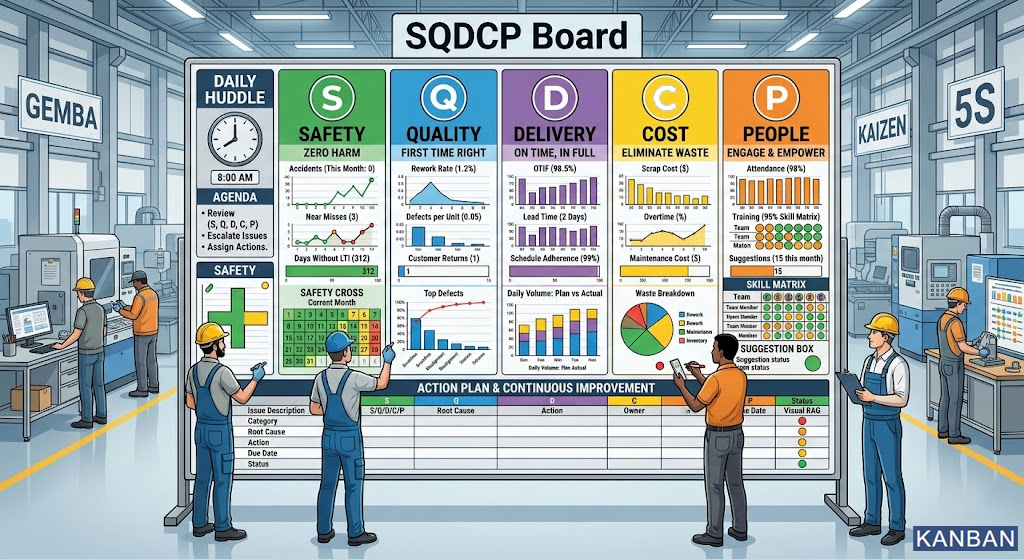
In modern manufacturing and operational environments, SQCDP (Safety, Quality, Cost, Delivery, People) provides a structured framework for improving Overall Equipment Effectiveness (OEE). It enables organisations to monitor performance consistently across all critical operational areas, ensuring that data is both reliable and actionable. This structured approach supports better visibility into performance trends and operational challenges.
By aligning daily activities with clearly defined SQCDP metrics, teams can focus on what truly drives efficiency and productivity. This alignment ensures that OEE is not treated as an isolated metric but as an outcome of well-managed processes and consistent decision-making across the shop floor.
Consistent Data for Faster Decisions
The effectiveness of SQCDP lies in its ability to deliver consistent and standardised data across all operational levels. When data is presented in a clear and uniform format, it becomes easier for teams to interpret performance and identify deviations. This consistency eliminates confusion and supports faster, more confident decision-making.
With accurate data readily available, managers and operators can respond quickly to issues such as downtime, quality defects, or delivery delays. This proactive approach significantly improves OEE by reducing losses and maintaining operational stability.
Linking SQCDP to OEE Components
Each element of SQCDP directly influences OEE performance. Safety ensures uninterrupted operations, Quality reduces rework and defects, Cost highlights inefficiencies, Delivery ensures adherence to schedules, and Productivity maximises output. Together, these elements provide a comprehensive view of operational effectiveness.
By consistently monitoring these pillars, organisations can identify root causes of inefficiencies and implement targeted improvements. This integrated approach ensures that OEE improvements are sustainable and aligned with broader business objectives.
Driving Accountability and Alignment
SQCDP frameworks promote accountability by clearly defining roles, responsibilities, and performance expectations. Teams are empowered to take ownership of their metrics and contribute actively to improvement initiatives. This sense of ownership drives engagement and continuous improvement.
Furthermore, transparent data sharing enhances communication across teams, ensuring alignment and collaboration. When everyone works towards the same goals using consistent data, operational efficiency improves significantly.
Why Consistent Data is Critical for Improving OEE
Aligning Daily Operations with Strategic Goals
Consistent data plays a vital role in aligning shop floor activities with organisational objectives. Without reliable data, it becomes difficult to measure performance accurately or identify areas requiring improvement. SQCDP ensures that all teams operate using the same metrics and standards.
This alignment reduces variability and improves focus, enabling organisations to achieve more predictable and sustainable results. It also ensures that improvement efforts are based on factual insights rather than assumptions.
Improving Visibility and Transparency
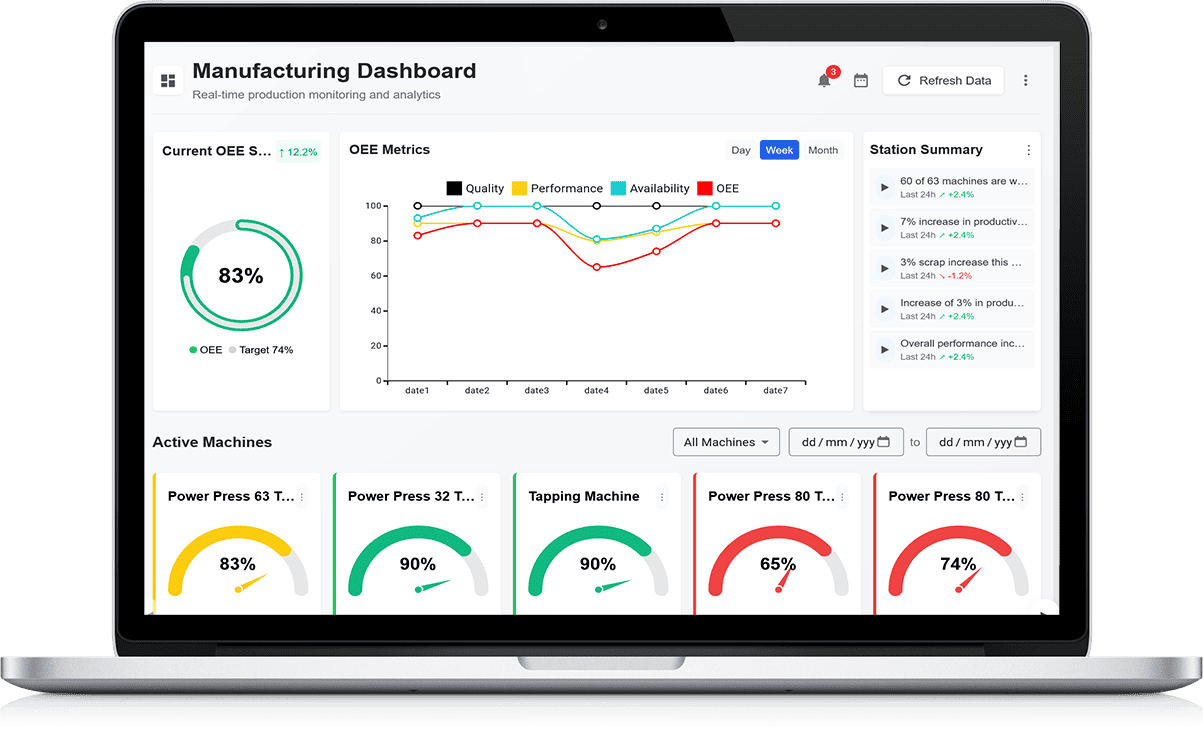
Clear and consistent data enhances visibility across the shop floor, allowing teams to identify inefficiencies, bottlenecks, and risks quickly. This improved transparency is essential for maintaining high OEE levels and ensuring smooth operations.
With better visibility, teams can prioritise actions effectively and address critical issues without delay. This leads to improved coordination, reduced downtime, and enhanced productivity.
Enabling Faster Decision-Making
Accurate data enables quicker and more informed decision-making. Managers can analyse trends, identify patterns, and respond to issues in real time. This reduces delays and improves the overall efficiency of operations.
Faster decisions directly contribute to improved OEE by minimising disruptions and maintaining consistent production performance. It also supports continuous improvement initiatives by providing reliable insights.
Supporting Standardisation and Control
Standardised data collection and reporting processes are essential for maintaining control over operations. SQCDP ensures that data is captured consistently across all areas, reducing errors and improving accuracy.
This standardisation supports scalability and ensures that performance improvements are sustained over time. It also creates a strong foundation for operational excellence and long-term growth.
Digital vs Physical SQCDP Boards: Impact on OEE
Accessibility and Flexibility
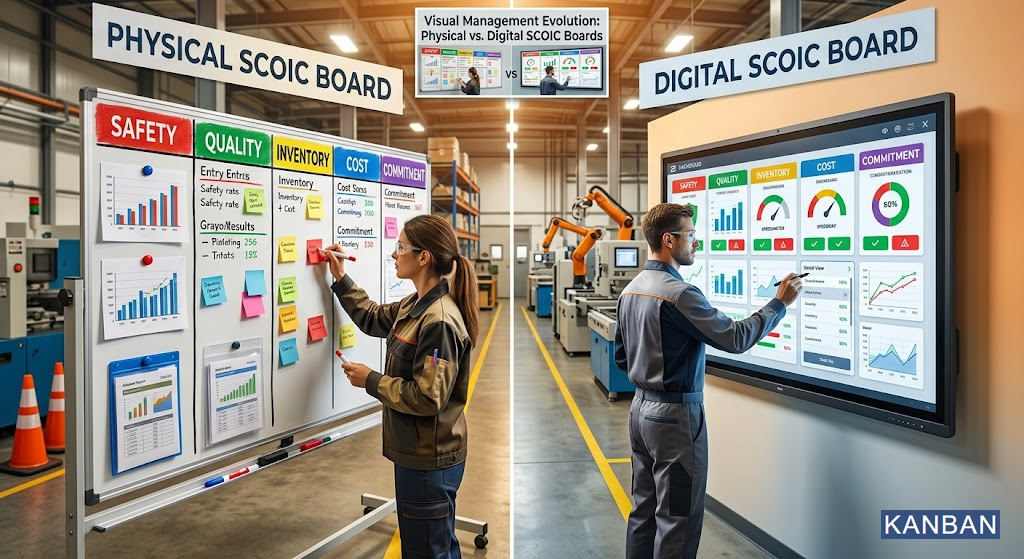
Digital SQCDP boards provide greater accessibility, allowing teams to view real-time performance data from multiple devices and locations. This is particularly beneficial for organisations with distributed operations or complex production environments.
Physical boards, however, offer immediate visibility on the shop floor and encourage direct team engagement. They are simple to use and highly effective in fostering daily communication and collaboration.
Data Accuracy and Update Speed
Digital systems ensure high levels of data accuracy through automation and integration with existing systems. Real-time updates enable teams to respond quickly to changes and maintain optimal performance levels.
Physical boards rely on manual updates, which may introduce delays but promote team involvement and accountability. This engagement can enhance understanding and ownership of performance metrics.
Cost and Implementation Considerations
Physical boards are cost-effective and easy to implement, making them suitable for smaller operations or initial stages of deployment. They require minimal investment and can be customised easily.
Digital boards involve higher initial costs but offer long-term benefits such as scalability, efficiency, and advanced data analytics. The choice depends on organisational priorities and available resources.
Collaboration and Engagement
Physical boards encourage face-to-face discussions and daily team interactions, which are essential for building a strong operational culture. Digital boards enable collaboration across departments and locations, supporting a more connected workforce.
A hybrid approach often provides the best results, combining the strengths of both systems to maximise engagement and performance.
Improving Safety Metrics to Enhance OEE
Integrating Safety into SQCDP for OEE Improvement
Safety is a fundamental pillar within the SQCDP framework and plays a critical role in improving Overall Equipment Effectiveness (OEE). A safe working environment reduces the likelihood of accidents, unplanned downtime, and operational disruptions, all of which can negatively impact productivity and efficiency. By embedding safety metrics into daily performance tracking, organisations can ensure that risk management becomes an integral part of operational excellence.
When safety is consistently monitored and prioritised, teams are better equipped to maintain stable production conditions. This stability directly contributes to improved equipment availability and performance, which are key components of OEE. In this way, safety is not just a compliance requirement but a strategic driver of operational success.
Using Consistent Safety Data for Faster Decisions
Consistent and accurate safety data enables faster and more effective decision-making on the shop floor. By standardising how safety incidents, near misses, and hazards are recorded and reported, organisations can quickly identify trends and areas of concern. This ensures that corrective actions are taken promptly, reducing the risk of recurring issues.
Real-time visibility into safety performance allows managers to respond immediately to potential risks, preventing escalation and minimising disruption. This proactive approach supports continuous improvement and helps maintain high levels of OEE by avoiding unnecessary downtime.
Proactive Risk Identification and Prevention
Effective SQCDP systems focus on proactive risk identification rather than reactive problem-solving. By analysing safety data regularly, teams can identify patterns and implement preventive measures before incidents occur. This forward-thinking approach reduces the likelihood of accidents and ensures a safer working environment.
Preventing incidents not only protects employees but also ensures uninterrupted operations. This continuity is essential for maintaining consistent production output and achieving optimal OEE performance.
Leveraging Digital Tools for Safety Management
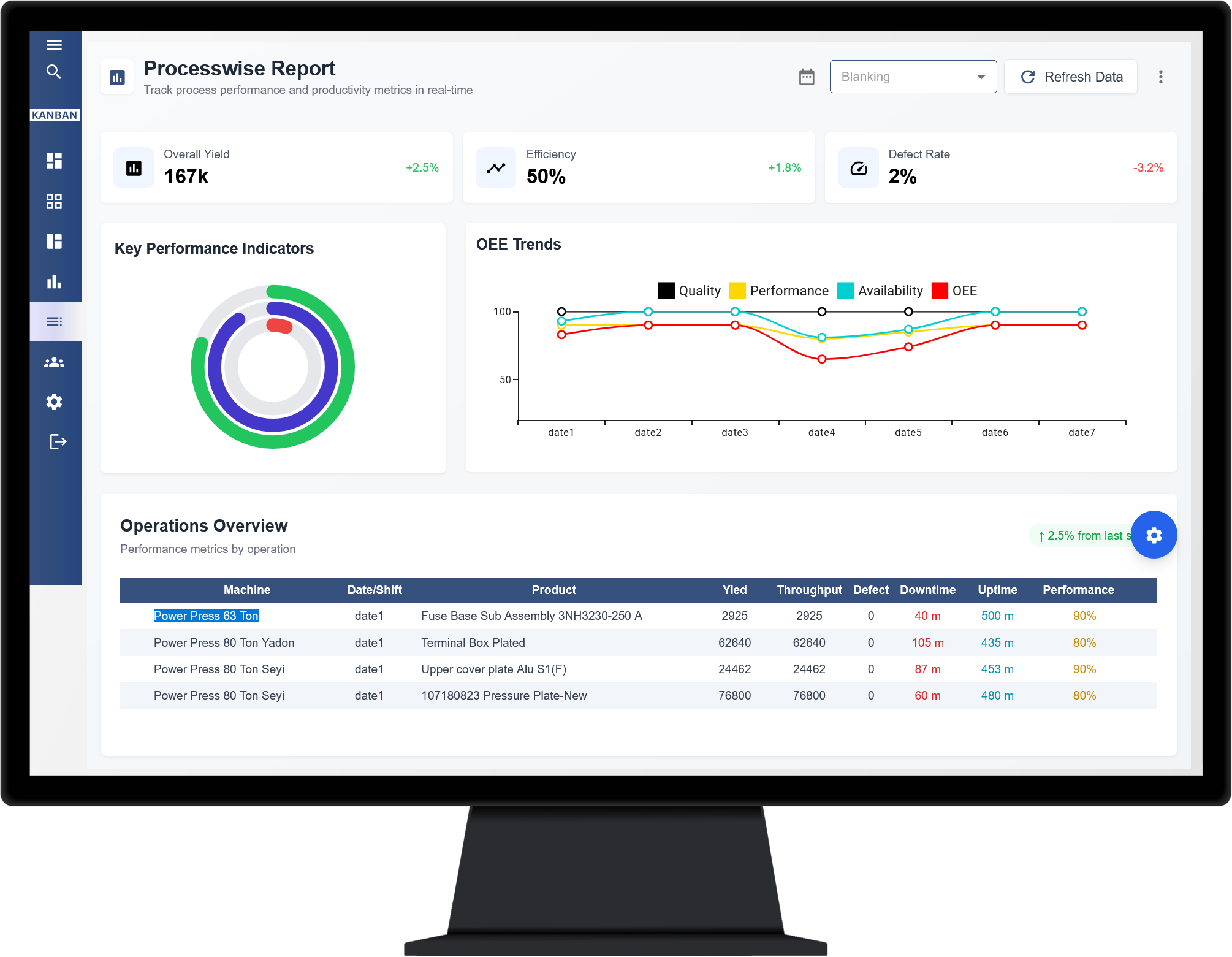
Digital tools and technologies play a significant role in enhancing safety management within the SQCDP framework. Systems such as real-time monitoring, incident reporting software, and automated alerts provide immediate insights into safety performance. These tools enable faster communication and more efficient response to potential hazards.
By integrating safety data with other operational metrics, organisations can gain a holistic view of performance. This integration supports better decision-making and ensures that safety considerations are incorporated into all aspects of operations.
Building a Safety-First Culture for Sustained OEE
Creating a strong safety culture is essential for sustaining improvements in OEE. This involves engaging employees at all levels, providing regular training, and encouraging open communication about safety concerns. When employees feel empowered to report issues and suggest improvements, overall safety performance improves.
A safety-first culture fosters accountability and continuous improvement, ensuring that safety remains a priority in daily operations. This commitment to safety not only protects the workforce but also drives long-term operational efficiency and productivity.
Using consistent and reliable SQCDP data ensures that teams have access to real-time insights, allowing them to identify inefficiencies, reduce downtime, and improve overall equipment effectiveness (OEE).
Driving Cost Efficiency Through SQCDP Data
Cost efficiency is a critical component of improving Overall Equipment Effectiveness (OEE), and SQCDP provides a structured approach to monitor and control operational expenses. By consistently tracking cost-related data, organisations can identify inefficiencies, reduce waste, and optimise resource utilisation. This structured visibility ensures that financial performance is aligned with operational goals.
Accurate and consistent cost data enables teams to compare actual spending against planned budgets in real time. This allows managers to quickly identify deviations and take corrective action before issues escalate. As a result, organisations can maintain tighter financial control and improve overall profitability.
Digital SQCDP systems further enhance cost monitoring by automating data collection and analysis. These systems reduce manual errors and provide deeper insights into cost trends, helping organisations make informed decisions. Over time, this leads to improved budgeting, forecasting, and financial planning.
By embedding cost management into daily operations, organisations can create a culture of financial discipline. This not only improves efficiency but also supports long-term sustainability and competitiveness.
Maximizing Output and Productivity Using SQCDP
Productivity is a key driver of OEE, and SQCDP enables organisations to track and optimise output effectively. By monitoring production data consistently, teams can identify performance gaps and take immediate action to improve efficiency. This ensures that equipment and resources are utilised to their full potential.
Real-time visibility into production performance allows teams to detect bottlenecks and inefficiencies quickly. This enables faster problem resolution and minimises downtime, which directly improves OEE. Consistent tracking also helps in maintaining stable and predictable production levels.
Combining digital tools with structured SQCDP processes enhances productivity management. Digital systems provide automated updates and advanced analytics, while physical methods encourage team engagement and collaboration. This balanced approach ensures both efficiency and accountability.
Over time, continuous monitoring and improvement of productivity metrics lead to higher output, better resource utilisation, and improved operational performance.
Quality Improvements and Their Effect on OEE
Quality is a fundamental element of OEE, as defects and rework directly impact performance and efficiency. SQCDP provides a structured framework for monitoring quality metrics and identifying areas for improvement. By consistently tracking quality data, organisations can reduce errors and enhance product reliability.
Real-time quality monitoring enables teams to detect issues early and implement corrective actions بسرعة. This proactive approach minimises defects and ensures that production processes remain stable and efficient.
Digital tools further enhance quality management by providing detailed analytics and trend analysis. These insights help organisations identify root causes of defects and implement long-term solutions. Physical boards, on the other hand, promote team discussions and awareness.
Improving quality not only enhances customer satisfaction but also reduces waste and operational costs. This contributes significantly to overall OEE improvement.
Enhancing Delivery Performance with Real-Time Data
Delivery performance is a critical factor in maintaining customer satisfaction and achieving operational excellence. SQCDP enables organisations to track delivery metrics consistently, ensuring that production schedules are met and customer expectations are fulfilled.
Real-time data provides immediate visibility into production progress and potential delays. This allows teams to take corrective action quickly, minimising disruptions and ensuring timely delivery. Improved delivery performance directly contributes to higher OEE by maintaining workflow consistency.
Digital systems enhance delivery tracking by integrating with production and supply chain systems. This provides a comprehensive view of operations and supports better coordination across teams. Physical boards complement this by encouraging daily reviews and discussions.
Consistent monitoring of delivery metrics ensures reliability and builds trust with customers, supporting long-term business success.
Tools and Techniques for Effective SQCDP Management
Effective SQCDP management requires a combination of visual tools, digital technologies, and structured processes. These tools help organisations track performance across Safety, Quality, Cost, Delivery, and Productivity in a consistent and efficient manner.
Visual management tools such as charts, dashboards, and performance boards simplify complex data and make it accessible to all team members. This improves understanding and ensures that everyone is aligned with operational goals.
Digital tools such as analytics platforms and monitoring systems provide real-time insights and advanced data analysis capabilities. These technologies enable faster decision-making and improved accuracy.
Combining physical and digital tools creates a balanced approach that maximises engagement and efficiency. This integrated strategy supports continuous improvement and sustained OEE growth.
Key KPIs for Monitoring OEE Through SQCDP
Key Performance Indicators (KPIs) are essential for measuring and improving OEE within the SQCDP framework. These metrics provide clear insights into operational performance and help organisations track progress towards their goals.
Common KPIs include equipment availability, production output, defect rates, and on-time delivery. By monitoring these indicators consistently, teams can identify trends and areas for improvement.
Digital systems enhance KPI tracking by providing real-time data and automated reporting. This ensures accuracy and enables faster decision-making. Physical boards support team engagement and daily performance reviews.
Effective use of KPIs ensures that improvement efforts are focused and measurable, leading to sustained operational success.
Standardizing Processes to Stabilize OEE
Standardisation is essential for maintaining consistent performance and improving OEE. SQCDP frameworks promote structured processes that ensure uniform data collection and reporting across all operations.
By establishing clear procedures and guidelines, organisations can reduce variability and improve efficiency. This consistency supports better decision-making and ensures that performance improvements are sustained over time.
Digital tools further enhance standardisation by automating processes and reducing manual errors. Physical methods reinforce discipline and routine practices.
Standardised processes create a stable operational environment, enabling organisations to achieve higher levels of efficiency and productivity.
Role of Digital Transformation in OEE Optimization
Digital transformation plays a significant role in enhancing OEE through the SQCDP framework. Advanced technologies enable real-time data collection, analysis, and reporting, providing organisations with deeper insights into performance.
These technologies improve accuracy, reduce manual effort, and enable faster decision-making. As a result, organisations can respond more effectively to operational challenges.
Digital transformation also supports scalability, allowing organisations to expand operations while maintaining high performance levels.
By integrating digital solutions into SQCDP processes, organisations can achieve sustained improvements in efficiency and productivity.
Integrating SQCDP with MES, ERP, and Other Systems
Integration of SQCDP with systems such as MES and ERP enhances data consistency and operational efficiency. These integrations enable seamless data flow across different functions, improving visibility and coordination.
Real-time integration ensures that data is accurate and up to date, supporting better decision-making. This reduces delays and improves overall performance.
By connecting SQCDP with existing systems, organisations can create a unified platform for performance management. This integration supports continuous improvement and operational excellence.
Effective system integration ensures that all teams work with the same data, improving alignment and collaboration.
Steps to Implement SQCDP for OEE Improvement
Implementing SQCDP requires a structured and strategic approach to ensure success. The first step involves defining clear metrics for Safety, Quality, Cost, Delivery, and Productivity, aligned with organisational goals.
Organisations must then select the appropriate tools and systems, whether physical, digital, or a hybrid approach. This decision should consider operational complexity and available resources.
Training employees is essential to ensure proper understanding and effective use of the system. Without adequate training, implementation efforts may not deliver the desired results.
Regular performance reviews and continuous improvement initiatives are necessary to sustain progress. Over time, organisations can refine their processes and achieve higher levels of OEE.
Challenges in Using SQCDP for OEE Optimization
While SQCDP provides a powerful framework for improving OEE, organisations may encounter several challenges during implementation. Resistance to change is one of the most common obstacles, as employees may be hesitant to adopt new systems or processes. Addressing this requires clear communication and strong leadership support.
Data consistency and accuracy can also pose challenges, particularly when transitioning from manual to digital systems. Ensuring that data is reliable and standardised is essential for effective decision-making. Organisations must invest in proper systems and processes to maintain data integrity.
Another challenge is the need for training and skill development, especially when introducing digital tools. Employees must be equipped with the necessary knowledge to use these systems effectively. Without proper training, the benefits of SQCDP may not be fully realised.
Overcoming these challenges requires a structured change management approach, continuous engagement, and ongoing support. When addressed effectively, these challenges can be transformed into opportunities for growth and improvement.
Leadership’s Role in Driving OEE Through SQCDP
Leadership plays a crucial role in the successful implementation of SQCDP and the achievement of OEE improvements. Leaders are responsible for setting clear expectations, defining goals, and ensuring alignment across all levels of the organisation. Their commitment establishes the foundation for operational excellence.
Effective leaders promote accountability and transparency by encouraging teams to take ownership of their performance metrics. Regular reviews and open communication help identify improvement opportunities and ensure that corrective actions are taken promptly. This proactive approach drives continuous improvement.
Leaders must also provide the necessary resources, tools, and training to support SQCDP initiatives. By empowering employees and fostering a collaborative environment, they can enhance engagement and motivation. This leads to better performance and sustained results.
Strong leadership ensures that SQCDP becomes an integral part of daily operations, driving long-term improvements in OEE and overall organisational performance.
Continuous Improvement Strategies Using SQCDP
Continuous improvement is at the core of SQCDP and plays a vital role in enhancing OEE over time. By regularly analysing performance data, organisations can identify inefficiencies and implement targeted improvements. This structured approach ensures that progress is consistent and measurable.
Teams are encouraged to actively participate in improvement initiatives by sharing ideas and implementing solutions. This collaborative approach fosters innovation and strengthens problem-solving capabilities across the organisation. It also ensures that improvements are practical and sustainable.
Regular monitoring and feedback loops are essential for maintaining momentum and ensuring that improvements are sustained. These processes enable organisations to track progress and make necessary adjustments. Over time, small incremental improvements lead to significant gains in efficiency and productivity.
Embedding continuous improvement into daily operations creates a culture of excellence and ensures long-term success in achieving OEE targets.
Engaging the Workforce to Improve OEE
Workforce engagement is a key factor in successfully improving OEE through SQCDP. When employees are actively involved in performance tracking and decision-making, they develop a stronger sense of ownership and accountability. This leads to higher levels of motivation and productivity.
Transparent communication of performance data helps employees understand their roles and contributions to organisational goals. This clarity improves alignment and ensures that everyone is working towards the same objectives. It also enhances collaboration across teams.
Encouraging employees to share ideas and participate in improvement initiatives fosters a culture of innovation and continuous learning. Recognition and feedback further strengthen engagement and morale. Engaged teams are more likely to deliver consistent and high-quality results.
By prioritising workforce engagement, organisations can create a positive work environment that supports sustained OEE improvement and operational excellence.
Benefits of SQCDP in Achieving Higher OEE
SQCDP offers numerous benefits that directly contribute to improving OEE and overall operational performance. By providing a structured framework for monitoring key metrics, it ensures that organisations have clear visibility into their operations. This visibility supports better decision-making and improved efficiency.
Consistent data tracking enables organisations to identify and address inefficiencies quickly, reducing downtime and improving productivity. It also enhances quality and delivery performance, leading to higher customer satisfaction. These improvements collectively drive better business outcomes.
Digital tools further enhance the benefits of SQCDP by providing real-time insights and advanced analytics. Physical methods complement this by encouraging team engagement and communication. Together, they create a balanced approach to performance management.
Ultimately, SQCDP helps organisations achieve sustainable improvements in OEE, making them more competitive and resilient in a dynamic business environment.
Future Trends in OEE and SQCDP Data Management
The future of OEE improvement through SQCDP is closely linked to advancements in digital technologies and data analytics. Organisations are increasingly adopting real-time dashboards, automation, and predictive analytics to enhance performance monitoring. These innovations provide deeper insights and enable proactive decision-making.
Emerging technologies such as artificial intelligence and machine learning are expected to play a significant role in identifying patterns and predicting potential issues. This will allow organisations to address problems before they impact operations, further improving OEE.
Integration with advanced systems and platforms will continue to improve data consistency and accessibility. This will enable organisations to create more connected and efficient operations. As a result, decision-making will become faster and more accurate.
Over time, these trends will transform SQCDP into a more intelligent and dynamic system, driving higher levels of efficiency, innovation, and operational excellence.