What Is OEE Software and Why It Matters for Japanese Manufacturers
Understanding OEE Software
OEE (Overall Equipment Effectiveness) software is a digital solution designed to track and improve manufacturing equipment performance. Japanese manufacturers use it to measure availability, performance, and quality of machinery. By providing real-time insights, the software helps managers identify inefficiencies, reduce downtime, and optimise production, ensuring high operational efficiency and consistent product quality.
How It Works
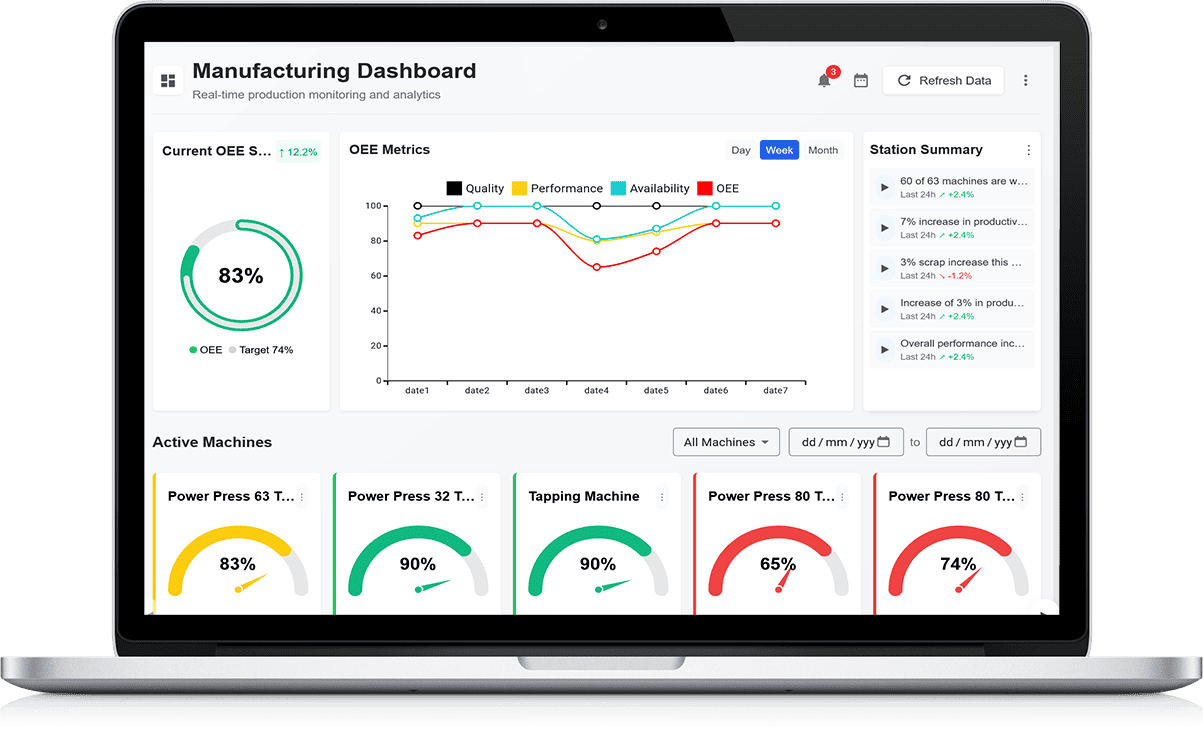
The software collects machine data automatically, including operating time, speed, and defects. It calculates OEE metrics such as availability, performance, and quality, presenting them in a clear visual format. Managers can quickly identify bottlenecks, underperforming machines, or production issues and take corrective actions to maintain smooth operations.
Importance for Japanese Manufacturers
In Japan’s highly competitive manufacturing industry, maintaining optimal equipment efficiency is critical. OEE software ensures machines operate at peak performance, reduces downtime, and improves product consistency. It supports lean manufacturing practices, helping factories maximise output while minimising waste, thereby reducing costs and improving competitiveness.
Supporting Continuous Improvement
OEE Software provides historical data and trend analysis, allowing managers to benchmark performance and implement improvements. This enables Japanese manufacturers to foster a culture of continuous improvement, enhance operational processes, and maintain high-quality production standards consistently.
How OEE Software Improves Overall Equipment Effectiveness
Monitoring Key Metrics
OEE software continuously monitors machine availability, performance, and quality. By analysing these metrics, Japanese manufacturers can pinpoint inefficiencies and underperforming equipment, ensuring maximum production efficiency and consistent output.
Reducing Downtime
The software tracks both planned and unplanned downtime. By identifying root causes of stoppages, managers can implement preventive measures and optimise schedules. This reduces production delays and ensures equipment remains available for longer periods.
Optimising Performance
By comparing actual output with theoretical capacity, OEE Software highlights performance gaps. Managers can adjust operational procedures, machine settings, or operator practices to enhance productivity and overall equipment effectiveness.
Maintaining Quality
OEE analytics also track defects and rework, allowing managers to address quality issues promptly. Ensuring high-quality production minimises waste and rework costs while supporting consistent standards across all production lines.
Key Features to Look for in the Best OEE Software
Real-Time Data Collection
Top OEE Software automatically captures machine performance, downtime, and output data. Accurate, real-time data ensures managers can make informed operational decisions and reduces the risk of manual reporting errors.
Visual Dashboards
Interactive dashboards provide clear insights into machine efficiency, production trends, and potential bottlenecks. Visual displays make it easier to identify areas for improvement and monitor operational performance effectively.
Custom Alerts
Customisable alerts notify managers of downtime, performance drops, or quality deviations. Immediate notifications allow quick corrective actions, preventing extended production disruptions and ensuring smooth workflow.
Advanced Analytics and Reporting
Comprehensive reports and analytics enable benchmarking, trend tracking, and actionable insights for continuous improvement. Japanese manufacturers can use these features to optimise processes, reduce inefficiencies, and maintain high-quality production consistently.
Tracking Machine Performance and Downtime in Real Time
Continuous Monitoring
OEE software continuously tracks machine performance metrics such as speed, uptime, and output. Real-time monitoring allows managers to detect inefficiencies or potential problems immediately, ensuring uninterrupted production.
Identifying Downtime Causes
The system records both planned and unplanned downtime and identifies root causes. Understanding why machines stop enables managers to implement preventive actions, reduce delays, and improve overall equipment reliability.
Optimising Machine Utilisation
Comparing actual production to theoretical capacity allows managers to maximise machine utilisation. Adjustments in workflow, scheduling, or maintenance improve production output and reduce inefficiencies across factories.
Supporting Operational Decisions
Real-time insights from OEE software help managers make informed decisions about maintenance, scheduling, and resource allocation. This ensures efficient operations and high overall equipment effectiveness in Japanese factories.
Improving Production Quality with Accurate OEE Analytics
Monitoring Quality Metrics
OEE Software tracks defect rates, scrap, and rework. Early detection of quality issues allows managers to take corrective actions quickly, maintaining high standards across all production lines.
Root Cause Analysis
Analytics help identify recurring quality problems related to machines, processes, or operator performance. Addressing these root causes ensures consistent product quality and reduces production losses.
Process Optimisation
OEE insights enable optimisation of production workflows, reducing setup times, material handling errors, and inefficiencies. This improves overall production quality while maintaining consistent output levels.
Supporting Continuous Improvement
Historical and real-time OEE data allow benchmarking and measurement of improvements over time. Japanese manufacturers can track progress and implement strategies for consistent high-quality output and operational excellence.
Increasing Operational Efficiency Across Japanese Factories
Identifying Bottlenecks
OEE software highlights production bottlenecks by analysing machine utilisation and workflow efficiency. Managers can take timely action to resolve issues and maintain smooth operations.
Optimising Resource Allocation
Insights from OEE data enable efficient allocation of operators, materials, and maintenance resources. Balanced resource utilisation ensures consistent production and supports operational efficiency.
Reducing Waste and Downtime
Real-time monitoring allows managers to detect inefficiencies and implement corrective measures. This reduces downtime, minimises waste, and improves productivity across Japanese factories.
Supporting Lean Practices
OEE software aligns with lean manufacturing principles, providing actionable insights for process improvements. This encourages continuous optimisation, enhanced efficiency, and operational excellence across factories.
Reducing Costs Through Data-Driven Equipment Insights
Minimising Downtime Costs
Real-time monitoring reduces unplanned machine stoppages, increasing production efficiency and lowering operational costs. Optimised uptime improves profitability and production reliability.
Optimising Maintenance Expenses
OEE analytics identify equipment needing preventive maintenance, reducing unexpected repair costs. Efficient maintenance planning ensures long-term machine reliability and cost savings.
Reducing Material Waste
Tracking defect rates and rework allows managers to minimise scrap and optimise material usage. This reduces production costs while maintaining high-quality output standards.
Enhancing Overall Efficiency
Data-driven insights enable managers to optimise machine utilisation, production scheduling, and operator performance. Improved efficiency reduces costs, increases throughput, and supports sustainable manufacturing operations in Japanese factories.
Empowering Teams to Optimise Equipment Performance
Encouraging Ownership and Responsibility
Empowering teams to optimise equipment performance starts with giving operators and maintenance staff clear responsibility for the machines they manage. When employees feel accountable for operational outcomes, they are more proactive in monitoring equipment, addressing minor issues, and implementing preventive measures. This approach reduces unplanned downtime and supports smoother production flows. Ownership fosters a sense of pride in work quality and motivates staff to maintain high operational standards, contributing to overall productivity and efficiency.
Utilising Real-Time Performance Metrics
Access to real-time equipment data is crucial for effective optimisation. Digital OEE software provides continuous insights into availability, performance, and quality, enabling teams to identify inefficiencies and take timely corrective actions. Live monitoring allows staff to react quickly to potential issues, adjust workflows, and maintain consistent production across all shifts. Real-time transparency fosters accountability and encourages proactive problem-solving, ensuring that performance targets are consistently met.
Continuous Training and Skill Development
For teams to optimise equipment effectively, ongoing training is essential. Staff must understand machine operation, maintenance procedures, and how to interpret OEE metrics. Regular skill development enhances technical competence, allowing employees to address issues efficiently and maintain optimal production standards. A trained workforce ensures that equipment runs reliably and that performance improvements are sustainable over time.
Supporting Continuous Improvement
Empowered teams contribute actively to continuous improvement initiatives by analysing performance trends, identifying recurring issues, and suggesting enhancements. Their engagement encourages a culture where efficiency and operational excellence are shared responsibilities. By involving staff in performance optimisation, businesses can achieve higher equipment reliability, reduced waste, and improved productivity, ensuring long-term success in manufacturing operations.
Using Visual Dashboards to Monitor OEE Across Production Lines
Centralised Performance Monitoring
Visual dashboards provide a centralised view of key performance indicators across multiple production lines. By displaying metrics such as equipment availability, production speed, and quality in a clear visual format, managers can quickly identify underperforming areas or bottlenecks. This centralised insight allows for timely intervention and ensures production resources are allocated effectively, improving overall operational efficiency.
Real-Time Alerts and Updates
Dashboards offer live updates on production metrics, highlighting deviations from expected performance. Alerts notify teams immediately when issues arise, enabling swift corrective action. Rapid response reduces downtime, prevents quality problems, and keeps production on track. The visibility provided by dashboards ensures that all stakeholders are aware of current performance and can make informed decisions.
Transparency and Accountability
Sharing dashboard data with operators and supervisors fosters transparency and accountability. Teams can see how their actions impact overall OEE, motivating them to improve efficiency and maintain high standards. Clear visibility encourages collaboration, proactive problem-solving, and a shared commitment to production excellence across all lines.
Supporting Continuous Improvement
Historical dashboard data allows teams to identify recurring production challenges and implement targeted improvements. Analysing trends over time informs process optimisation, reduces waste, and drives continuous improvement initiatives. By combining real-time monitoring with historical insights, organisations can maintain consistent operational performance and achieve long-term efficiency gains.
Identifying Bottlenecks and Maintenance Needs Quickly
Early Detection Through Metrics
OEE software continuously tracks key metrics including availability, performance, and quality. This monitoring enables teams to identify bottlenecks and potential maintenance requirements early. By detecting issues before they escalate, businesses can avoid extended downtime and maintain consistent production output. Early identification of bottlenecks ensures that resources are allocated effectively and processes remain efficient.
Automated Alerts and Notifications
Real-time alerts notify operators and maintenance teams when equipment underperforms or requires attention. Immediate action helps reduce production interruptions and maintains high levels of productivity. Automated notifications support a proactive maintenance strategy, ensuring that potential failures are addressed before they impact output, improving operational reliability and performance.
Prioritising Maintenance Interventions
Identifying bottlenecks allows teams to prioritise maintenance based on urgency and potential production impact. Critical machinery can be serviced first to minimise downtime, while less urgent tasks can be scheduled appropriately. This strategic prioritisation maximises operational efficiency, reduces resource waste, and helps maintain smooth production workflows across all shifts.
Driving Process Improvements
Analysing bottlenecks and maintenance trends highlights recurring issues and informs process improvement initiatives. Teams can implement preventive measures, optimise workflows, and enhance equipment reliability. By combining timely maintenance with process analysis, organisations create a continuous improvement cycle that supports operational excellence and sustained productivity.
Integrating OEE Software with Existing Manufacturing Systems
Seamless Data Integration
Integrating OEE software with existing manufacturing systems ensures a seamless flow of data between machines, production lines, and centralised platforms. This eliminates manual entry, reduces errors, and provides a comprehensive view of operational performance. Accurate, automated data enables teams to monitor equipment effectively and make informed decisions based on real-time insights.
Enhanced Decision-Making
Integration provides complete visibility into production performance, equipment health, and maintenance requirements. Managers can use this information to optimise workflows, allocate resources efficiently, and prevent potential bottlenecks. Access to accurate, real-time data supports strategic planning, ensuring that operational decisions are both timely and effective.
Operational Efficiency
Automated data collection reduces administrative burdens, allowing teams to focus on optimisation and problem-solving. Integrated systems provide consistent, up-to-date information across departments, enhancing collaboration and improving production reliability. Streamlined workflows and standardised reporting contribute to improved operational efficiency.
Supporting Continuous Improvement
Integration allows for historical analysis and performance benchmarking. Teams can identify recurring issues, implement preventive measures, and refine processes. By linking OEE data with manufacturing systems, organisations create a culture of continuous improvement that drives efficiency, reduces waste, and improves overall production outcomes.
Supporting Continuous Improvement Initiatives with Reliable Data
Accurate Performance Metrics
Reliable OEE data provides an accurate representation of equipment performance, production efficiency, and quality. Accurate metrics are critical for identifying inefficiencies and targeting improvements effectively. By relying on dependable data, organisations can prioritise initiatives that have the greatest impact on performance and operational outcomes.
Historical Data Analysis
Analysing historical performance trends allows teams to identify recurring issues, bottlenecks, and inefficiencies. Understanding these patterns supports informed decision-making, enabling organisations to implement targeted improvement strategies. Historical insights also assist in forecasting potential issues and allocating resources effectively.
Employee Engagement and Accountability
Access to transparent, reliable data encourages team accountability and engagement. Staff can clearly see the impact of their actions on overall OEE, motivating participation in improvement initiatives. Engaged teams contribute to enhanced production efficiency, reduced waste, and improved equipment reliability.
Driving Operational Excellence
Reliable performance data underpins continuous improvement by enabling informed interventions, process optimisation, and benchmarking. Teams can monitor the effectiveness of implemented changes, adjust processes as necessary, and sustain high standards of operational excellence. Data-driven strategies ensure long-term efficiency and productivity gains across all equipment and production lines.
Standardising Equipment Performance Reporting Across Departments
Ensuring Consistency in Data
Standardised reporting ensures that OEE data is collected consistently across departments. Using uniform templates for availability, performance, and quality metrics allows organisations to compare results accurately and identify performance trends. Consistency reduces errors, enhances reliability, and ensures that management receives dependable information for decision-making.
Reducing Misinterpretation
Without standardisation, reporting inconsistencies can lead to misinterpretation and flawed decisions. By standardising data capture and reporting methods, teams ensure accuracy and clarity. Reliable reporting improves collaboration between departments, aligns performance expectations, and supports effective process optimisation initiatives.
Benchmarking and Best Practices
Standardised reporting enables benchmarking across departments, allowing organisations to identify high-performing teams and replicate best practices. Benchmarking fosters a culture of excellence and encourages continuous improvement, driving efficiency and operational consistency across the business.
Supporting Strategic Decisions
Uniform reporting provides actionable insights for leaders, helping inform decisions related to resource allocation, maintenance priorities, and process optimisation. Consistent, high-quality data strengthens operational oversight and contributes to improved efficiency, productivity, and overall performance.
Cloud-Based vs On-Premise OEE Solutions for Japanese Businesses
Accessibility and Flexibility
Cloud-based OEE solutions allow Japanese businesses to access performance data from multiple sites or remotely, providing operational flexibility. On-premise systems are limited to local networks, reducing accessibility. Cloud solutions enable timely monitoring, faster decision-making, and enhanced responsiveness across production facilities, supporting more agile operations.
Maintenance and Updates
Cloud platforms automatically manage software updates and security improvements, reducing the administrative burden on IT teams. On-premise systems require manual updates and maintenance, which can disrupt operations. Automatic updates ensure teams have access to the latest tools, features, and security protocols, improving productivity and reliability.
Data Security and Compliance
Cloud OEE solutions offer robust security measures such as encryption, access controls, and audit logs to protect sensitive production data. Compliance with local Japanese regulations is easier to maintain through standardised cloud security practices. On-premise solutions may require additional investment to match cloud-level security, increasing complexity and cost.
Scalability and Cost Efficiency
Cloud OEE software scales easily, accommodating additional production lines or sites without substantial infrastructure investment. On-premise systems often involve costly expansions. Cloud-based solutions provide cost-effective, flexible, and scalable performance monitoring suitable for growing Japanese businesses, enhancing long-term operational efficiency.
Measuring the Impact of OEE Software on Productivity and ROI
Tracking Performance Improvements
OEE software provides detailed metrics on equipment performance, production output, and quality. By tracking these metrics, businesses can quantify improvements in productivity, identify bottlenecks, and assess the effectiveness of process changes. Accurate measurement ensures that operational gains are tangible and actionable, supporting informed decision-making.
Evaluating Efficiency and Cost Savings
OEE metrics help teams calculate efficiency gains, reduced downtime, and resource optimisation. By quantifying these improvements, organisations can understand cost savings and demonstrate the tangible benefits of investing in OEE software. This analysis helps justify expenditure and prioritise further optimisation initiatives.
Assessing Return on Investment
Comparing investment in OEE software with achieved benefits allows businesses to assess ROI accurately. Improved production, reduced waste, and higher-quality output all contribute to tangible returns. Data-driven insights guide strategic investments and ensure that performance monitoring delivers measurable value.
Driving Sustainable Operational Gains
OEE software continuously provides insights that support workflow optimisation, reduced waste, and ongoing productivity improvements. These metrics-driven improvements enable businesses to maintain operational excellence, maximise ROI, and remain competitive in the manufacturing sector over the long term.