What Is Balanced Scorecard (BSC) Software and How It Works
Understanding BSC Software
Balanced Scorecard (BSC) software is a strategic management tool that helps organisations translate their vision and strategy into measurable objectives. It provides a digital framework to track performance across four key perspectives: financial, customer, internal processes, and learning and growth. By consolidating these metrics into a central system, managers can easily monitor progress, identify gaps, and make informed decisions to achieve organisational goals.
How It Works
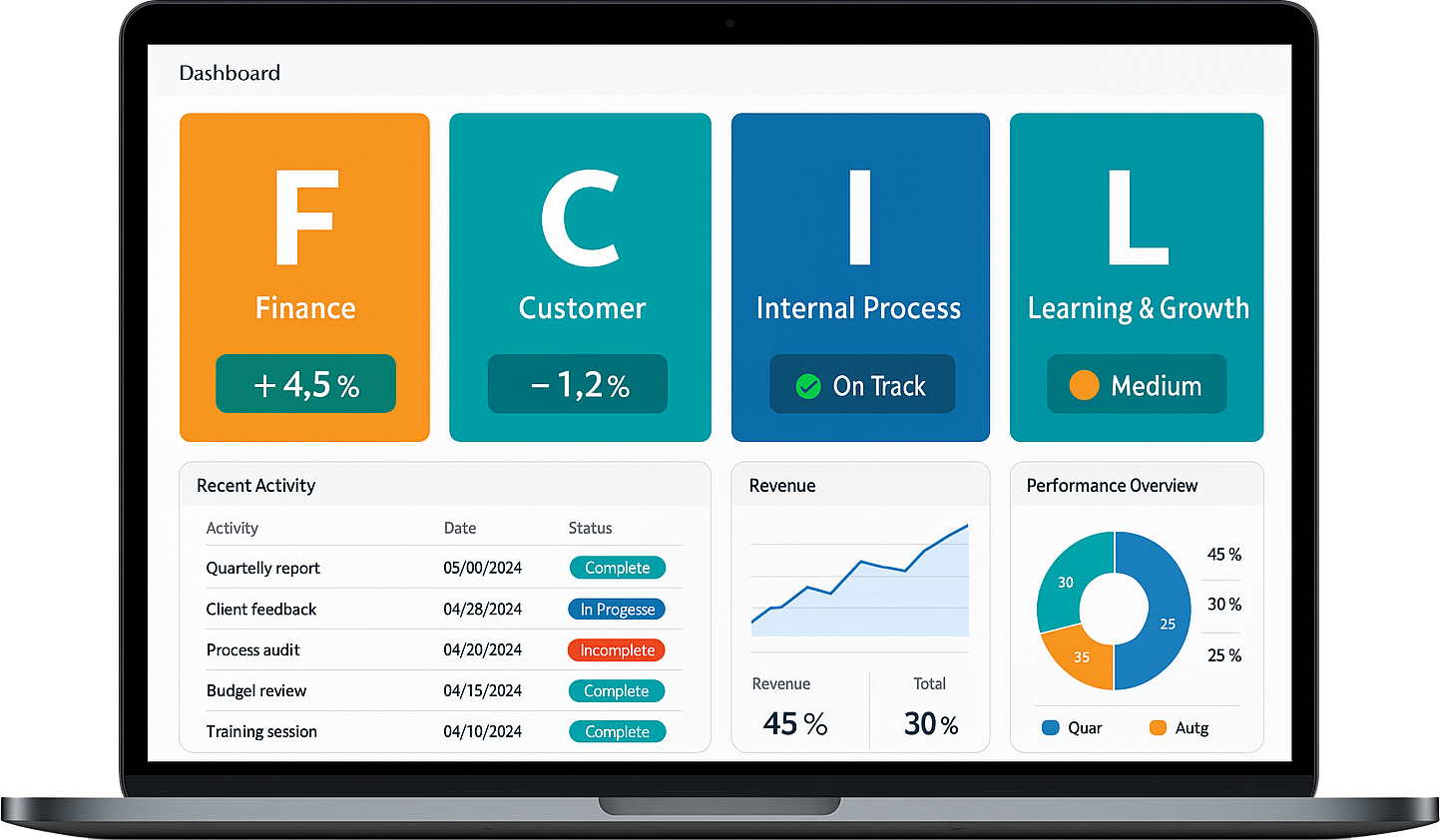
The software allows users to create KPIs (Key Performance Indicators) for each perspective, assign targets, and track results in real time. Visual dashboards display performance trends, making it easy to spot deviations or opportunities for improvement. Automated reporting simplifies the monitoring process, allowing managers to focus on strategy execution rather than manual calculations.
Integration and Accessibility
BSC software often integrates with other enterprise systems such as finance, HR, and operations. This ensures accurate, up-to-date data flows into the scorecard, providing a holistic view of organisational performance. Users can access the software from multiple locations, promoting transparency and collaboration across departments.
Supporting Strategic Management
By providing a clear line of sight from strategic objectives to daily operations, BSC Software enables organisations to align initiatives, monitor performance, and continuously improve. It ensures that strategy is actionable, measurable, and visible throughout the organisation.
Why UK Businesses Are Adopting BSC Software for Strategic Management
Addressing Complexity in Modern Organisations
UK businesses face increasing complexity in operations and strategic initiatives. Balanced Scorecard software helps simplify management by consolidating key metrics into a single platform, allowing leaders to see the organisation’s performance at a glance. This approach supports faster and more effective decision-making.
Aligning Strategy with Operations
BSC software enables UK businesses to align organisational objectives with departmental goals. By clearly linking KPIs to overall strategy, teams understand their contribution to organisational success, improving accountability and focus on results.
Improving Performance Measurement
Traditional reporting methods often fail to provide a complete view of performance. BSC Software offers real-time insights across financial, customer, internal process, and learning and growth perspectives. This comprehensive monitoring allows UK managers to identify gaps and take timely corrective action.
Supporting Continuous Improvement
With historical data, benchmarking, and trend analysis, BSC software helps UK businesses track progress and identify areas for improvement. The software encourages a culture of continuous learning, ensuring long-term strategic objectives are consistently met while adapting to changing business conditions.
Key Features to Look for in the Best BSC Software
Customisable KPIs and Metrics
The best BSC software allows organisations to define KPIs for each perspective, set measurable targets, and monitor progress. Customisation ensures that metrics are relevant to the organisation’s strategy and operational needs.
Real-Time Dashboards
Interactive dashboards provide a visual representation of performance metrics, making it easy to identify trends, track targets, and detect issues. Real-time updates ensure managers always have accurate information for decision-making.
Automated Reporting and Alerts
Automated reports reduce manual effort and provide consistent insights. Customisable alerts notify managers of performance deviations, enabling proactive interventions before problems escalate.
Integration with Enterprise Systems
Effective BSC Software integrates with finance, HR, and operational systems to ensure accurate, real-time data feeds. This integration supports holistic performance management and ensures the scorecard reflects true organisational performance.
Linking Strategy to Measurable KPIs Using BSC Software
Translating Vision into Action
BSC software enables organisations to convert high-level strategic objectives into actionable KPIs. Each KPI is tied to a specific goal, ensuring that strategy is measurable and achievable. This provides clarity on how daily activities contribute to overall success.
Tracking Performance Across Perspectives
By linking KPIs to the four Balanced Scorecard perspectives, managers can monitor financial performance, customer satisfaction, operational efficiency, and employee growth. This comprehensive approach ensures no aspect of organisational performance is overlooked.
Enhancing Accountability
Assigning KPIs to individuals or departments ensures accountability for performance. BSC software tracks progress against targets, allowing managers to identify gaps and address issues promptly, maintaining alignment with strategic objectives.
Supporting Strategic Adjustments
With clear data on KPI performance, organisations can adjust strategies in response to changing conditions. This continuous monitoring and alignment process ensures that strategy remains relevant and drives results effectively.
Improving Performance Tracking Across All Four Perspectives
Comprehensive Monitoring
BSC software tracks performance across financial, customer, internal process, and learning and growth perspectives. This ensures that organisations maintain a balanced approach, considering both operational and strategic outcomes in decision-making.
Identifying Gaps and Opportunities
By analysing performance data, managers can identify areas where results are below expectations. This visibility enables targeted improvement initiatives that enhance efficiency, productivity, and customer satisfaction.
Real-Time Insights
Interactive dashboards provide real-time updates on KPIs, making it easier for managers to monitor progress and take immediate corrective action when performance deviates from targets.
Supporting Continuous Improvement
Historical data and trend analysis allow organisations to measure improvements over time. BSC software fosters a culture of learning and continuous enhancement, ensuring all perspectives contribute effectively to strategic success.
Enhancing Decision-Making with Real-Time BSC Dashboards
Visualising Performance Data
BSC dashboards present KPIs in charts, graphs, and summary metrics, providing clear visual insights. Managers can quickly assess organisational performance, identify bottlenecks, and prioritise actions based on accurate data.
Real-Time Updates
Live data feeds ensure dashboards reflect current performance, allowing managers to make timely decisions. This reduces reliance on outdated reports and improves responsiveness to operational challenges.
Customisable Views
Dashboards can be customised for executives, department heads, or teams, showing relevant KPIs for each role. This ensures that decision-makers have the information they need without unnecessary complexity.
Supporting Strategic Planning
By integrating dashboards with long-term strategy and goals, BSC software allows managers to track progress, forecast outcomes, and implement changes that keep the organisation on track towards achieving its strategic objectives.
Aligning Individual Goals with Organisational Objectives
Translating Strategy into Daily Actions
BSC software enables managers to connect organisational goals with individual or team objectives. Each employee understands their role in achieving strategic priorities, which improves engagement, accountability, and productivity.
Tracking Progress and Performance
By monitoring individual KPIs alongside departmental and organisational performance, managers can identify areas for improvement. This alignment ensures that every action contributes to overall strategy execution effectively.
Encouraging Collaboration
When individual goals are linked to team and organisational objectives, collaboration improves. Employees work collectively towards shared outcomes, fostering a culture of cooperation and accountability.
Supporting Continuous Feedback
Regular performance updates and analytics provide ongoing feedback, helping employees adjust their efforts to remain aligned with organisational goals. This dynamic approach promotes continuous improvement and ensures that strategic objectives are consistently met.
Supporting Continuous Improvement Through BSC Insights
Leveraging Performance Data
Balanced Scorecard (BSC) insights provide organisations with a clear view of performance across financial, customer, internal process, and learning and growth perspectives. By analysing these metrics, teams can identify areas of underperformance and implement targeted improvements. Reliable data allows leaders to prioritise initiatives with the greatest impact, ensuring that resources are used effectively and continuous improvement becomes a measurable process rather than an abstract goal.
Identifying Trends and Patterns
BSC analytics highlight trends over time, enabling organisations to spot recurring issues or opportunities for optimisation. Patterns in customer satisfaction, process efficiency, or employee development can guide strategic adjustments. This trend-based approach ensures improvements are evidence-driven and aligned with organisational goals, supporting a culture of systematic, continuous enhancement across all departments.
Engaging Teams in Improvement Initiatives
Sharing BSC insights with teams encourages active participation in continuous improvement efforts. Employees can see how their work impacts broader business objectives and are motivated to suggest process enhancements. This transparency fosters accountability, collaboration, and a shared commitment to achieving measurable performance gains.
Aligning Improvements with Strategy
Improvements driven by BSC insights are closely tied to strategic objectives, ensuring that operational enhancements support long-term goals. By integrating data analysis with decision-making, organisations can maintain focus on critical priorities, continuously refine processes, and sustain high performance levels throughout the business.
Standardising Performance Reporting Across Departments
Consistency and Accuracy
Standardising performance reporting ensures that all departments follow uniform data collection and reporting procedures. This consistency eliminates discrepancies and allows for accurate cross-departmental comparisons. Managers can rely on consistent information when making strategic decisions, ensuring that insights reflect true organisational performance rather than variations in reporting practices.
Streamlining Data Collection
Uniform reporting templates simplify data collection, reducing administrative effort and human errors. Teams spend less time reconciling inconsistent reports and more time analysing results to identify improvement opportunities. Streamlined processes also improve response times, enabling faster decision-making and proactive management across departments.
Facilitating Benchmarking
Standardised data allows organisations to benchmark performance across teams and departments. Identifying high-performing units and best practices helps replicate success in other areas, fostering a culture of excellence and continuous improvement. Benchmarking also provides clarity on where resources or support may be needed to enhance underperforming areas.
Supporting Strategic Alignment
By standardising reporting, departments align their performance metrics with organisational strategy. This ensures that all teams are working towards the same objectives, promoting collaboration and focused improvement. Standardised reporting creates transparency, accountability, and measurable outcomes that reinforce strategic priorities.
Tracking Strategic Initiatives and Business Outcomes Effectively
Connecting Initiatives to Results
Balanced Scorecard software links strategic initiatives directly to business outcomes, providing visibility on how specific projects impact organisational goals. By monitoring progress against KPIs, leaders can assess whether initiatives are driving the expected results, enabling timely adjustments and maximising the effectiveness of resources invested in strategic activities.
Real-Time Monitoring and Insights
Tracking tools provide real-time updates on strategic initiatives, allowing organisations to respond quickly to emerging issues or delays. Immediate visibility ensures that projects stay on course, performance gaps are addressed, and teams remain aligned with business objectives. Real-time insights improve decision-making and reduce the risk of missed opportunities.
Supporting Data-Driven Decisions
Effective tracking relies on accurate and timely data. Leaders can analyse trends, measure outcomes, and make informed decisions about prioritising resources, reallocating efforts, or adjusting strategies. This evidence-based approach ensures that strategic initiatives contribute to measurable improvements in business performance.
Enhancing Accountability and Alignment
Linking initiatives to outcomes establishes clear accountability for teams and managers. Everyone understands their role in achieving organisational goals, fostering alignment across departments. Clear performance visibility encourages engagement, collaboration, and a focus on results-driven execution, ensuring that initiatives deliver tangible value.
Reducing Manual Reporting and Administrative Work with BSC Software
Automation of Routine Tasks
BSC software automates data collection, aggregation, and reporting processes, significantly reducing the need for manual effort. Teams no longer spend hours compiling spreadsheets or reconciling disparate sources, freeing time to focus on analysis, strategy, and improvement initiatives. Automation improves efficiency and reduces the risk of human error.
Improving Accuracy and Reliability
Manual reporting is prone to inconsistencies and mistakes, which can misinform decision-making. BSC software ensures accurate, standardised, and up-to-date reporting. Reliable information supports better planning, aligns departmental objectives, and enhances organisational performance visibility, ensuring that leaders can trust the data they use.
Enhanced Collaboration
With automated reporting, multiple teams can access the same up-to-date information simultaneously. This transparency fosters collaboration, facilitates cross-departmental initiatives, and improves communication. Shared visibility ensures that everyone works with the same data, enhancing coordination and efficiency.
Supporting Strategic Focus
By reducing administrative burdens, BSC software allows managers and teams to focus on strategic objectives rather than routine reporting tasks. More time can be dedicated to analysing performance, implementing improvements, and making informed decisions that drive organisational growth and long-term success.
Integrating BSC Software with Existing Enterprise Systems
Seamless Data Flow
Integrating Balanced Scorecard software with enterprise systems ensures seamless flow of data from various departments, reducing manual entry and inconsistencies. Integration allows real-time updates, aligning operational and strategic metrics for accurate performance tracking. Businesses gain a consolidated view of organisational health, enabling informed decision-making and timely action.
Enhanced Reporting and Analysis
Integration provides comprehensive reporting capabilities, combining financial, operational, and human resource data. Leaders can analyse performance across multiple dimensions and identify correlations between initiatives and outcomes. This holistic insight improves decision-making, optimises resource allocation, and supports continuous improvement across the organisation.
Improving Efficiency and Productivity
Automation through integration reduces repetitive tasks, freeing staff to focus on strategic priorities. Centralised data access eliminates delays and miscommunications, increasing productivity and operational efficiency. Teams can respond faster to trends and performance gaps, maintaining alignment with business objectives and strategy.
Supporting Scalability
Integrated systems scale easily as organisations grow, accommodating new departments, locations, or initiatives without additional administrative burden. Consistent data management ensures continuity, simplifies reporting, and maintains reliable performance monitoring across expanding operations.
Empowering Teams to Take Ownership of Strategic Goals
Clarity and Accountability
Teams are empowered when they understand organisational strategy and how their roles contribute to achieving it. Clear communication of objectives and expected outcomes creates accountability, motivating employees to align their daily tasks with strategic goals. Ownership drives engagement and a proactive approach to achieving results.
Access to Relevant Metrics
Providing teams with access to Balanced Scorecard metrics ensures they can monitor their performance and understand the impact of their actions. Visibility into key performance indicators allows employees to identify improvement opportunities and adjust workflows to contribute effectively to organisational objectives.
Fostering Collaboration
Empowered teams collaborate more effectively when goals are transparent and aligned. Cross-functional engagement ensures that initiatives are executed efficiently and that resources are used optimally. Collaboration enhances problem-solving, innovation, and continuous improvement efforts, ensuring strategic objectives are consistently met.
Supporting Continuous Improvement
Ownership of strategic goals encourages teams to participate in continuous improvement initiatives. By analysing performance data, identifying gaps, and proposing enhancements, employees actively contribute to the organisation's long-term success. Engaged teams drive measurable performance improvements and sustain strategic alignment.
Using BSC Analytics to Drive Long-Term Business Growth
Data-Driven Strategic Planning
Balanced Scorecard analytics provide a comprehensive understanding of business performance across multiple perspectives. By analysing these insights, organisations can identify growth opportunities, optimise resource allocation, and align initiatives with strategic objectives. Data-driven planning ensures initiatives deliver measurable outcomes, supporting long-term business growth.
Identifying Improvement Opportunities
BSC analytics reveal areas where processes, customer experience, or employee performance can be enhanced. Understanding these gaps allows teams to implement targeted strategies that increase efficiency, improve quality, and enhance competitiveness. Continuous monitoring ensures that improvements are sustained and adapt to evolving market demands.
Supporting Investment Decisions
Analytics help leaders prioritise initiatives and allocate resources effectively. Investments in projects with the highest potential return are easier to justify when data highlights expected impact on performance and growth. This informed approach ensures that growth strategies are financially sound and aligned with organisational objectives.
Driving Sustainable Results
Using analytics consistently enables organisations to track the long-term impact of initiatives, ensuring continuous growth and value creation. Teams can measure progress, adjust strategies, and maintain alignment with strategic goals, fostering sustainable performance improvements across the enterprise.
Measuring ROI and Strategic Impact with Balanced Scorecard Software
Quantifying Financial and Operational Benefits
Balanced Scorecard software allows organisations to measure the financial and operational impact of initiatives. Metrics such as revenue growth, cost reduction, and process efficiency provide tangible evidence of ROI. By tracking performance improvements across multiple dimensions, leaders can evaluate the effectiveness of strategic initiatives and resource allocation.
Assessing Strategic Alignment
BSC software connects initiatives to organisational goals, providing visibility into whether actions align with strategic objectives. This alignment assessment ensures that resources are invested in activities that contribute directly to business success. It also highlights areas where strategic adjustments may be required to optimise impact.
Data-Driven Decision Making
Reliable, real-time data from BSC software supports informed decision-making. Leaders can analyse performance trends, compare initiatives, and adjust strategies based on measurable outcomes. Data-driven decisions improve efficiency, minimise risk, and enhance the probability of achieving desired results.
Demonstrating Long-Term Value
By measuring both immediate and long-term performance outcomes, organisations can quantify the strategic impact of Balanced Scorecard software. Tracking improvements over time allows leaders to demonstrate tangible value, reinforce continuous improvement initiatives, and ensure that the organisation achieves sustainable growth and operational excellence.