What Is Balanced Scorecard (BSC) Software and How It Supports Japanese Organisations
Understanding the Role of BSC Software
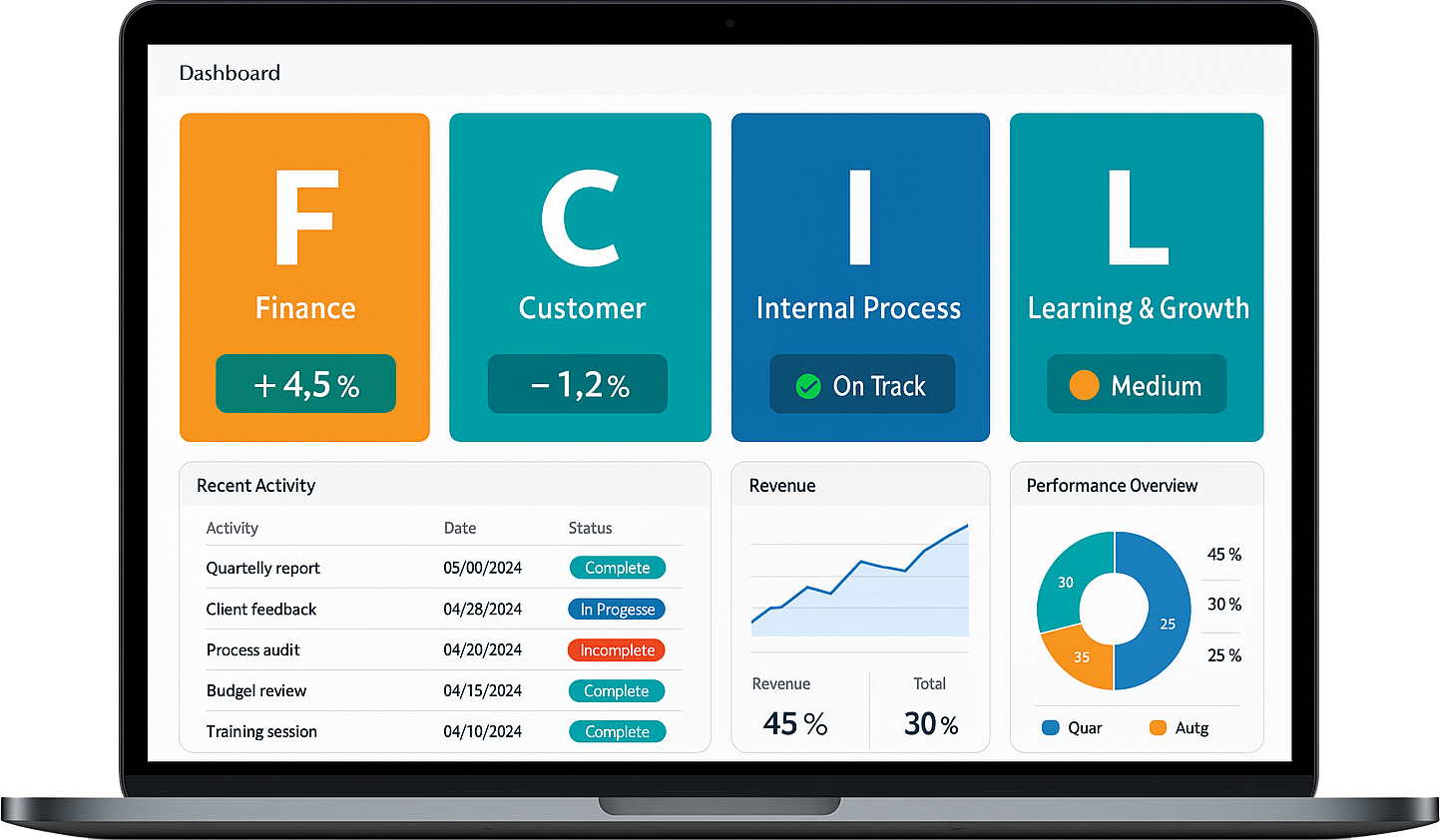
Balanced Scorecard (BSC) software is a strategic performance management tool designed to help Japanese organisations translate long-term vision into measurable actions. It provides a structured framework to track performance across four key perspectives: financial, customer, internal processes, and learning and growth. By centralising strategic data, the software enables organisations to monitor progress, maintain focus, and ensure alignment between strategy and daily operations.
Supporting Structured Management Practices
Japanese organisations often value precision, consistency, and continuous improvement. BSC software supports these principles by offering clear visibility into performance metrics and strategic initiatives. It helps management teams ensure that objectives are well-defined, measurable, and consistently tracked across departments and business units.
Improving Organisational Transparency
The software enhances transparency by making performance data accessible to relevant stakeholders. Managers and teams can easily understand priorities, track progress, and identify areas that require attention. This clarity strengthens trust, accountability, and alignment across the organisation.
Enabling Long-Term Strategic Focus
BSC Software helps Japanese organisations balance short-term performance with long-term development. By monitoring trends and outcomes over time, leaders can make informed adjustments, support sustainable growth, and reinforce a culture of disciplined execution and continuous improvement.
Why Companies in Japan Are Adopting BSC Software for Strategic Management
Managing Complex Organisational Structures
Many Japanese companies operate with complex structures, multiple departments, and long-term strategic goals. BSC software simplifies strategic management by consolidating performance data into a single, easy-to-understand system. This allows leaders to gain a clear overview of organisational performance without relying on fragmented reports.
Strengthening Strategic Alignment
The software ensures that corporate strategy is clearly communicated and understood at all levels. By linking departmental and individual goals to organisational objectives, Japanese companies improve alignment, reduce confusion, and ensure that every team contributes to shared outcomes.
Supporting Data-Driven Decisions
BSC Software provides accurate, real-time insights across all four perspectives. This enables leaders to identify performance gaps, assess risks, and make informed decisions quickly. Reliable data supports proactive management rather than reactive problem-solving.
Encouraging Continuous Improvement
By tracking performance trends and historical data, the software reinforces a culture of ongoing improvement. Japanese companies can monitor progress, refine processes, and adapt strategies while maintaining stability and long-term focus.
Key Features to Look for in the Best BSC Software
Customisable KPIs and Objectives
Effective BSC Software allows organisations to define and customise KPIs based on their strategic priorities. This flexibility ensures that metrics remain relevant, measurable, and aligned with business goals across all four perspectives.
Clear and Interactive Dashboards
Visual dashboards present performance data through charts and summaries, making it easier to understand trends and outcomes. Interactive views help managers identify issues quickly and focus on areas that require immediate action.
Automated Reporting and Alerts
Automation reduces manual effort by generating reports and notifying managers when performance deviates from targets. This improves responsiveness, accountability, and consistency in performance monitoring.
Integration with Internal Systems
The ability to integrate with existing financial, operational, and human resource systems ensures data accuracy and real-time updates. This creates a unified view of performance and strengthens strategic decision-making.
Linking Strategy to Measurable KPIs Using BSC Software
Turning Vision into Measurable Actions
BSC Software helps Japanese organisations convert strategic vision into specific, measurable KPIs. Each KPI is linked to a defined objective, ensuring that strategy is practical, trackable, and actionable across all levels of the organisation.
Ensuring Consistent Strategic Focus
By mapping KPIs to strategic goals, the software maintains focus on priorities that matter most. This prevents teams from working in isolation and ensures that efforts remain aligned with long-term objectives.
Improving Accountability and Ownership
KPIs can be assigned to departments or individuals, making responsibility clear. Managers can track progress, provide guidance, and address performance gaps before they impact overall results.
Supporting Strategic Adaptability
Continuous KPI monitoring allows organisations to adjust strategies based on performance data. This ensures that strategy remains relevant and responsive to operational and market changes.
Tracking Performance Across Financial, Customer, Internal, and Learning Perspectives
Achieving a Balanced View of Performance
BSC software enables Japanese organisations to evaluate performance across financial results, customer outcomes, internal processes, and learning and growth. This balanced approach prevents overreliance on a single metric and supports sustainable success.
Identifying Strengths and Weaknesses
By monitoring multiple perspectives, managers can identify operational strengths and areas needing improvement. This insight supports targeted actions that enhance efficiency, quality, and employee capability.
Real-Time Performance Visibility
Up-to-date dashboards provide immediate insight into performance trends. This enables timely responses to issues and supports informed decision-making across all levels of management.
Encouraging Long-Term Development
Tracking learning and growth metrics ensures that employee development and innovation remain priorities. This supports continuous improvement and long-term organisational resilience.
Improving Decision-Making with Real-Time BSC Dashboards
Visual Access to Critical Information
Real-time dashboards display key metrics in a clear and visual format. This allows Japanese managers to quickly understand performance status and identify trends without complex analysis.
Faster and More Accurate Decisions
Access to current data reduces reliance on outdated reports. Managers can respond promptly to performance changes, minimise risks, and maintain operational stability.
Role-Based Dashboard Views
Dashboards can be customised to show relevant information for executives, managers, or teams. This improves usability and ensures that each user receives meaningful insights aligned with their responsibilities.
Supporting Strategic Reviews
Dashboards help leaders review progress against objectives and evaluate the impact of strategic initiatives. This strengthens planning, forecasting, and execution effectiveness.
Aligning Team and Individual Goals with Organisational Objectives
Creating Clear Strategic Connections
BSC software helps Japanese organisations connect individual and team goals directly to organisational objectives. Employees gain a clear understanding of how their work contributes to overall success.
Improving Engagement and Accountability
Clear goal alignment increases ownership and motivation. Teams understand expectations, track progress, and remain focused on delivering measurable outcomes.
Strengthening Cross-Team Collaboration
When goals are aligned, departments work together more effectively. This reduces silos, improves communication, and supports shared responsibility for results.
Continuous Feedback and Adjustment
Real-time performance tracking provides ongoing feedback, allowing teams and individuals to adjust priorities and efforts. This ensures sustained alignment with organisational strategy and continuous improvement.
Supporting Continuous Improvement Through BSC Insights
Turning Performance Data into Improvement Actions
Balanced Scorecard insights help organisations move from static reporting to continuous improvement. By monitoring performance across financial, customer, internal process, and learning perspectives, leaders can clearly see where progress is slowing and where improvement is required. These insights highlight gaps between current performance and strategic targets, allowing teams to focus on actions that deliver measurable improvement. Rather than reacting to problems after they escalate, organisations can use BSC insights to identify early warning signs and take corrective steps at the right time.
Encouraging a Culture of Ongoing Improvement
When teams have access to clear and reliable insights, continuous improvement becomes part of daily work rather than a one-off initiative. Employees understand how their actions affect wider organisational goals, which encourages ownership and accountability. BSC insights support structured review meetings where teams can discuss progress, challenges, and opportunities openly. This regular review cycle helps embed improvement thinking into everyday operations and ensures learning is shared across departments.
Aligning Improvements with Strategic Priorities
BSC insights ensure that improvement activities remain aligned with long-term strategy. Instead of making isolated changes, organisations can prioritise initiatives that support strategic objectives. Leaders can track whether improvement actions are delivering expected results and adjust plans where needed. This alignment ensures resources are used effectively, improvement efforts are focused, and performance continues to move in the right direction over time.
Standardising Performance Reporting Across Departments and Locations
Creating a Single View of Performance
Standardised performance reporting ensures that all departments and locations measure success in the same way. When reporting formats, definitions, and metrics are consistent, leaders can compare performance accurately across the organisation. This single view removes confusion caused by different reporting styles and allows management to identify trends, strengths, and problem areas quickly. Consistency also improves transparency, as everyone works with the same information.
Improving Accuracy and Reducing Manual Errors
Manual reporting often leads to inconsistencies and data errors. Standardising reporting processes reduces these risks by applying common measurement rules and automated data handling. Teams spend less time correcting reports and more time analysing results. Reliable data builds trust in performance information and supports better decision-making at every level of the organisation.
Supporting Better Collaboration and Accountability
When performance is reported consistently, departments and locations can collaborate more effectively. Teams understand how their performance compares with others and can share best practices. Standardised reporting also strengthens accountability, as responsibilities and results are clearly visible. This clarity supports alignment with organisational goals and encourages continuous improvement across all business areas.
Tracking Strategic Initiatives and Measuring Business Outcomes Effectively
Connecting Strategy to Measurable Results
Tracking strategic initiatives is essential for understanding whether plans are delivering real business value. Balanced Scorecard frameworks link initiatives directly to measurable outcomes, ensuring that progress is visible and meaningful. Each initiative is associated with clear performance indicators, making it easier to assess success and identify delays or risks early.
Monitoring Progress in Real Time
Effective tracking allows leaders to monitor initiatives continuously rather than relying on delayed reports. Real-time visibility helps organisations respond quickly when performance falls behind expectations. Teams can adjust priorities, reallocate resources, or refine actions to keep initiatives aligned with strategic objectives.
Strengthening Decision-Making and Accountability
By measuring outcomes consistently, organisations can make informed decisions based on evidence rather than assumptions. Tracking also reinforces accountability, as ownership of initiatives is clearly defined. Teams understand their responsibilities and how their work contributes to broader goals, leading to improved execution and stronger business results.
Reducing Manual Reporting and Administrative Effort with BSC Software
Automating Performance Data Collection
BSC software significantly reduces the need for manual reporting by automating data collection and consolidation. Instead of maintaining multiple spreadsheets, teams can rely on a central system that captures and updates performance information automatically. This reduces administrative workload and ensures data is always current and accurate.
Improving Efficiency and Focus
Reducing manual effort allows employees to focus on analysis and improvement rather than data preparation. Time previously spent on compiling reports can be redirected towards identifying trends, solving problems, and improving processes. This shift increases productivity and supports better use of organisational resources.
Ensuring Consistency and Reliability
Automated reporting improves consistency across departments by applying standard calculation methods and reporting structures. Reliable data builds confidence in performance insights and supports timely, informed decision-making. Reduced administrative effort also helps organisations scale reporting without increasing workload.
Integrating BSC Software with Existing Enterprise and ERP Systems
Creating a Unified Performance Environment
Integrating BSC software with enterprise and ERP systems allows organisations to combine operational and strategic data in one place. This integration ensures performance information flows smoothly across systems, reducing duplication and improving accuracy. Leaders gain a comprehensive view of organisational performance without relying on disconnected reports.
Enhancing Reporting and Analysis
Integrated systems support richer analysis by combining data from multiple business areas. This enables organisations to understand how operational performance influences strategic outcomes. Improved analysis supports better planning, prioritisation, and resource allocation.
Supporting Scalability and Long-Term Growth
System integration ensures that performance management processes can scale as the organisation grows. New departments or locations can be included without adding complexity. This flexibility supports long-term growth while maintaining consistent performance monitoring.
Empowering Teams to Take Ownership of Strategic Goals
Making Strategy Clear and Relevant
Teams are more engaged when they clearly understand strategic goals and how their work contributes to them. Balanced Scorecard frameworks translate high-level strategy into practical objectives that teams can act on. This clarity helps employees prioritise tasks and align daily activities with organisational direction.
Encouraging Accountability and Engagement
When teams have ownership of goals, accountability naturally improves. Access to performance measures allows teams to monitor progress and take corrective action independently. This empowerment increases motivation and encourages proactive problem-solving.
Building a Performance-Driven Culture
Empowered teams contribute to a culture where performance and improvement are shared responsibilities. Collaboration increases, communication improves, and strategic execution becomes more consistent across the organisation.
Using BSC Analytics to Drive Long-Term Business Growth
Identifying Growth Opportunities
BSC analytics help organisations identify patterns and trends that signal growth opportunities. By analysing performance data across multiple perspectives, leaders can spot areas with high potential and focus resources accordingly.
Supporting Strategic Planning
Analytics provide evidence to support long-term planning decisions. Organisations can evaluate the impact of past initiatives and use insights to shape future strategies. This reduces risk and improves confidence in strategic choices.
Maintaining Sustainable Performance
Continuous monitoring ensures growth remains sustainable over time. BSC analytics allow organisations to track progress, adjust strategies, and maintain alignment with long-term objectives.
Measuring ROI and Strategic Impact with Balanced Scorecard Software
Linking Investment to Results
BSC software enables organisations to measure how strategic initiatives contribute to measurable outcomes. By linking activities to KPIs, leaders can assess return on investment clearly and objectively.
Improving Transparency and Confidence
Clear ROI measurement improves transparency across the organisation. Stakeholders can see which initiatives deliver value and which require adjustment, supporting better governance and decision-making.
Supporting Continuous Strategic Improvement
Measuring strategic impact allows organisations to refine plans continuously. Insights gained from performance data help improve future initiatives, ensuring resources are invested where they generate the greatest long-term value.