In today’s fast-paced business landscape, organisations must adapt quickly to changing market conditions and evolving customer needs. A well-structured strategy is key to long-term success, and effective execution of that strategy is crucial. The Balanced Scorecard (BSC) framework has been a reliable tool for aligning business activities with strategic goals since its introduction. However, as businesses increasingly rely on data and technology, the traditional Balanced Scorecard is evolving into its digital counterpart, offering more agility and precision in strategy execution.
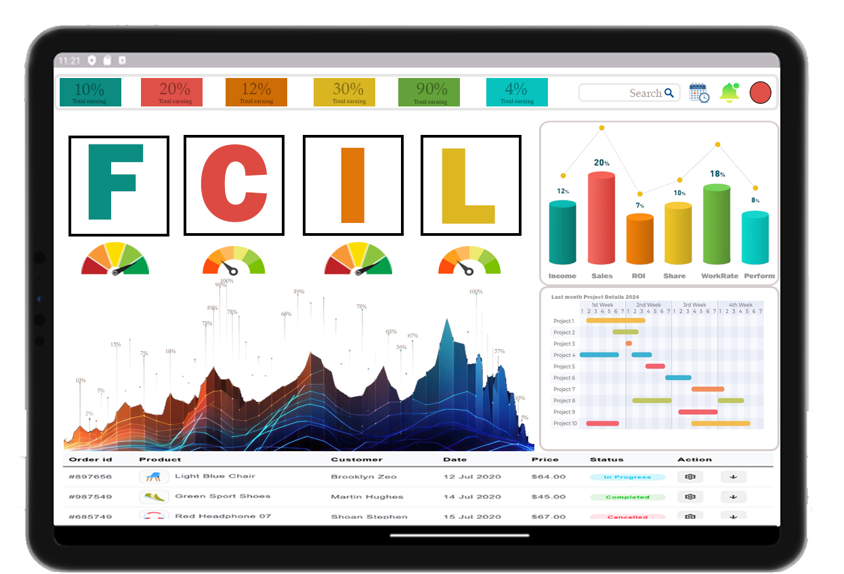
Digital Balanced Scorecard (BSC) software modernises the way organisations manage and measure strategic performance.
Understanding the Digital Balanced Scorecard
The Balanced Scorecard framework, developed by Robert S. Kaplan and David P. Norton, focuses on four key perspectives: Financial, Customer, Internal Processes, and Learning & Growth. By tracking and balancing these perspectives, businesses can align daily operations with long-term goals. Traditionally, BSCs were managed manually using spreadsheets or static reports. While effective, this method is time-consuming, prone to human error, and limited in providing real-time insights.
Digital Balanced Scorecard (BSC) software automates the tracking and reporting processes, enabling real-time data collection, analysis, and decision-making. It integrates seamlessly with existing enterprise systems, offering a unified view of key performance indicators (KPIs) across various departments. This modern approach empowers organisations to remain agile, adapt strategies quickly, and improve performance with greater precision.
Key Benefits of Digital BSC Software
1. Real-Time Data and Insights
Traditional BSC frameworks rely on static reports, which often provide outdated or incomplete information. Digital Balanced Scorecard (BSC) software, on the other hand, allows for real-time data collection and analysis. This means decision-makers have access to up-to-date information, enabling them to respond to challenges and opportunities more quickly. Real-time insights can significantly enhance an organisation’s ability to course-correct and ensure that strategies remain aligned with business objectives.
2. Automation and Increased Efficiency
Manual tracking of performance metrics can be laborious and error-prone. Digital BSC software automates these processes, ensuring that performance data is collected accurately and consistently. Automation not only reduces the risk of human error but also frees up valuable time for teams to focus on strategic initiatives rather than administrative tasks. As a result, businesses can operate more efficiently and allocate resources more effectively.
3. Improved Alignment Across Departments
One of the most significant advantages of a Balanced Scorecard is its ability to align various departments and functions with the overall organisational strategy. Digital BSC software enhances this alignment by providing a centralised platform where all teams can access the same data and performance indicators. This visibility ensures that every department is working towards common goals, fostering collaboration and synergy across the organisation.
4. Customisation for Industry-Specific Needs
Every industry has its unique set of challenges and metrics that are critical for success. Digital BSC software offers customisation options, allowing organisations to tailor their scorecard to focus on the KPIs that matter most to them. Whether you're in manufacturing, healthcare, technology, or any other sector, the ability to customise the BSC ensures a more precise alignment between strategy and operations. This level of flexibility is difficult to achieve with traditional, static scorecards.
5. Enhanced Decision-Making
Access to real-time data and advanced analytics provided by Digital Balanced Scorecard (BSC) software improves decision-making at all levels of an organisation. By tracking both leading and lagging indicators, companies can anticipate potential issues before they become critical, allowing for proactive problem-solving. This enhanced decision-making capability leads to better resource allocation, risk management, and ultimately, improved strategic outcomes.
6. Scalability and Integration
As businesses grow and evolve, so too must their strategy execution tools. Digital BSC software is highly scalable, meaning it can easily accommodate the needs of a growing organisation. Additionally, these platforms integrate with other enterprise systems such as Enterprise Resource Planning (ERP) software and Customer Relationship Management (CRM) tools. This integration ensures a seamless flow of data across different functions, providing a comprehensive view of performance and strategy execution.
How Digital Balanced Scorecard (BSC) software Drives Strategic Optimisation
To truly optimise strategy, businesses must go beyond simply tracking KPIs. Digital BSC software enables a proactive approach to strategy management by providing the tools to continuously monitor, adjust, and refine performance metrics. Here's how:
- Continuous Feedback Loops: Digital BSC software allows for continuous feedback from all levels of the organisation, creating an environment where strategies can be regularly evaluated and adjusted. This fosters a culture of agility and responsiveness, ensuring that the company is always moving toward its strategic goals.
- Data-Driven Strategy Execution: By harnessing the power of data, businesses can make more informed decisions. Digital BSC software provides detailed insights into what is working and what isn’t, enabling organisations to pivot strategies as needed. This data-driven approach ensures that decisions are based on facts rather than intuition, leading to more reliable outcomes.
- Strategic Transparency: Digital Balanced Scorecard (BSC) software platforms promote transparency by giving stakeholders access to performance data. This openness encourages accountability and ensures that every team understands their role in the larger strategy. When everyone is aligned and accountable, strategic execution becomes more effective.
Conclusion
Optimising your strategy with Digital Balanced Scorecard software is a game-changer in today’s competitive business environment. By leveraging real-time data, automating key processes, and fostering alignment across departments, digital BSC solutions enable organisations to stay agile and responsive to changing market conditions. With customisable options, enhanced decision-making capabilities, and seamless integration with other enterprise systems, these tools provide a comprehensive approach to strategy execution that drives better performance and long-term success.
Embracing Digital Balanced Scorecard (BSC) software is not just about keeping up with technological advancements; it’s about transforming the way your organisation approaches strategy. By optimising the execution of your strategic goals, you position your business for sustained growth and success in an ever-evolving market.