In today’s fast-paced business environment, aligning strategy with execution is critical for success. Companies need effective tools to ensure that strategic goals are translated into measurable actions across the organisation. The Digital Balanced Scorecard (BSC) software, developed by Robert Kaplan and David Norton, has long been a proven framework for achieving this alignment. However, with the increasing complexity of modern business operations, organisations are turning to digital solutions to enhance the BSC’s effectiveness.
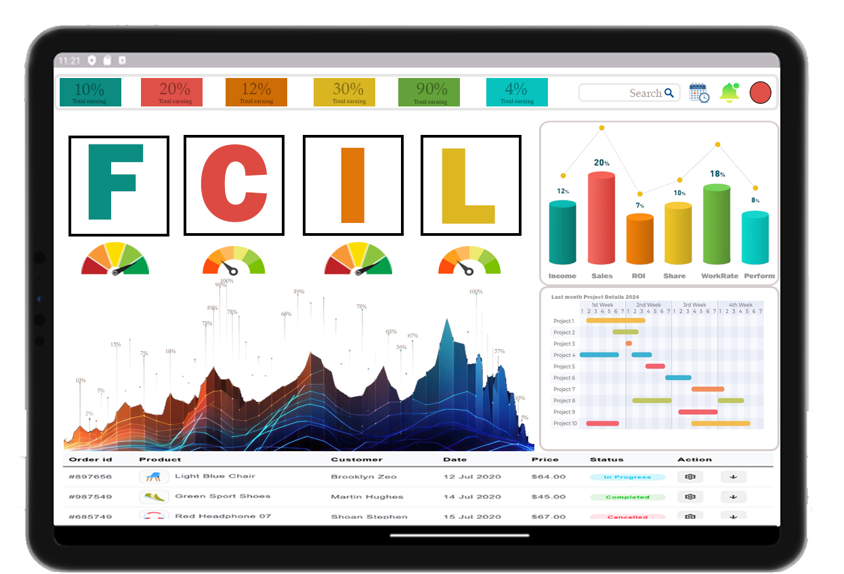
Digital Balanced Scorecard (BSC) software modernises the traditional framework, providing real-time data, automation, and seamless integration with other business systems. This software is designed to bridge the gap between strategy and execution, enabling organisations to track performance in real time, improve decision-making, and drive success.
What Is Digital Balanced Scorecard (BSC) software?
The traditional Balanced Scorecard framework focuses on four key perspectives: Financial, Customer, Internal Processes, and Learning & Growth. By tracking and balancing these areas, businesses can align their daily operations with long-term strategic objectives. However, managing the Balanced Scorecard manually can be cumbersome, often leading to delays in performance tracking and reporting.
Digital Balanced Scorecard (BSC) software transforms this process by automating data collection, analysis, and reporting. It integrates seamlessly with other enterprise systems, such as Enterprise Resource Planning (ERP) and Customer Relationship Management (CRM) tools, providing a holistic view of an organisation’s key performance indicators (KPIs). This digital approach not only improves efficiency but also enhances the ability to quickly adapt strategies in response to changing market conditions.
Key Benefits of Digital Balanced Scorecard (BSC) software
1. Real-Time Data for Better Decision-Making
One of the most significant advantages of Digital Balanced Scorecard software is its ability to provide real-time data. In traditional BSC frameworks, decision-makers often rely on static reports that may not accurately reflect the current state of the business. Digital solutions, however, pull data from multiple sources and present it in real time, allowing leaders to make informed decisions quickly. This is especially valuable in today’s fast-moving business environment, where agility and responsiveness are critical.
With real-time data, organisations can identify emerging trends, spot potential issues, and make course corrections before they become significant problems. This ability to act on current information helps businesses stay aligned with their strategic goals and improves overall performance.
2. Automation Increases Efficiency
Manual data entry and reporting are time-consuming and prone to errors. Digital Balanced Scorecard software automates these processes, reducing the administrative burden on teams. By automating the collection and analysis of performance metrics, organisations can free up valuable resources to focus on strategic initiatives.
Automation also ensures greater accuracy in performance tracking. The software automatically pulls data from integrated systems, reducing the risk of human error and providing more reliable insights. This leads to more efficient operations and a more effective execution of the organisation’s strategic plan.
3. Enhanced Alignment Across Departments
The Balanced Scorecard is designed to align various departments and functions with the overall organisational strategy. Digital BSC software takes this a step further by providing a centralised platform where all teams can access the same data and performance indicators. This transparency ensures that each department is working towards the same strategic objectives.
With Digital Balanced Scorecard (BSC) software, cross-departmental collaboration is enhanced. Teams can easily see how their efforts contribute to the larger goals of the company, fostering a sense of accountability and shared purpose. This alignment between strategy and execution helps organisations achieve their objectives more effectively.
4. Customisation for Industry-Specific Needs
Every industry has unique performance metrics that are critical to success. Digital Balanced Scorecard software offers customisation options that allow organisations to tailor their scorecards to meet specific industry needs. Whether a company operates in healthcare, finance, manufacturing, or another sector, the software can be configured to focus on the KPIs that matter most.
This customisation ensures that the Balanced Scorecard is not just a generic performance management tool but a strategic asset that reflects the specific goals and challenges of the business. By aligning the BSC with industry-specific metrics, companies can gain more precise insights and achieve better results.
5. Scalability and Integration
As businesses grow and evolve, their needs change. Digital Balanced Scorecard software is designed to scale with the organisation, making it a valuable tool for companies of all sizes. Whether a small business is looking to formalise its strategic processes or a large enterprise needs to manage complex performance metrics, digital BSC solutions can be adapted to fit the company’s requirements.
Furthermore, Digital Balanced Scorecard software integrates with other enterprise systems, such as ERP and CRM platforms. This integration ensures that data flows seamlessly between systems, providing a comprehensive view of performance across the organisation. By combining data from multiple sources, companies can gain deeper insights and improve decision-making.
How Digital Balanced Scorecard (BSC) software Integrates Strategy and Execution
The primary goal of Digital Balanced Scorecard software is to bridge the gap between strategy and execution. This is achieved through continuous performance monitoring, real-time data insights, and the ability to adjust strategies as needed.
- Continuous Monitoring: Digital BSC software allows organisations to continuously track performance against strategic goals. This ongoing monitoring ensures that the company stays on course and can make adjustments when necessary.
- Data-Driven Decisions: By providing real-time insights, the software empowers leaders to make data-driven decisions. Instead of relying on outdated or incomplete information, decision-makers have access to current data that reflects the organisation’s true performance.
- Agility and Responsiveness: In today’s dynamic business environment, companies need to be agile. Digital BSC software enables businesses to pivot strategies quickly in response to market changes, ensuring that execution remains aligned with the overall strategy.
Conclusion
Digital Balanced Scorecard (BSC) software is a powerful tool for integrating strategy and execution in today’s data-driven world. By providing real-time data, automating key processes, and fostering alignment across departments, it enables organisations to execute their strategies more effectively. The ability to customise the software for industry-specific needs, along with its scalability and integration capabilities, makes it a valuable asset for businesses of all sizes.
Ultimately, by adopting Digital Balanced Scorecard software, companies can ensure that their strategic goals are not just well-defined but also effectively executed, leading to sustained success and competitive advantage in the marketplace.