In today's fast-paced business environment, organisations need to maximize efficiency and optimize performance to stay competitive. One of the most powerful tools for achieving this is Kanban. Originally developed in the manufacturing sector, Kanban has evolved into a versatile system that can benefit businesses across various industries.
What is Kanban?
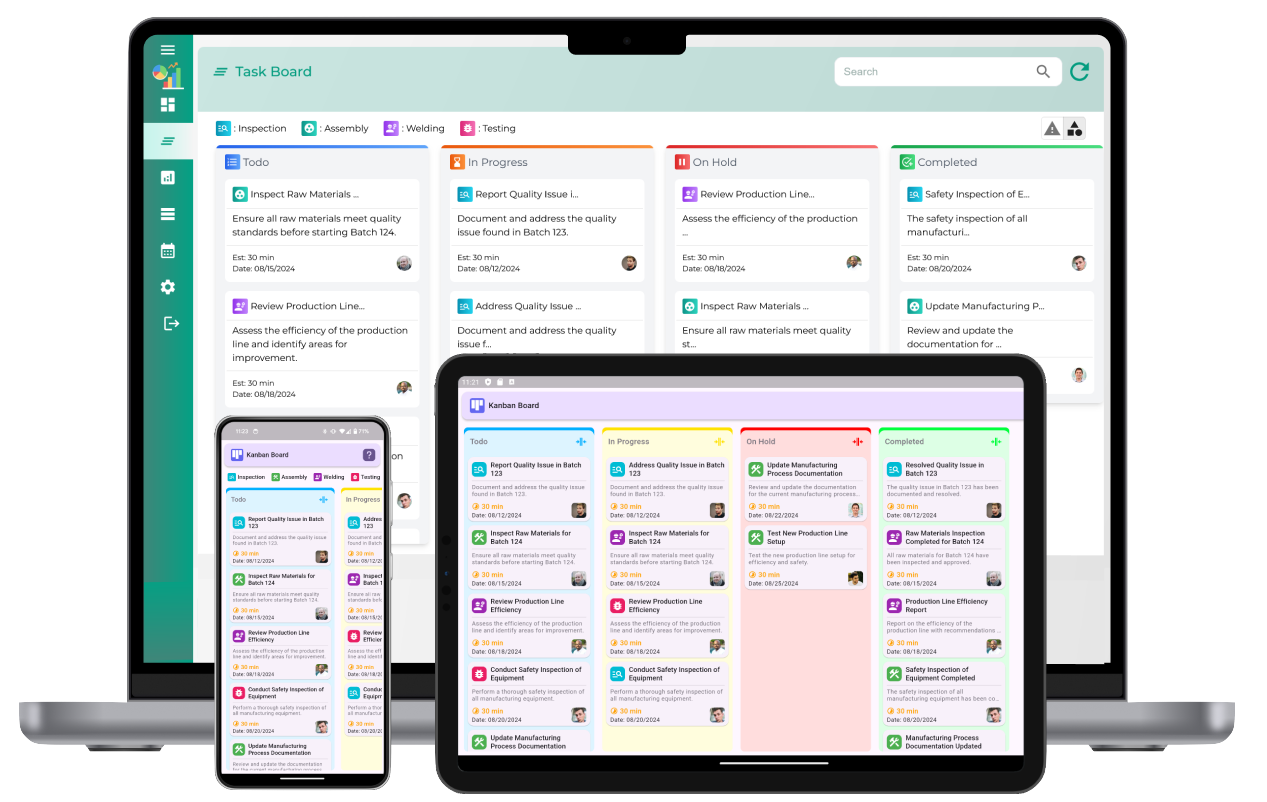
Kanban is a Japanese term meaning "visual signal" or "card." It was first developed by Toyota in the mid-20th century as part of its production system to improve efficiency. The core idea behind Kanban is to visualize the flow of work, making it easier to manage and optimize. It involves a board (often digital) with columns representing different stages of a process, such as "To Do," "In Progress," and "Completed." Each task or work item is represented by a card, which moves across the board as it progresses through the workflow.
The simplicity of Kanban allows organizations to manage work effectively, spot bottlenecks, and adjust processes for better outcomes. It fosters collaboration, transparency, and accountability, enabling teams to focus on the most critical tasks.
Key Benefits of Kanban for Business Growth
1. Enhanced Workflow Efficiency
One of the most significant advantages of Kanban is its ability to simplify workflows. By visualizing each stage of a process, teams can easily track the status of work and identify any delays. This helps eliminate confusion and ensures that everyone knows what needs to be done and when.
For businesses, this means faster turnaround times and less wasted effort. Tasks are handled more efficiently, and bottlenecks are quickly addressed before they disrupt the workflow. With clear visibility into task statuses, teams can adjust their priorities on the fly, keeping the work moving smoothly.
2. Improved Collaboration and Communication
Kanban promotes a collaborative work environment by making workflows visible to all team members. Everyone can see what tasks are in progress, who is working on them, and what needs attention. This transparency encourages open communication, helping teams stay aligned and work together more effectively.
Moreover, because the Kanban board is easily accessible, it acts as a central hub where team members can provide updates, raise issues, or discuss potential improvements. This collaborative atmosphere fosters creativity and innovation, contributing to the overall growth of the business.
3. Faster Decision-Making
The visual nature of Kanban empowers teams to make faster, more informed decisions. Managers and team members can quickly identify bottlenecks, areas for improvement, and potential risks. This immediate visibility enables quick adjustments to be made, preventing delays and minimizing disruptions to the workflow.
In fast-moving industries, the ability to make rapid decisions is crucial. Kanban's transparency allows businesses to stay nimble, respond to market changes, and seize new opportunities without unnecessary delays.
4. Better Resource Management
Kanban helps businesses manage resources more effectively by limiting the number of tasks assigned to individuals at any given time. This concept is known as "Work in Progress" (WIP) limits. By limiting the number of tasks in progress, teams can focus on completing the most critical tasks before moving on to new ones. This prevents overloading team members and ensures that work is completed to a high standard.
Moreover, businesses can allocate resources where they are most needed, ensuring that projects stay on track. By reducing multitasking and improving task completion rates, Kanban enhances overall productivity and helps organizations make the best use of their resources.
5. Continuous Improvement
Kanban is based on the principle of continuous improvement. By regularly reviewing workflows and identifying areas for optimization, businesses can refine their processes over time. Kanban encourages teams to reflect on their work, analyze inefficiencies, and implement small changes that lead to long-term improvements.
The iterative nature of Kanban means that businesses can adapt quickly to changes in the market or internal processes. This ongoing refinement leads to sustained growth and increased competitiveness, as organizations become more agile and responsive to external challenges.
Implementing Kanban for Business Growth
1. Define Your Workflow
Before implementing Kanban, it's essential to understand your organization's workflow. Identify the stages that work items go through, from initial planning to final delivery. Once you have a clear understanding of your workflow, create a Kanban board that represents these stages.
A simple Kanban board typically consists of columns such as "To Do," "In Progress," and "Completed." Depending on your workflow, you may want to add additional stages to capture the full process.
2. Set WIP Limits
Work in Progress (WIP) limits are a critical component of Kanban. By setting limits on the number of tasks in progress at each stage, you prevent bottlenecks and ensure that work is completed efficiently. WIP limits also help teams focus on finishing tasks before starting new ones, leading to higher productivity and quality.
3. Use Visual Signals
In Kanban, each task is represented by a card that moves through the workflow stages. These cards contain essential information about the task, such as its description, priority, and deadlines. You can use color-coding, labels, or tags to further categorize tasks, making it easy to identify urgent or high-priority items.
Digital Kanban tools offer additional features, such as automated notifications and integrations with other project management systems, to streamline the process.
4. Monitor and Improve
Kanban is an ongoing process. Regularly review the board and track performance metrics to identify areas for improvement. Hold team meetings to discuss what’s working, what isn’t, and how processes can be optimized. This continuous feedback loop helps ensure that the Kanban system remains aligned with the organization's evolving needs.
Conclusion
Kanban is a powerful tool for businesses looking to simplify workflows, boost productivity, and enhance performance. By visualizing tasks, limiting WIP, and fostering collaboration, organizations can optimize their processes and achieve sustainable growth. Whether you're a small startup or an established enterprise, implementing Kanban can drive significant improvements in efficiency and effectiveness.
The simplicity of Kanban, combined with its focus on continuous improvement, makes it an invaluable asset for any business aiming for long-term success. Start using Kanban today and unlock the potential of streamlined workflows and enhanced business performance.
FAQs on Kanban for Business Growth
1. What is Kanban and how does it work?
Kanban is a visual management system used to optimize workflows by visualizing tasks and their progress through stages. Tasks are represented as cards on a board, moving through columns such as "To Do," "In Progress," and "Completed," to ensure efficient task management and workflow optimization.
2. How can Kanban help improve team productivity?
Kanban boosts productivity by simplifying workflows, minimizing multitasking, and focusing on completing one task before moving on to the next. It provides clear visibility of tasks, helping teams prioritize work and identify potential bottlenecks.
3. What are Work In Progress (WIP) limits, and why are they important?
WIP limits restrict the number of tasks that can be in progress at any given stage. This ensures teams focus on completing tasks rather than starting too many at once, reducing bottlenecks and improving task completion efficiency.
4. Can Kanban be applied to industries outside of manufacturing?
Yes, Kanban is versatile and can be applied across various industries, including IT, marketing, software development, healthcare, and project management. It helps streamline workflows and improve efficiency in virtually any business environment.
5. What is the role of the Kanban board in managing workflows?
The Kanban board is a visual tool that helps manage and monitor tasks as they progress through different stages. It ensures all team members can see the status of tasks, making it easier to manage workloads, prioritize tasks, and track project progress.
6. How does Kanban encourage continuous improvement?
Kanban encourages continuous improvement by regularly reviewing workflows, identifying inefficiencies, and making adjustments to processes. Teams reflect on their work and implement incremental changes to enhance performance over time.
7. What are the main advantages of using Kanban for business growth?
Key advantages include improved workflow efficiency, better resource management, faster decision-making, enhanced collaboration, and the ability to adapt to changing business needs. Kanban drives better outcomes by streamlining processes and optimizing team performance.
8. Is Kanban suitable for small businesses?
Yes, Kanban is suitable for businesses of all sizes, including small businesses. It helps small teams stay organized, improve communication, and manage workloads effectively, making it an ideal tool for businesses looking to scale.
9. How do I get started with Kanban?
To get started, define your workflow, create a Kanban board, and set Work In Progress (WIP) limits. You can start with a simple board and then expand as needed, incorporating additional stages or categories. Regularly monitor performance and adjust the system to optimize workflows.
10. Are there digital tools for managing Kanban boards?
Yes, there are various digital Kanban tools available, offering additional features like automated notifications, task prioritization, and integrations with other project management systems. These tools make managing Kanban boards more efficient, especially for remote teams.