In the fast-paced world of manufacturing, maintaining operational excellence is a critical factor in staying competitive. One of the tools designed to help teams meet performance objectives is the SQDCP board, a visual management tool used to track key performance indicators across Safety, Quality, Delivery, Cost, and People. By providing a clear, actionable overview of these metrics, SQDCP boards help teams make informed decisions, identify improvement areas, and ensure continuous growth.
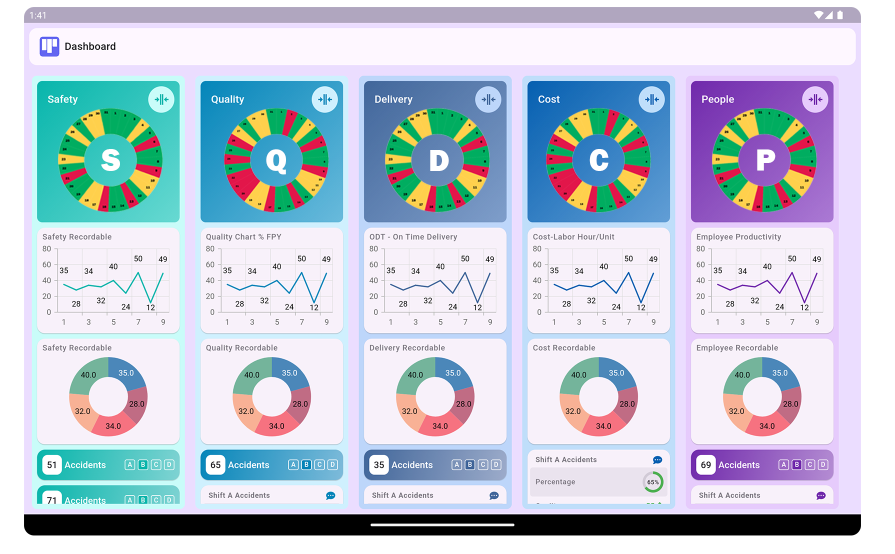
What is an SQDCP Board?
The SQDCP board is a visual representation of essential metrics that guide daily decision-making in manufacturing environments. The acronym stands for:
- Safety: Ensures that a safe work environment is maintained to prevent accidents and injuries.
- Quality: Focuses on producing products that meet or exceed customer expectations.
- Delivery: Tracks the timeliness of meeting production schedules and fulfilling orders.
- Cost: Monitors production expenses to maintain profitability.
- People: Evaluates employee engagement, skills, and team collaboration.
Each of these categories is tracked on a daily, weekly, or monthly basis using color codes (often green, yellow, and red) to quickly communicate performance status. The visual nature of SQDCP boards makes it easier for teams to immediately see if a particular area requires attention.
How SQDCP Boards Drive Continuous Improvement
SQDCP boards are instrumental in driving continuous improvement by providing real-time performance feedback to manufacturing teams. Each metric on the board acts as a benchmark, ensuring that safety protocols are followed, product quality is maintained, deliveries are on time, costs are managed effectively, and employee wellbeing is prioritized.
This continuous feedback loop is crucial for making swift adjustments in the production process. If a particular area is flagged as underperforming (typically shown in red), the team can immediately focus on solving the problem. For instance, if quality dips below standard, the team can quickly investigate root causes, such as machine calibration or material defects, and implement corrective measures.
Implementing SQDCP in Manufacturing
Implementing an SQDCP board effectively requires careful planning and clear communication across the team. Here are steps to integrate the system into a manufacturing workflow:
1. Define KPIs
Each metric on the board needs clearly defined key performance indicators (KPIs) that align with company goals. For example, safety could be measured by the number of incidents, while quality may track defect rates or customer complaints.
2. Set Targets
Establish performance targets for each KPI. These should be realistic yet challenging enough to drive improvement.
3. Assign Ownership
Designate a responsible individual or team for each metric to ensure accountability. This creates a sense of ownership, and team members are more likely to focus on improving areas they manage.
4. Regular Review
SQDCP boards are most effective when updated daily or weekly. Regular review meetings should be held to discuss performance and identify any necessary corrective actions.
5. Foster Collaboration
Open discussions on the board’s metrics foster cross-functional collaboration. Team members from different departments can share insights and solutions that benefit overall performance.
6. Celebrate Successes
Recognizing achievements when targets are met helps build morale and encourages ongoing commitment to improvement.
Benefits of Using SQDCP Boards
SQDCP boards bring numerous advantages to manufacturing teams, including:
Transparency
SQDCP boards provide a clear, real-time view of operational performance. This transparency helps identify issues early and enables teams to focus on areas needing improvement before they become critical.
Improved Decision-Making
With all performance metrics visible in one place, leaders can make informed, data-driven decisions. The color-coded system makes it easy to prioritize which issues need immediate attention.
Accountability
Because each category is assigned to a specific individual or team, there’s greater accountability across departments. Everyone knows their role in maintaining operational excellence.
Operational Efficiency
By tracking metrics such as delivery times and production costs, SQDCP boards help teams streamline operations and reduce waste, leading to higher efficiency and profitability.
Employee Engagement
The inclusion of the "People" metric ensures that employee wellbeing and engagement are part of the operational strategy. By recognizing and addressing issues like team morale and skill development, companies can foster a more motivated workforce.
Real-Life Examples and Case Studies
Manufacturing companies around the world have successfully implemented SQDCP boards to enhance operational excellence. For instance, a global automotive manufacturer used SQDCP boards to standardize performance metrics across its production facilities. By focusing on safety and quality, the company was able to reduce defects by 15% and decrease workplace incidents by 10% in the first year of implementation.
Similarly, a packaging company used SQDCP boards to streamline its delivery process, resulting in a 20% improvement in on-time deliveries while reducing overall production costs. These success stories illustrate how effective SQDCP boards can be when integrated into a well-structured continuous improvement strategy.
Conclusion
SQDCP boards are more than just visual management tools; they are a powerful framework for fostering a culture of operational excellence in manufacturing. By providing real-time data on critical performance areas, these boards empower teams to take proactive steps toward improvement. With a focus on safety, quality, delivery, cost, and people, SQDCP boards ensure that manufacturing operations are not only efficient but also sustainable and people-centric. As manufacturing teams continue to face new challenges, SQDCP boards offer a proven method for maintaining high standards and driving continuous growth.